Be Not Afraid
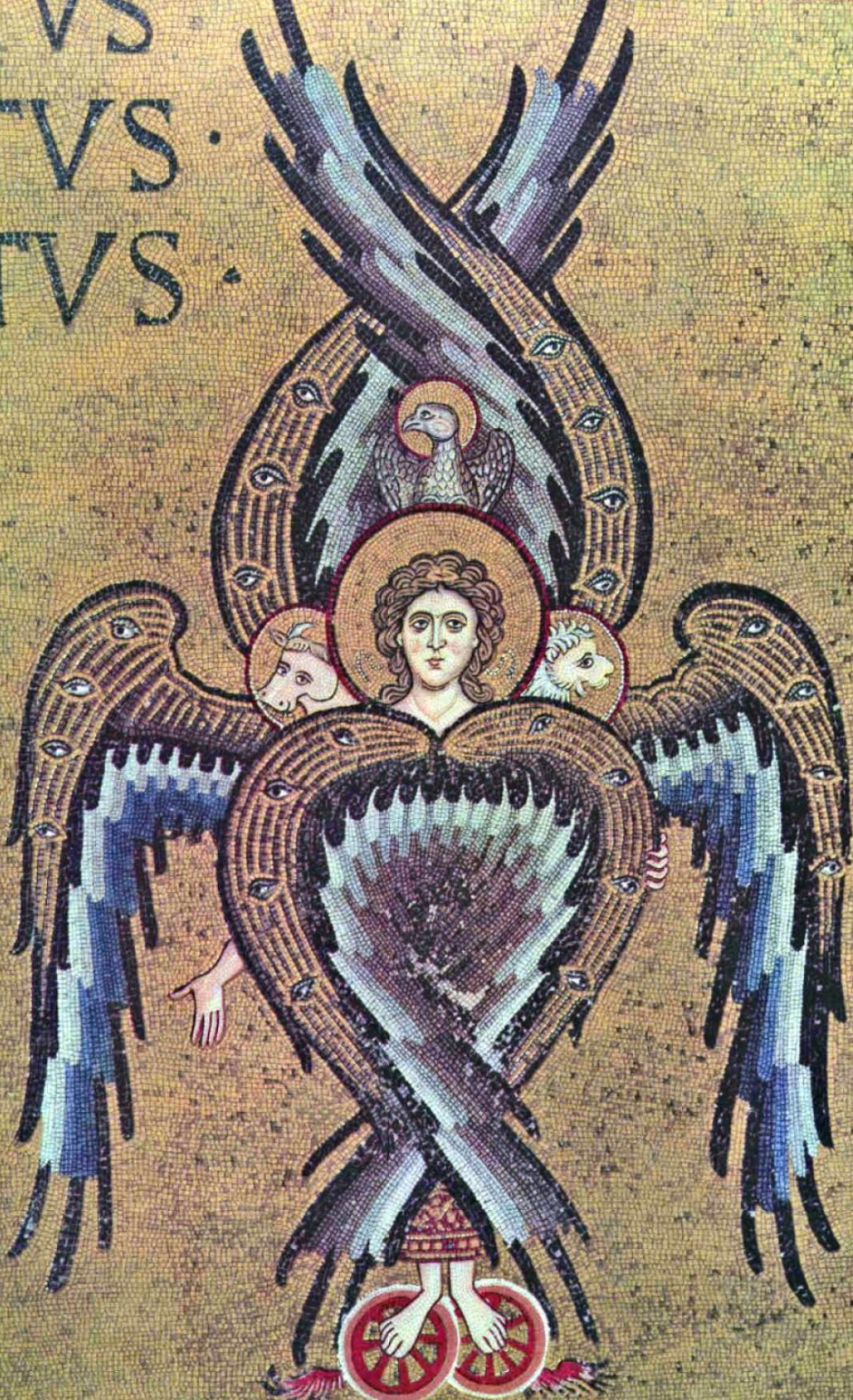
When we hear the word “angels,” many of us picture soft-winged figures in flowing white garments or perhaps cherubic children floating on clouds. Yet, what Scripture and the Church teach about angels is far more mysterious, powerful, and awe-inspiring than those familiar images. Angels are not sentimental ornaments in salvation history; they are spiritual beings who participate intimately in God’s plan for creation and redemption. From the fiery guardians of Eden to the heavenly hosts praising God at the Nativity, angels are woven throughout the entire story of salvation, quietly carrying out God’s will with perfect obedience.
What we hear so often in Scripture from the angelic messengers of God is “Be not afraid.” It’s one of the most repeated commands in the Bible: Genesis 21:17, Judges 6:23, Daniel 10:12, Daniel 10:19, Matthew 1:20 (sort of), Matthew 28:5, Luke 1:13, Luke 1:30, Luke 2:10, Acts 18:9, Acts 27:24 — and many more.
There’s a reason that the first thing angels so often say is “Hey, calm down. Don’t die of fright.” It’s not just because their appearance is otherworldly or overwhelming (though that’s part of it). Often, it’s because the message they carry brings awe, challenge, and change. God’s messengers rarely come with easy assignments. They come bearing news that will turn a life upside down — or, more accurately, right-side up.
So why do the angels so often begin with “be not afraid”? I think there are three reasons.
Angels are Scary!
Even their names hint at awe. The word seraph (as in seraphim) comes from the Hebrew root meaning “to burn.” The seraphim are literally “the burning ones.” Combine that with wings, light, and movement like lightning, and you can see why “fear not” is a good way to start the conversation.
Scripture gives us several glimpses of what these beings are like. Sometimes, they appear in human form. In Genesis 18-19, the angels who visit Abraham and Lot look like men. Even so, their presence radiates something beyond the ordinary. In Judges 13:6-21, Manoah and his wife describe the angel who foretells Samson’s birth as “very awesome.“ Yet, the being is identified multiple times as a “man.“
Other passages show angels in forms that are far more terrifying. In Daniel 10:5-6, Daniel looks and sees “a man clothed in linen, with a belt of fine gold from Uphaz around his waist. His body was like beryl, his face like the appearance of lightning, his eyes like flaming torches, his arms and legs like the gleam of burnished bronze, and the sound of his words like the sound of a multitude.“
Revelation, Isaiah, and Ezekiel seem to describe either the same angel, or at least a similar type of angel. In Revelation, John writes that he sees “four living creatures“ which is the same word choice given in Ezekiel of “four living creatures.“ John writes further that they they are “full of eyes in front and behind: the first living creature like a lion, the second living creature like an ox, the third living creature with the face of a man, and the fourth living creature like an eagle in flight. And the four living creatures, each of them with six wings, are full of eyes all around and within, and day and night they never cease to say, ‘Holy, holy, holy, is the Lord God Almighty, who was and is and is to come!’” Isaiah 6:1-7 identifies many of the same attributes, stating that they are called “seaphim,“ which means having six wings and shouting “Holy, holy, holy is the Lord of hosts; the whole earth is full of his glory!“ Ezekiel has several parallels, although it seems like Revelation is a combination of Ezekiel’s angels. You can read the whole thing in Ezekiel 1:4-28, but the main part is that Ezekiel sees
the likeness of four living creatures... they had a human likeness, but each had four faces, and each of them had four wings. Their legs were straight, and the soles of their feet were like the sole of a calf's foot. And they sparkled like burnished bronze. Under their wings on their four sides they had human hands. And the four had their faces and their wings thus: their wings touched one another… As for the likeness of their faces, each had a human face. The four had the face of a lion on the right side, the four had the face of an ox on the left side, and the four had the face of an eagle. Such were their faces. And their wings were spread out above. Each creature had two wings, each of which touched the wing of another, while two covered their bodies… As for the likeness of the living creatures, their appearance was like burning coals of fire, like the appearance of torches moving to and fro among the living creatures. And the fire was bright, and out of the fire went forth lightning. And the living creatures darted to and fro, like the appearance of a flash of lightning.
These are not the soft, glowing figures on Christmas cards. They are immense, intelligent, and radiant beings, blazing with the holiness of God. When angels appear, they carry with them a touch of heaven’s fire. No wonder the first words they speak are “Do not be afraid.”
God is Scary
Not “scary” like a monster under the bed, but “scary” in the sense of overwhelming greatness. The created mind can only handle so much glory. Standing before God is like standing on the edge of infinity: awe-inspiring, humbling, and more than a little frightening.
Think of moments when the vastness of creation makes your heart race: staring into a star-filled sky, looking over the Grand Canyon, standing beside the ocean. That instinctive fear isn’t bad; it’s a recognition of our smallness before something greater.
In The Lion, the Witch, and the Wardrobe, Mr. Beaver tells the children exactly this about Aslan. I like my (humorous) version better that the actual quote:
“Is he a safe lion?“
“Heck no! He’s a lion, for goodness sake! But he is a good lion.“(1)
God’s majesty inspires reverent fear because we know, deep down, that we are in the presence of absolute power, holiness, and love.
Saint Thomas Aquinas, quoting Psalm 111:10, wrote that “the fear of the Lord is the beginning of wisdom.” (Summa theologiae, II-II, Q. 19, A. 7, sed contra). This isn’t because God wants to terrify us, but because holy fear keeps us rightly oriented. Before the One who holds the stars in his hand and sustains our very existence by his will, “be not afraid” is both comfort and command.
Angels, as reflections of God’s glory, naturally inspire this same holy fear. They are not the source of awe - only the mirrors of it.
Intimate Love is Scary
Have you ever noticed that the moments of greatest love in life are also the moments of greatest trembling? The first kiss. The wedding vows. The birth of a child. Each involves vulnerability, a surrender of control to something deeper and more powerful.
The same is true of divine love. God’s love is not distant or abstract. Instead, it is deeply personal and unrelenting. He doesn’t love humanity as a faceless mass. He loves you. Not “you” as an idea, but you in all your complexity, your wounds, your story.
And it’s not just any love. It’s a love that is so real and so genuine that he gave his love for you and for that love. Mark Hart has a great line in the Venture: The Bible Timeline for High School series. “Jesus loves you so much that he would rather die than spend an eternity without you.“ That love is beautiful — and also terrifying. Because if God loves us that much, it demands a response. It means that our lives are not our own. That’s scary, because it is frightening to know that the creator of all things loves you that much.
So when an angel delivers a message from God, such as Gabriel telling Mary she will bear the Son of the Most High, there’s fear not only of the messenger, but of what the message means. To receive divine love is to be drawn into divine mission.
Personal Reflection
Angels are frightening, not merely because of what they are, but because of Who they represent. Their very presence reminds us that heaven is real, that God is active, and that his plans are greater than our own. In a way, angels are merciful mediators - filters, if you will - helping us to encounter God’s glory without being consumed by it.
Think of it this way: God is like the sun. To look directly at the sun would blind us, yet through the right filter, its light becomes visible and life-giving. Angels are like those filters - not dimming God’s glory, but making it bearable for our eyes. They communicate his light, his will, his love, in ways we can receive without being overwhelmed.
As radiant and fearsome as the angels are, their splendor is only a reflection of the One they serve. Their brilliance, their voices, their very being exist to proclaim the holiness of God: “Holy, holy, holy is the Lord God Almighty, who was and is and is to come.”
So when Scripture tells us, “Be not afraid,” it isn’t saying “There’s nothing to fear.” It’s saying: “Do not be afraid to stand before the Holy One who loves you.”
The fear of the Lord is not the end of the story. It’s the doorway to wonder. The angels remind us that God’s love is vast, his glory real, and his invitation personal. When we learn not to run from that fear, but to let it lead us into awe, we finally begin to see what the angels see: that perfect love casts out all fear.
(1) “For Mr. Beaver had warned them, ‘He’ll be coming and going’ he had said. ‘One day you’ll see him and another you won’t. He doesn’t like being tied down - and of course he has other countries to attend to. It’s quite all right. He’ll often drop in. Only you mustn’t press him. He’s wild, you know. Not like a tame lion.‘“ The Lion, the Witch, and the Wardrobe, Chapter XVII The Hunting of the White Stag.
