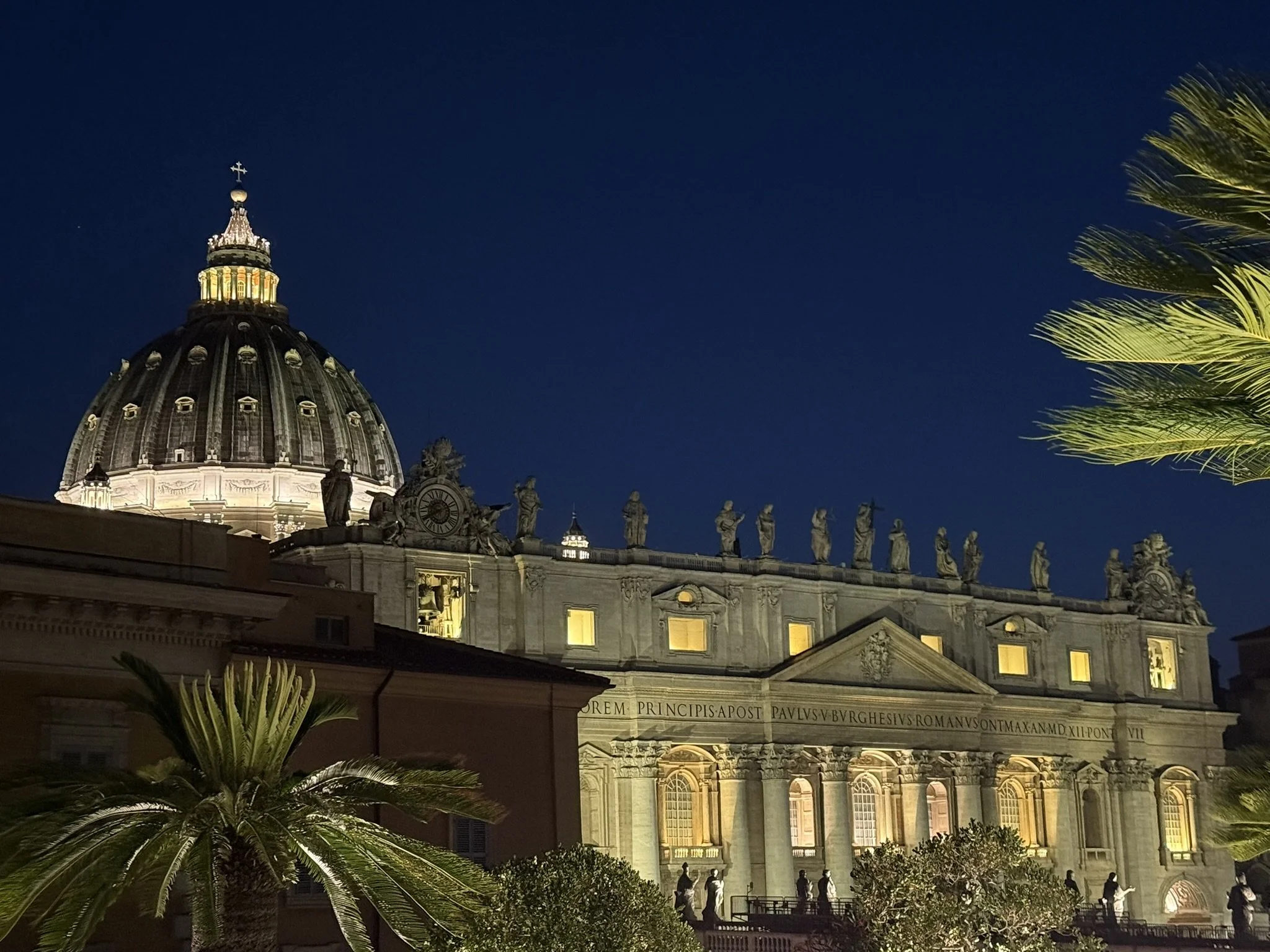
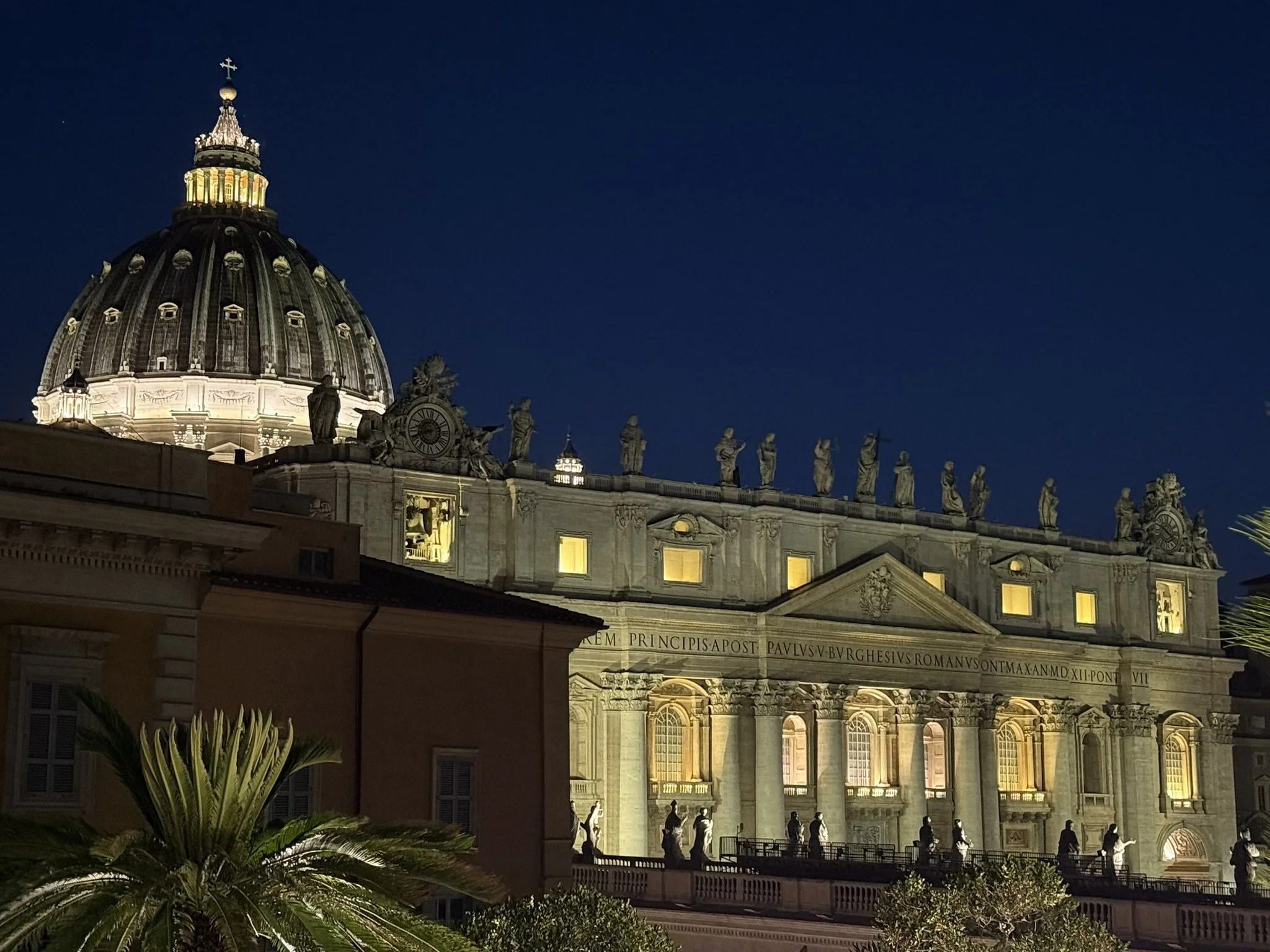
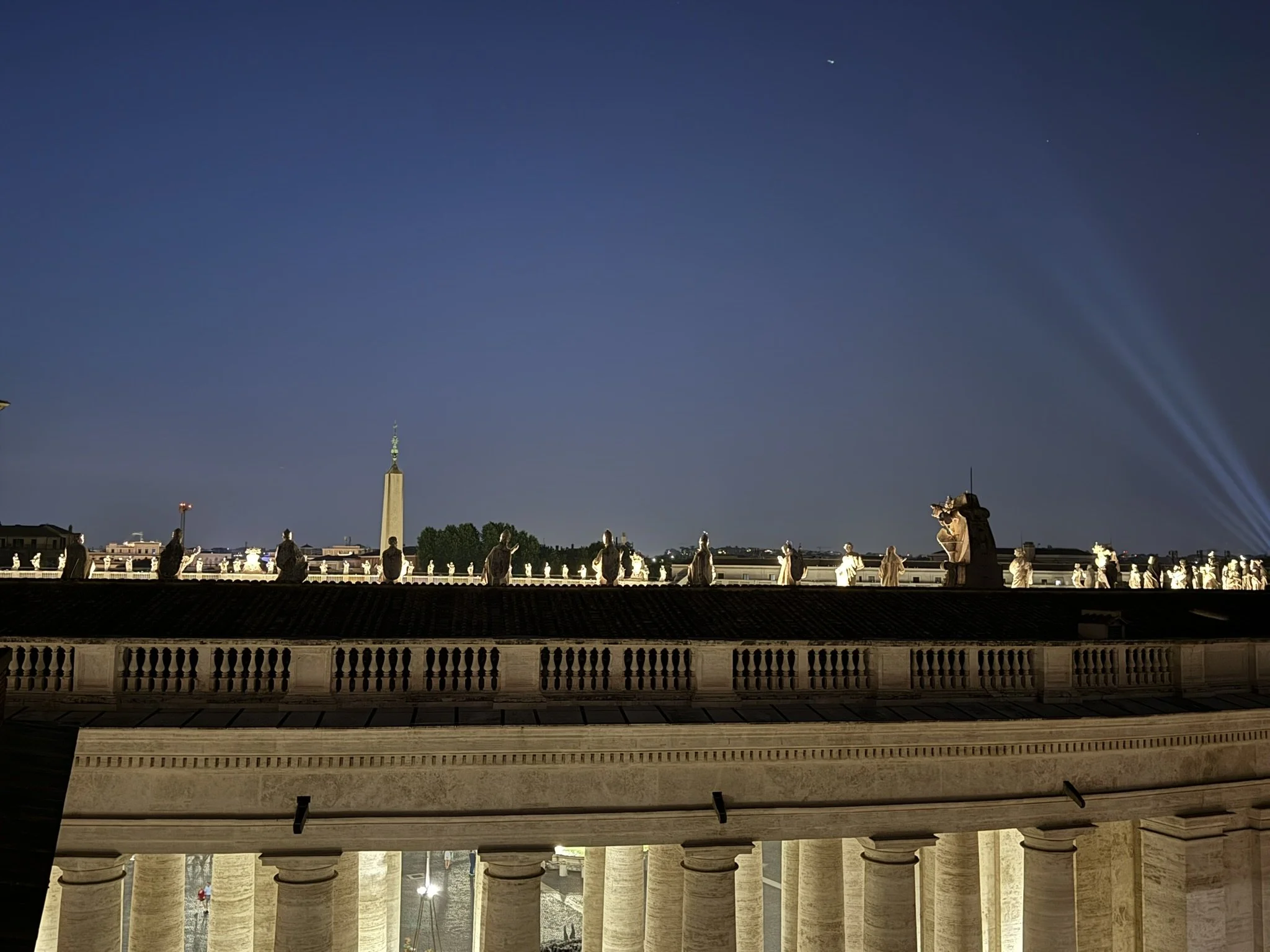
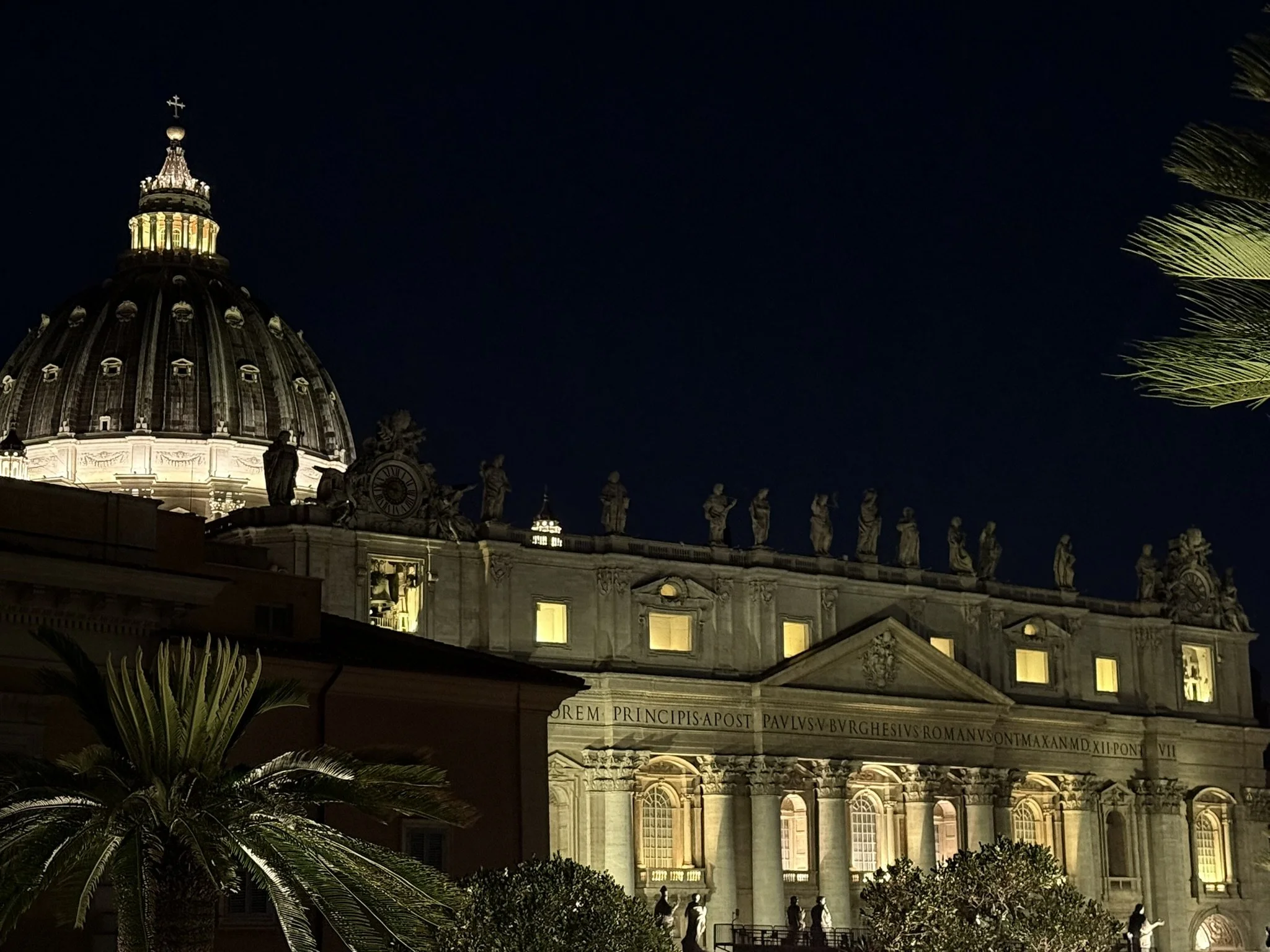
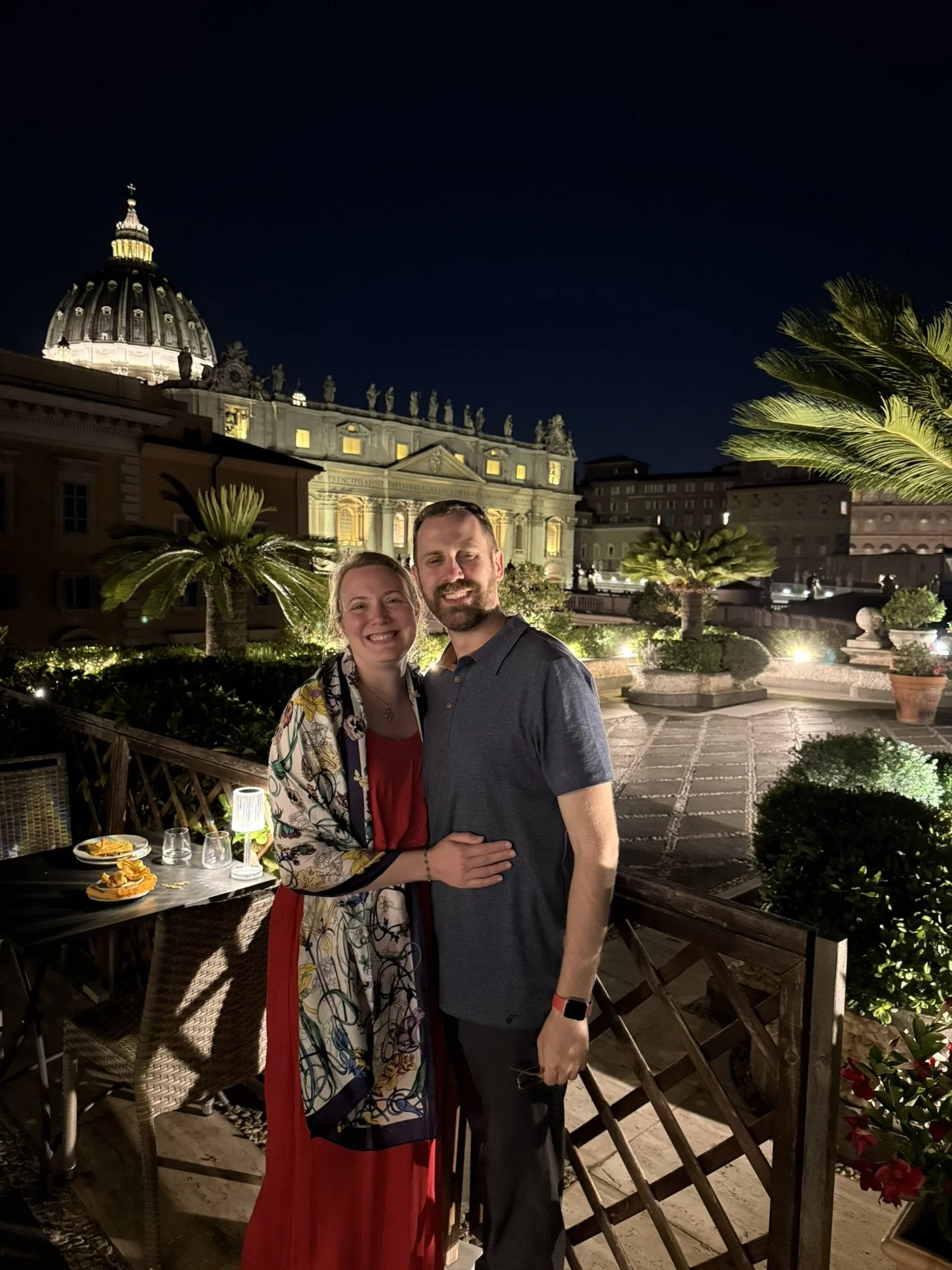
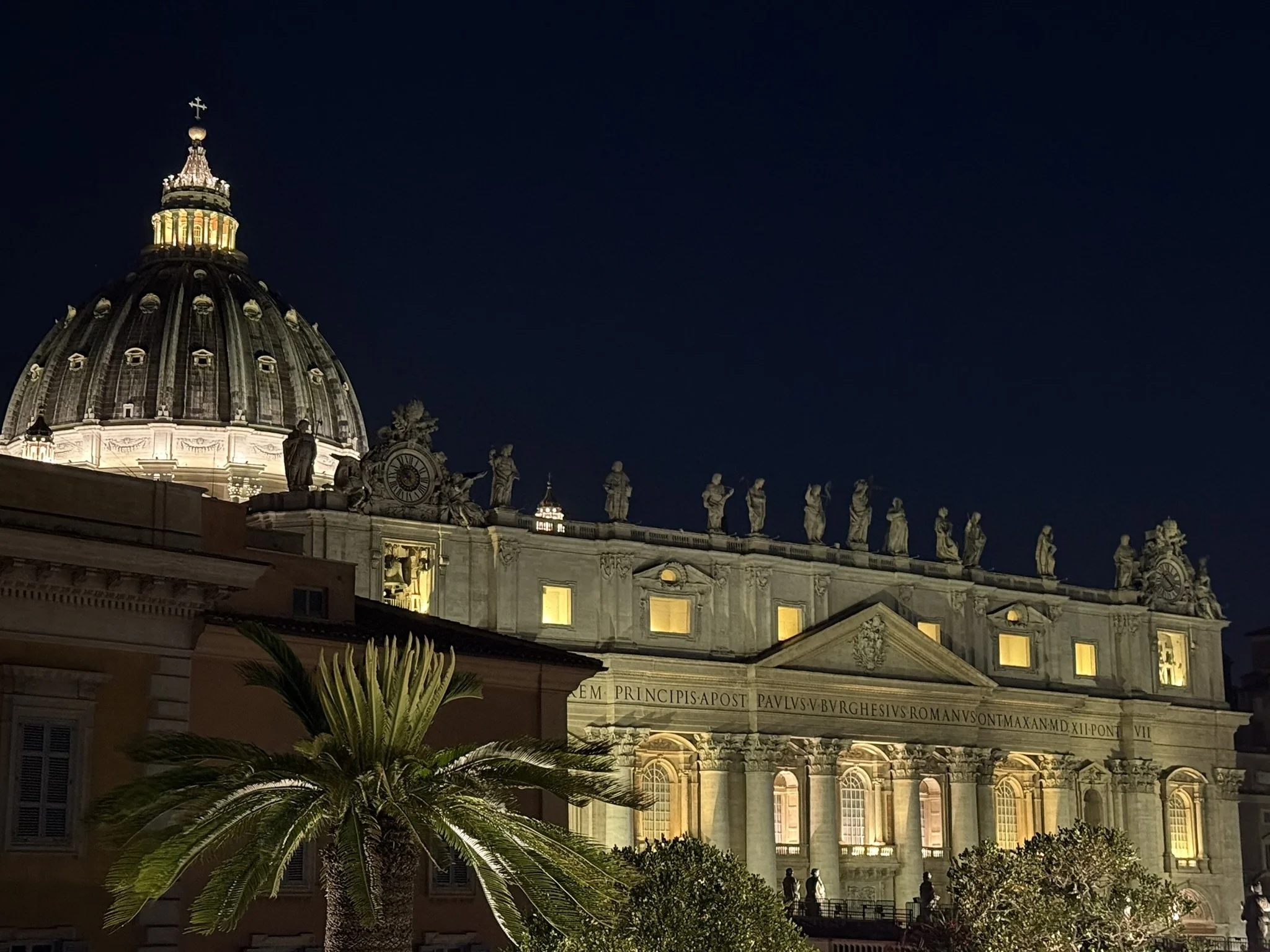
Last Summer, my wife and I went on pilgrimage to Rome for the Jubilee Year. Here is our story…
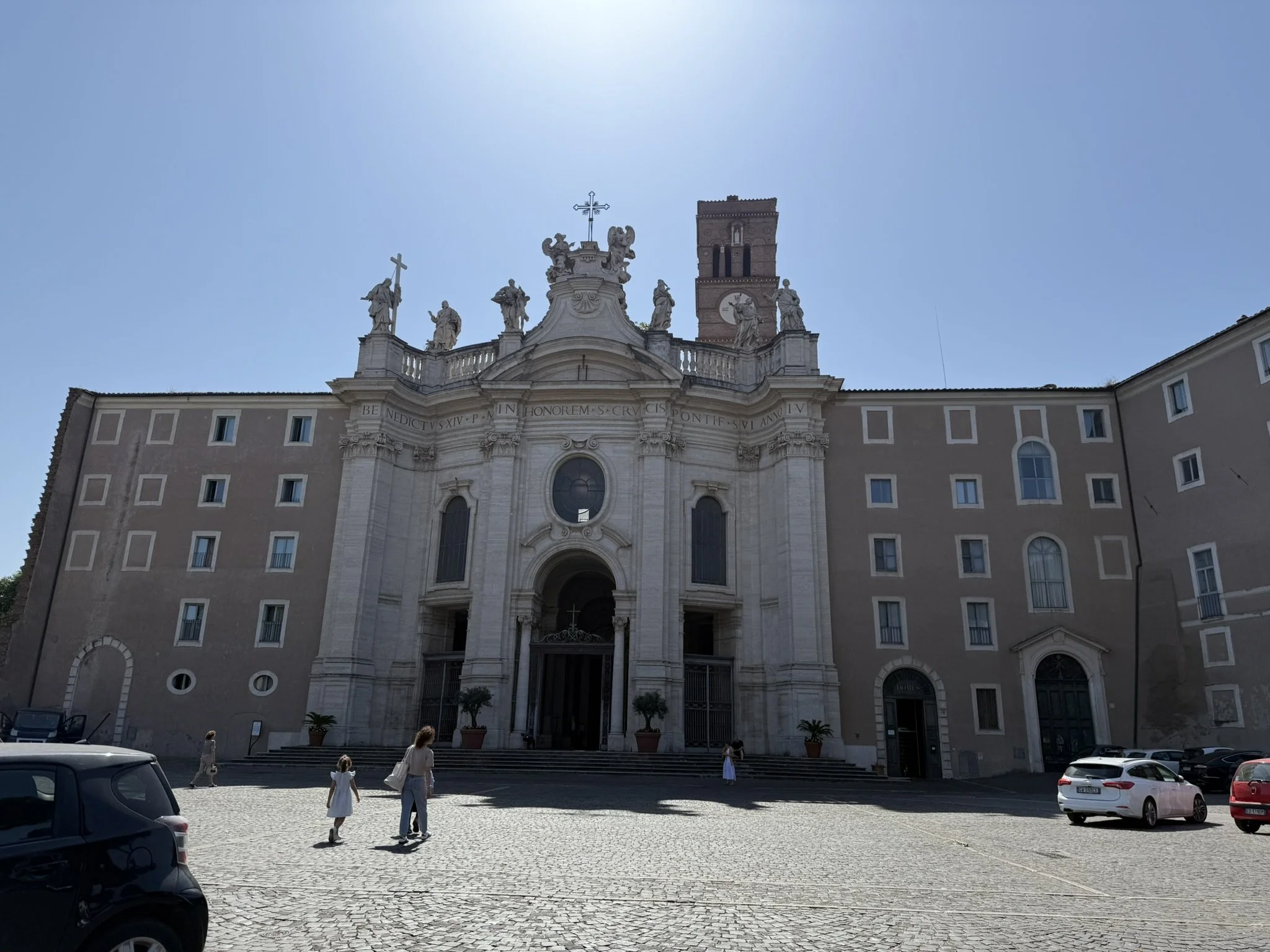
We walked from St. John Lateran to Santa Croce in Gerusalemme (The Basilica of the Holy Cross in Jerusalem). It’s obviously not called that because the cross is currently in Jerusalem, but rather that Jerusalem is present at that church. St. Helena brought soil from Jerusalem and used it as the floor for the basilica, thus bringing Jerusalem to Rome. We caught the last half of Mass, and were able to view the Cappella delle Reliquie (Chapel of the Relics), which allegedly contains the panel which hung on Jesus’s cross, a replica of the Shroud of Turin, two thorns from the Crown of Thorns, part of a nail, a finger from St. Thomas, and three small pieces of wood from the Cross. I only took a picture of the outside.
Almost inevitably, every summer I’ll get a question from a high school Bible study student asking about what to do with these types of relics. Are they legitimate or not? How do we interact with questionable relics? My answer has evolved over time, but generally I tell them that the purpose of these relics is to call to mind the historicity of the event itself. Whether these two thorns really come from the Crown of Thorns or not does not change the fact that there were thorns that pierced the head of Jesus. The wonder I give to these thorns isn’t truly directed at these thorns, but rather at the thorns which really made up that cruel crown, which may or may not be these. I tend to be a skeptic, yet these relics effectively draw out my spirit and always force me to face the reality that these things really and historically occurred.
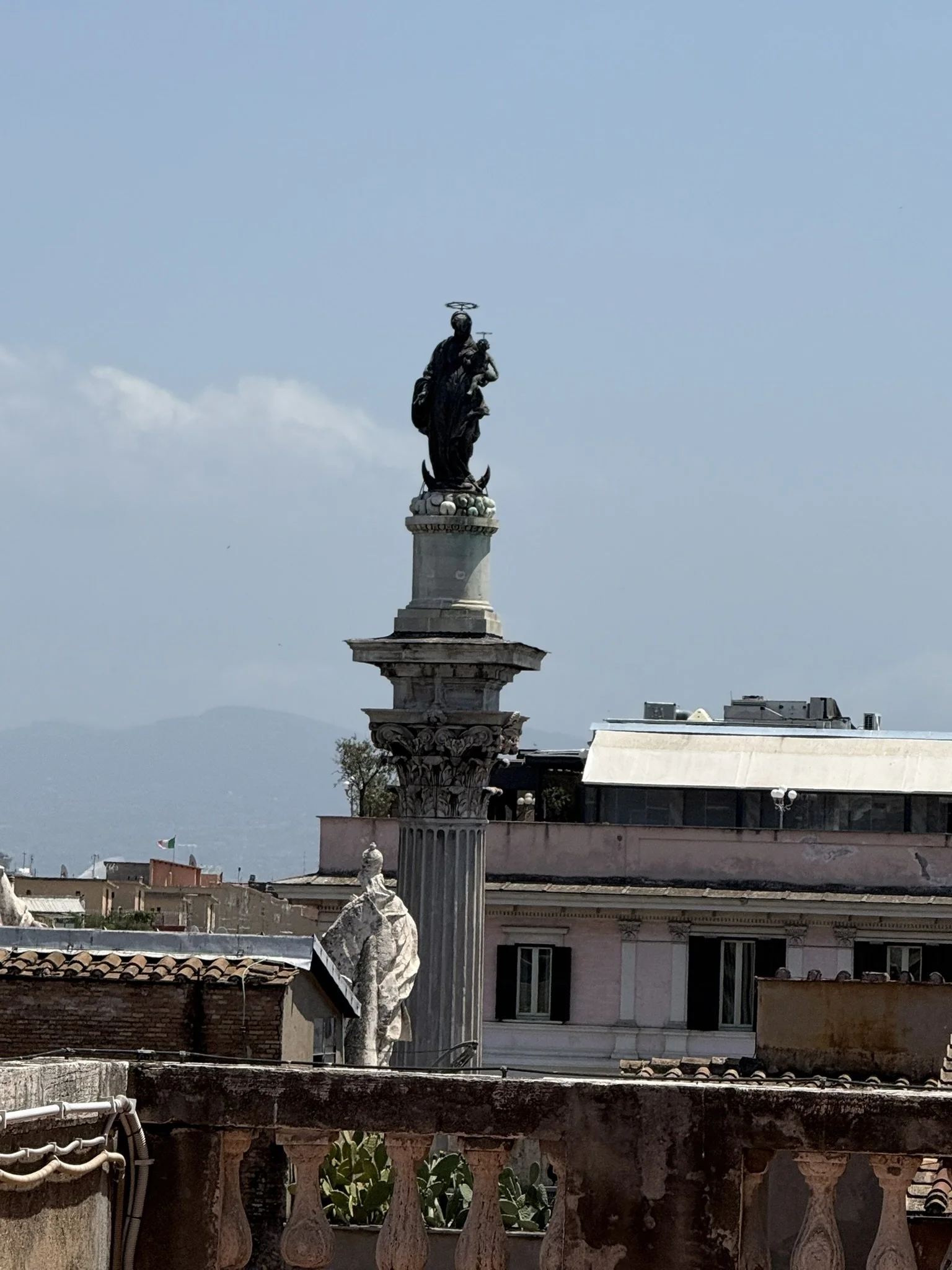
We continued our walk to Santa Maria Maggiore - the Basilica of Saint Mary Major. We first saw the column with Mary and Jesus on top, almost like a beacon for the basilica itself. Then, entering into the wide plaza itself, St. Mary Major sat in front of us almost like a contradiction. On the one hand, it is tall, distinct, and pronounced. It wasn’t hard to know which building was the basilica. At the same time, the basilica almost blends with the buildings around it. You wouldn’t realize it was one of the Four Papal Basilicas.
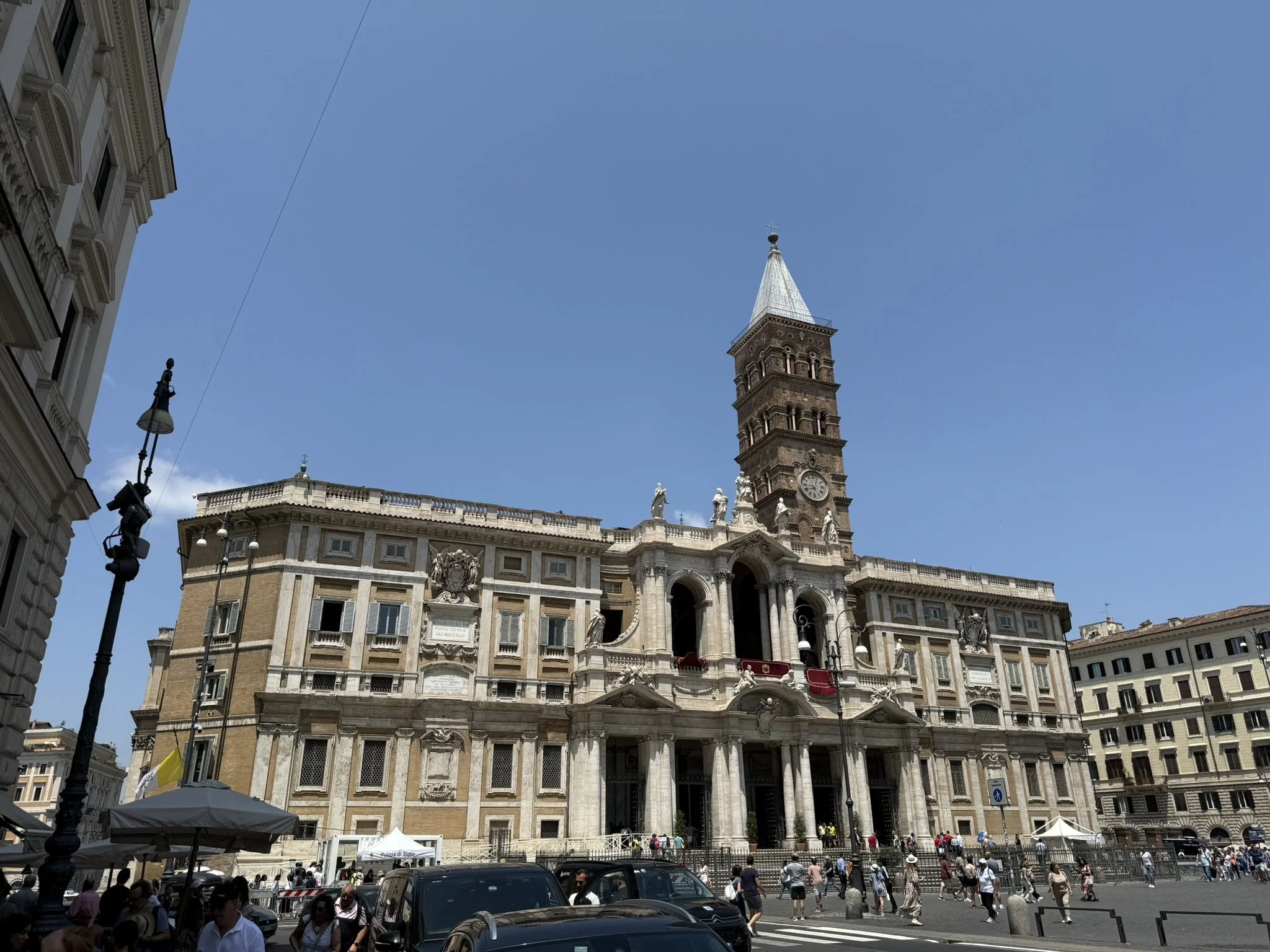
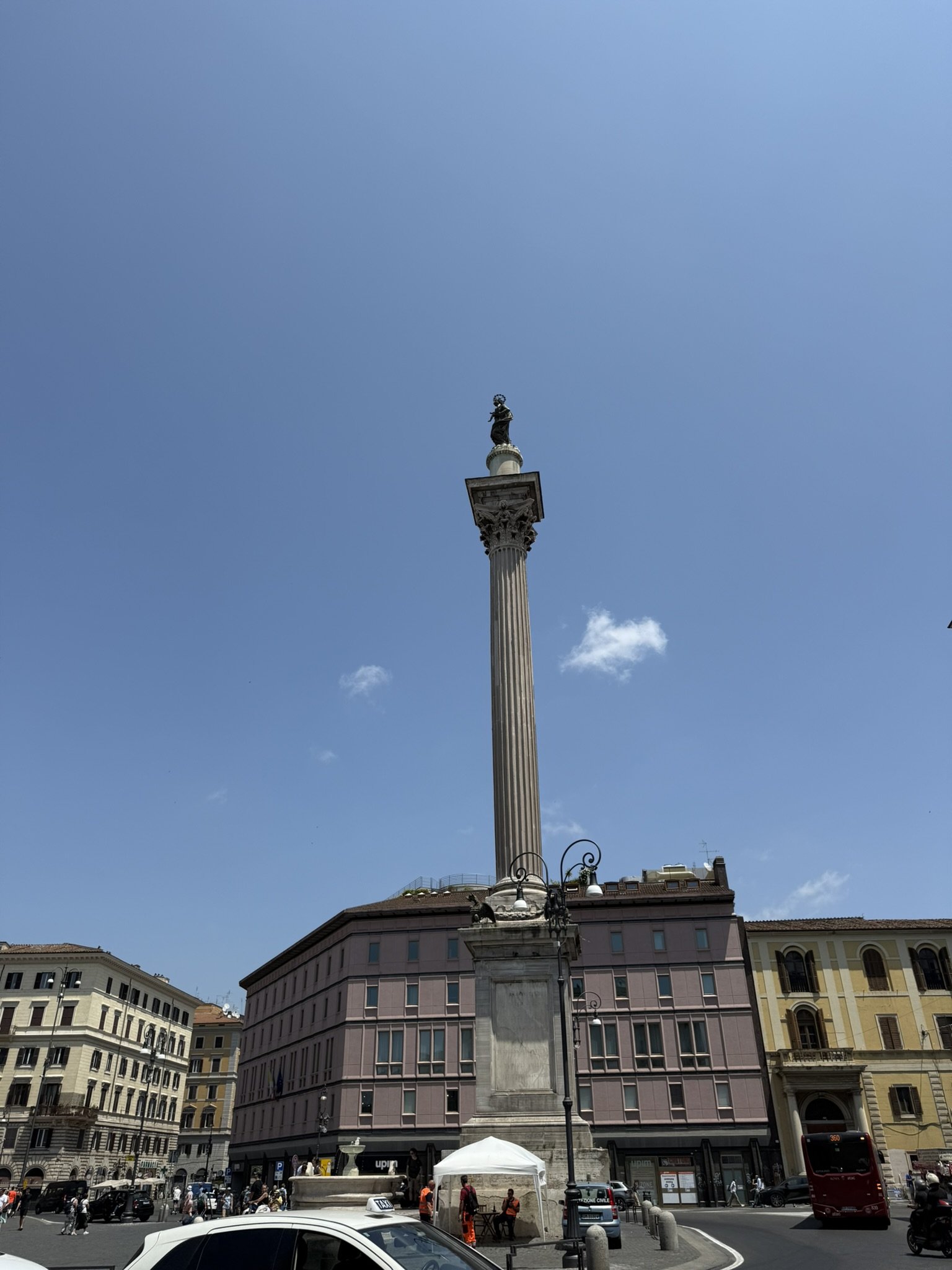
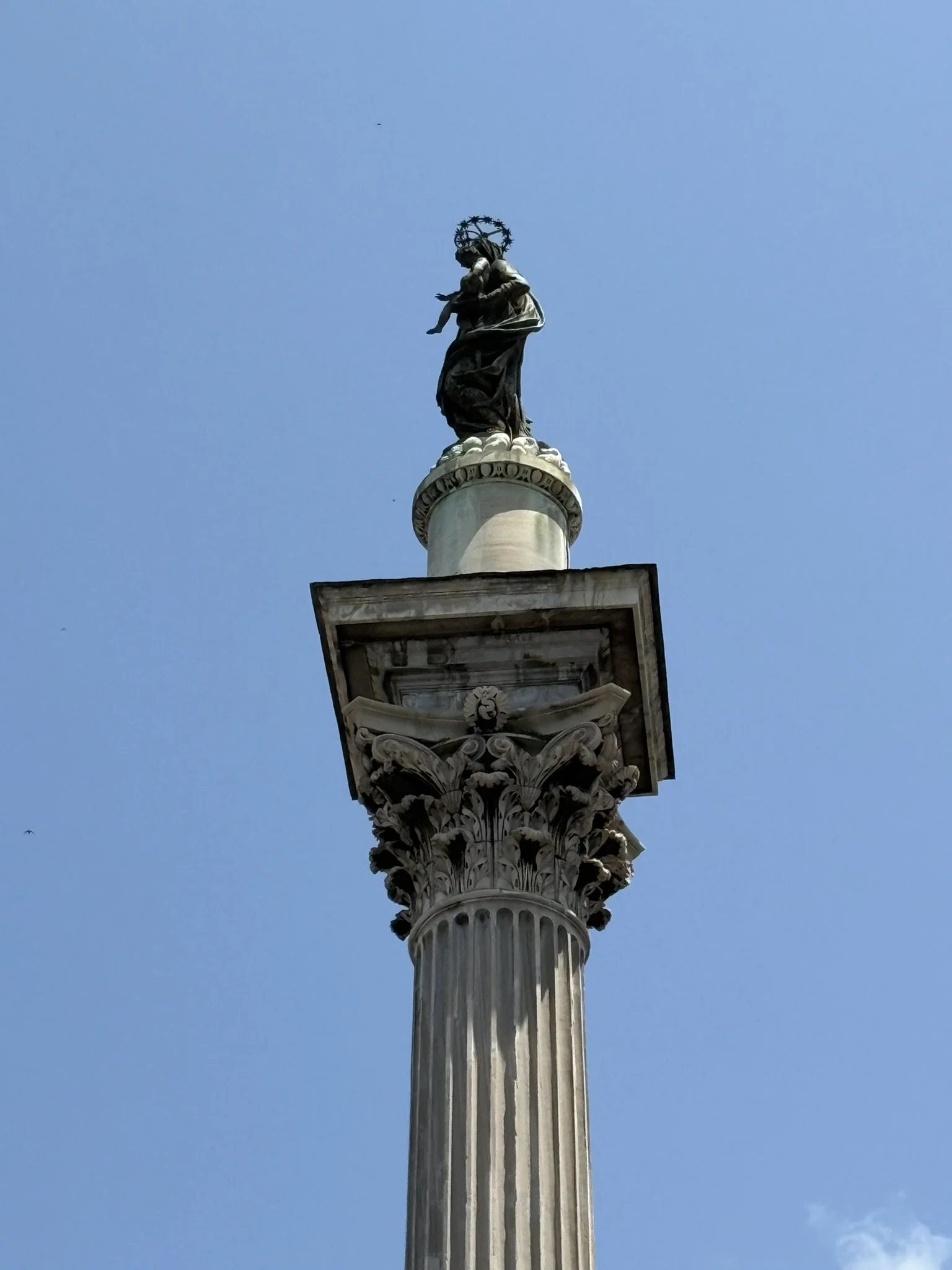
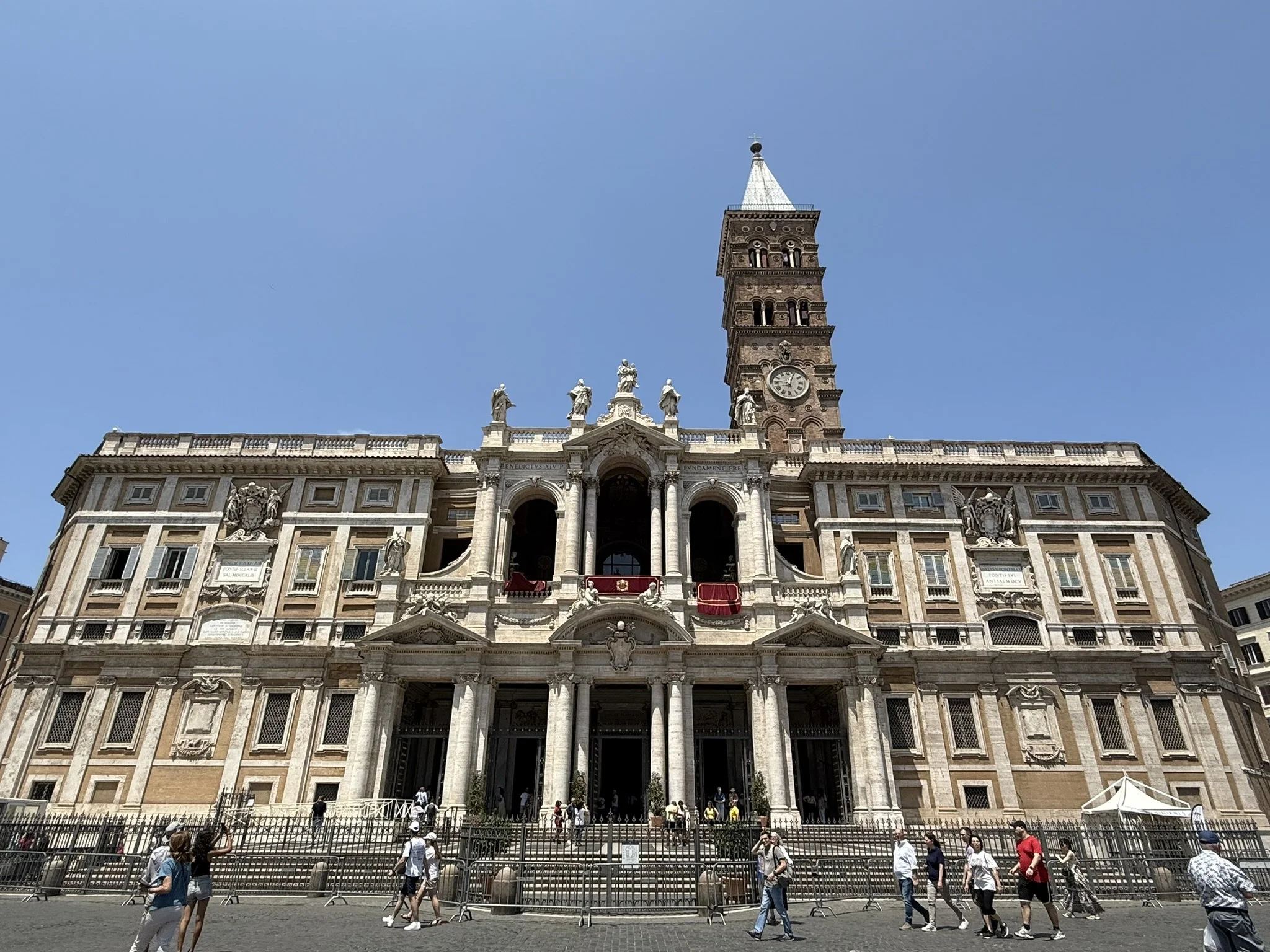
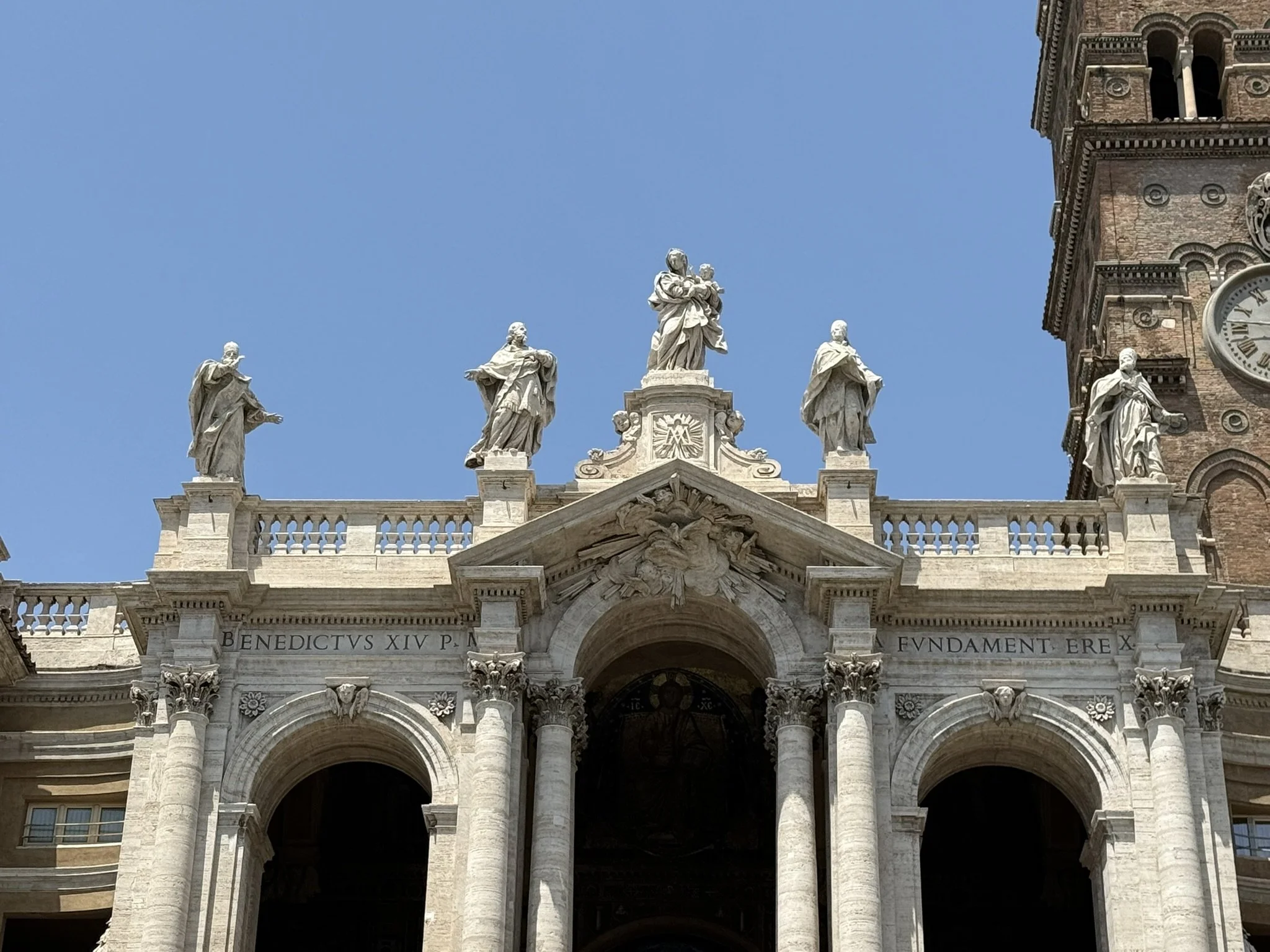
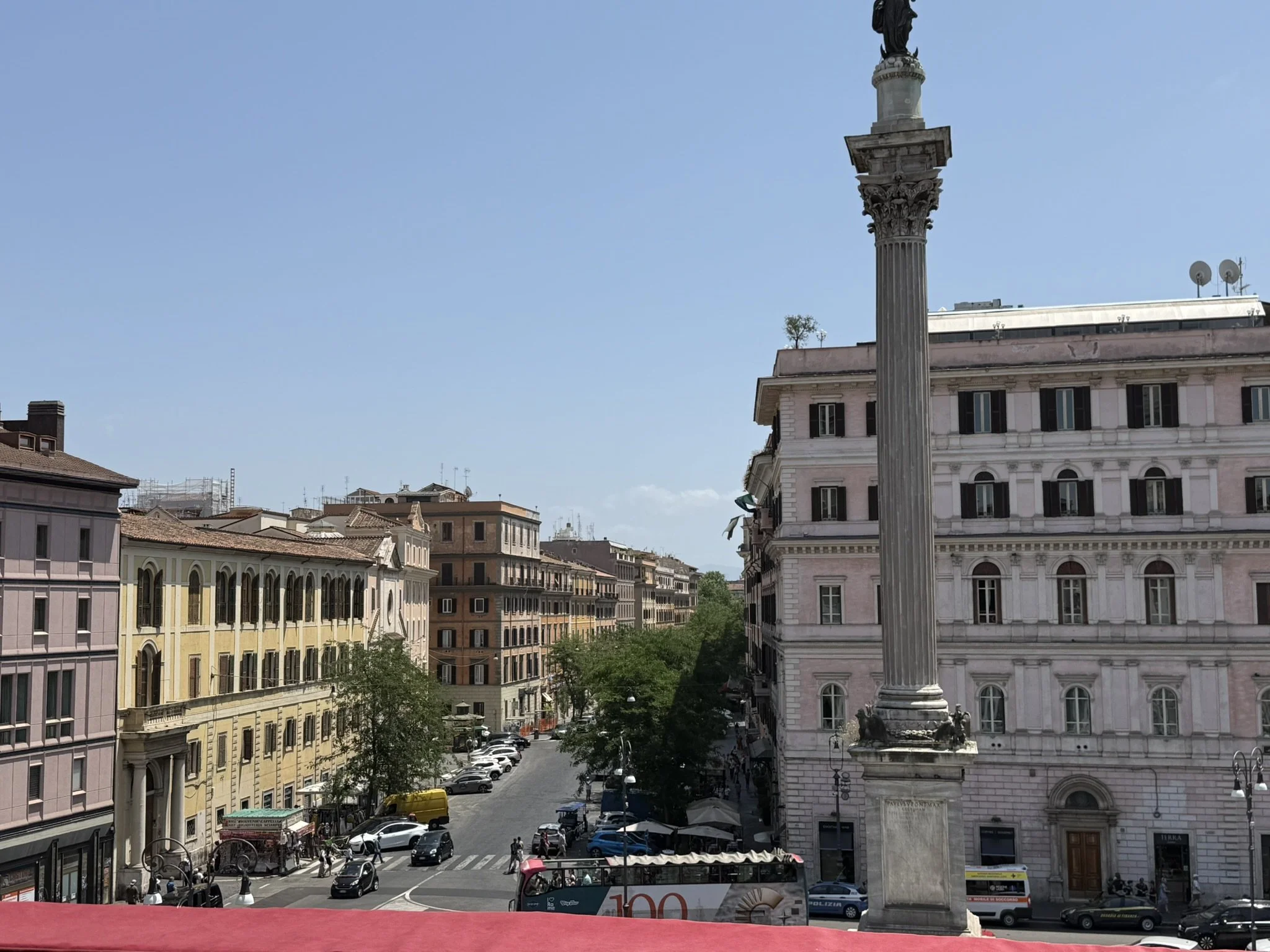
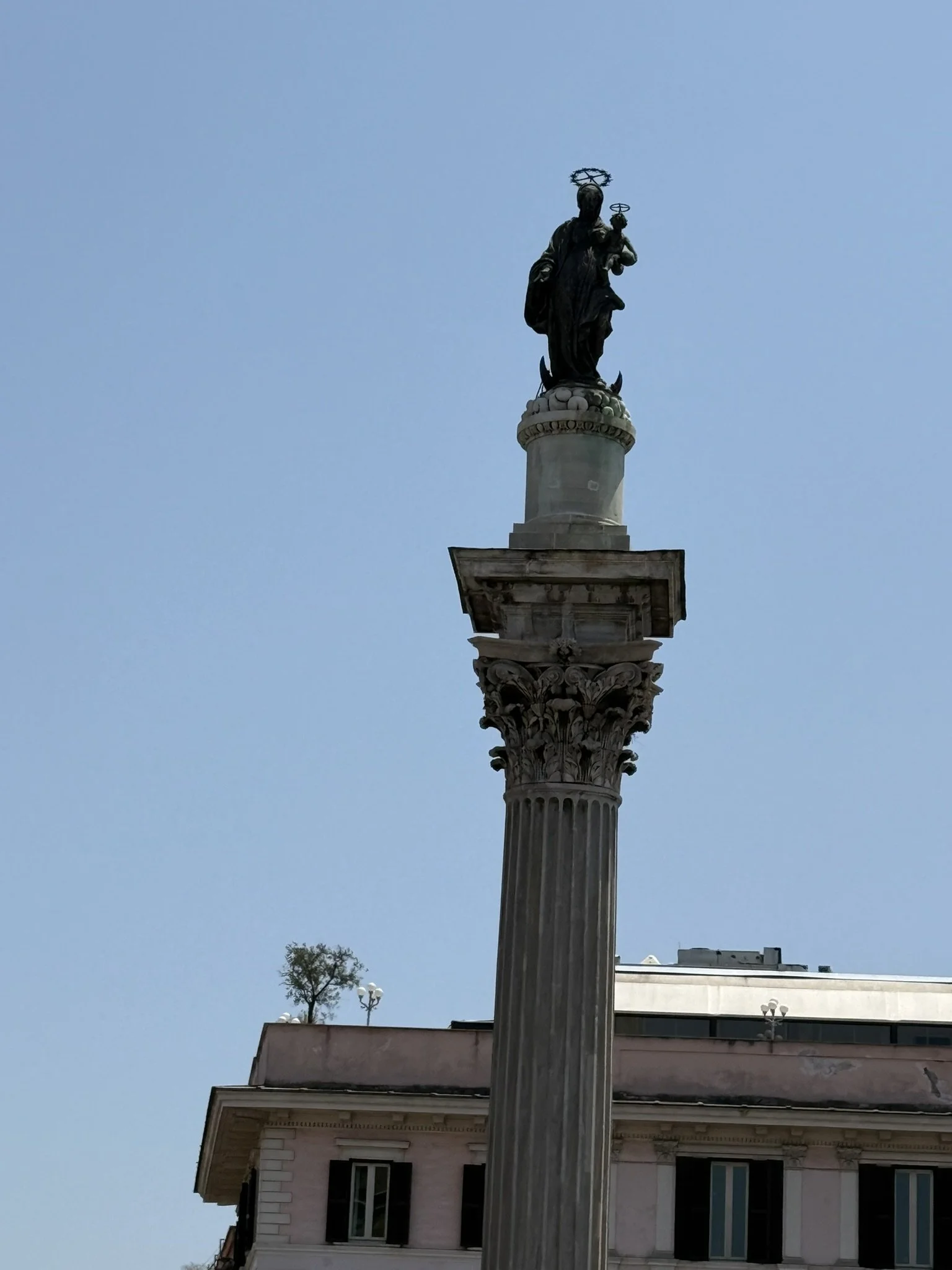
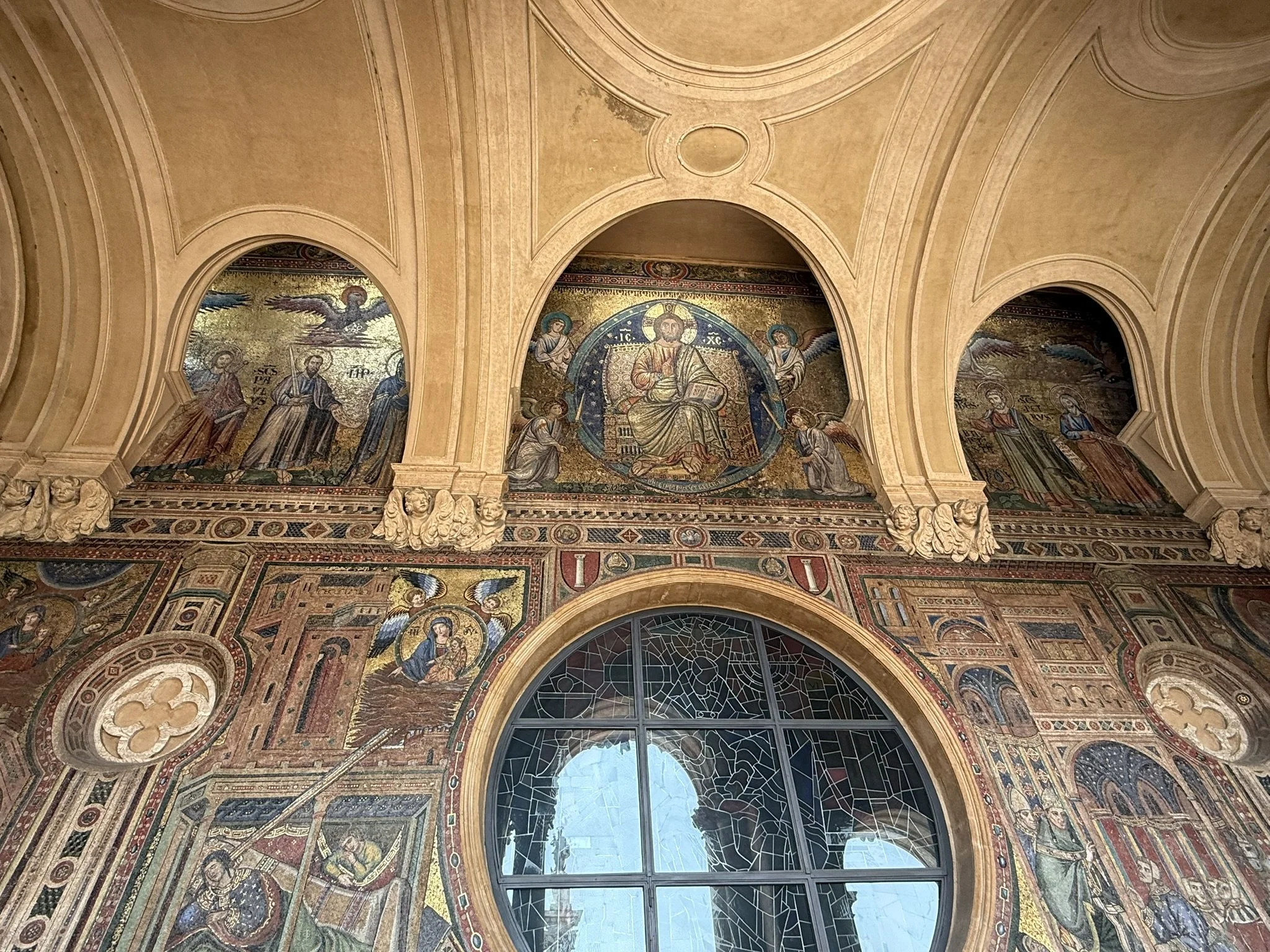
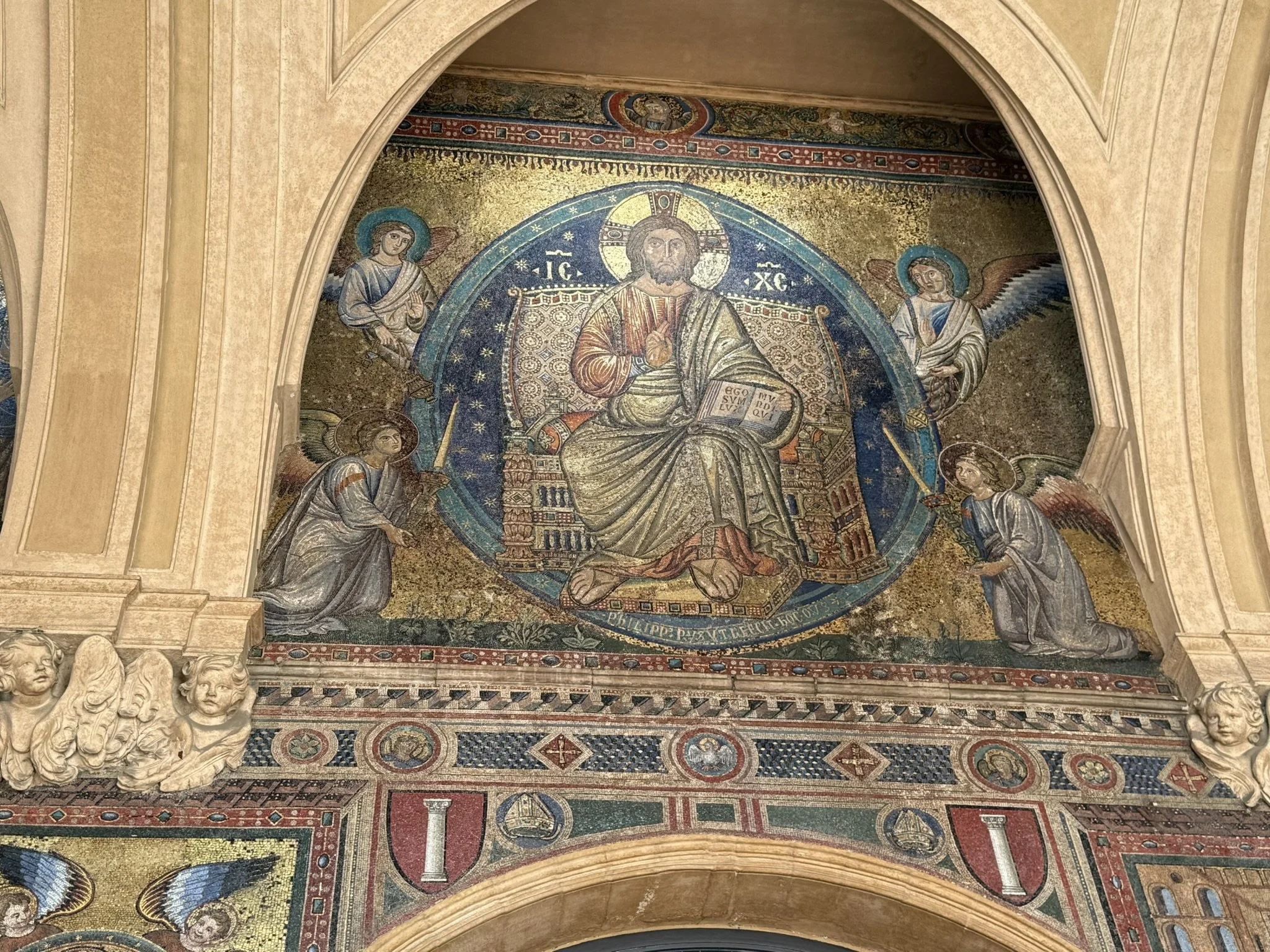
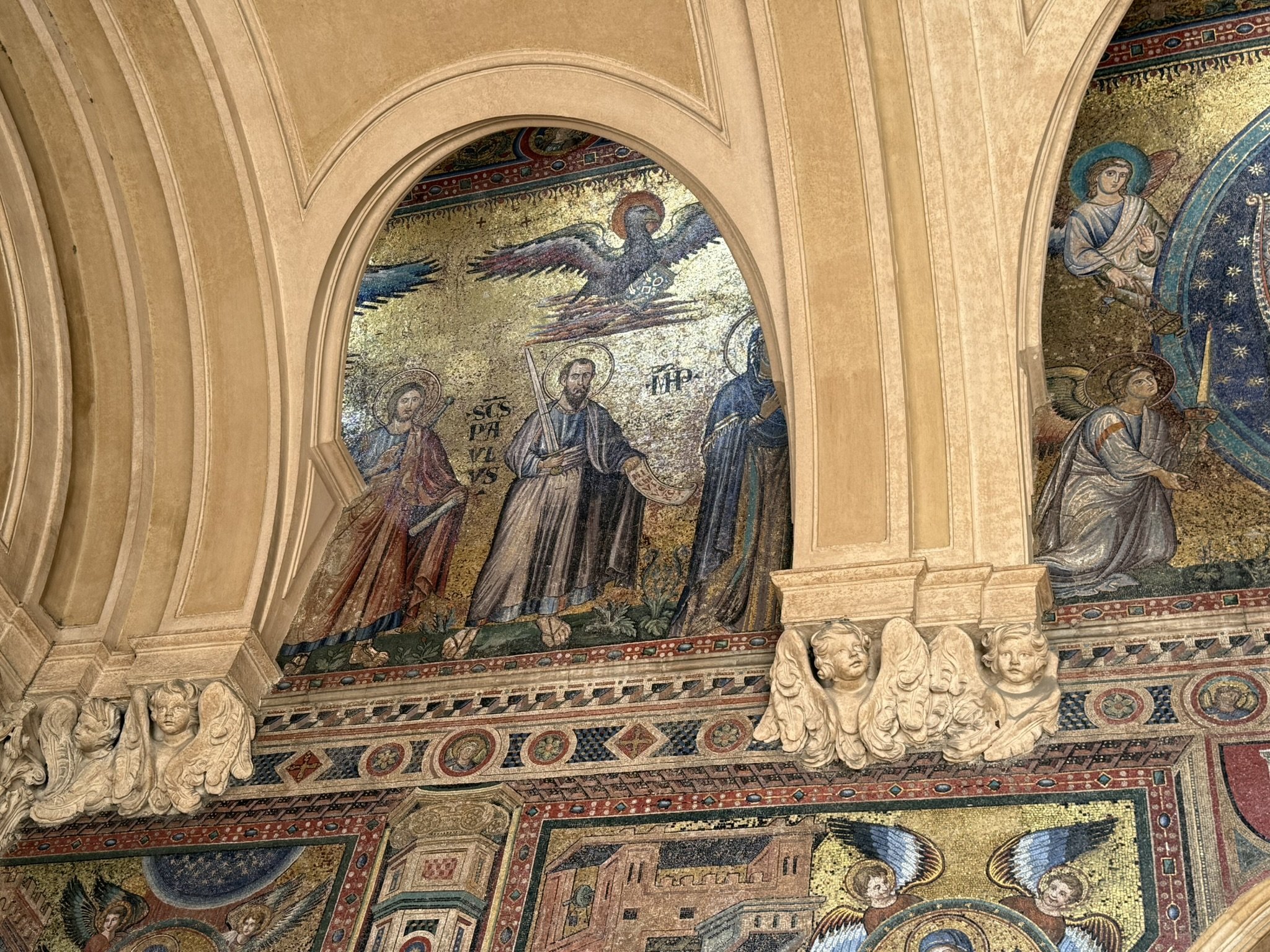
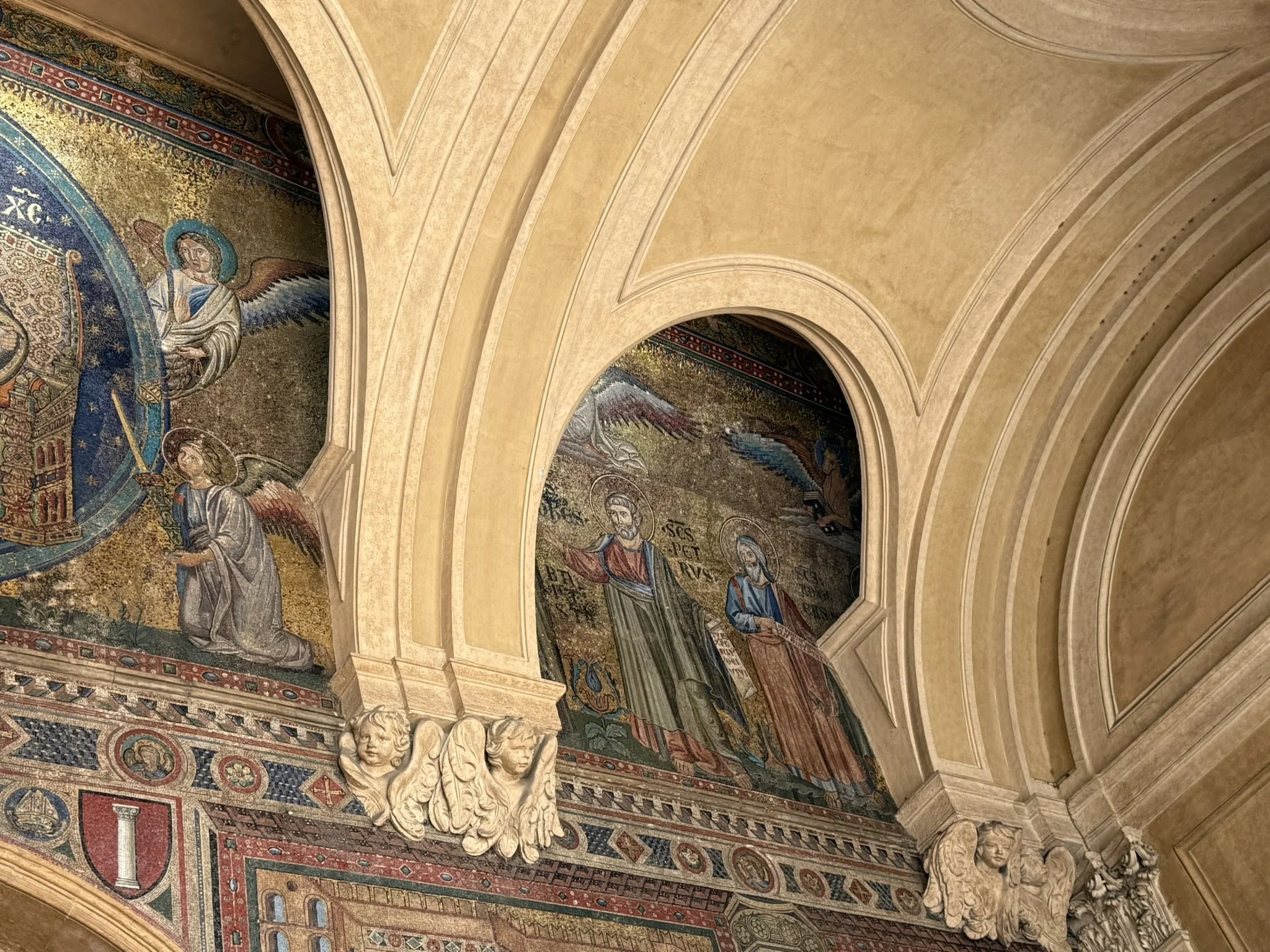
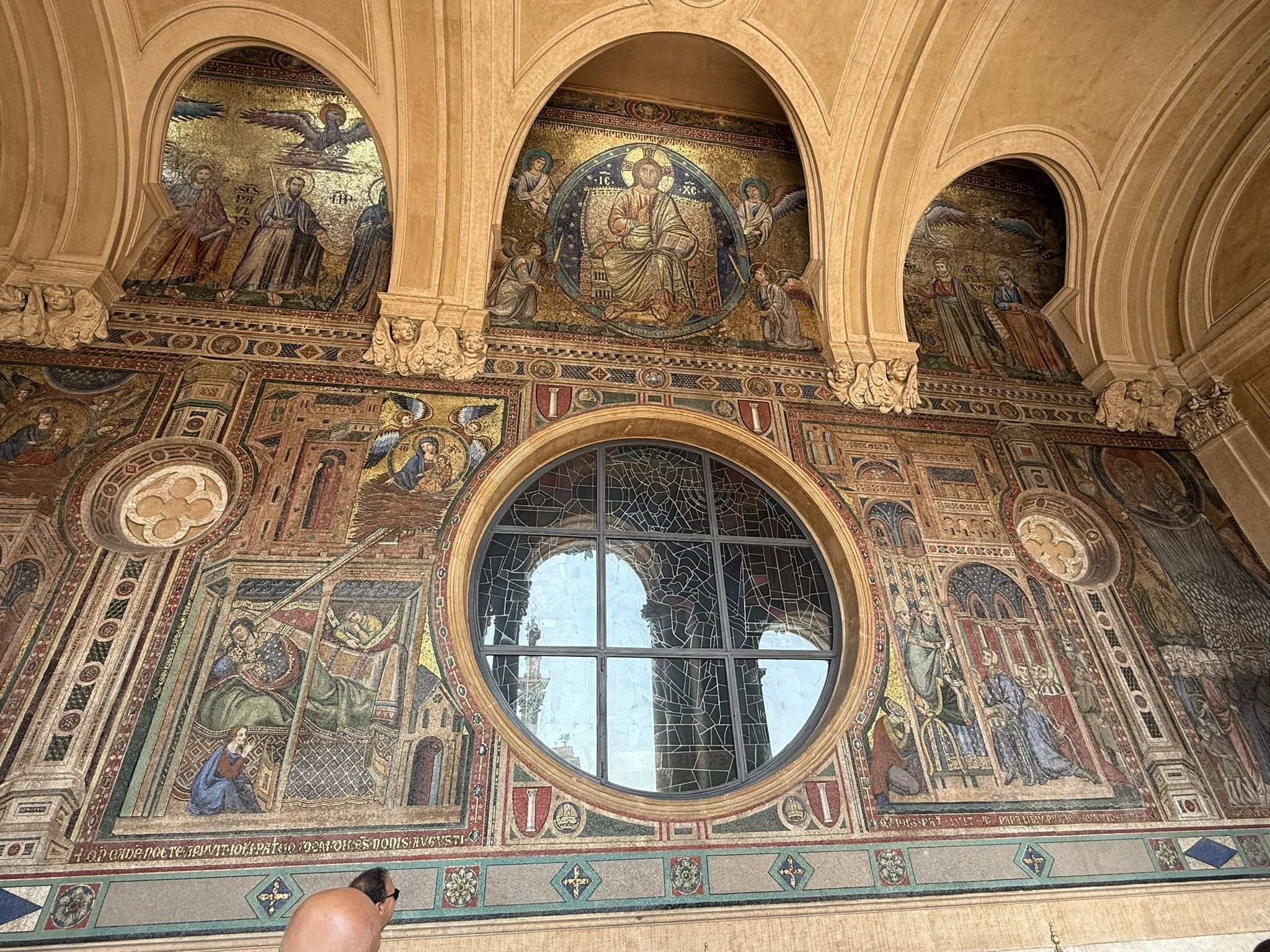
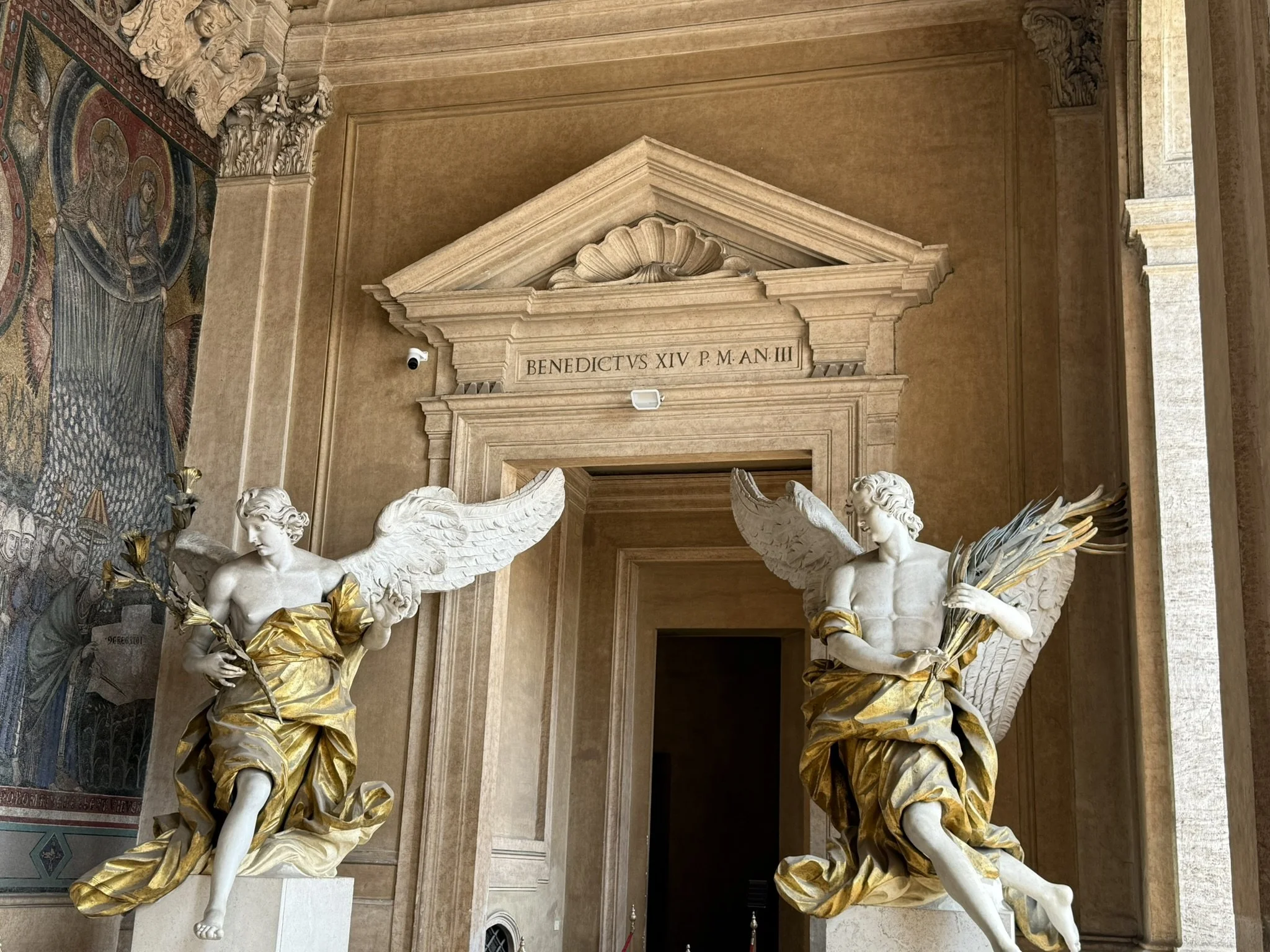
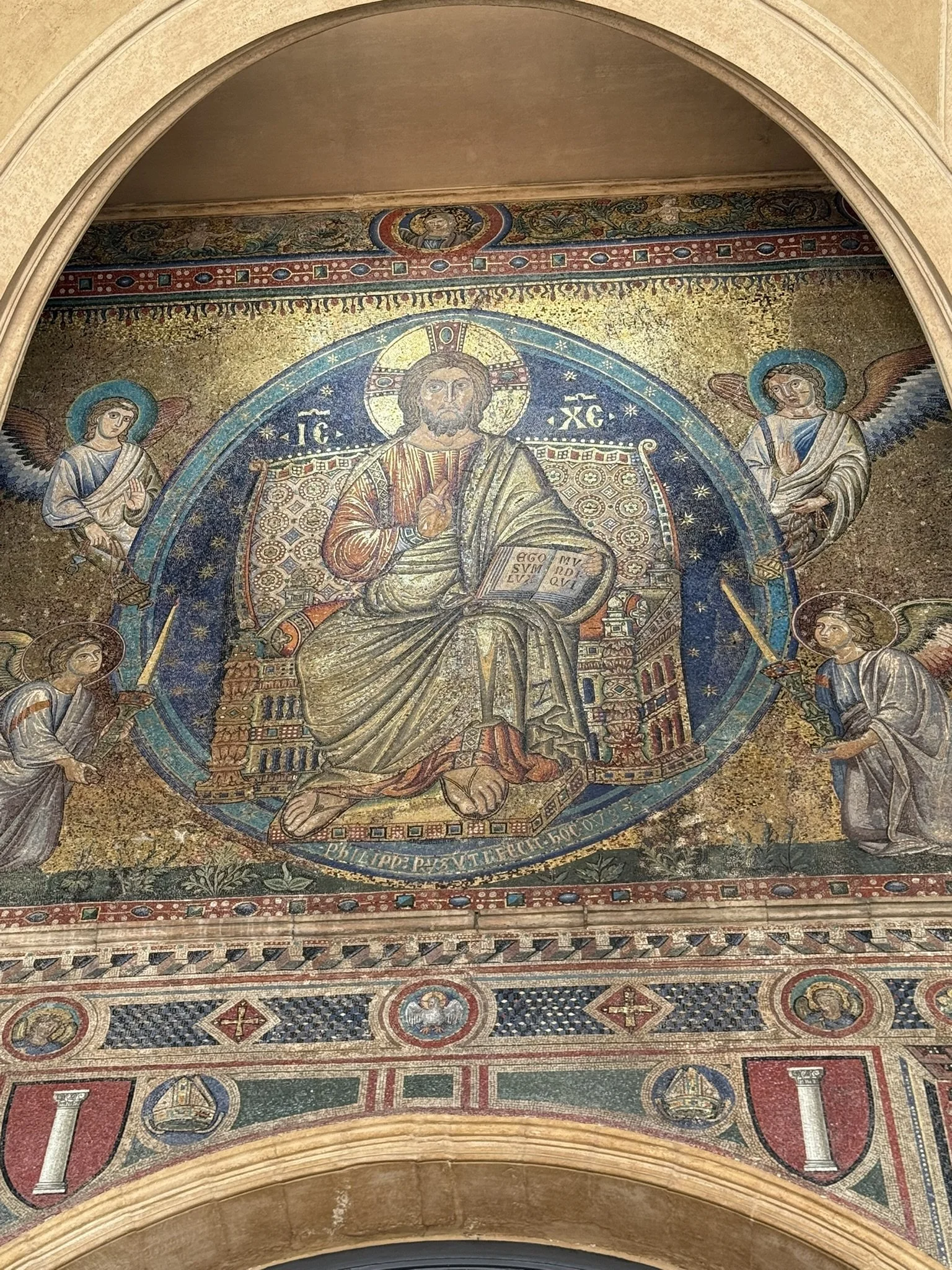
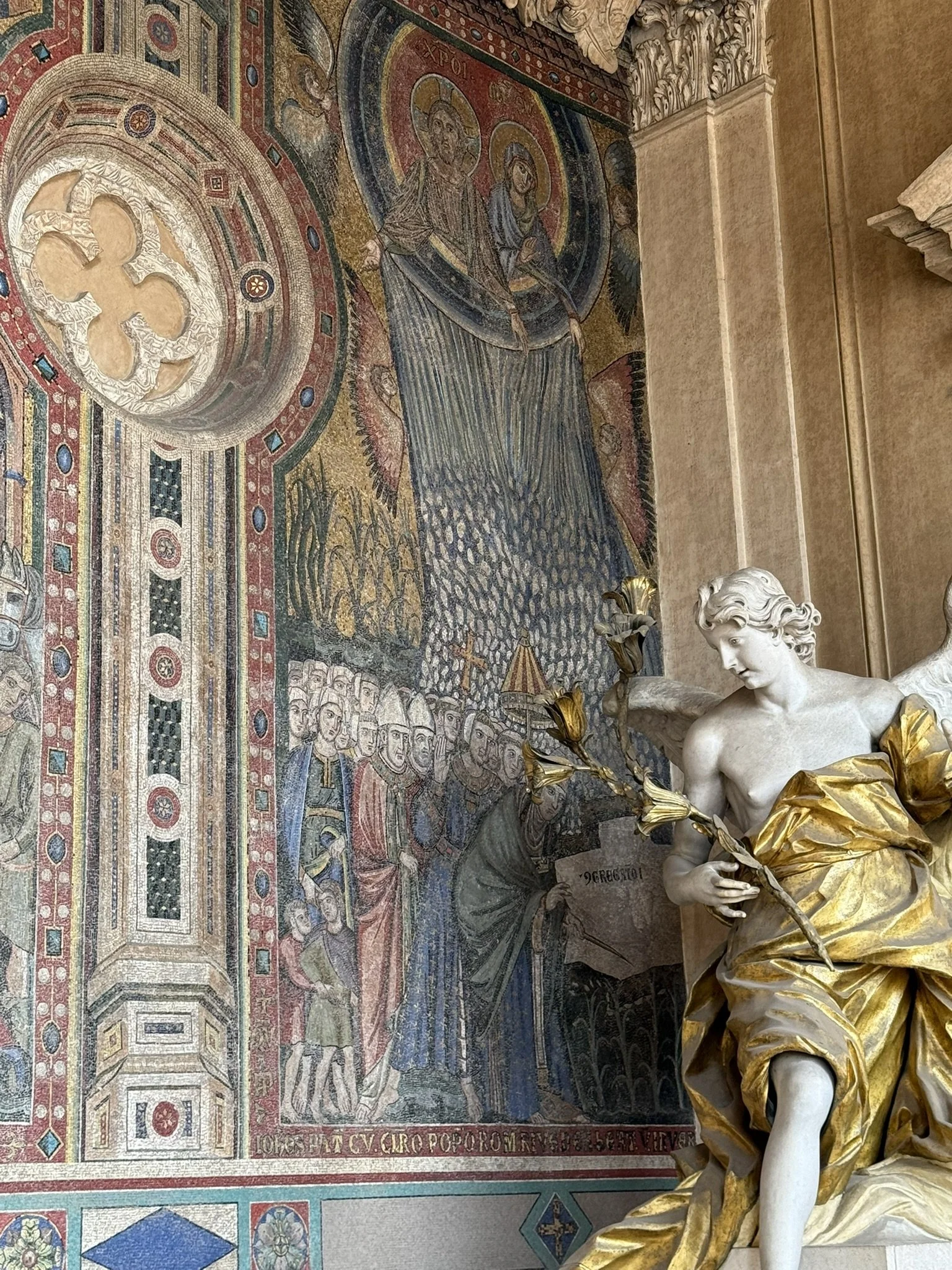
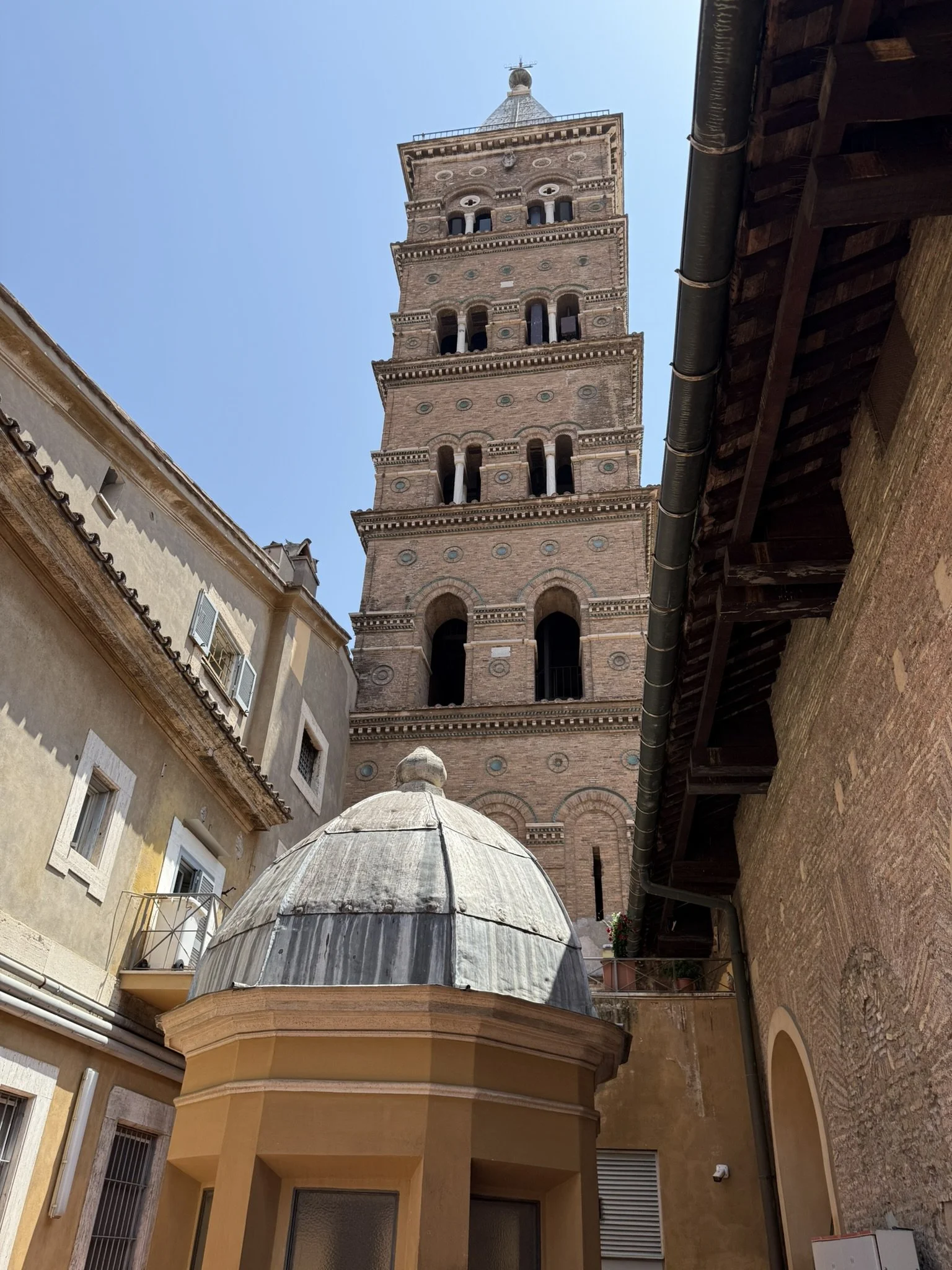
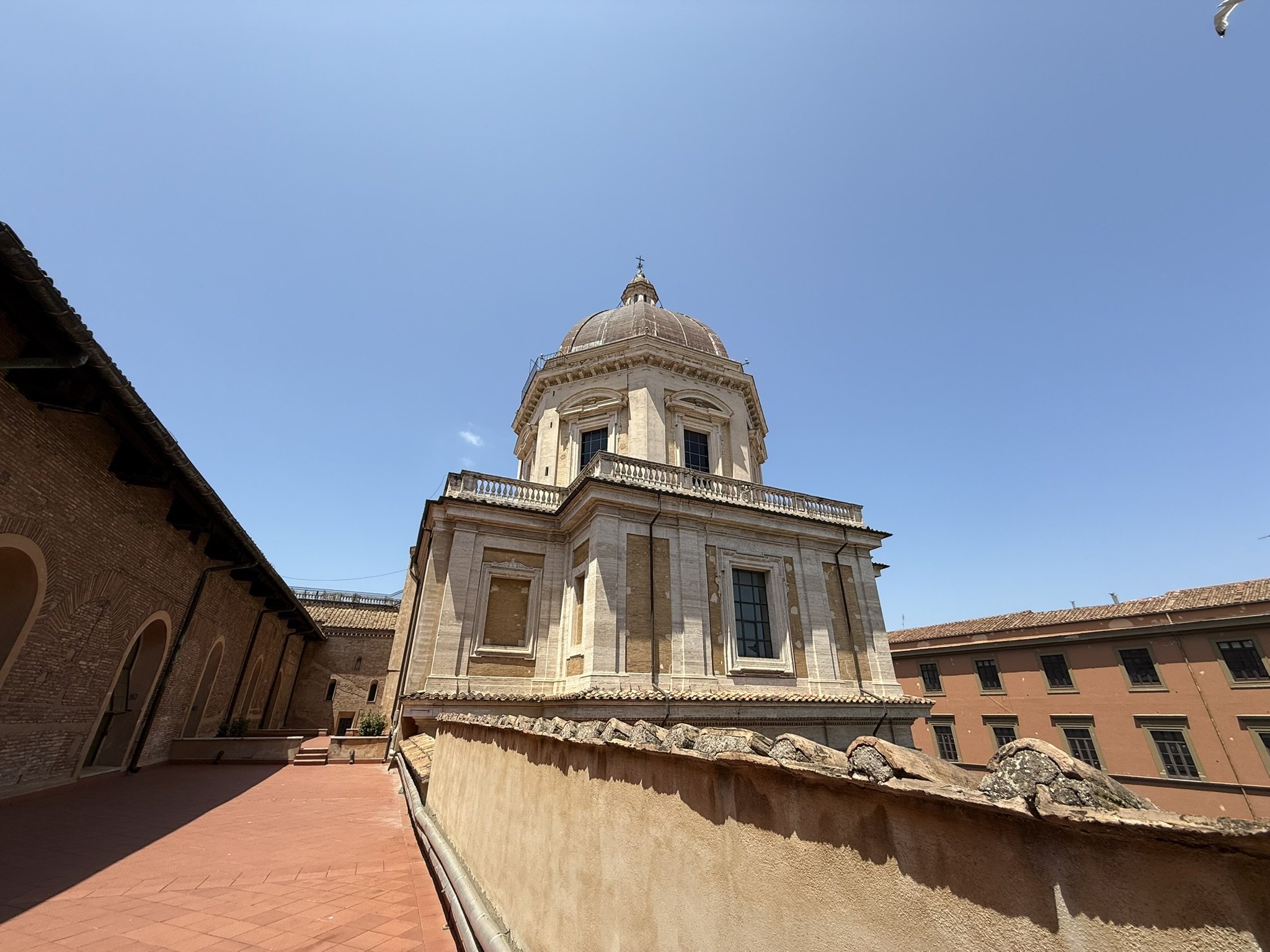
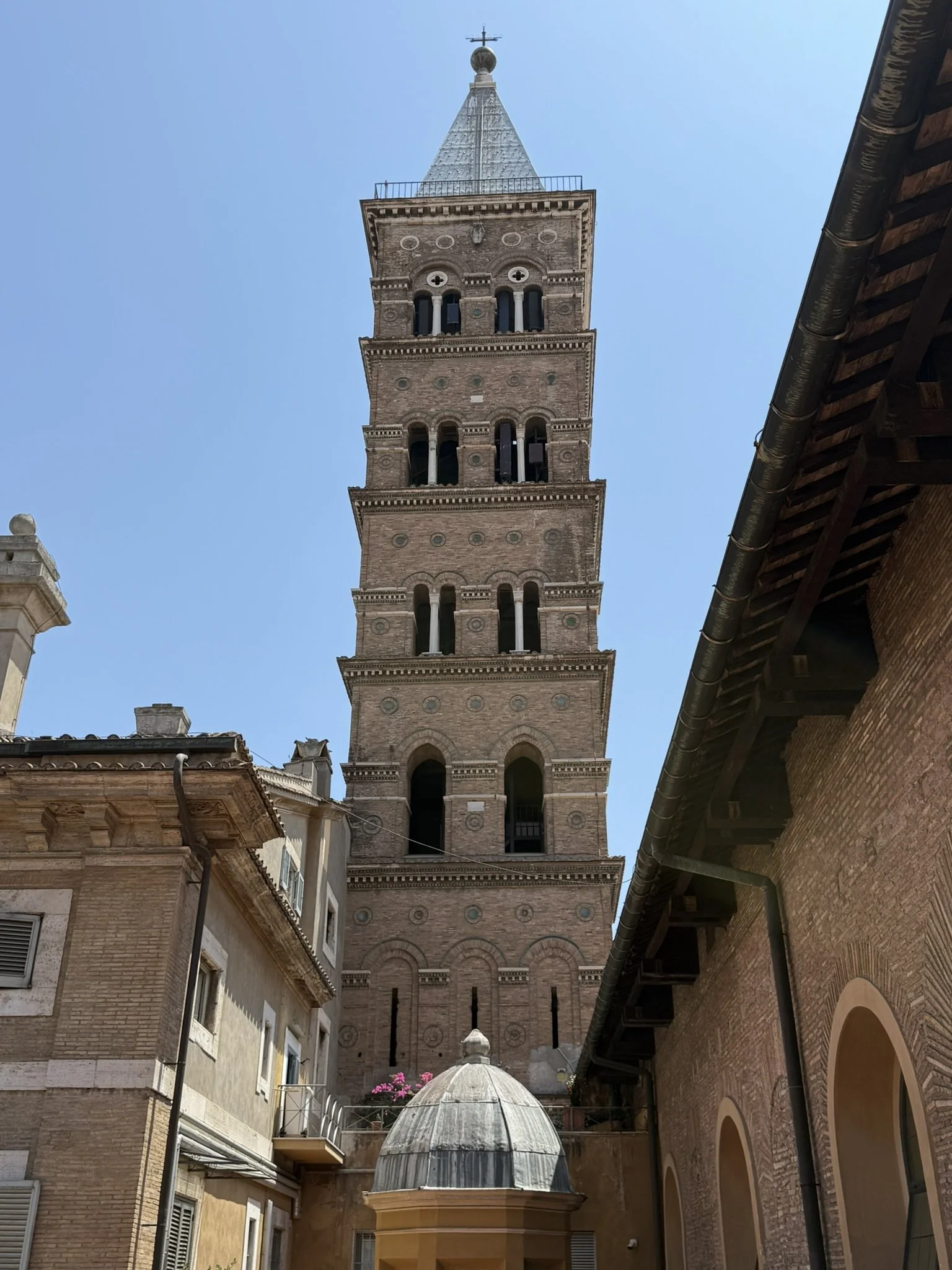
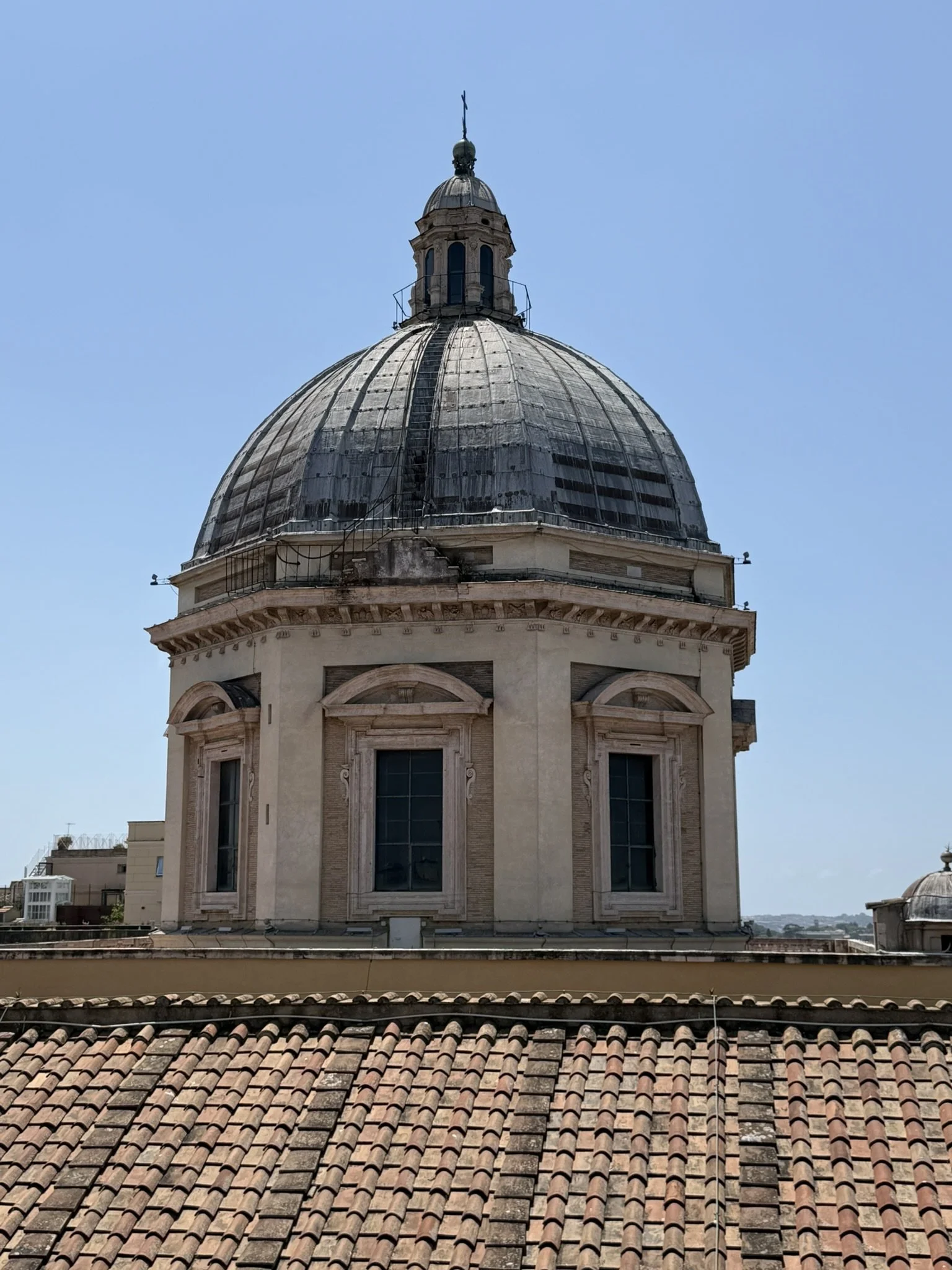
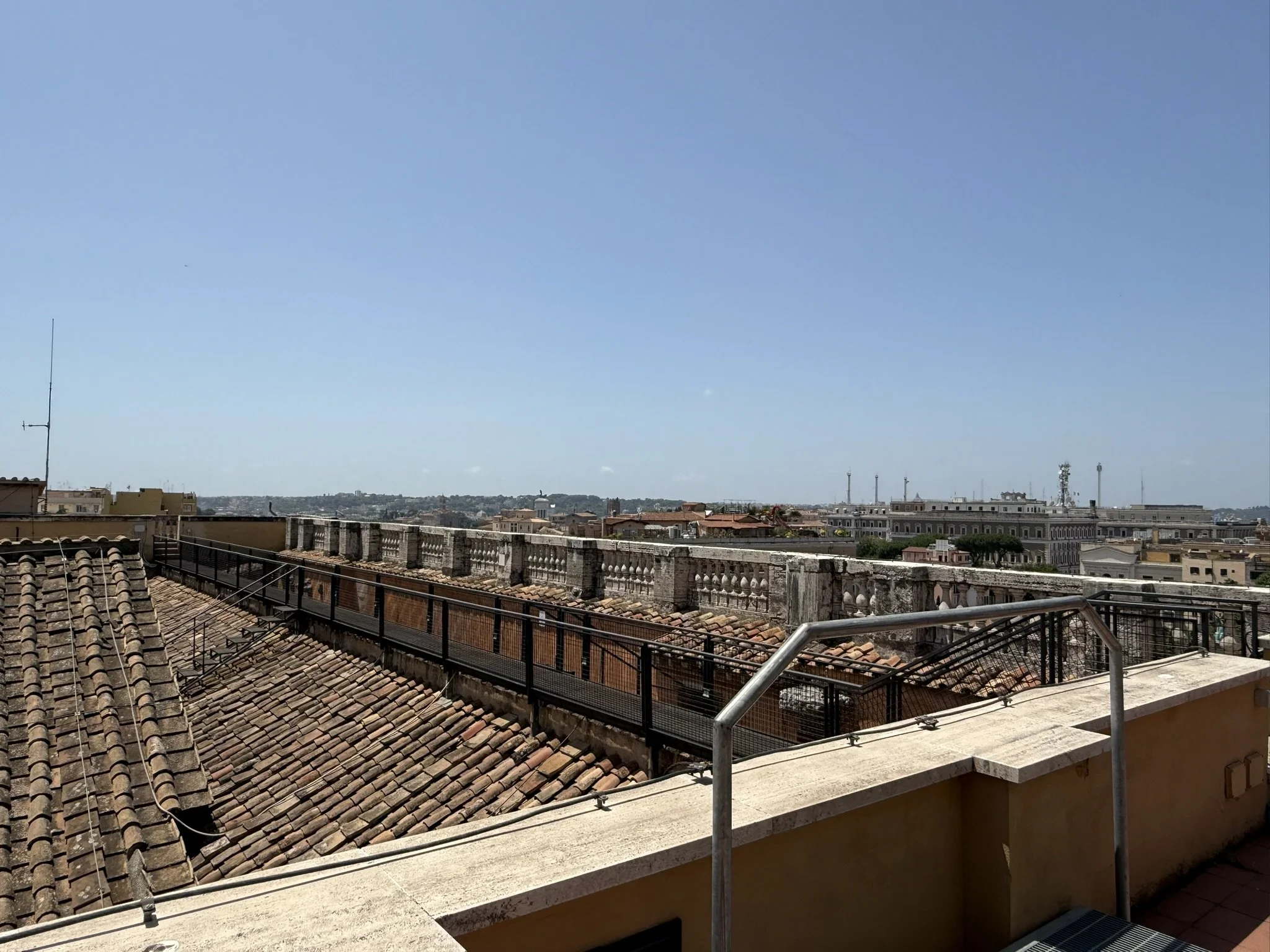
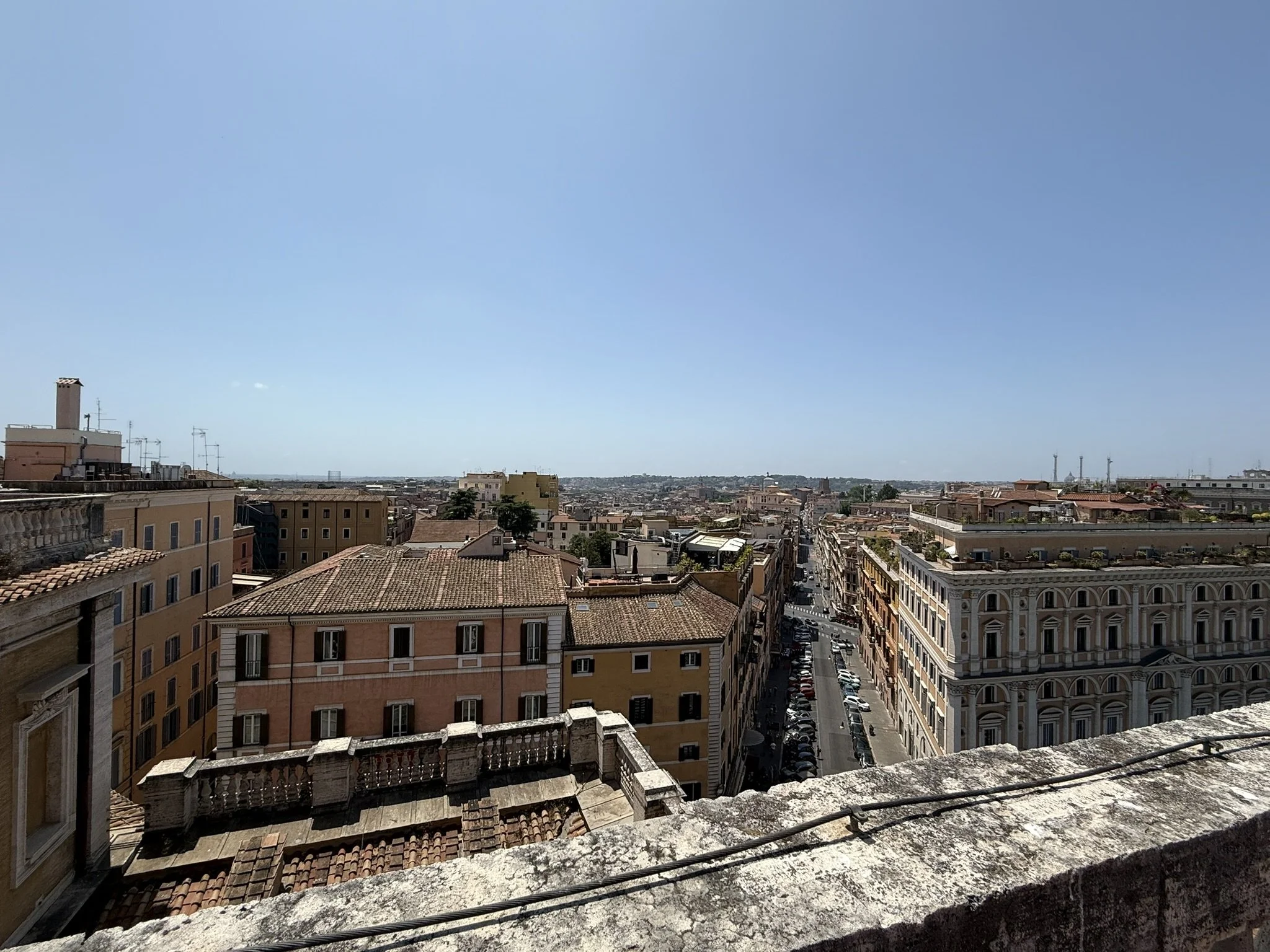
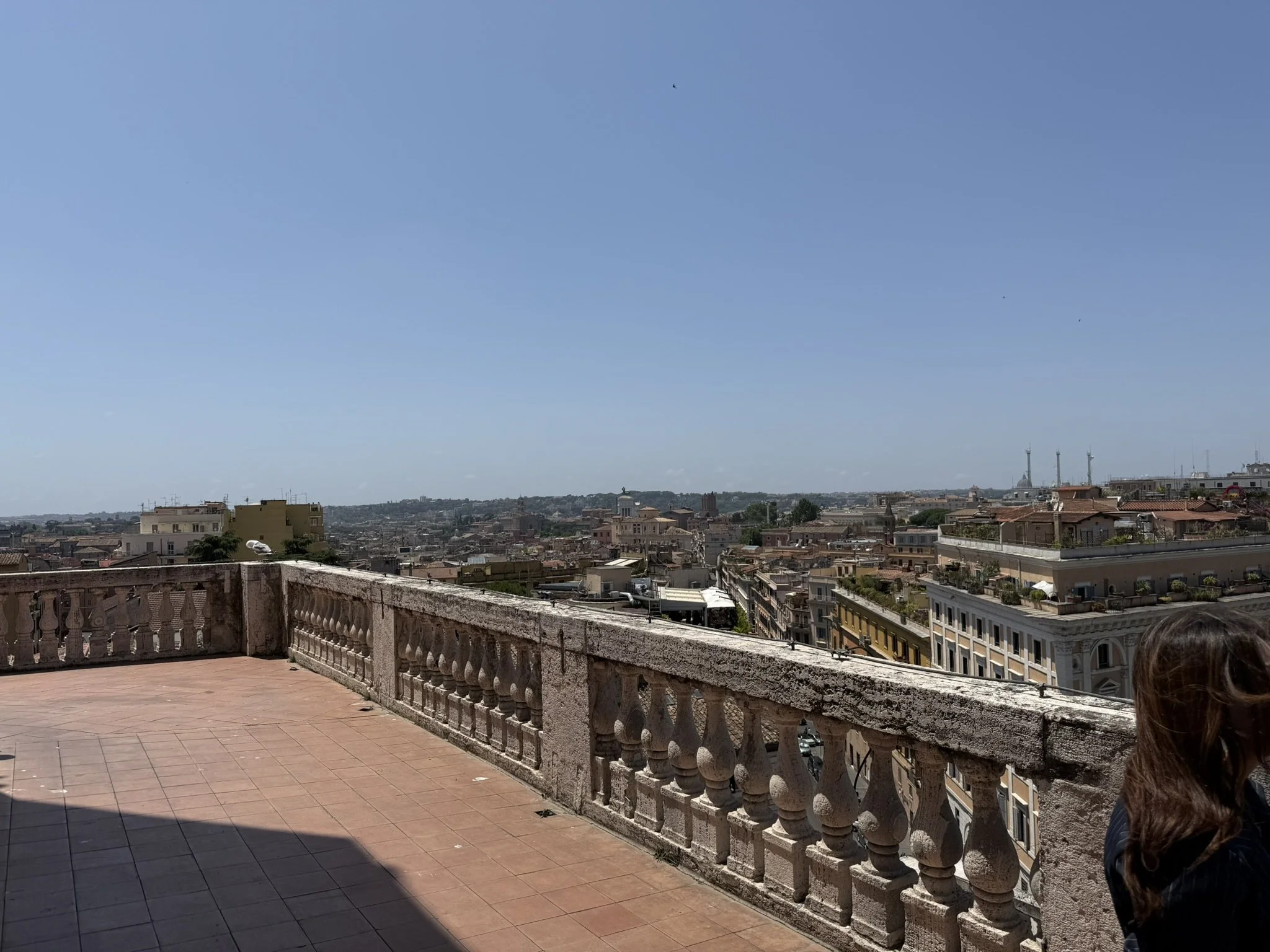
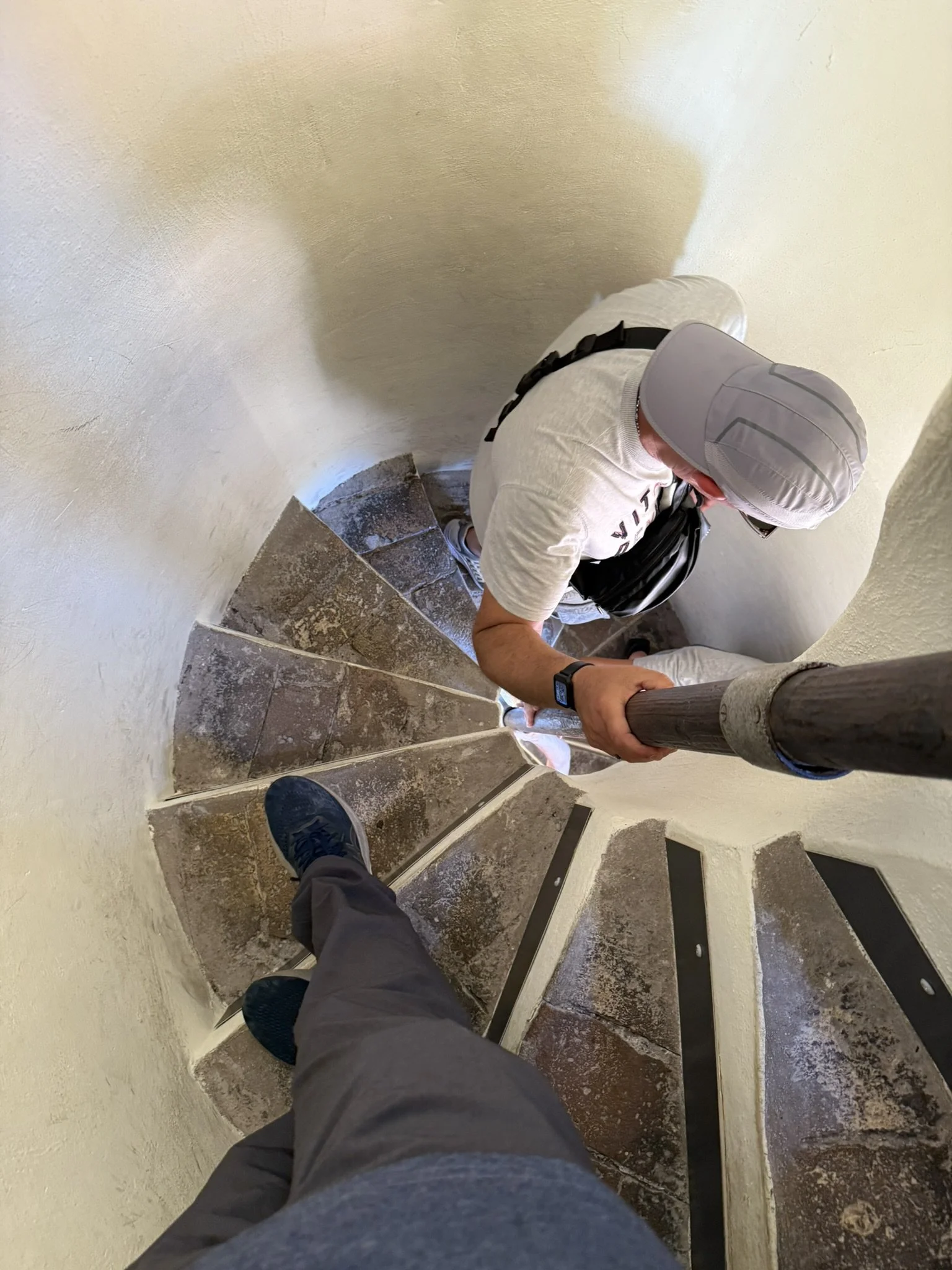
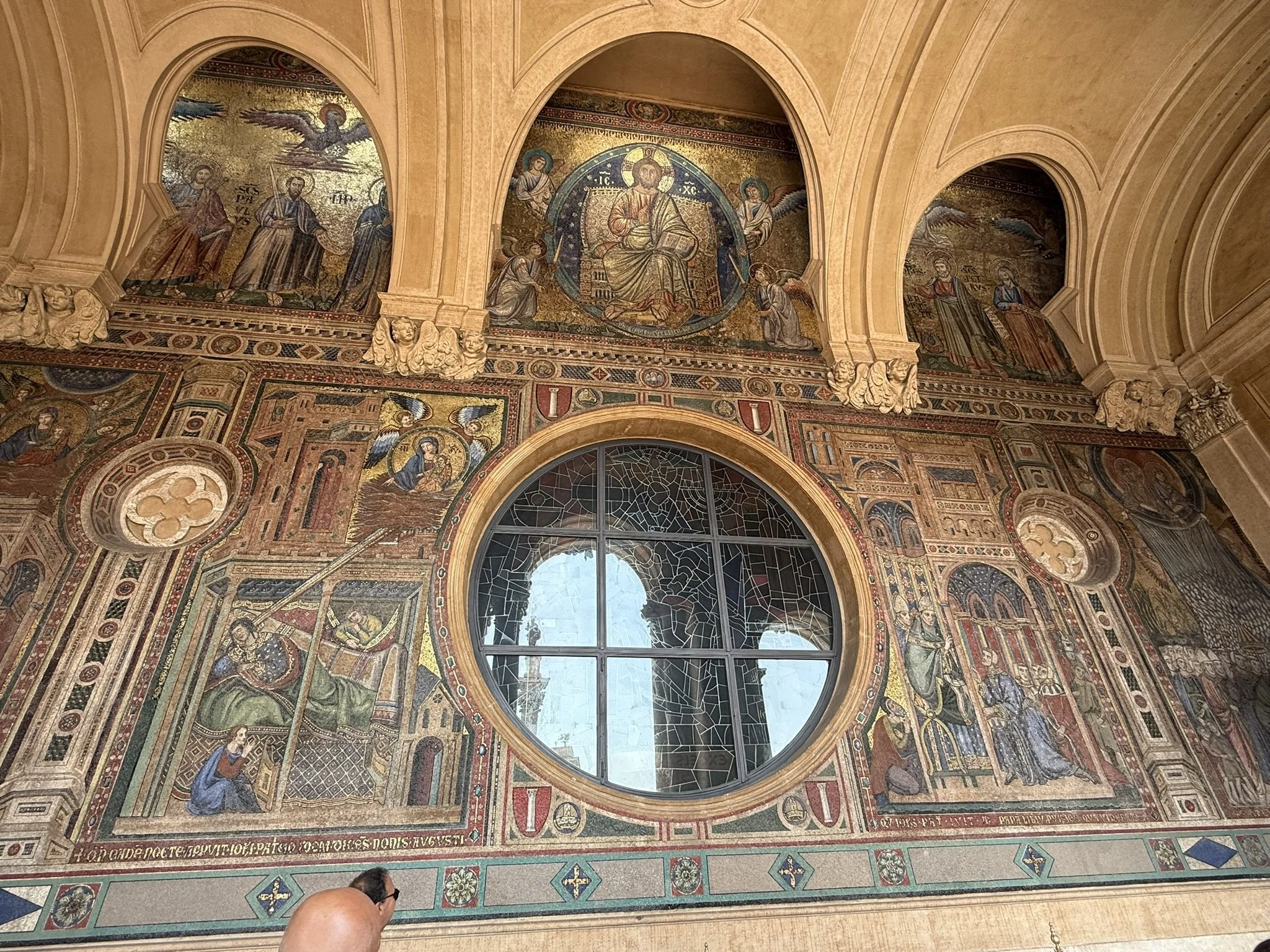
I’m going to go a little out of order, since we’re already talking about the outside. My wife and I didn’t learn our lesson from climbing the dome at St. Peter’s, we also went on a special tour of the loggia and roof of St. Mary Major. I recommend it. It’s a tad on the long side for a tour, but still a neat experience. There are several mosaics you can only see from the loggia (called the Loggia of Blessings), and you also get to stand where many popes have stood and blessed the crowds throughout the centuries.
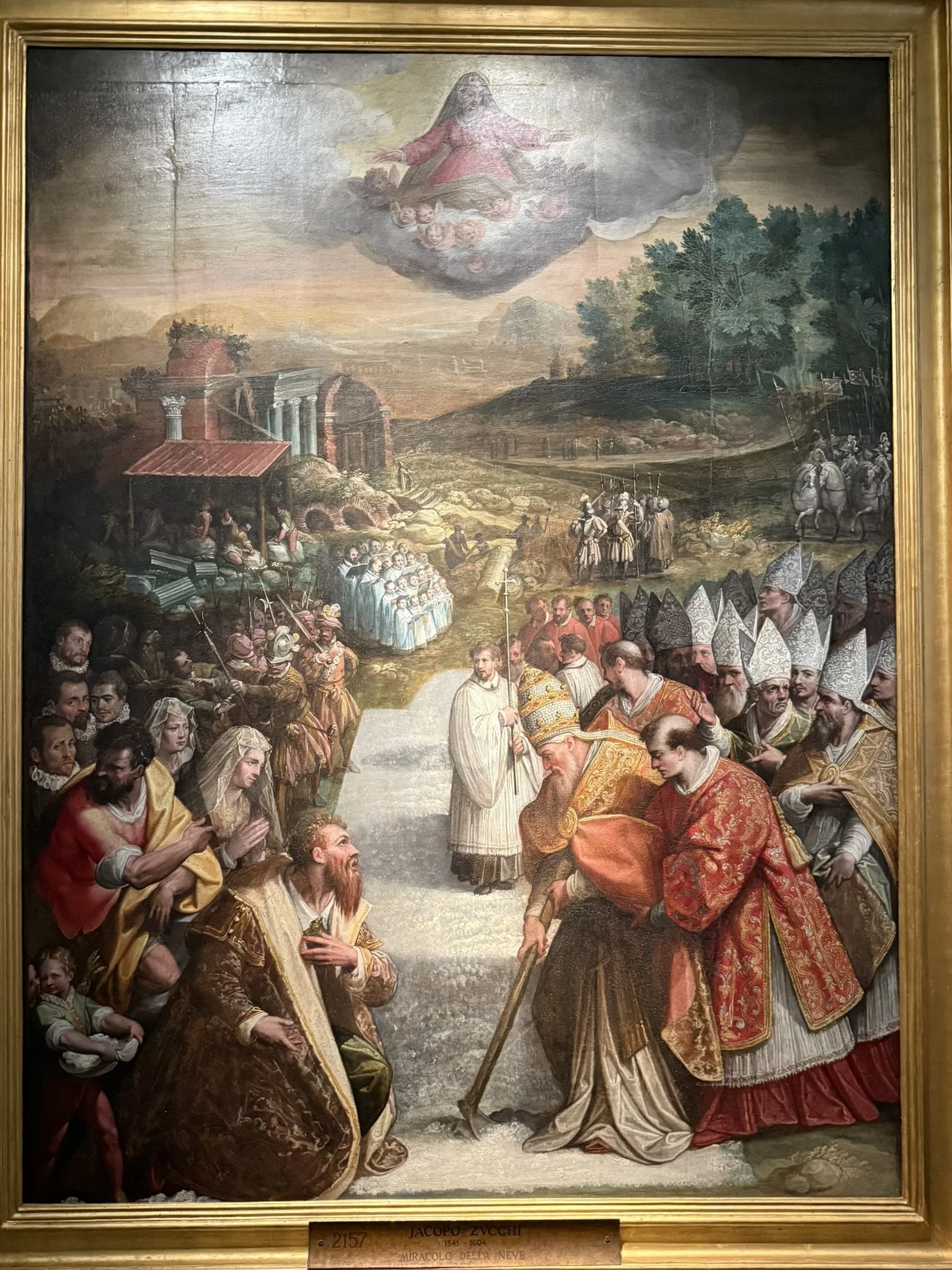
A loggia is a covered external gallery or balcony. Think a porch, but accessible only from the inside. Notice that the loggia almost feels like it has been added to the facade, and not that it was all built together. This is because the loggia was added in the 1700s by Pope Benedict XIV, whereas the facade comes from the 1100s. The very last photo also depicts the founding of the basilica, the location of which was chosen when Mary sent a snowfall in August at the location of the basilica. This miracle is remembered every August 5, although while it occurred in the 300s it was only first recorded in the 1200s. Click to enlarge images.
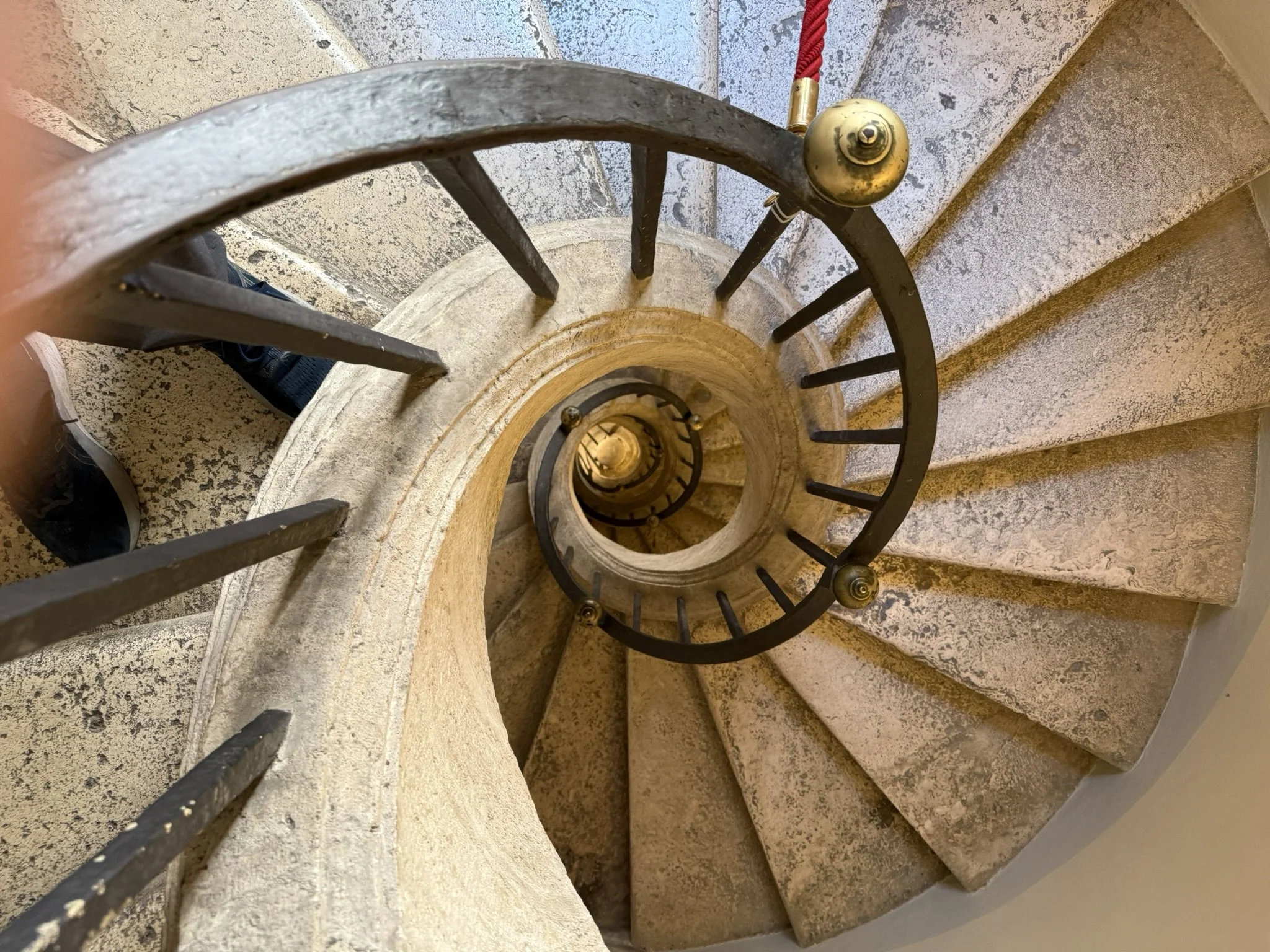
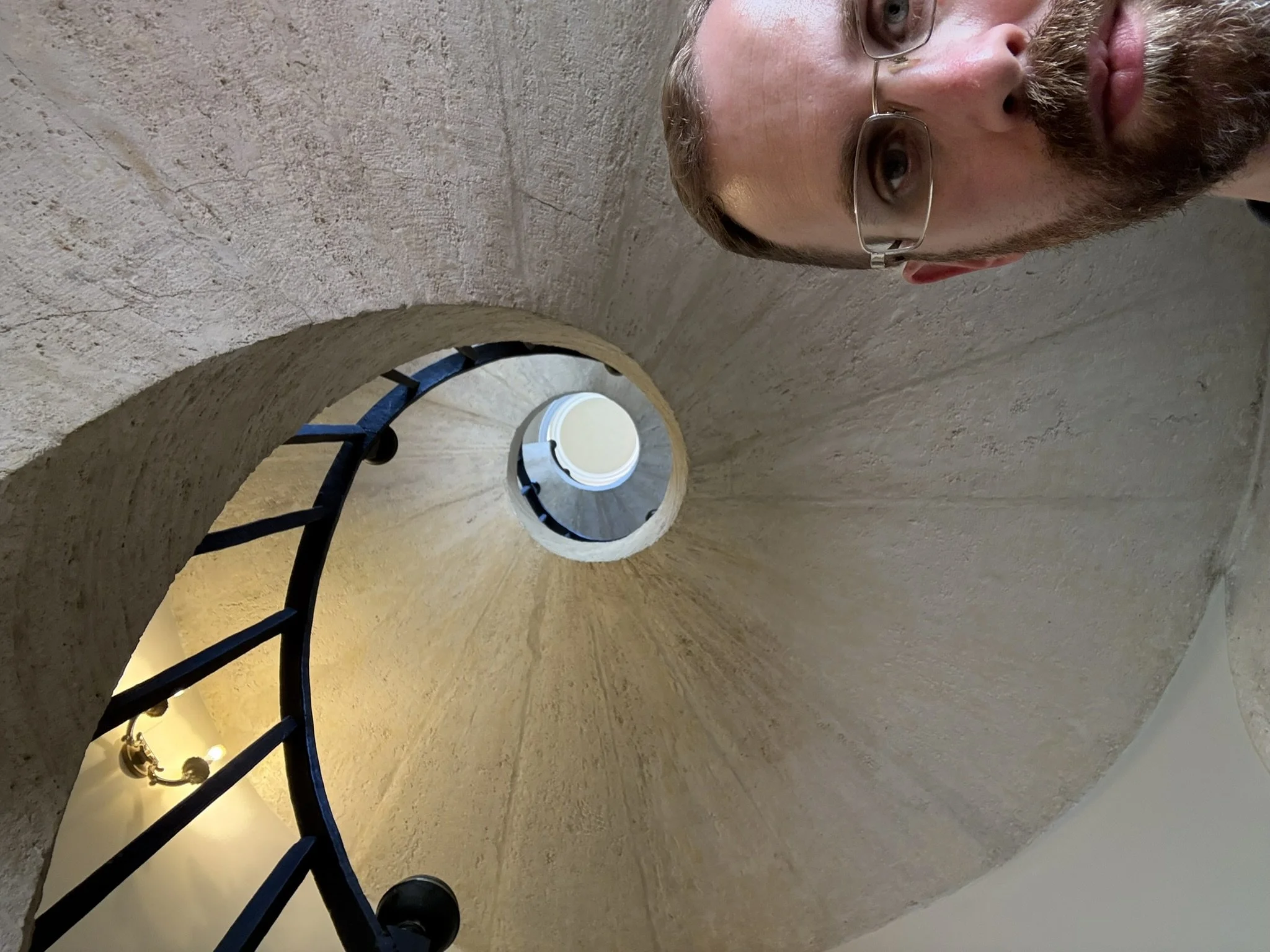
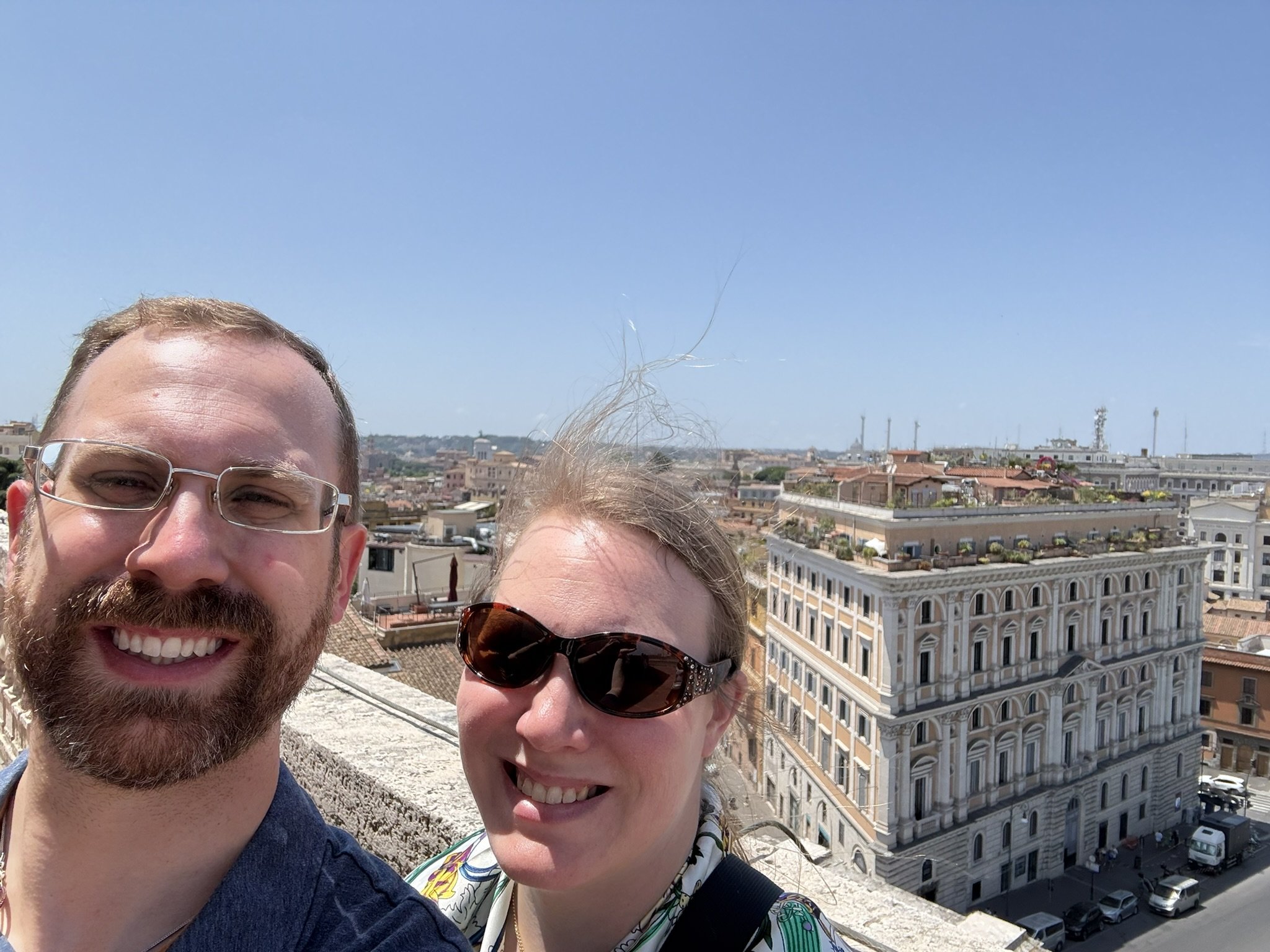
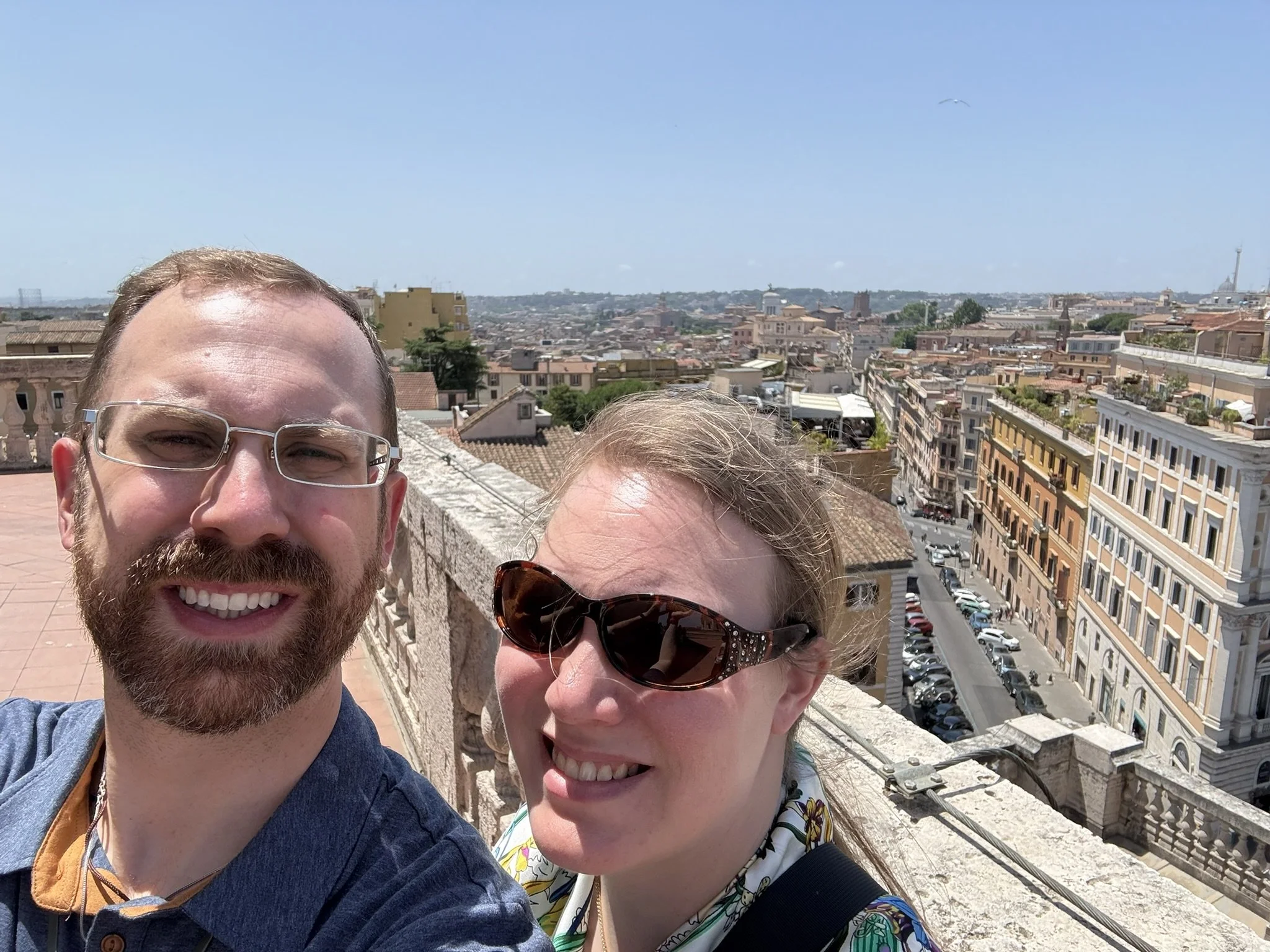
We made our way up to the roof. It was nice to see Rome from above, like at St. Peter’s
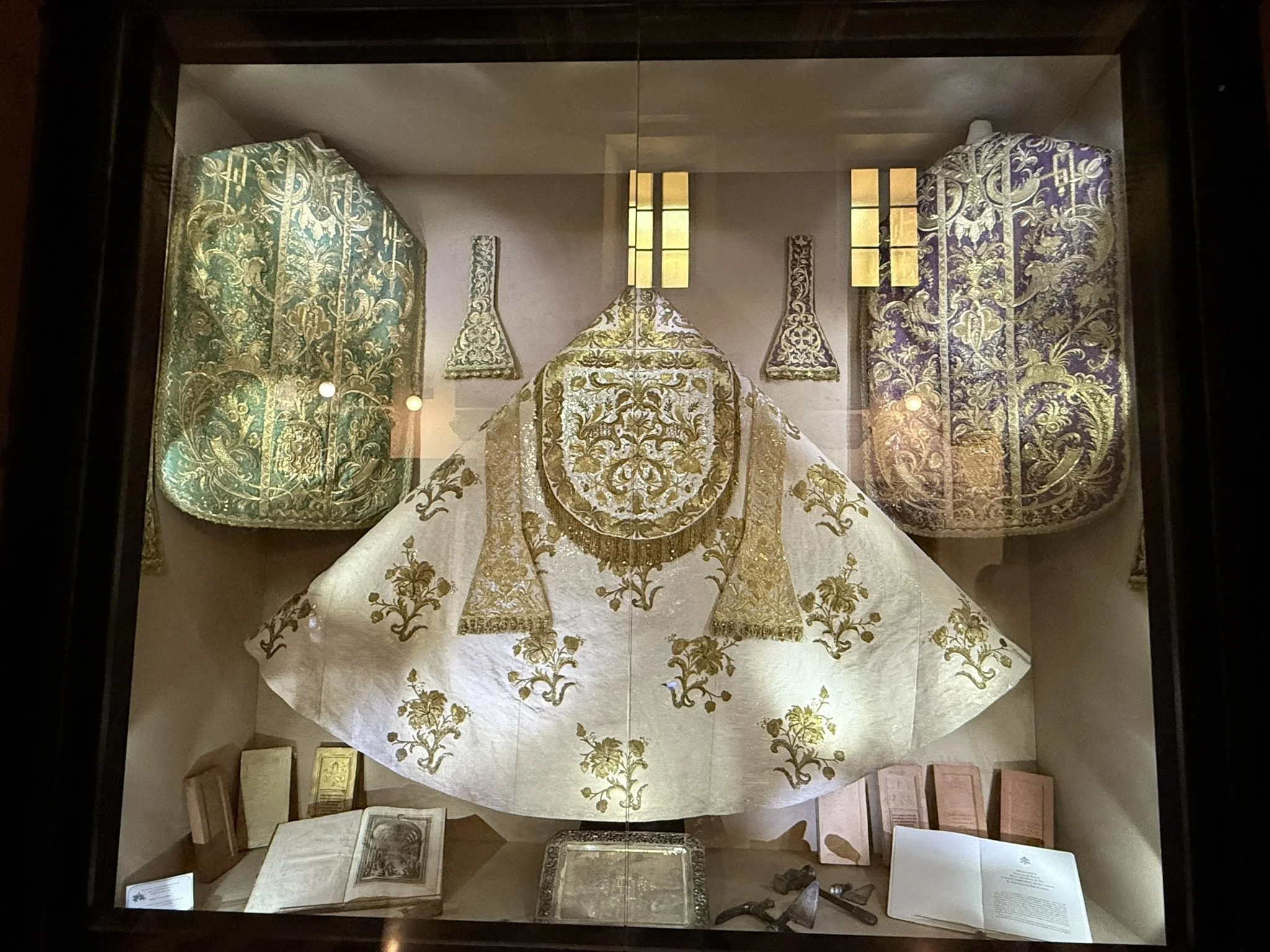
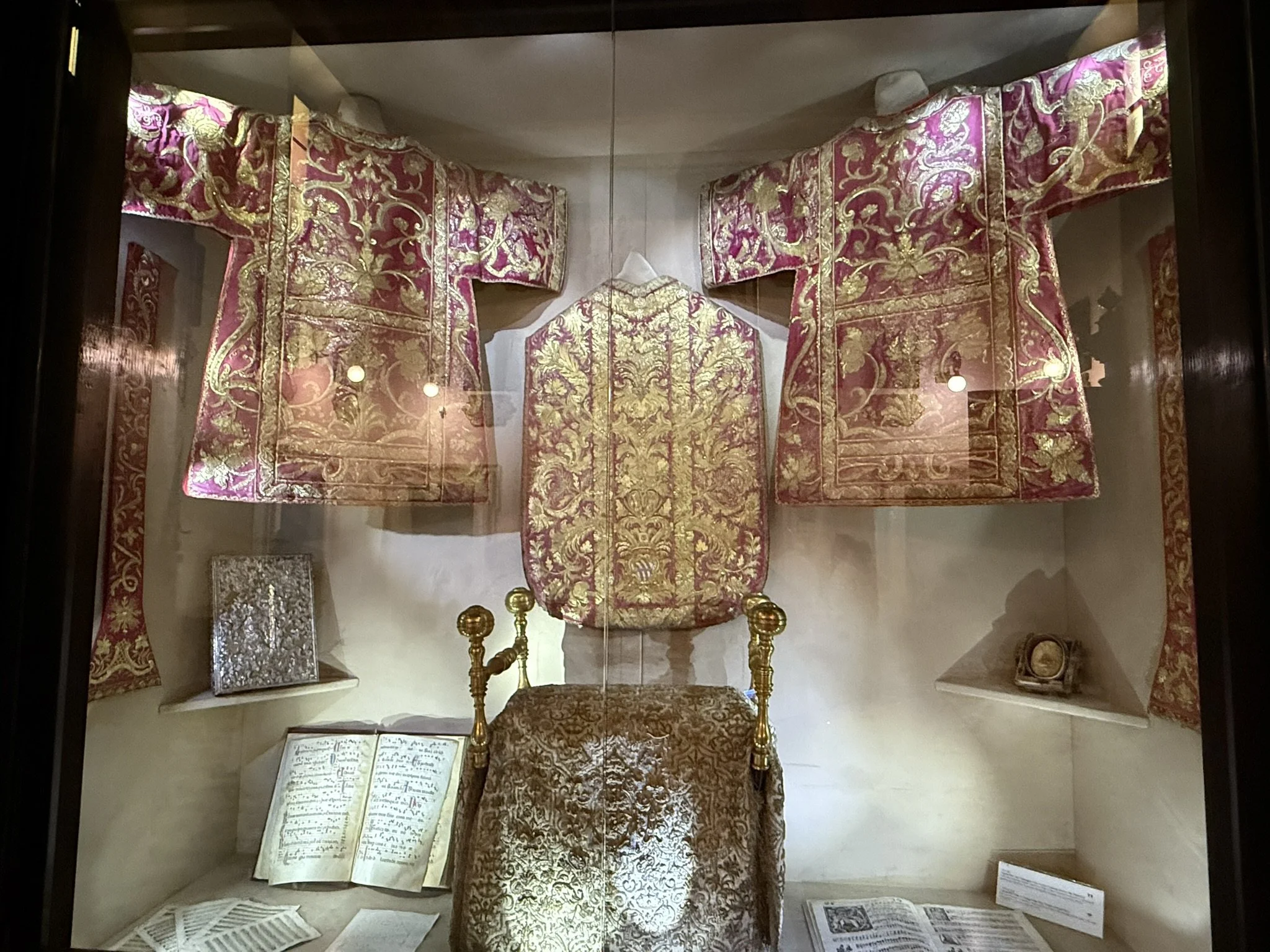
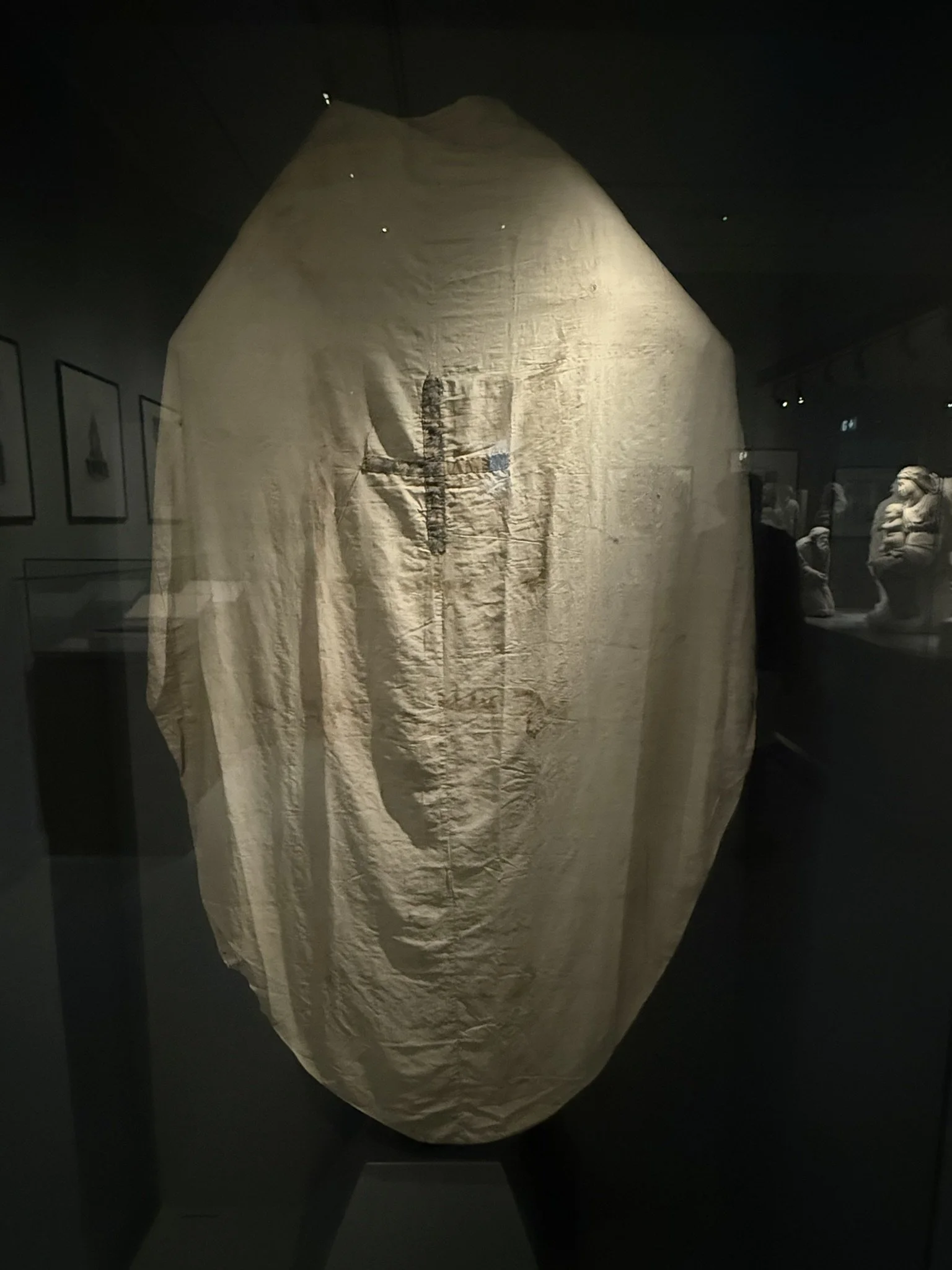
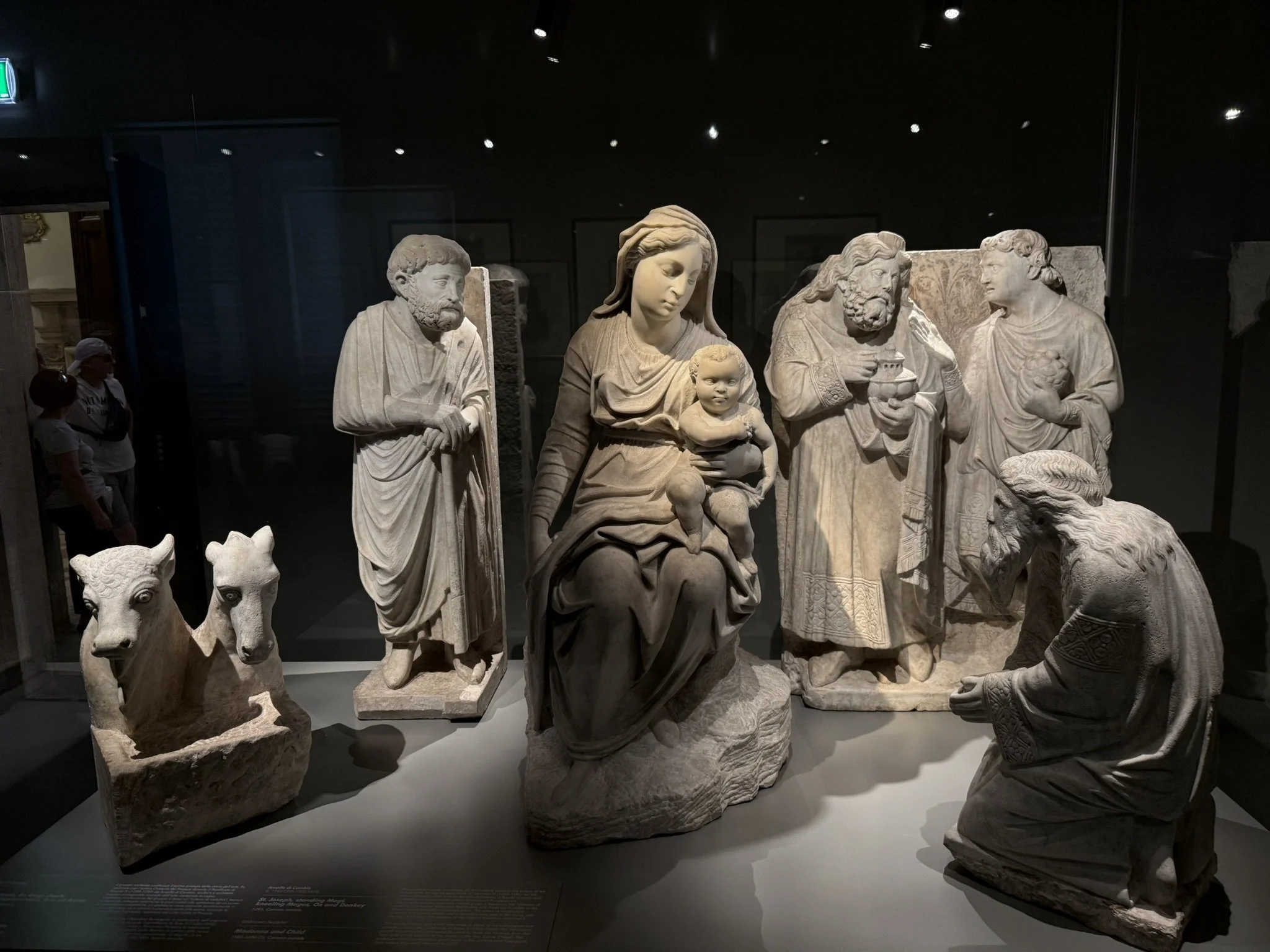
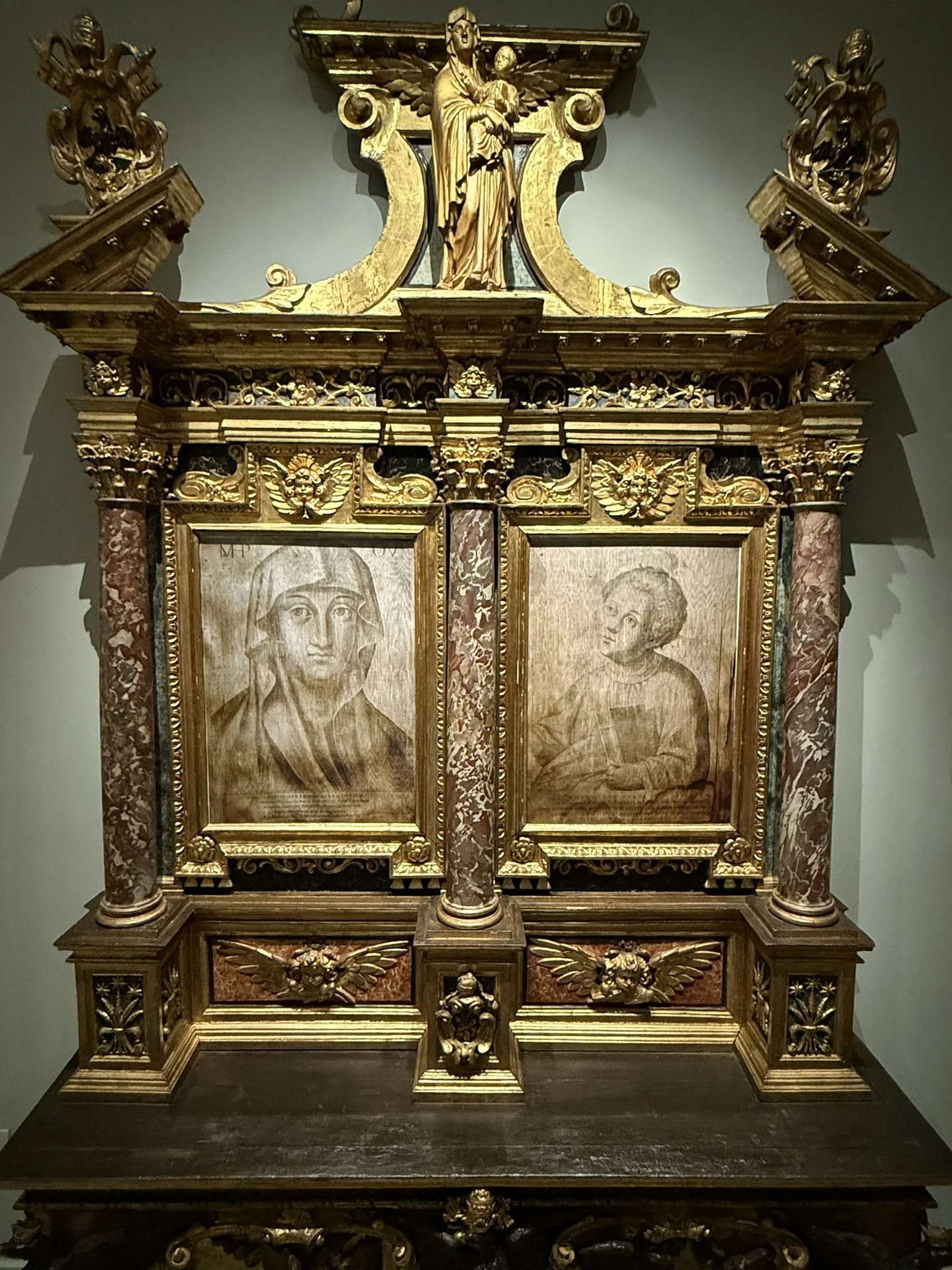
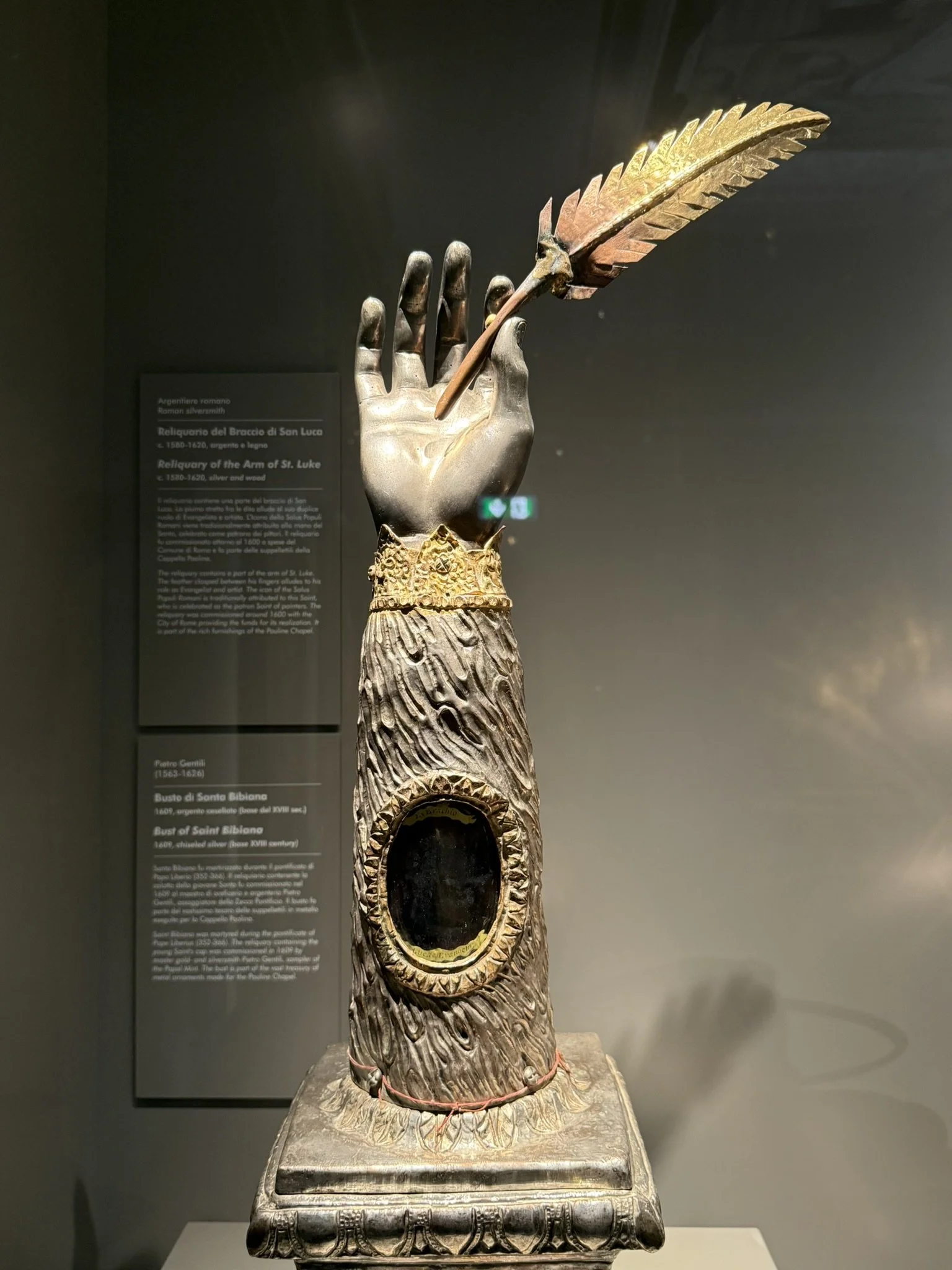
The tour to the loggia and roof included several artifacts. For liturgy nerds like me, note the various liturgical vestments. The ornate ones were worn by the Borgia pope. The plain one was worn by St. Jerome (yes, THAT St. Jerome, from the late 300s). For the other things, you can click the picture and see the captions. Click to enlarge images.
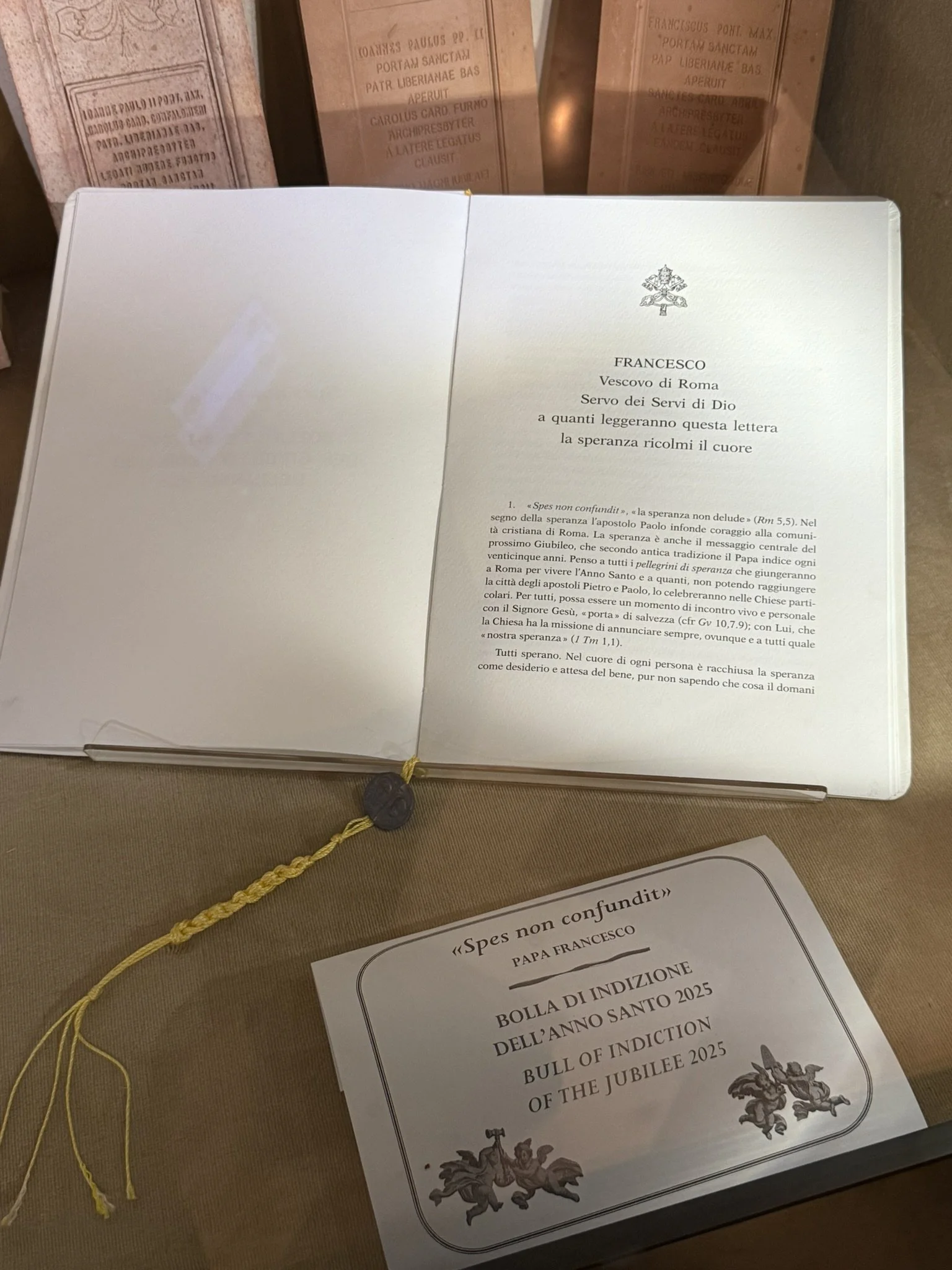
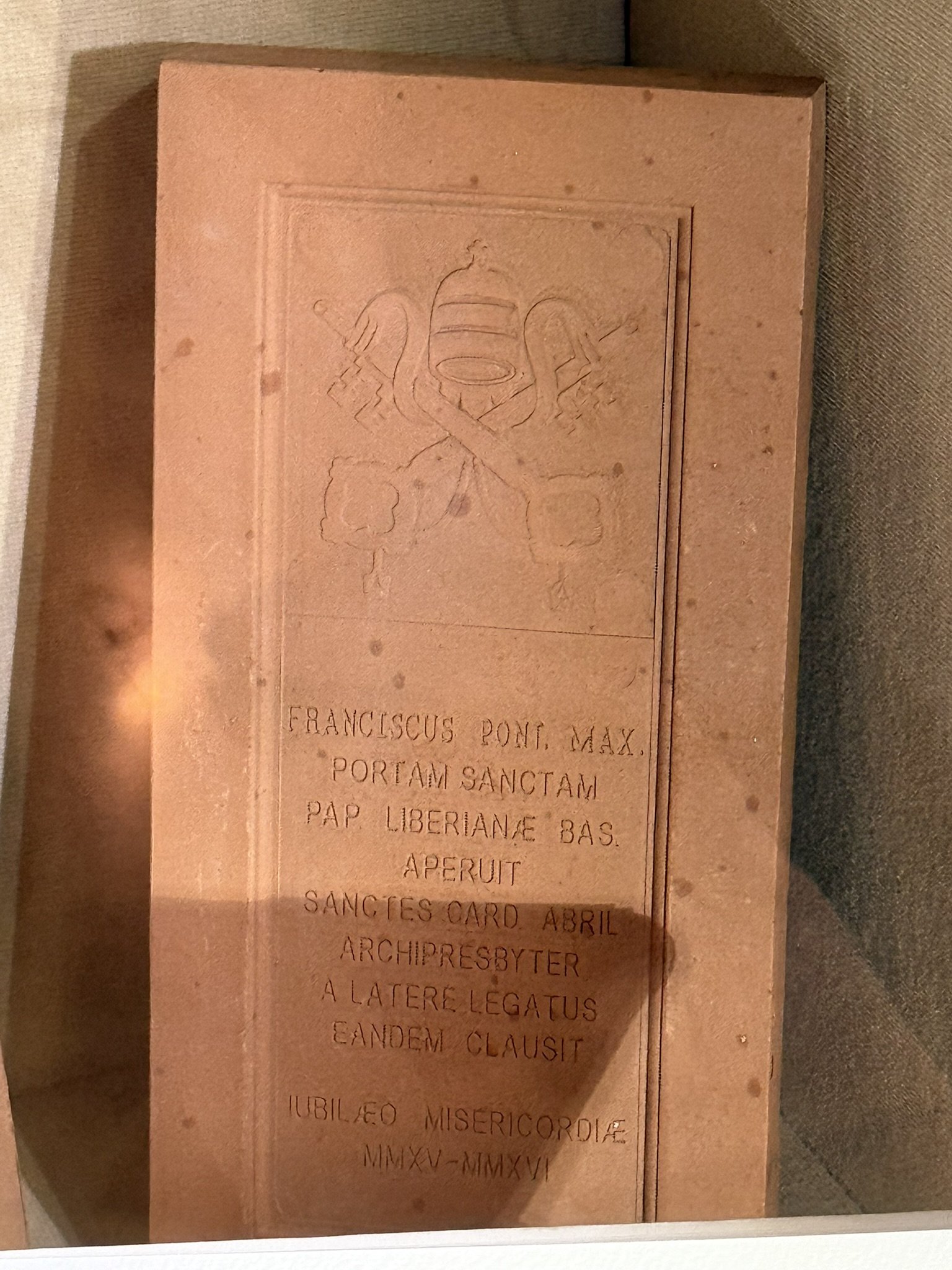
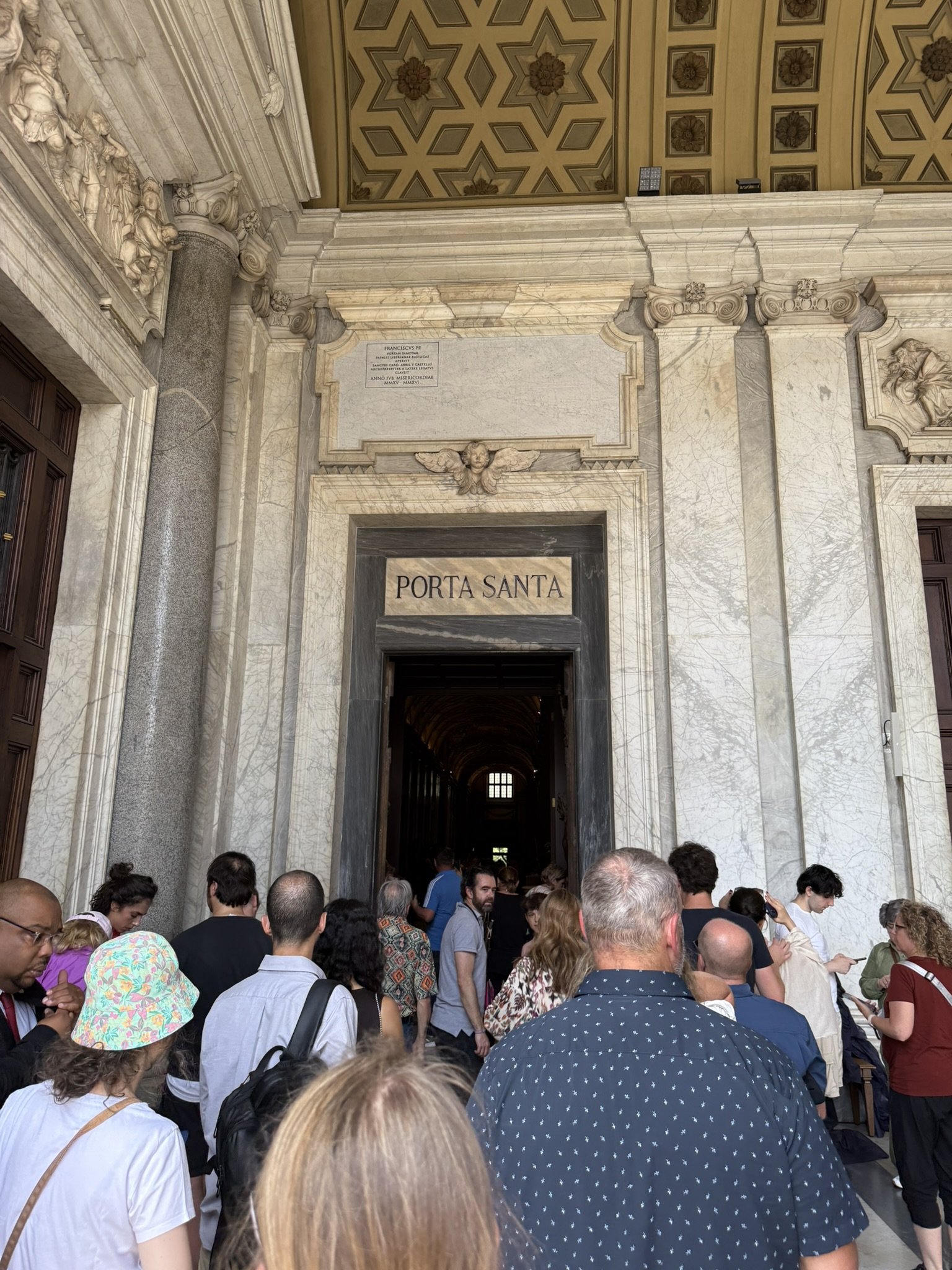
Before moving inside, we of course went through to porta sancta.
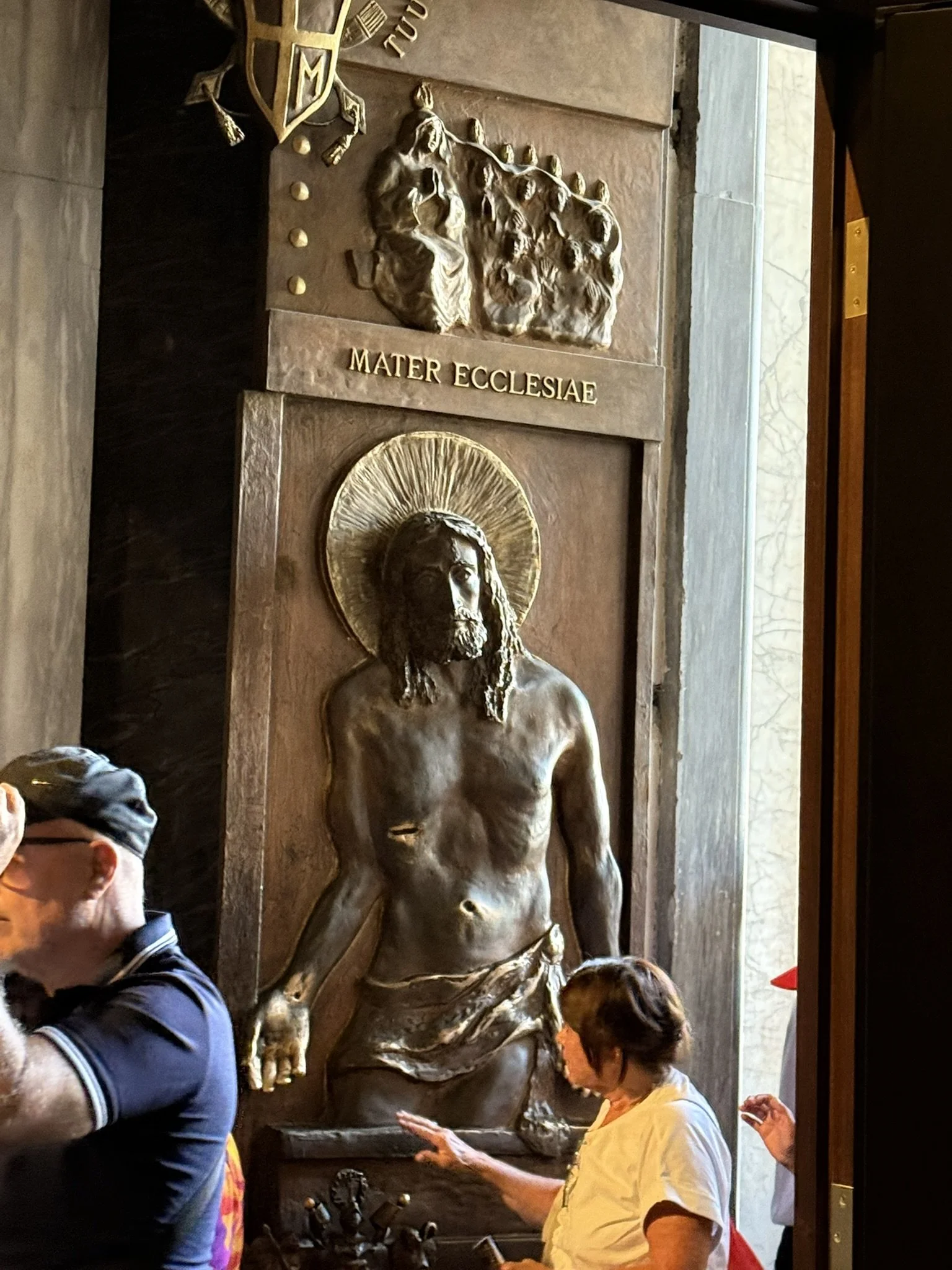
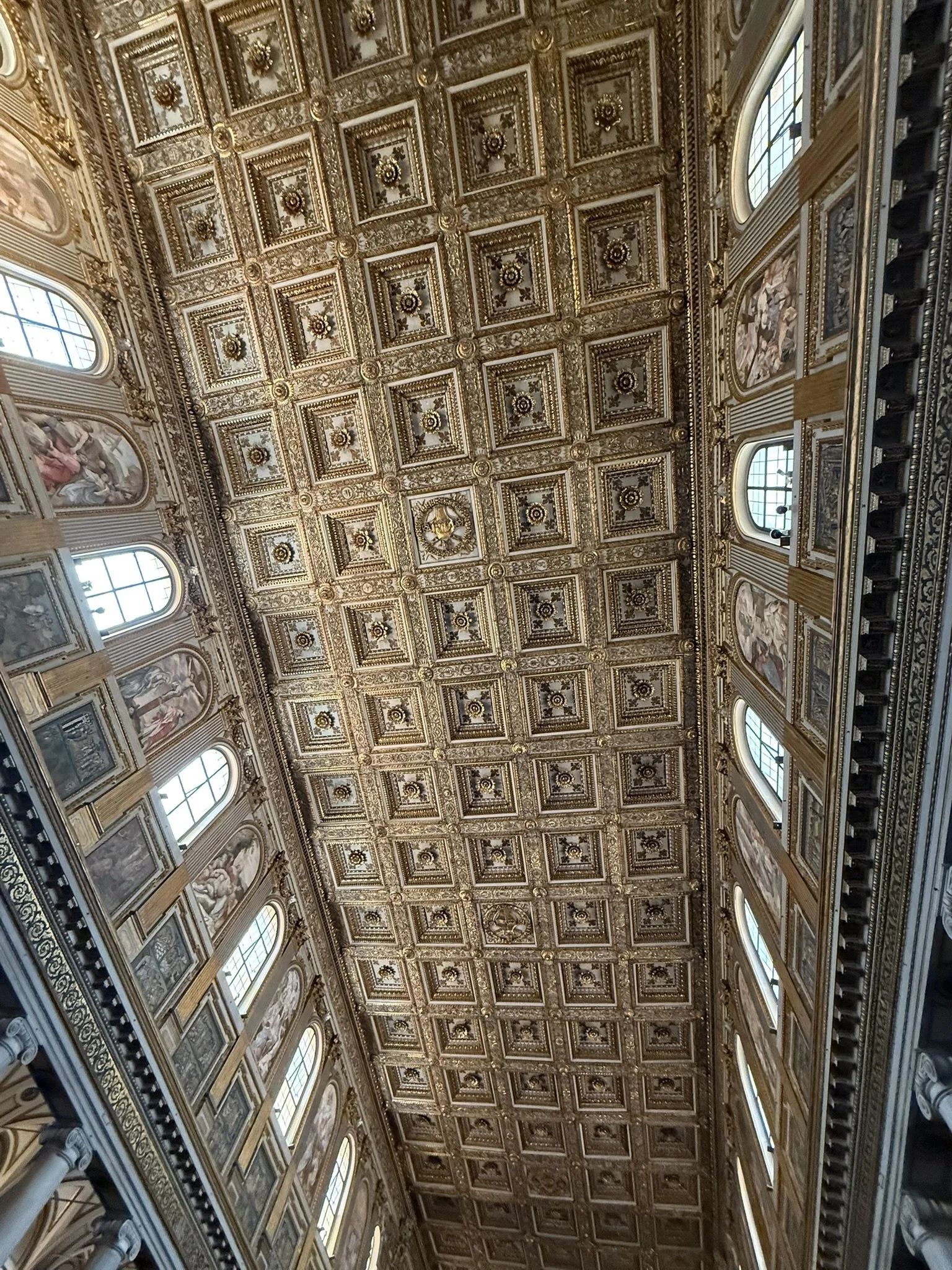
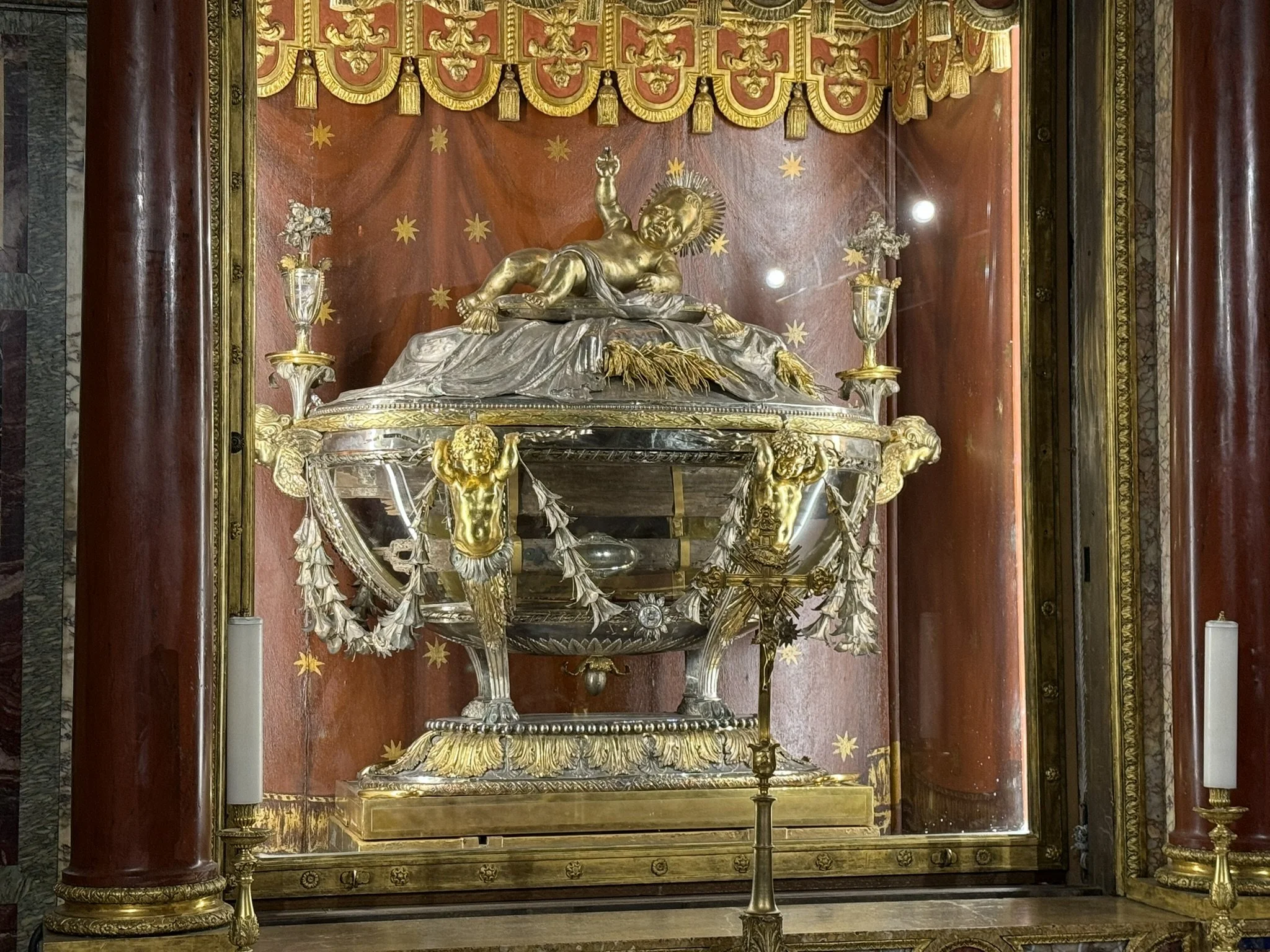
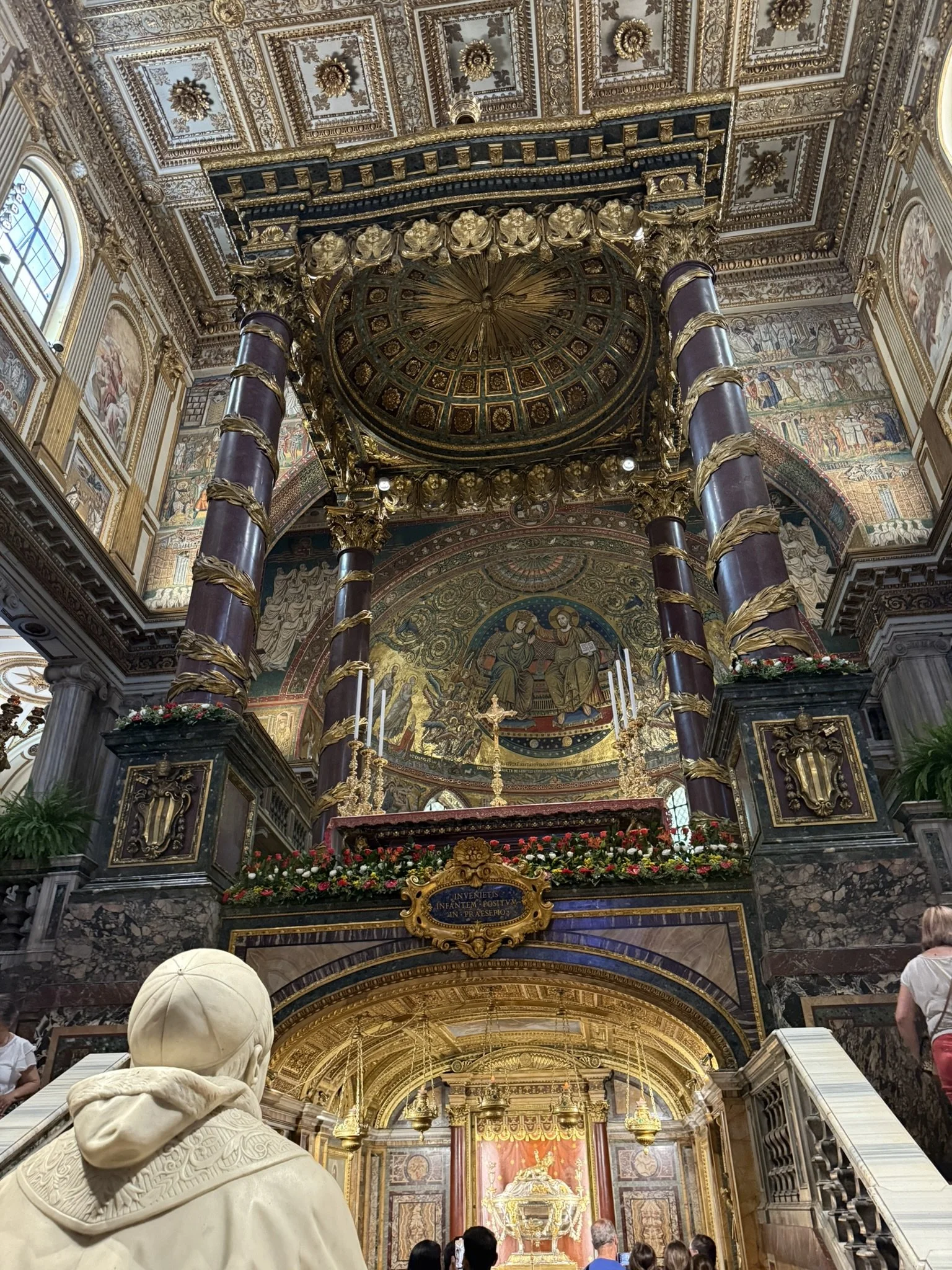
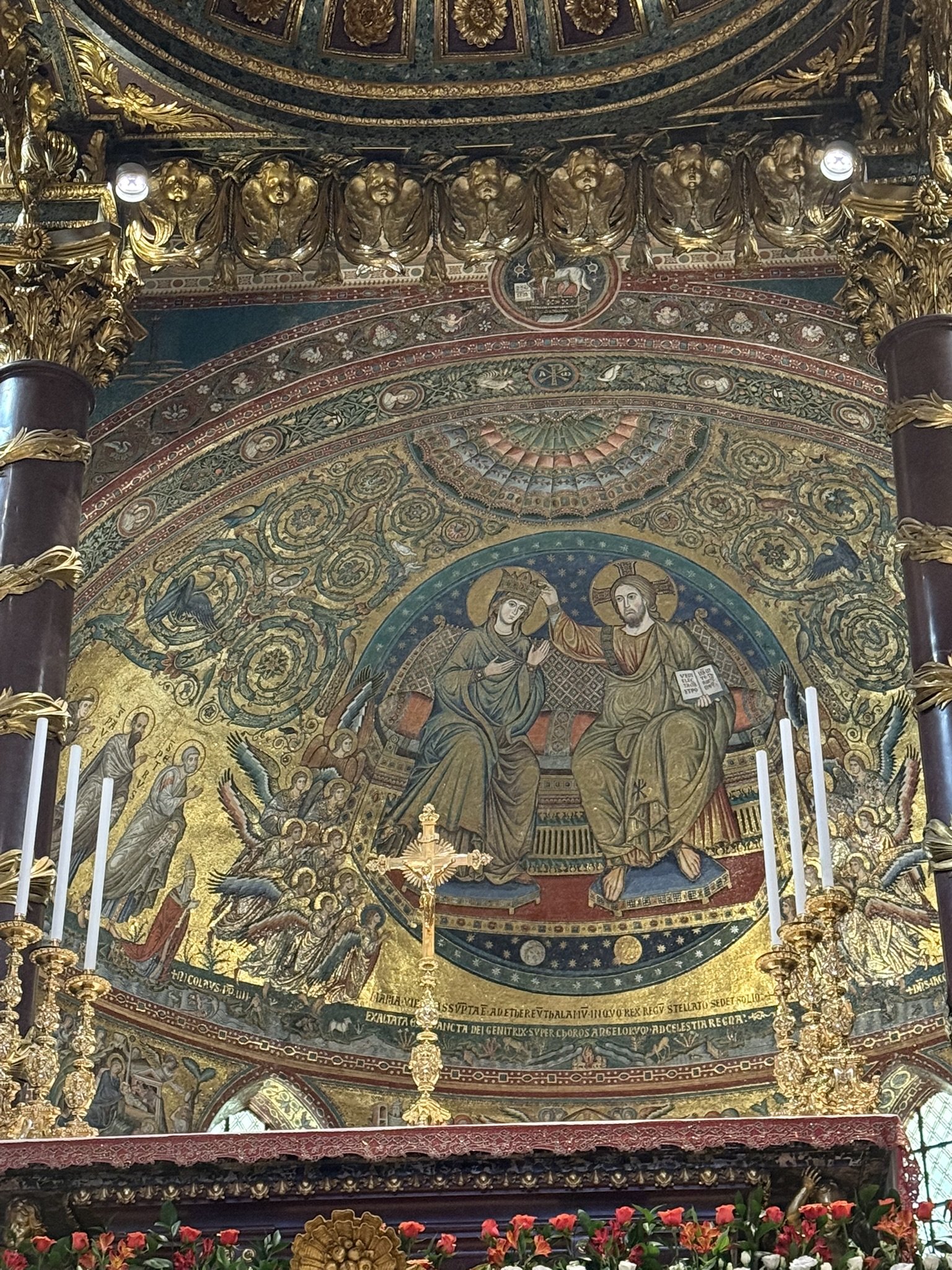
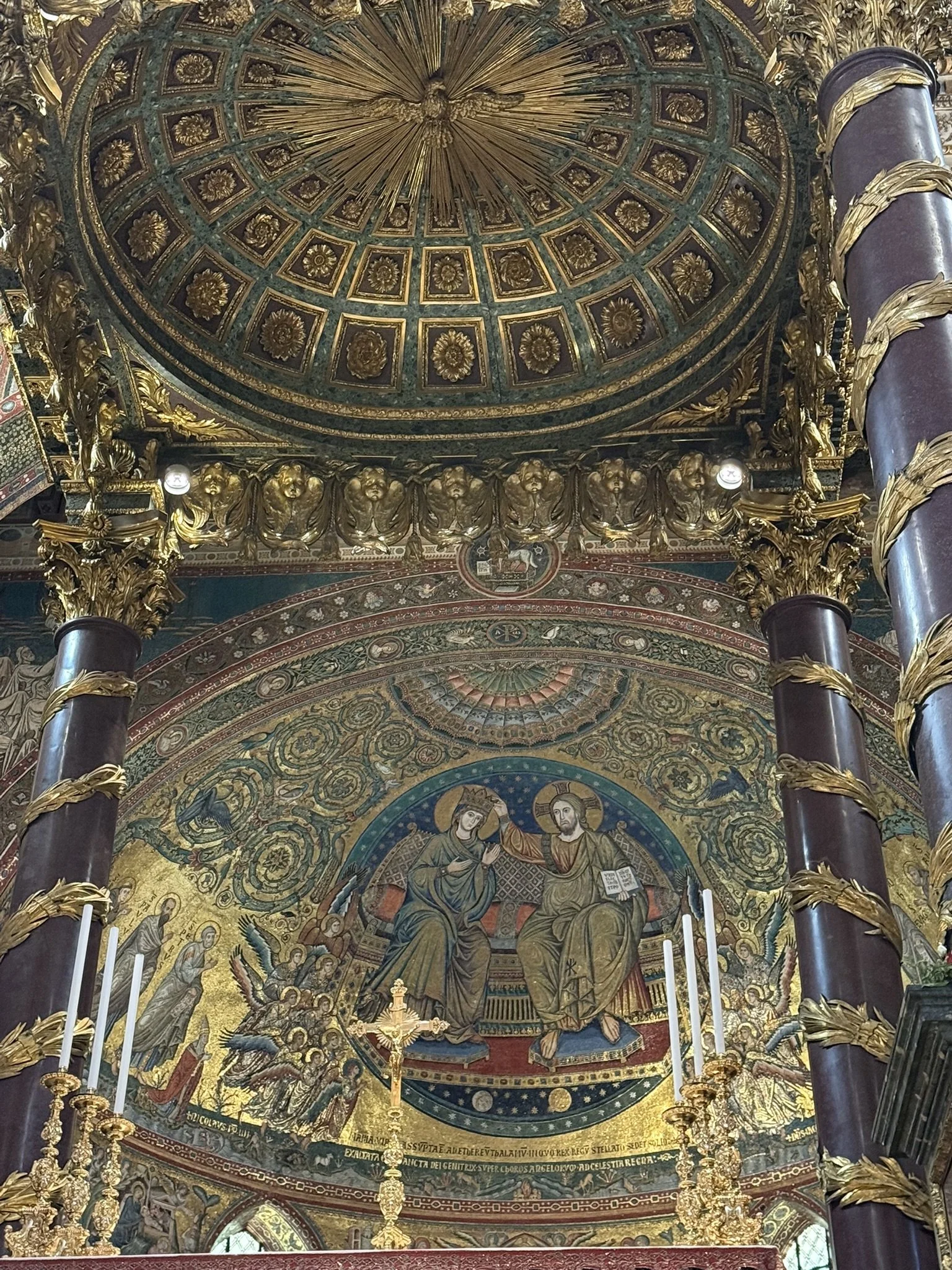
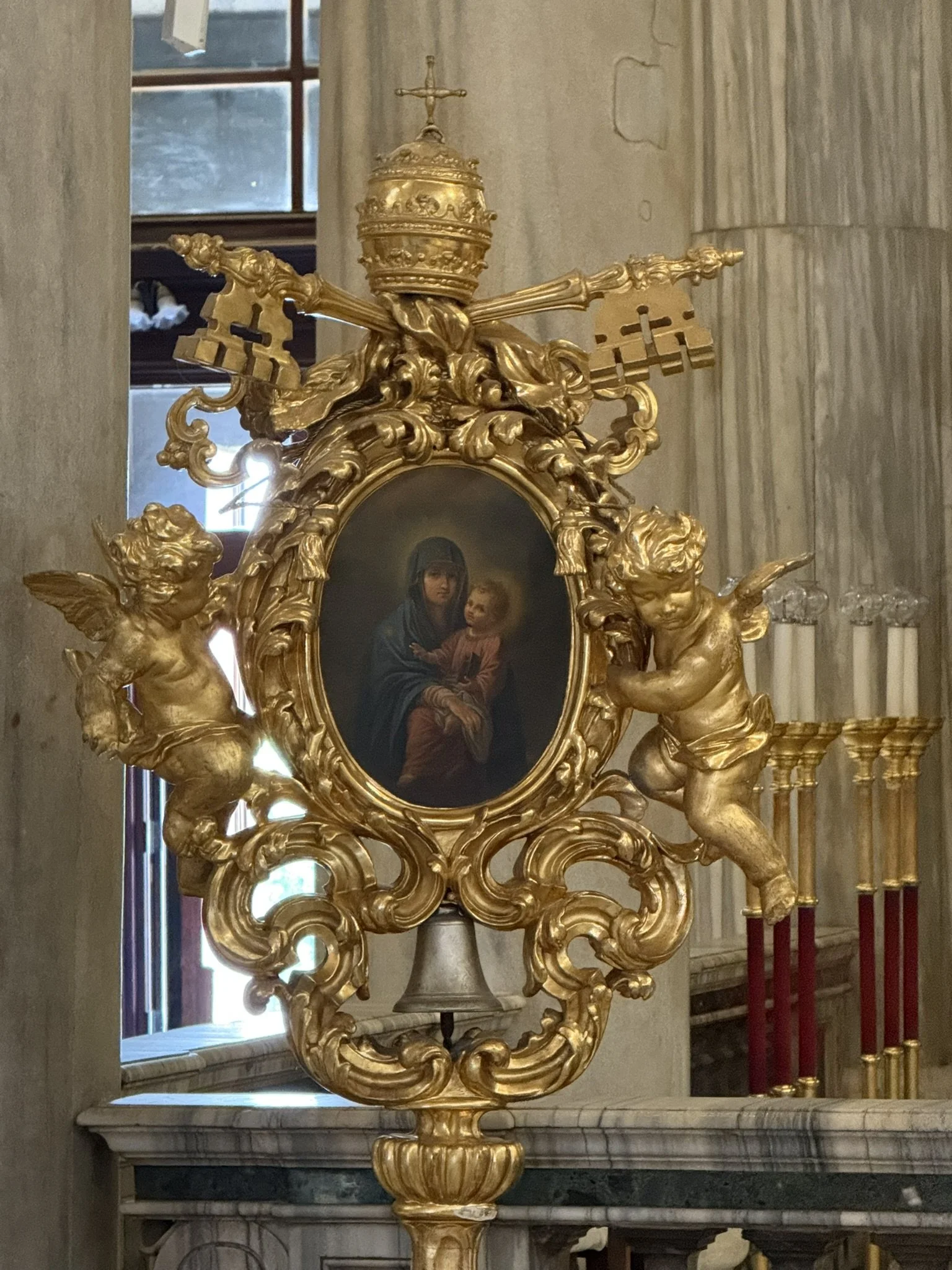
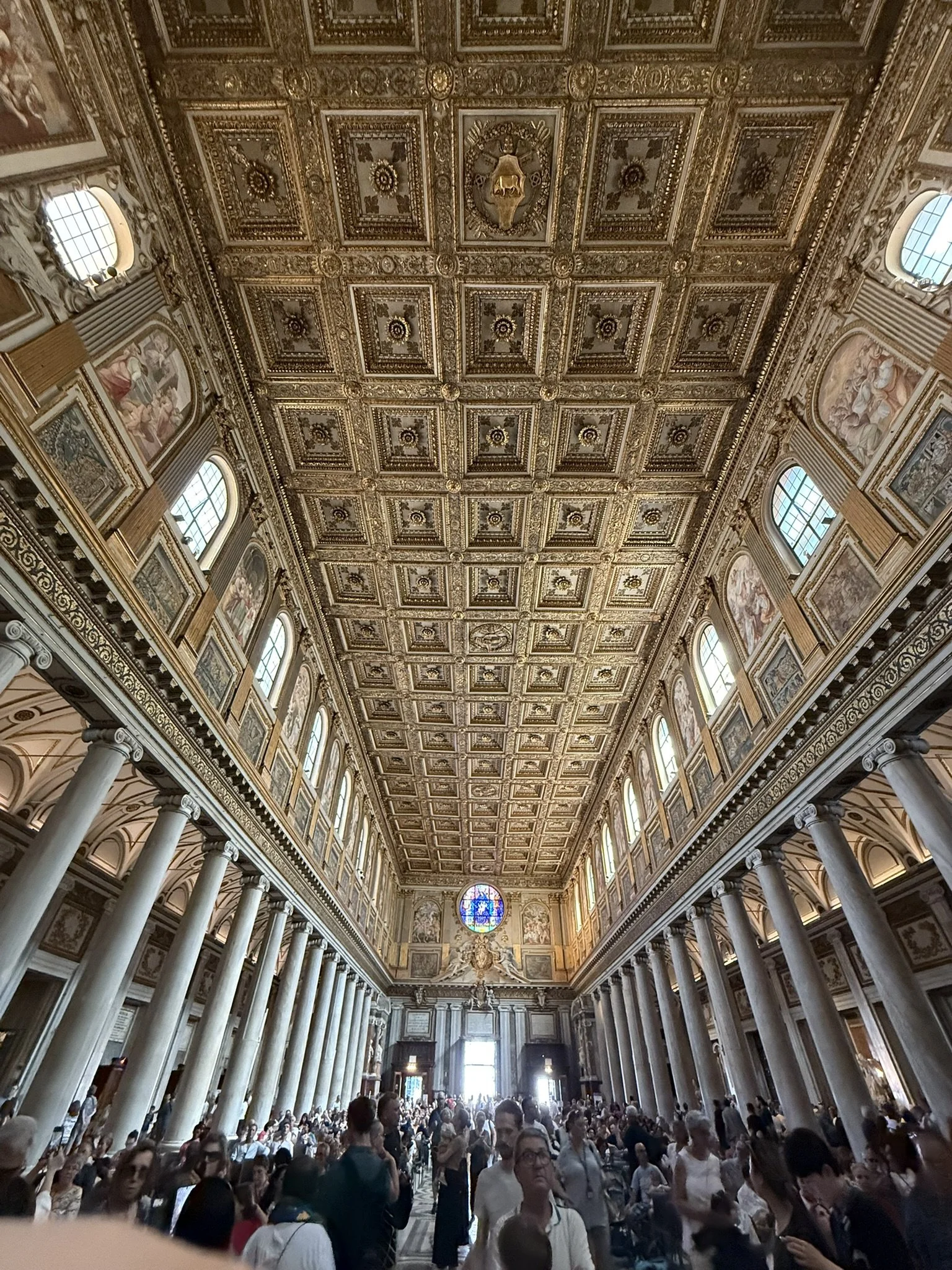
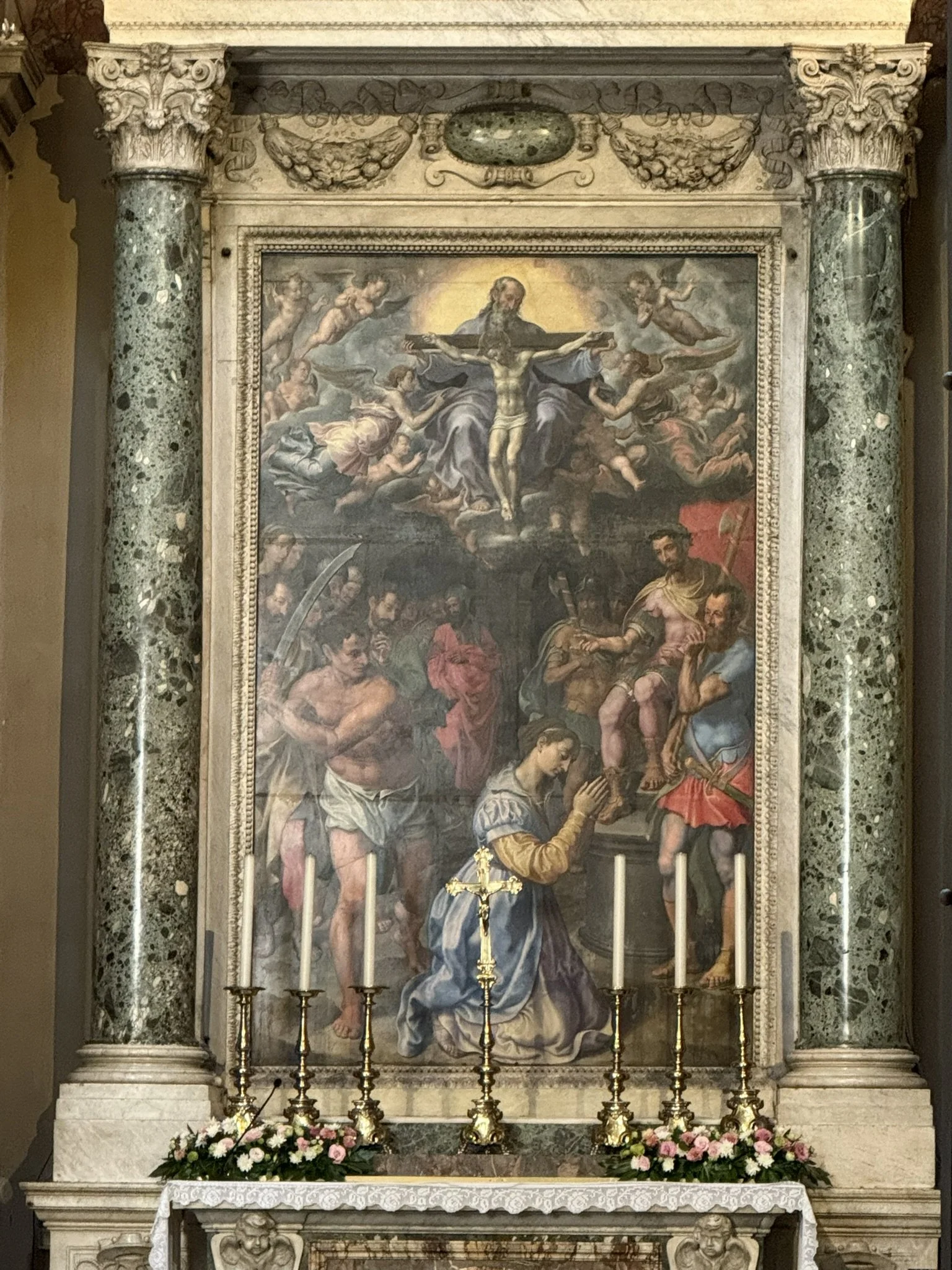
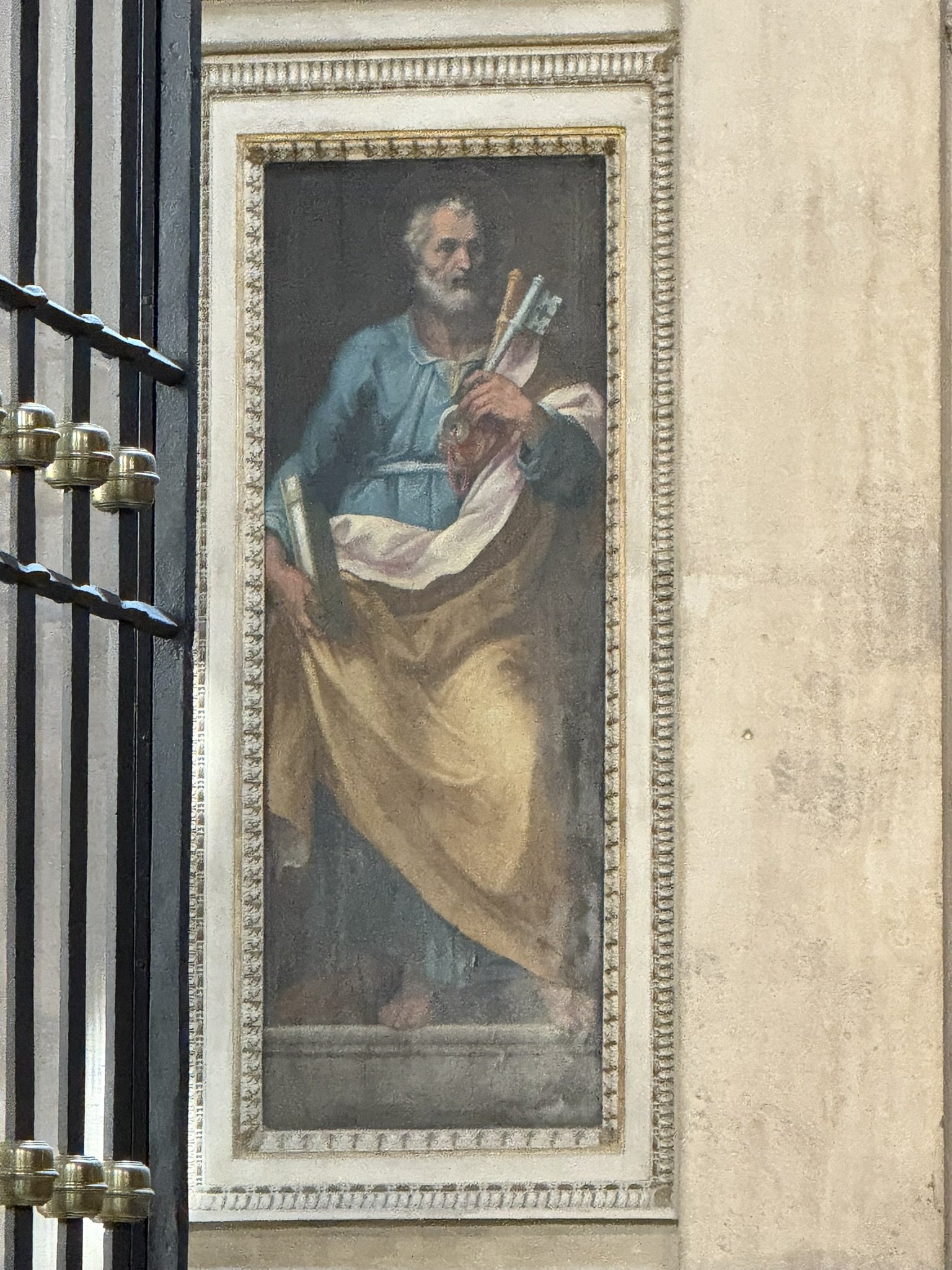
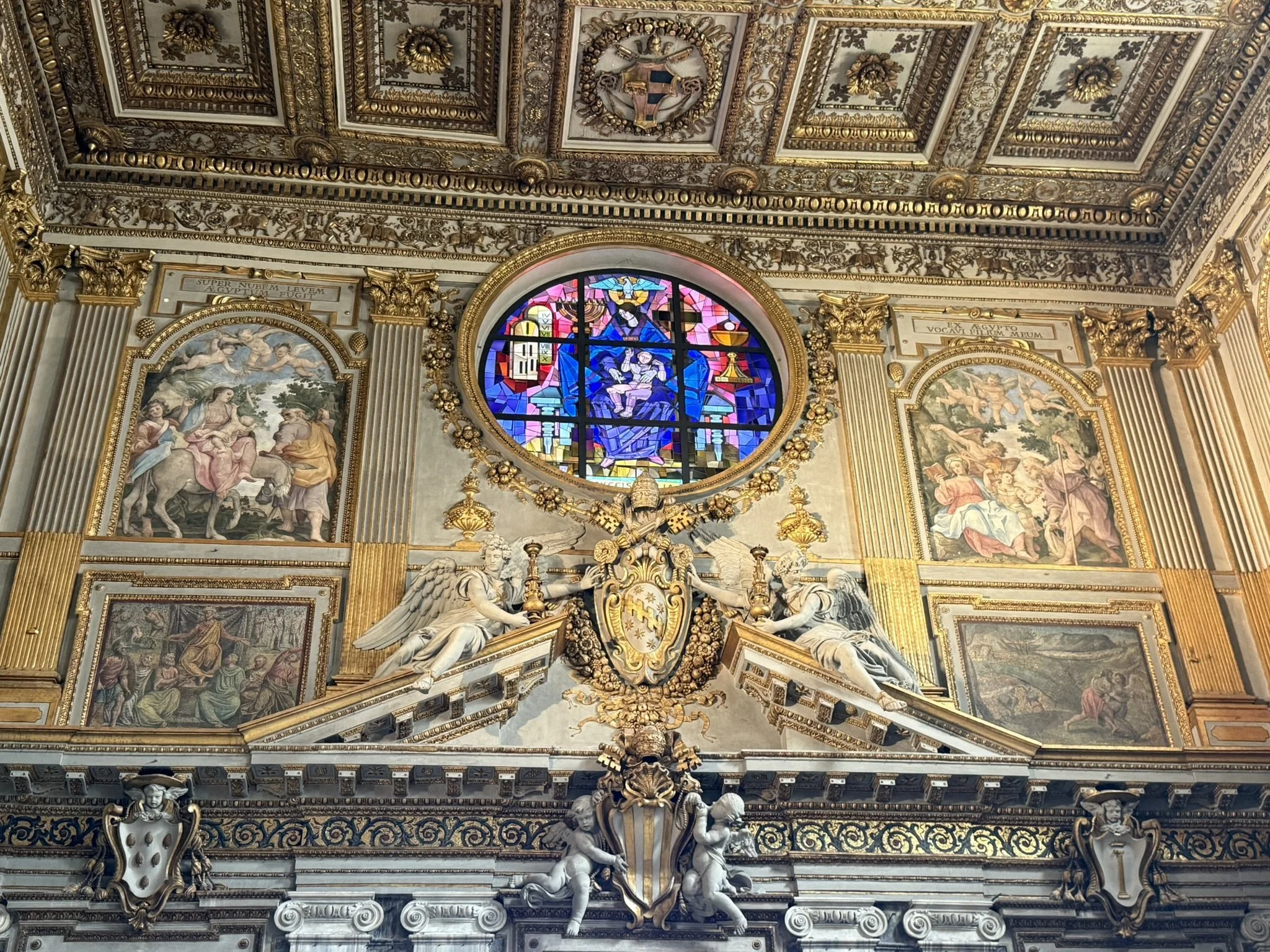
The inside of St. Mary Major is full of life. St. Peter’s is large and grandiose. St. John Lateran is bare yet what it contains is poignantly chosen. St. Mary Major is in the middle, with a fair amount of artistic work but not stuffy. For pieces of note, see the captions below, but there is one I want to call out.
I never connected with Pope Francis. Pope Benedict XVI was a humble academic, a hero of mine that I wish I could even try to emulate. He was pope during my conversion process. But Pope Francis never really connected for me. It wasn’t his views, but it was something deeper. I blame myself, not him. Maybe I was just too busy, or maybe not focused on the pope like I was during my conversion process.
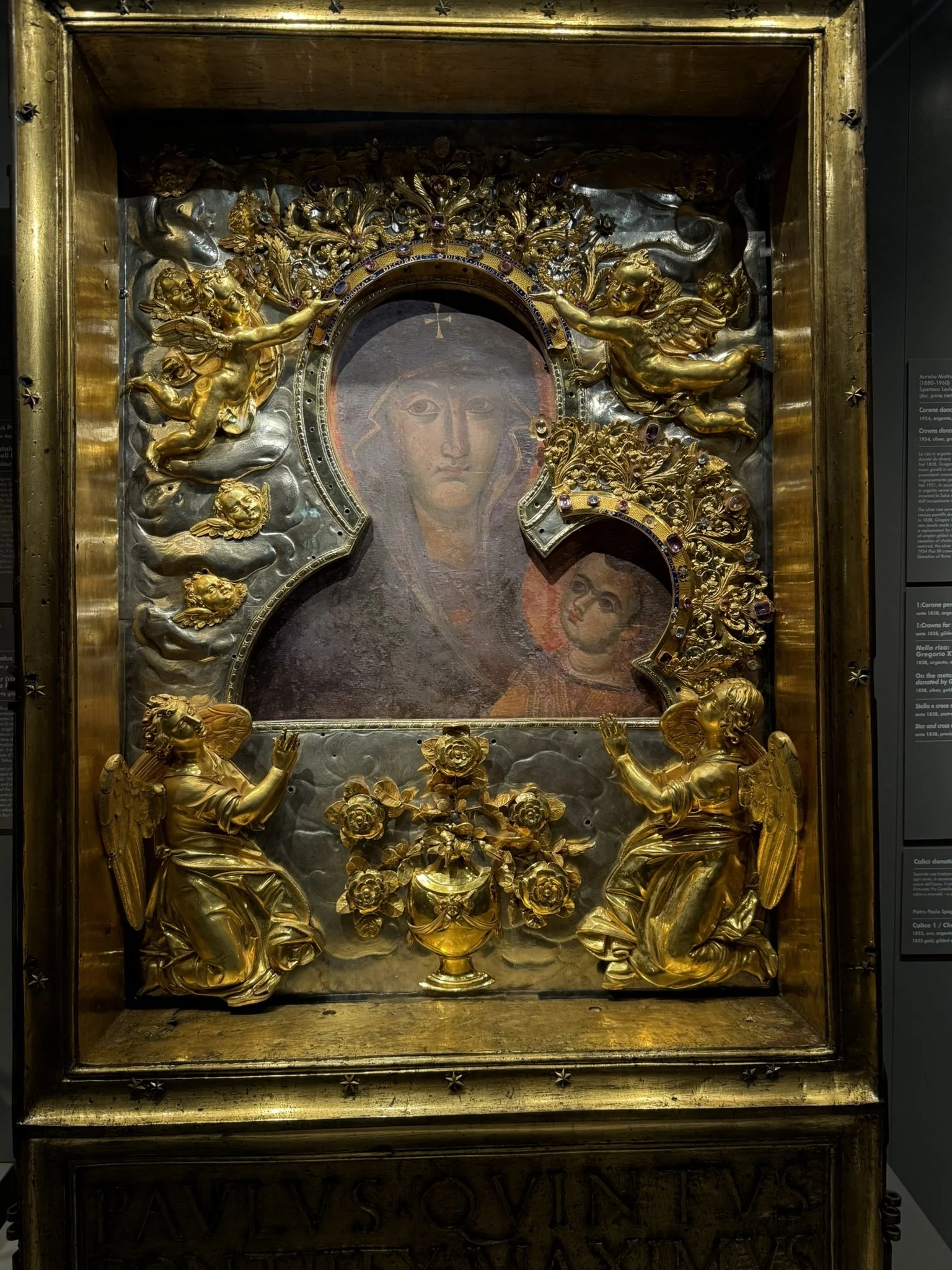
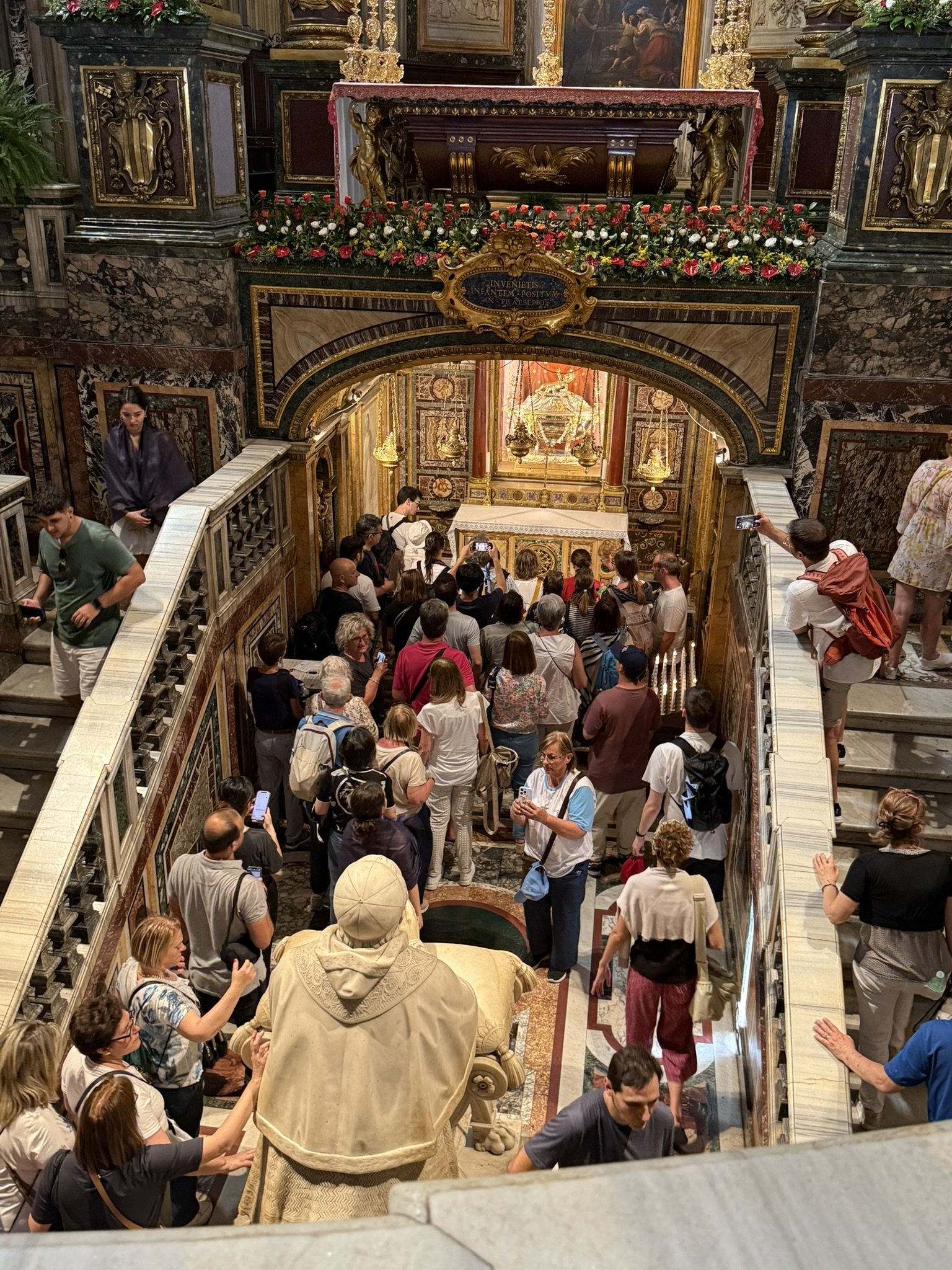
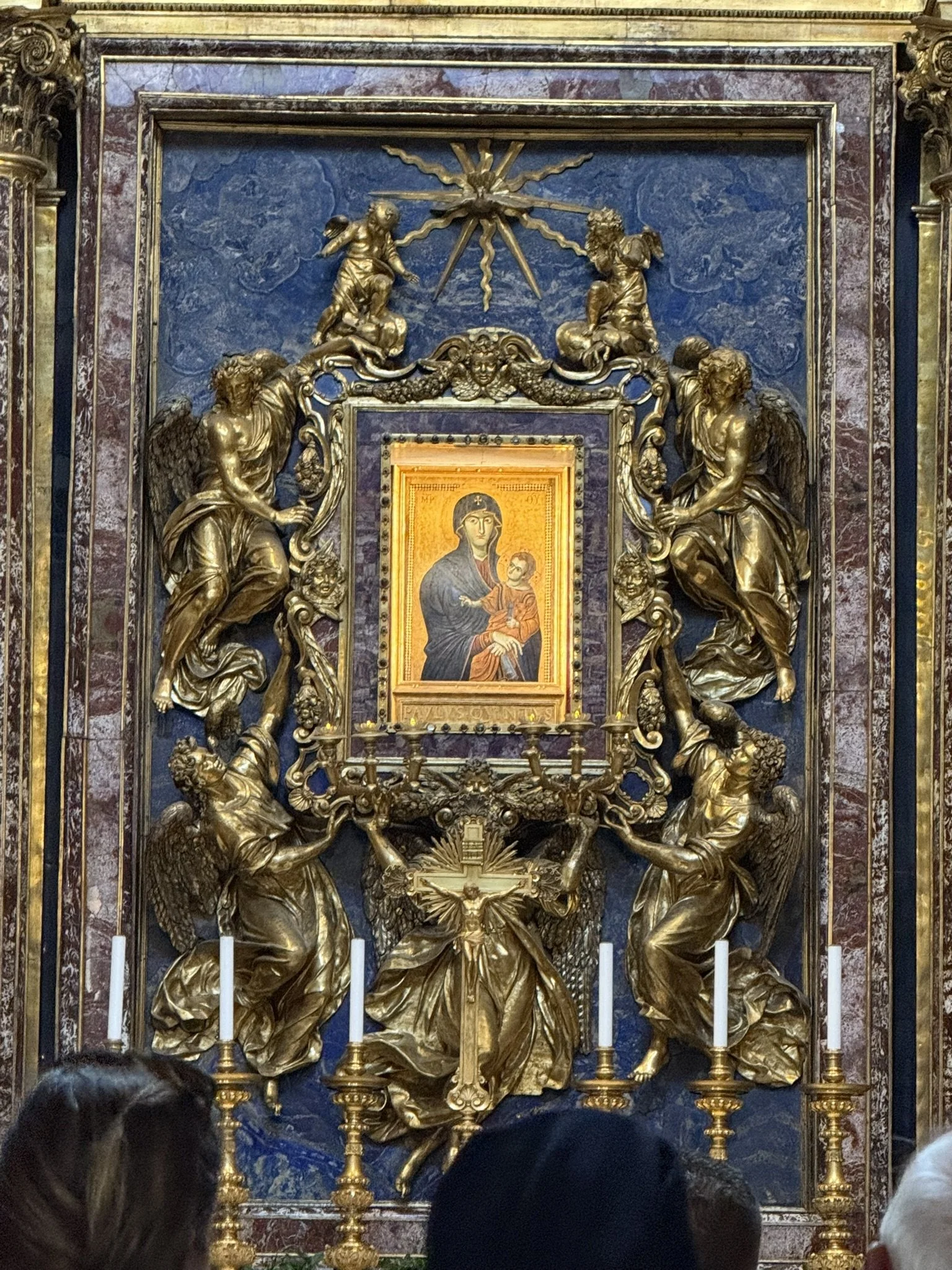
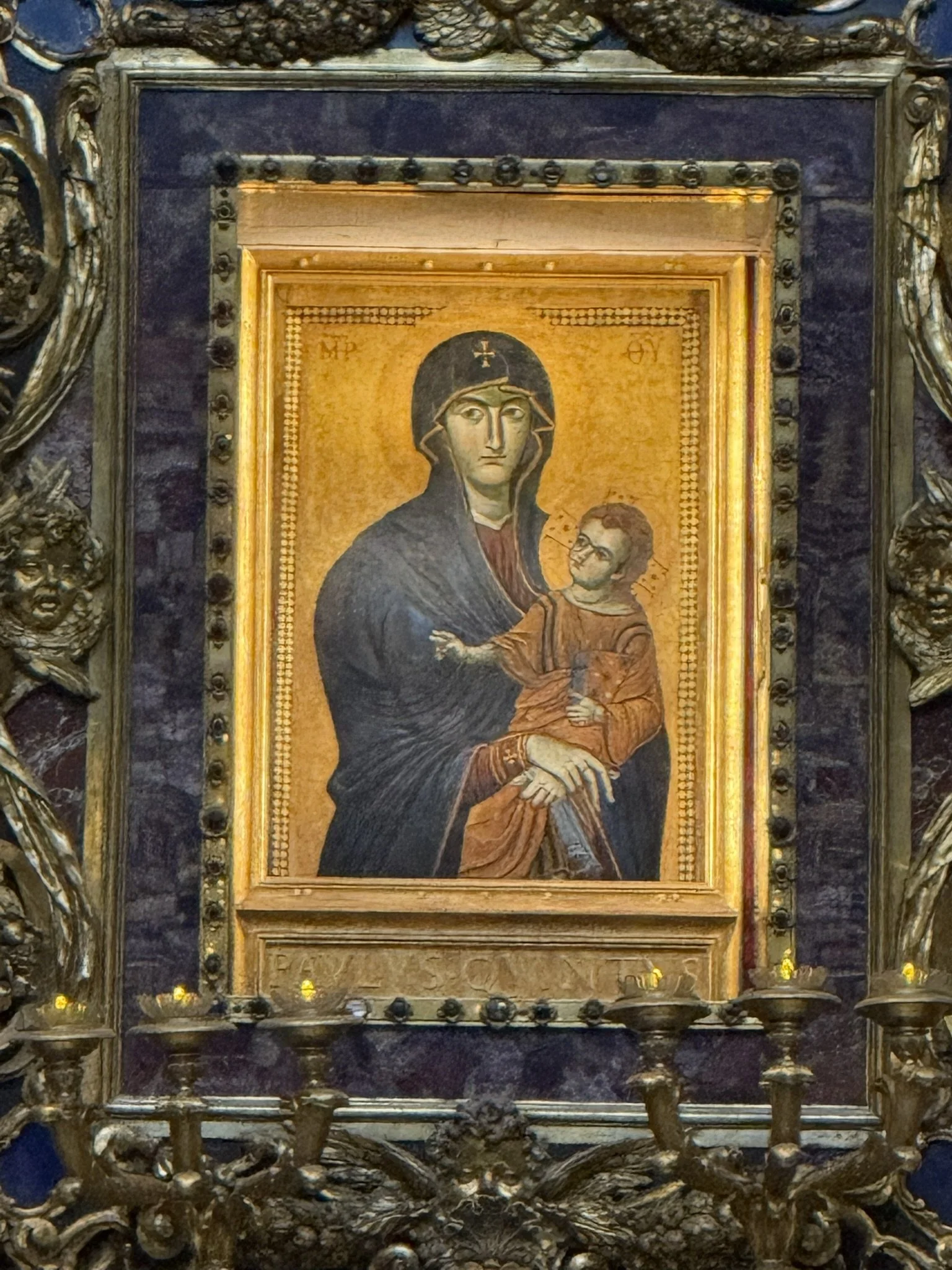
The line for Pope Francis’s tomb was out the door, and it stayed that way the entire time we were there. St. Mary Major was Pope Francis’s favorite basilica in Rome, visiting it the day after his election and many many times thereafter. His favorite icon was there: Salus Populi Romani (brought to Rome in the late 500s), and he set his tomb right next to the chapel that holds the icon. Salus (Protectress of the Roman People) isn’t particularly interesting when seen in a photo. But in person… in person there is something that captivated me. It held my gaze, and I stood looking at it for an unknown length of time.
The way Mary sits, holding him close and enwrapping him. She isn’t offering him to the meditator or directing their attention to Jesus, like is common in much of Marian imagery. Instead, she almost wants to keep him close. She wants him close, physically close. She wants to hold him tight. To me, Mary is thinking about what Simeon has told her about what her child will suffer. She does not want to let him go. She wants to enjoy the time she has with him now, when things aren’t complicated, before Jesus has started his ministry and gone out into the world. For now, Jesus is all hers. Click to enlarge images.
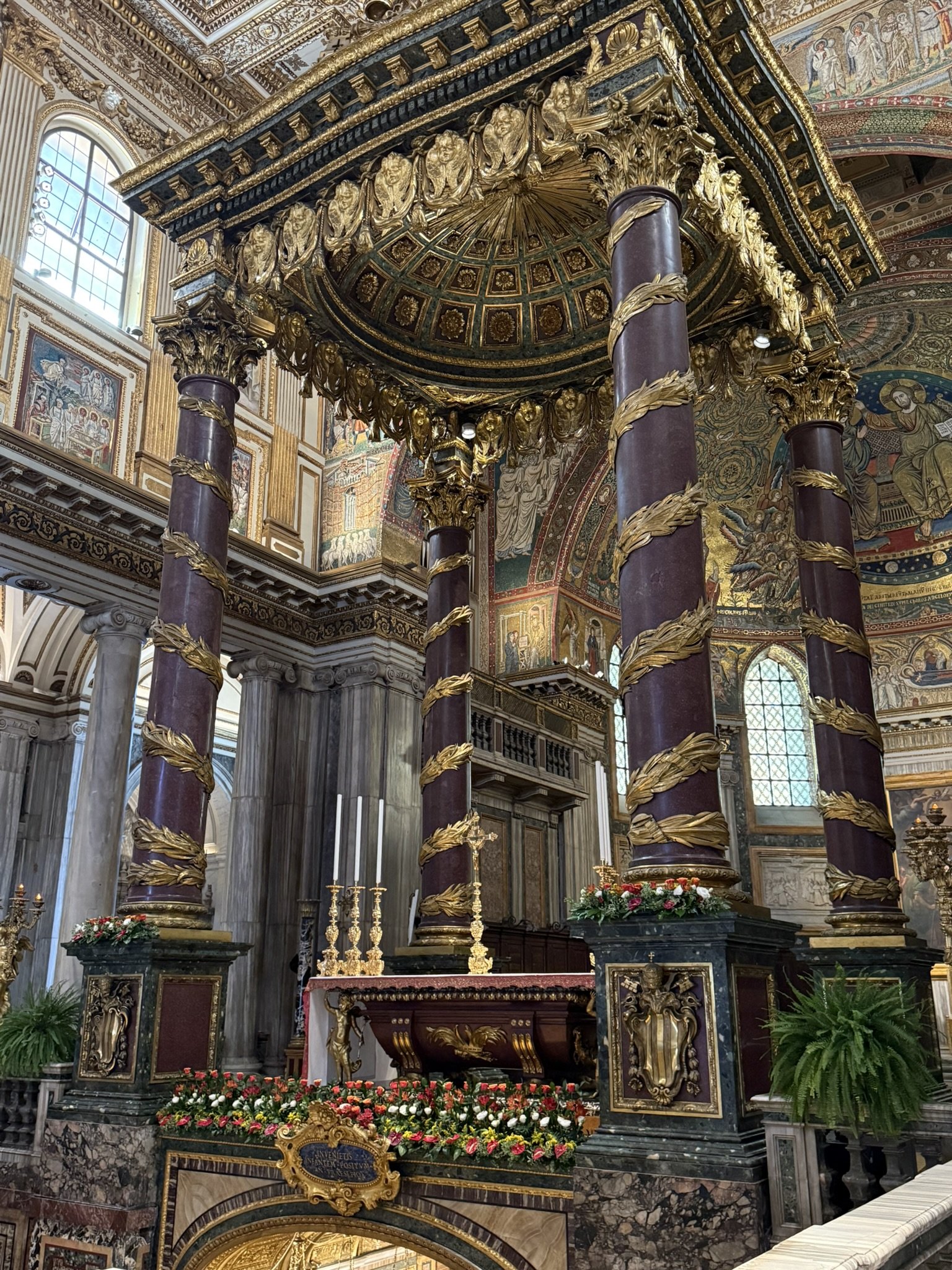
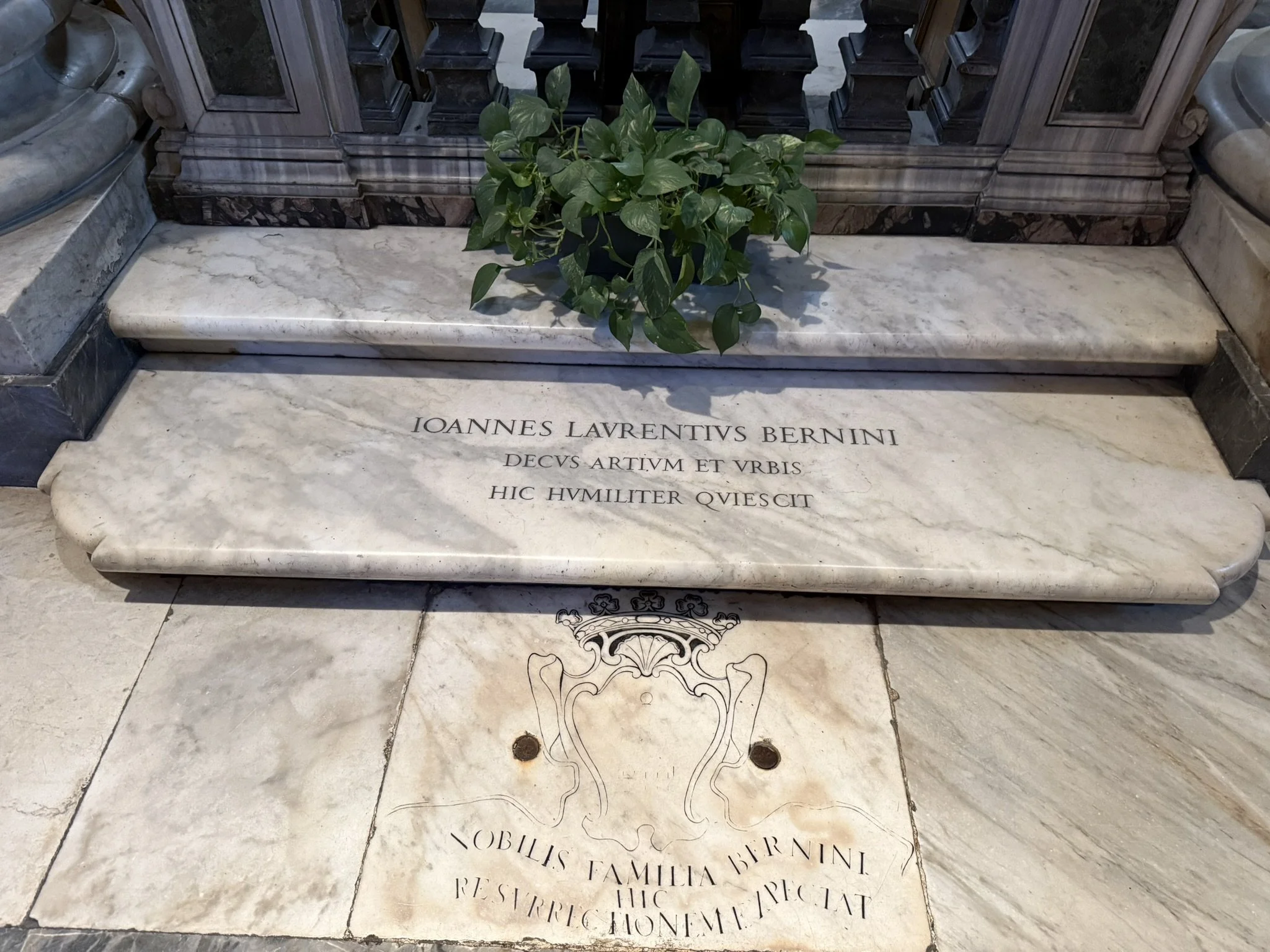
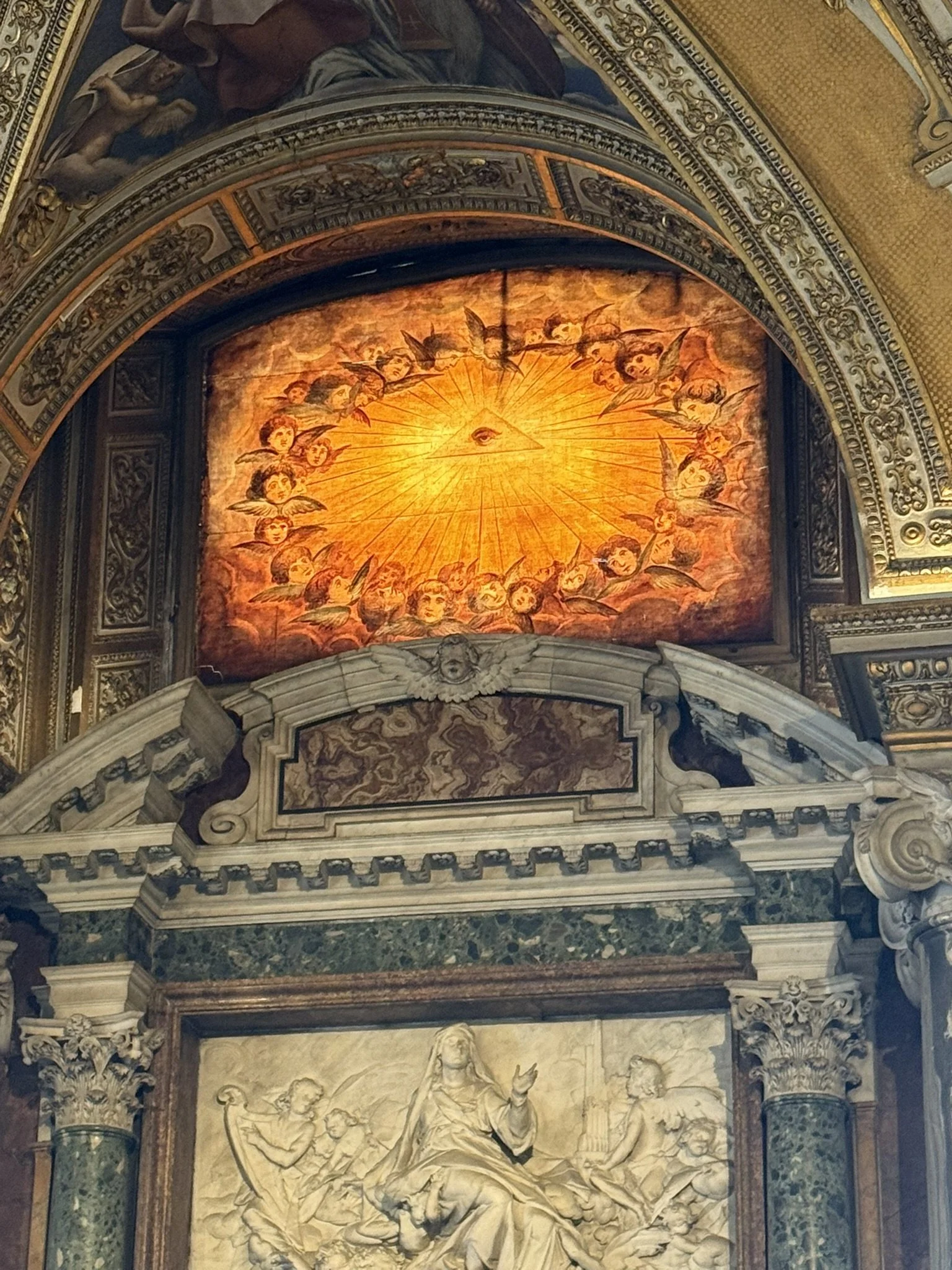
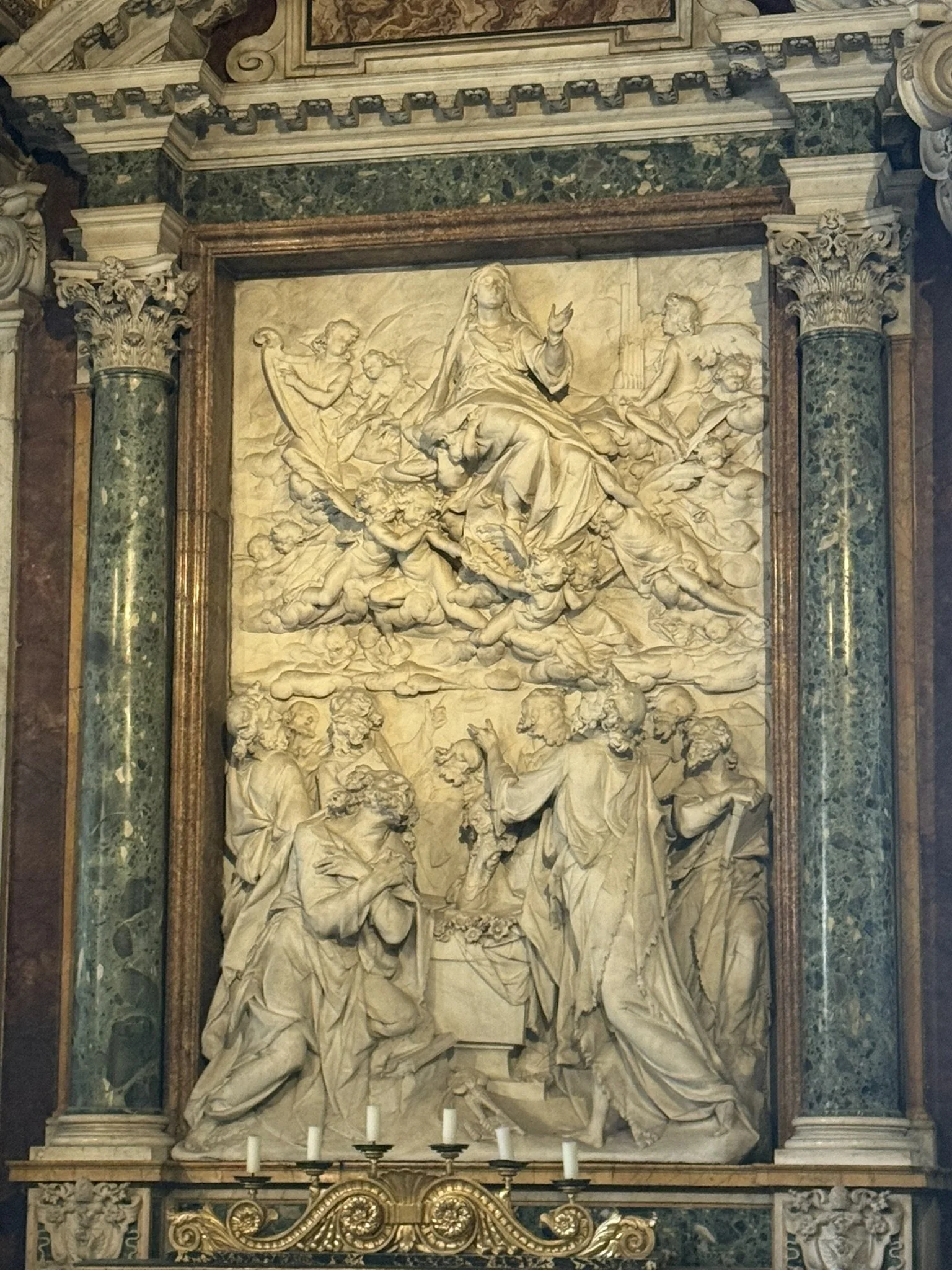
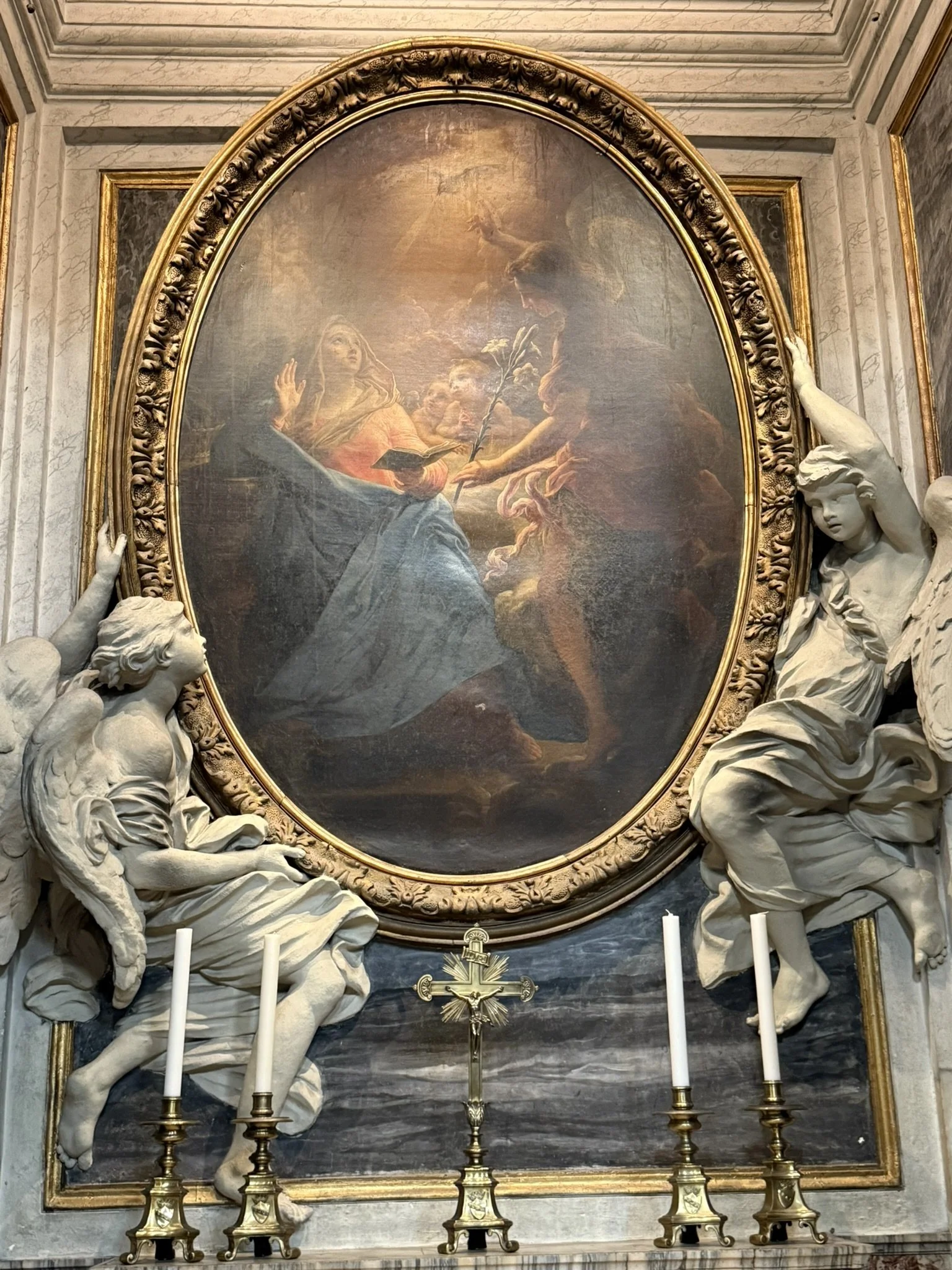
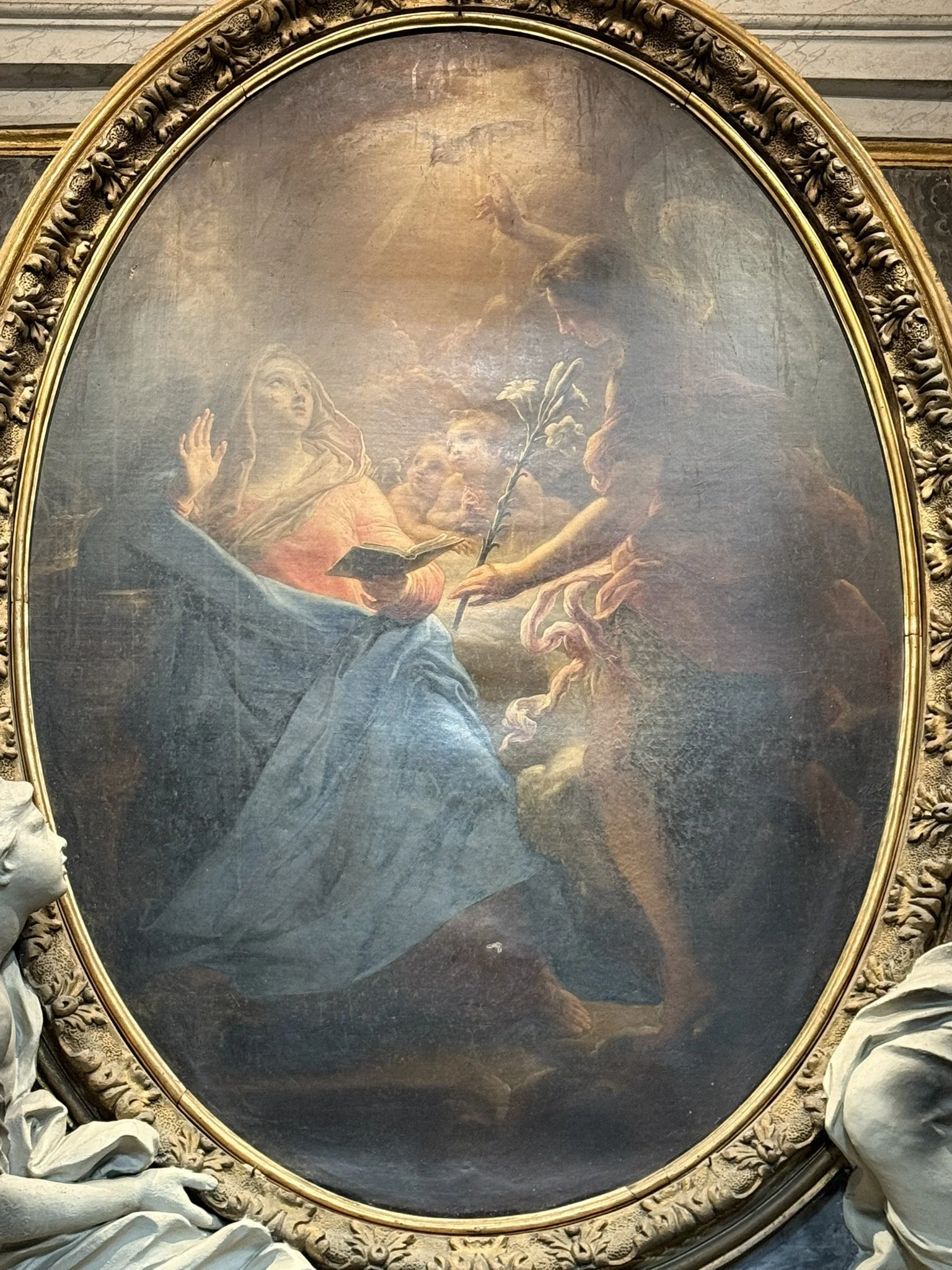
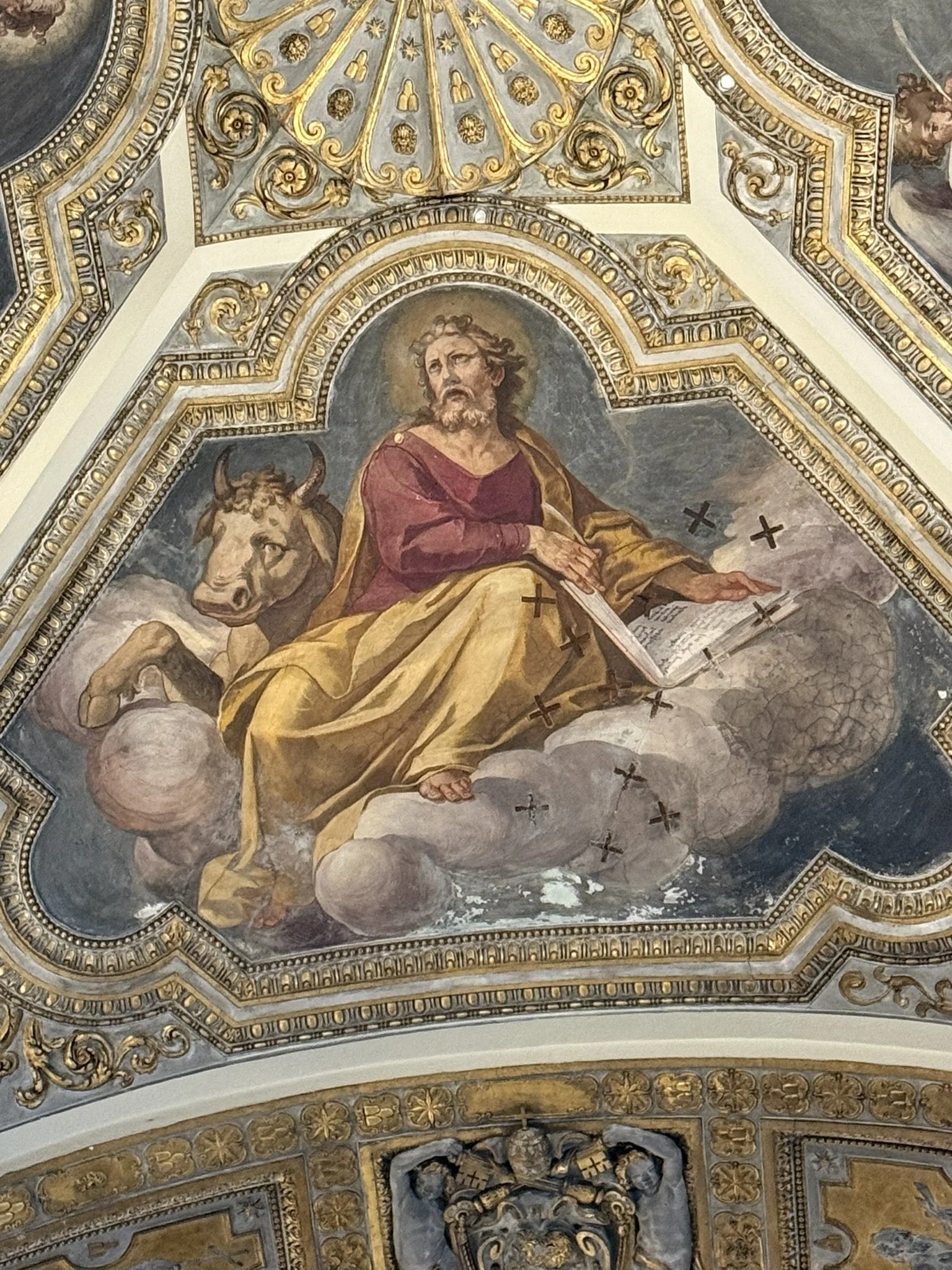
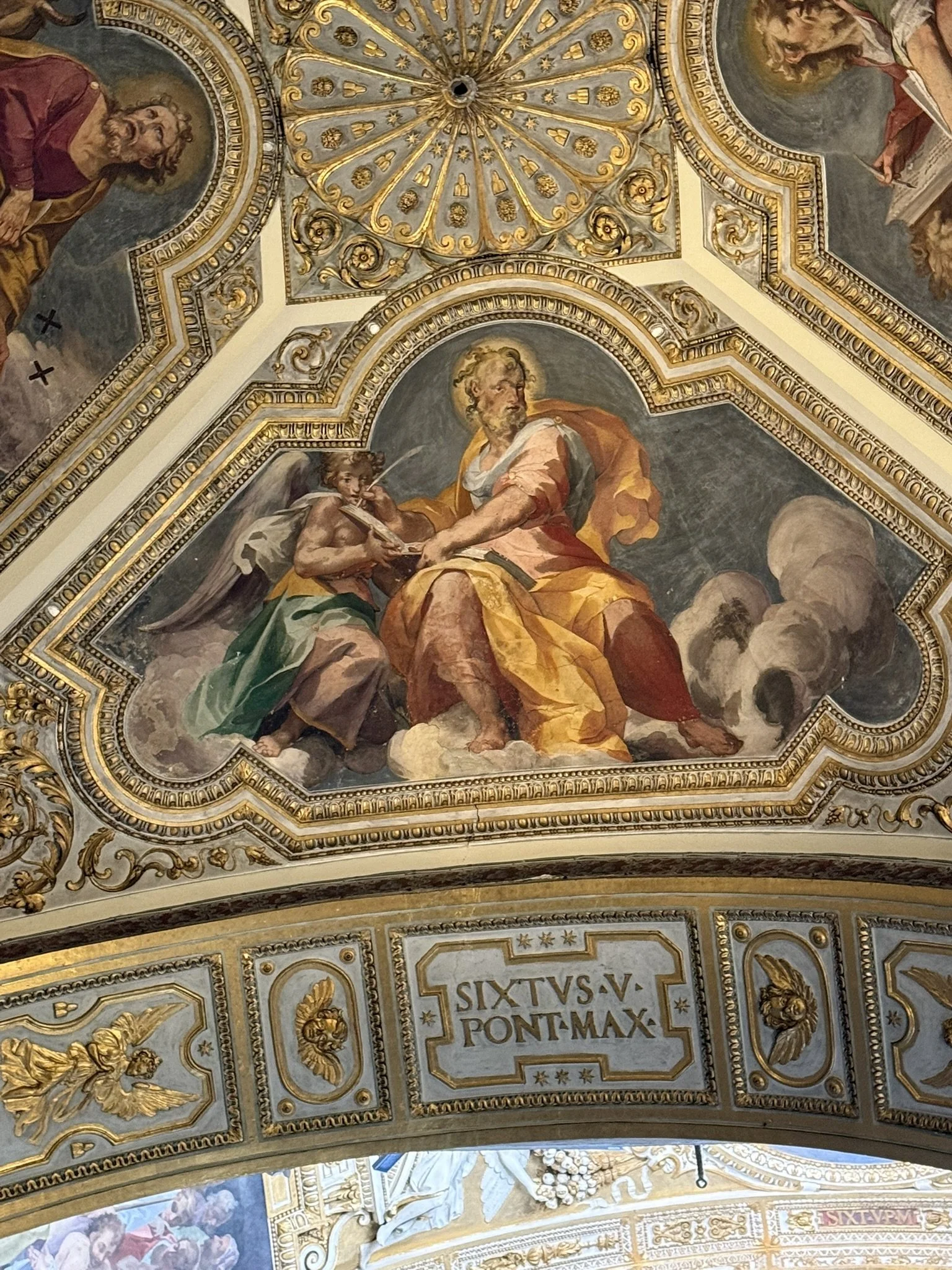
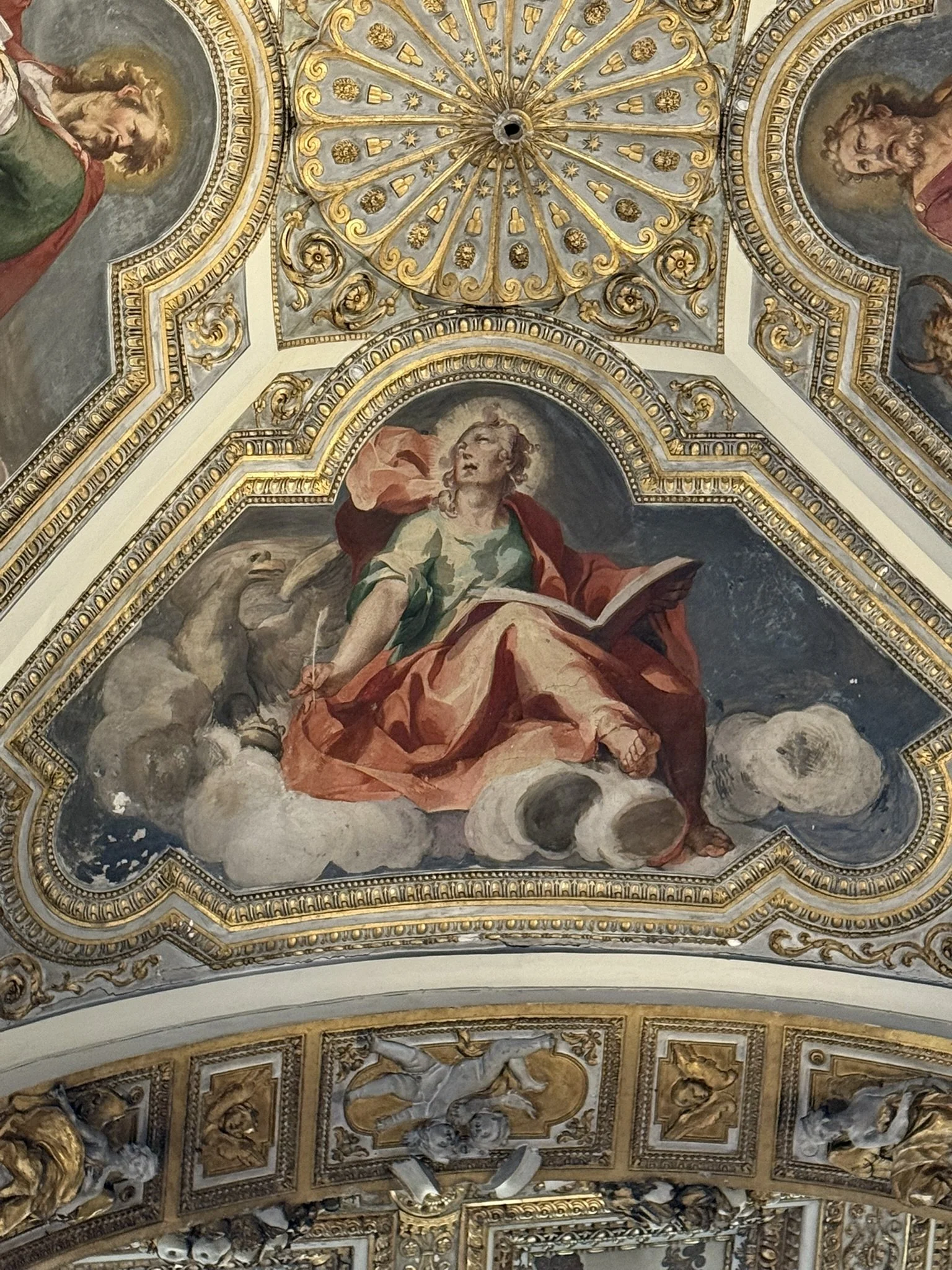
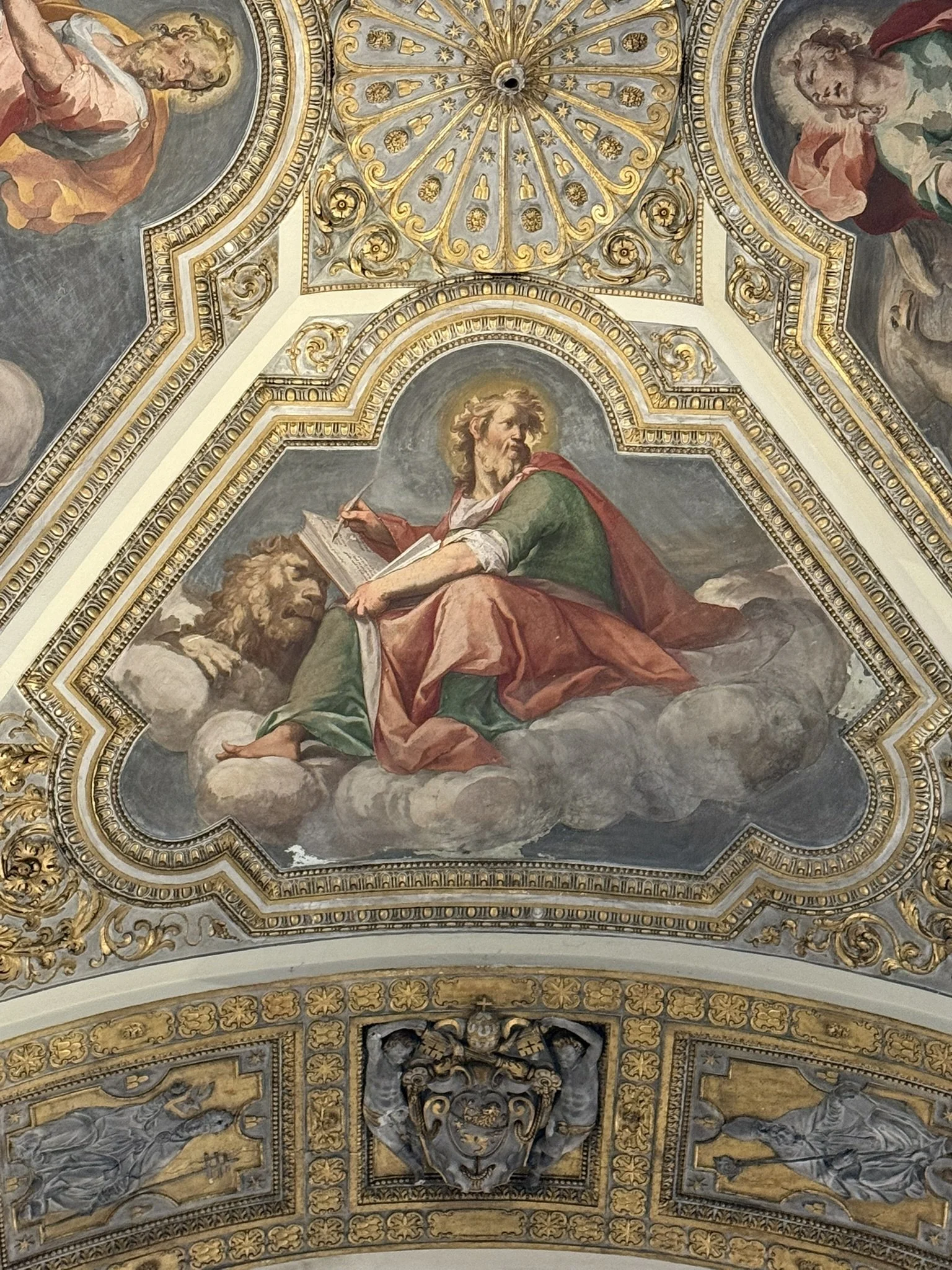
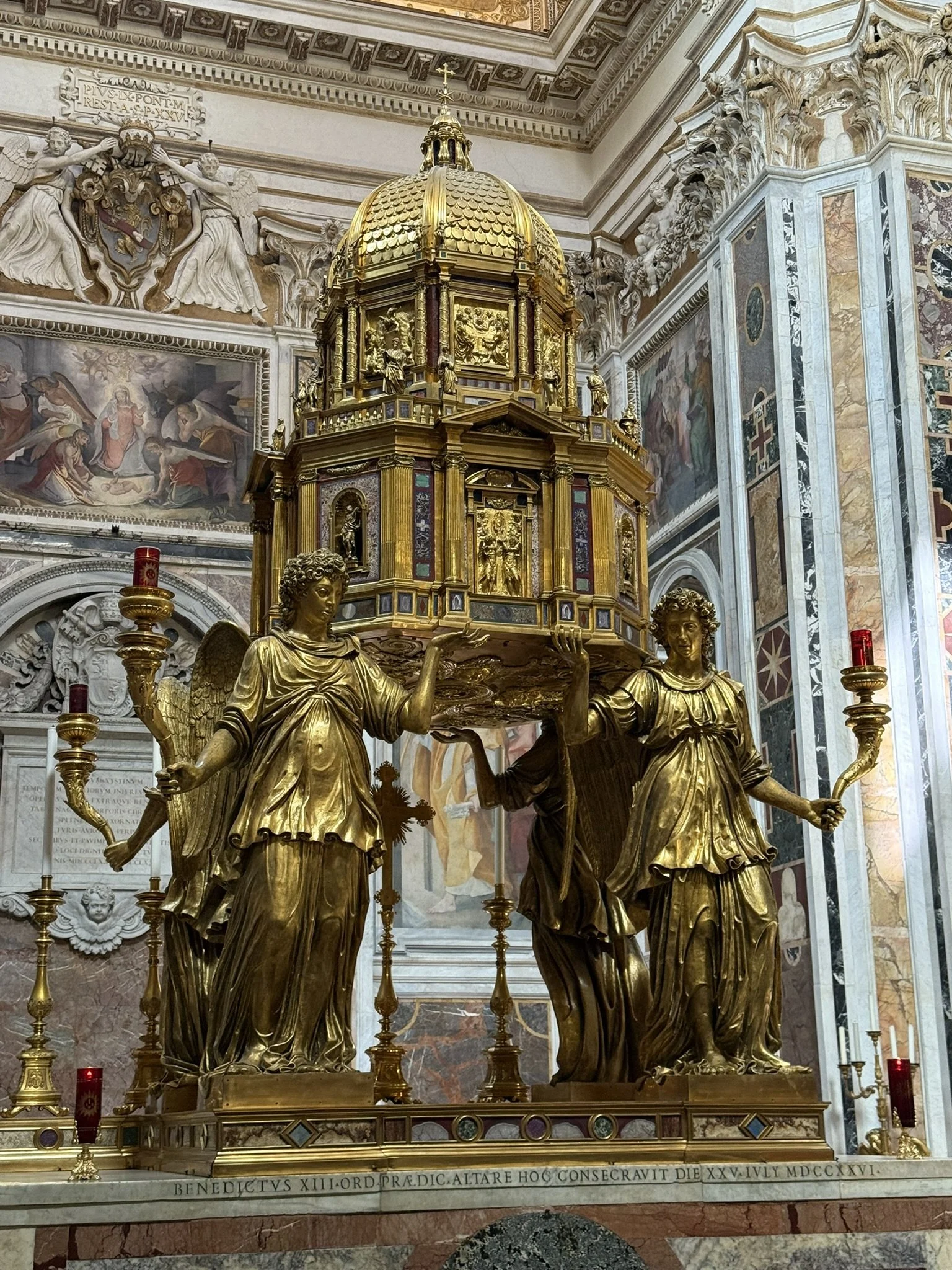
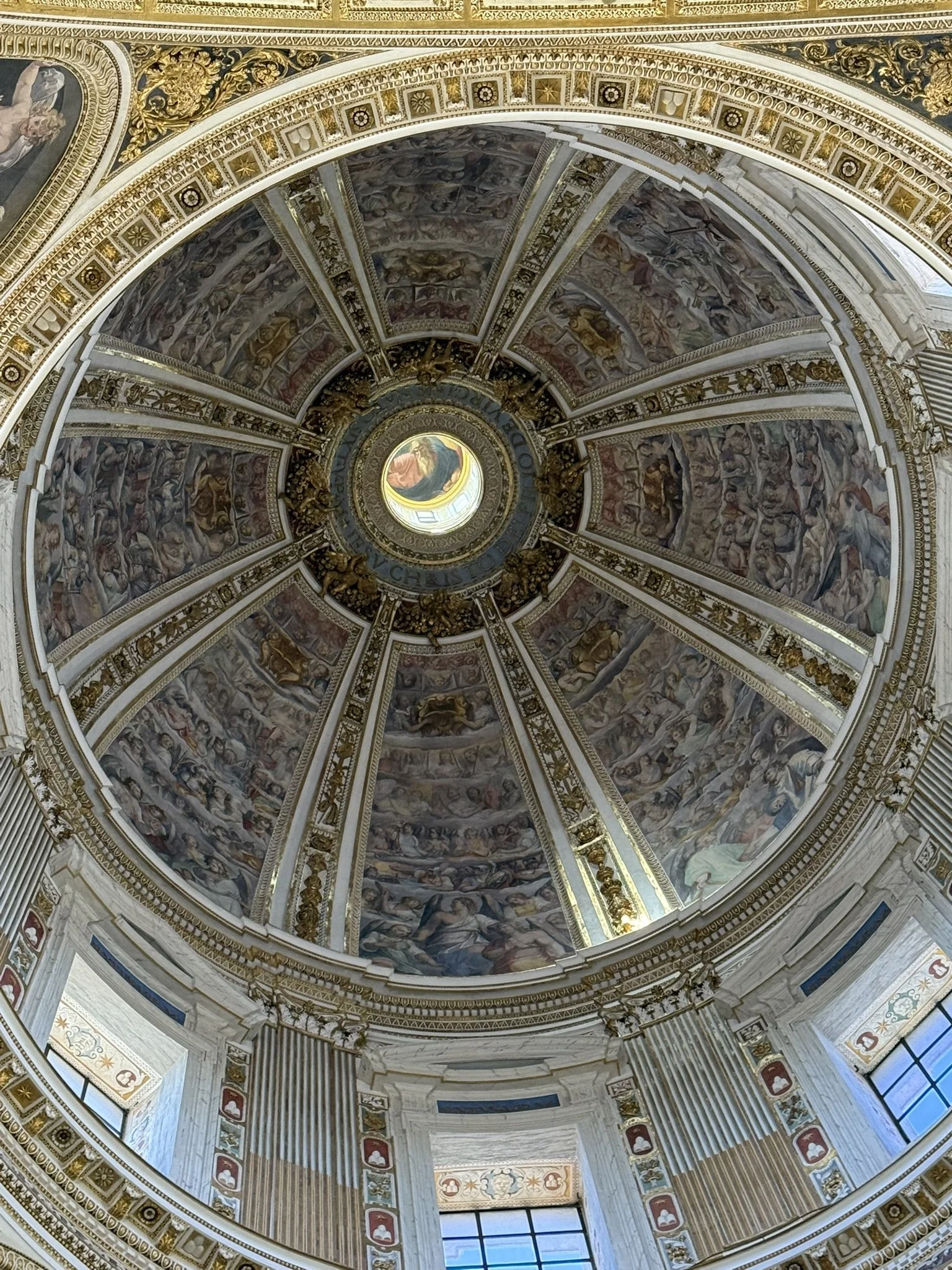
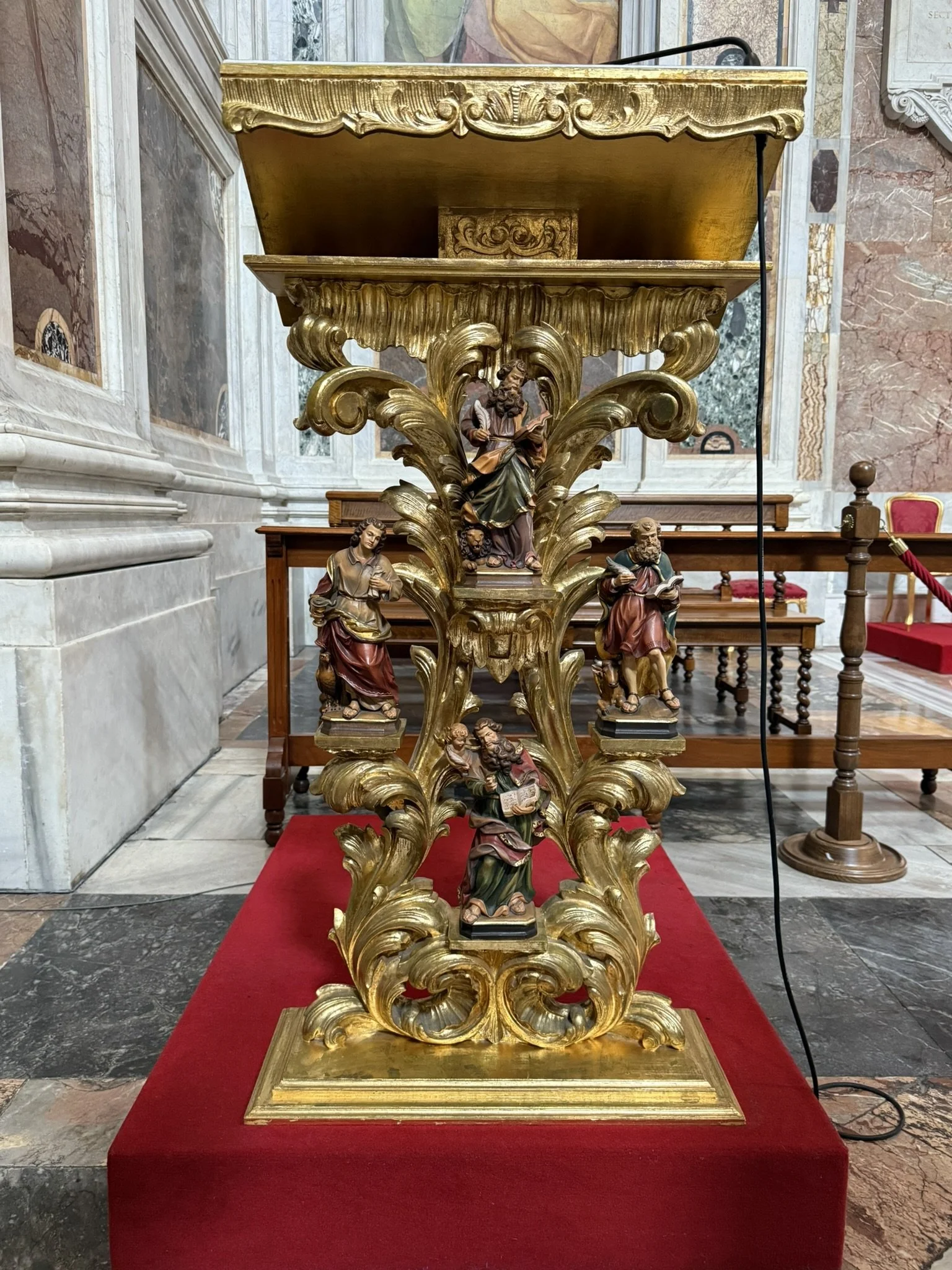
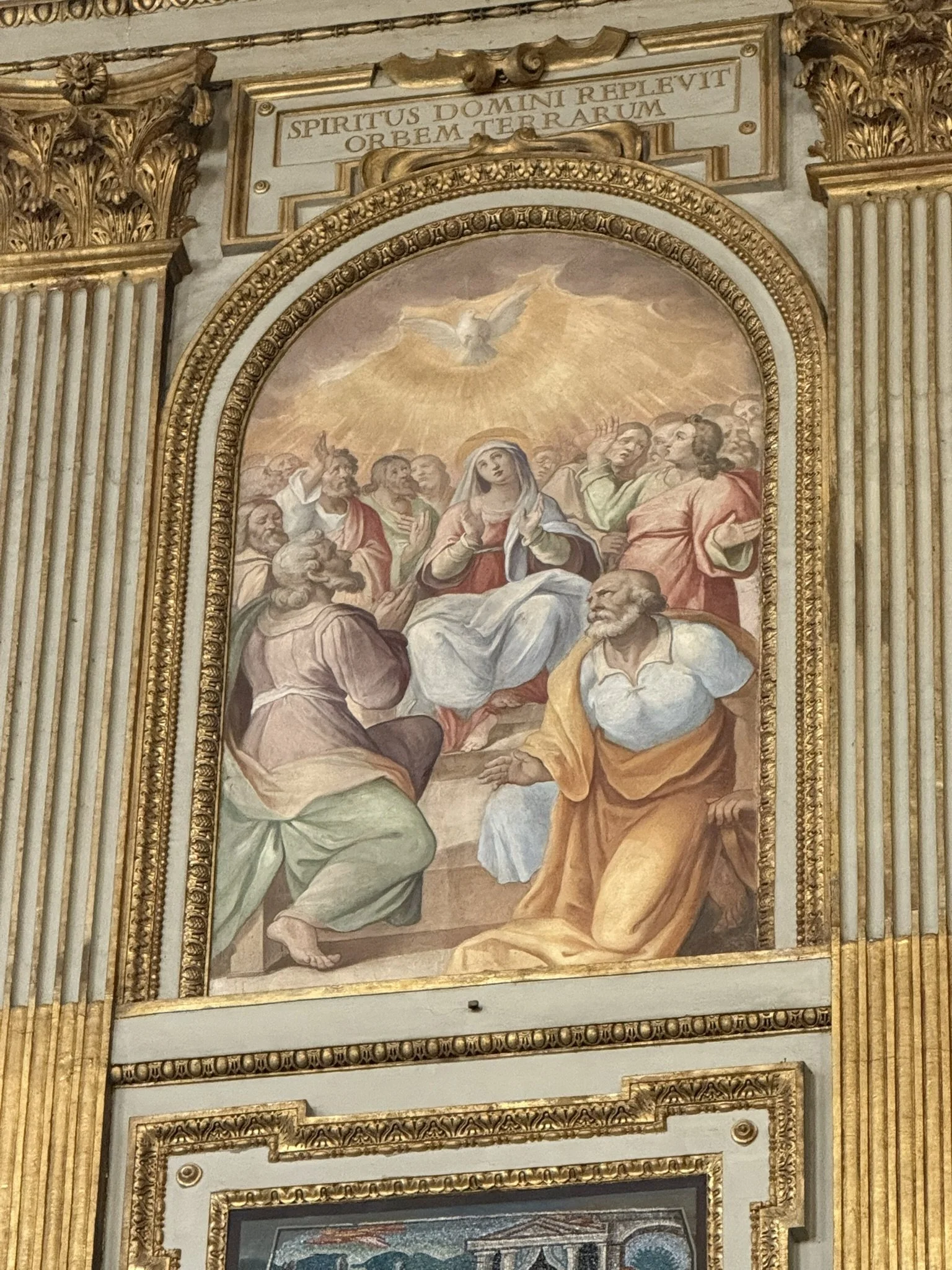
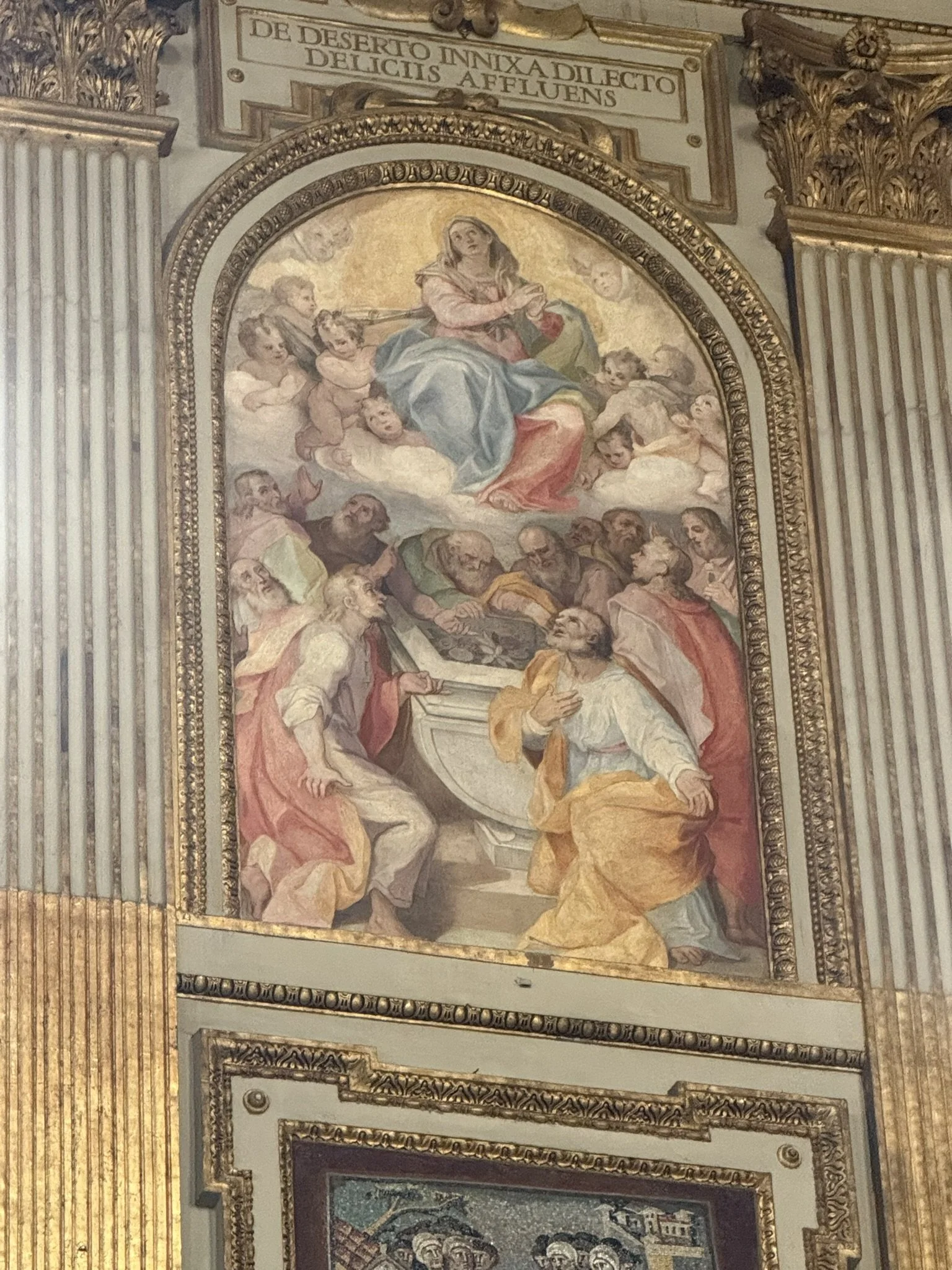
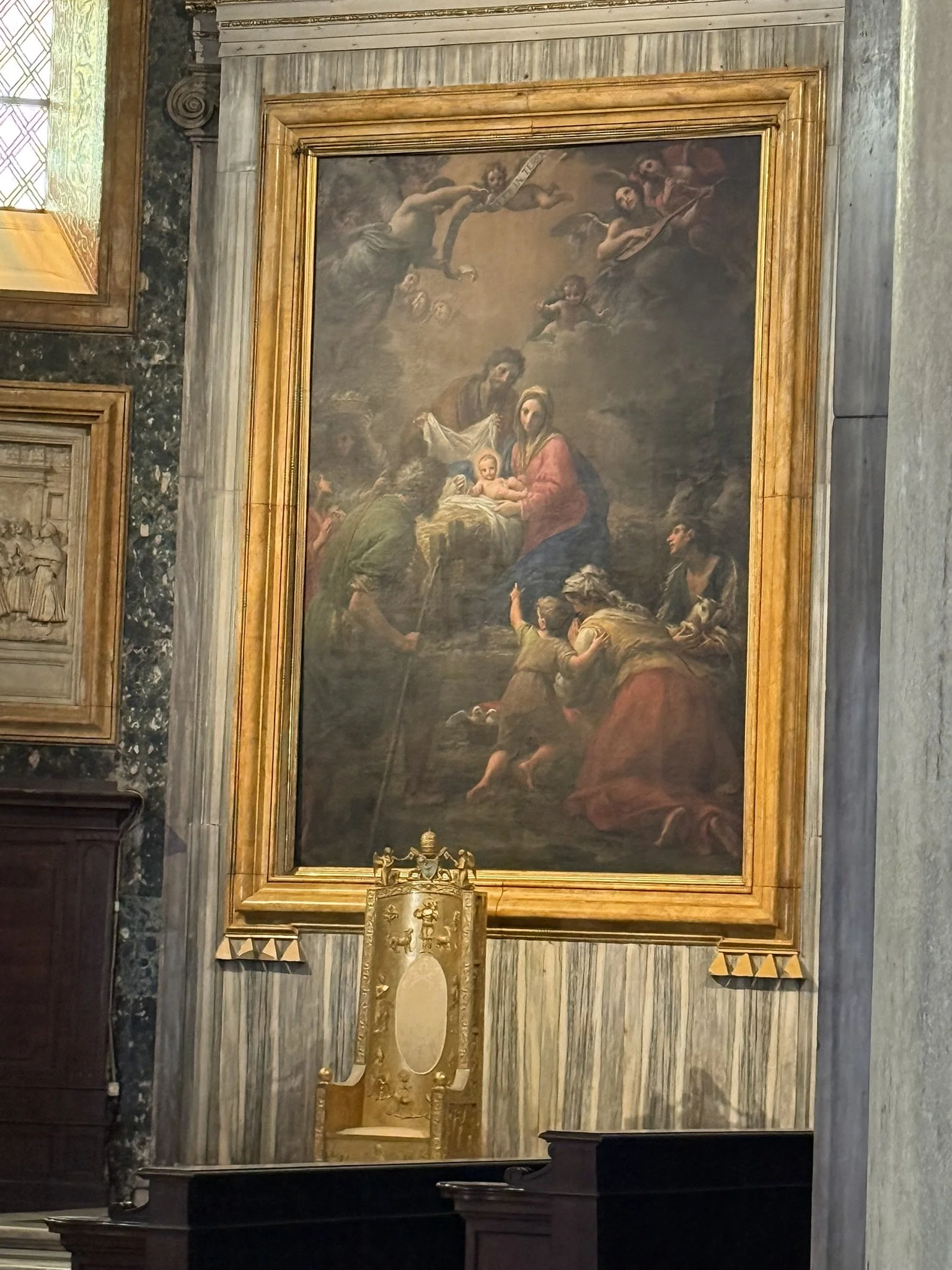
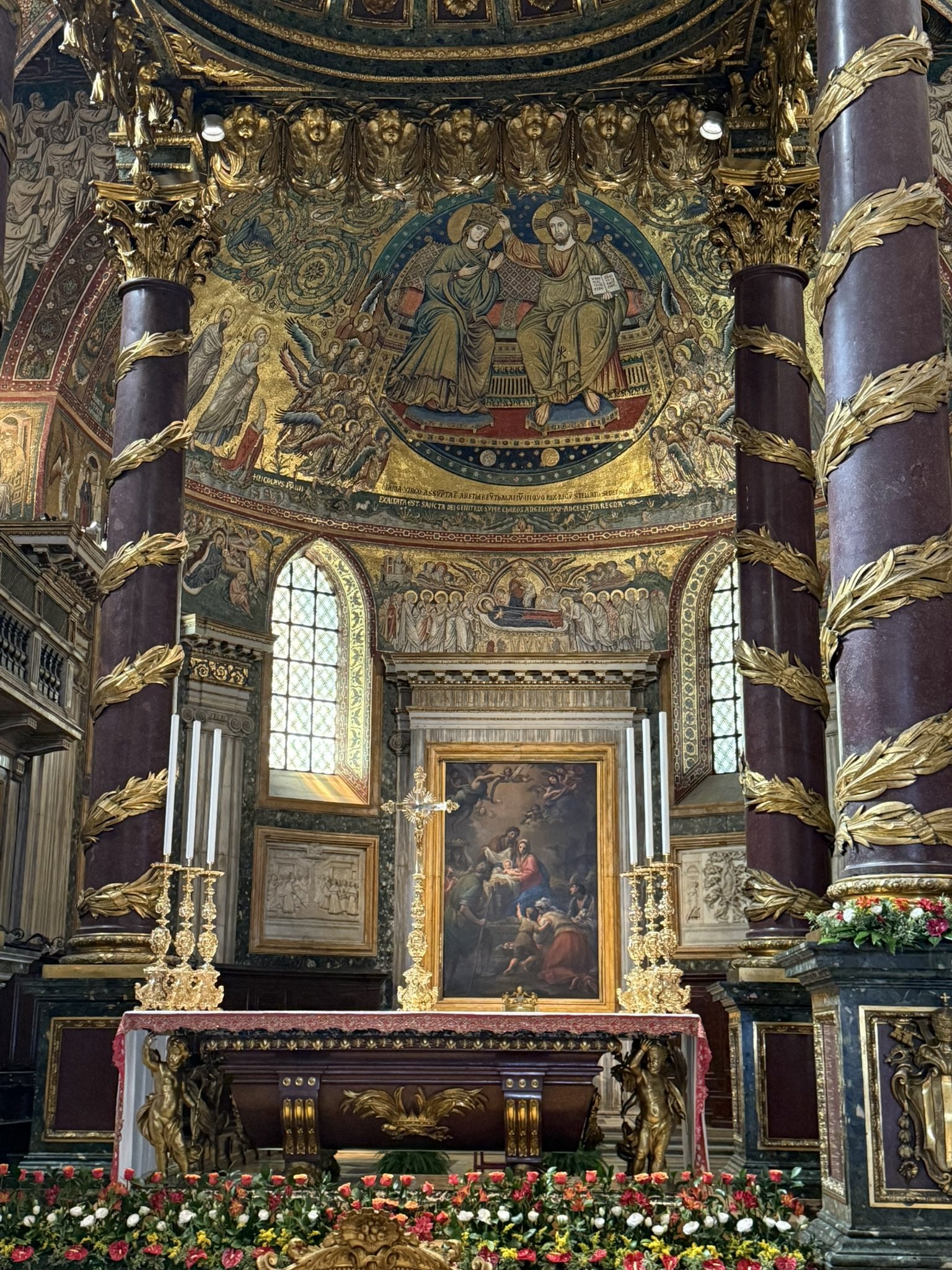
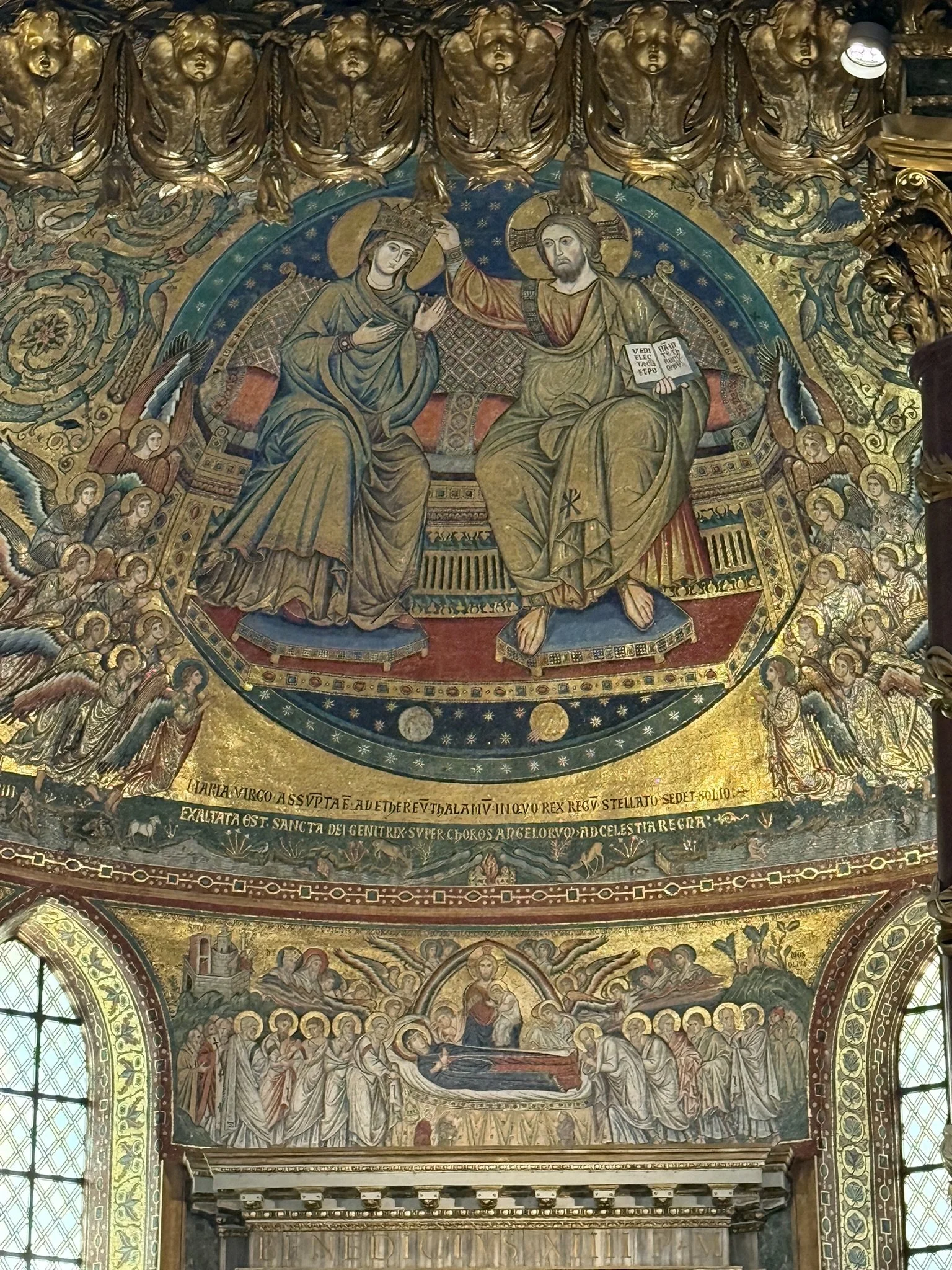
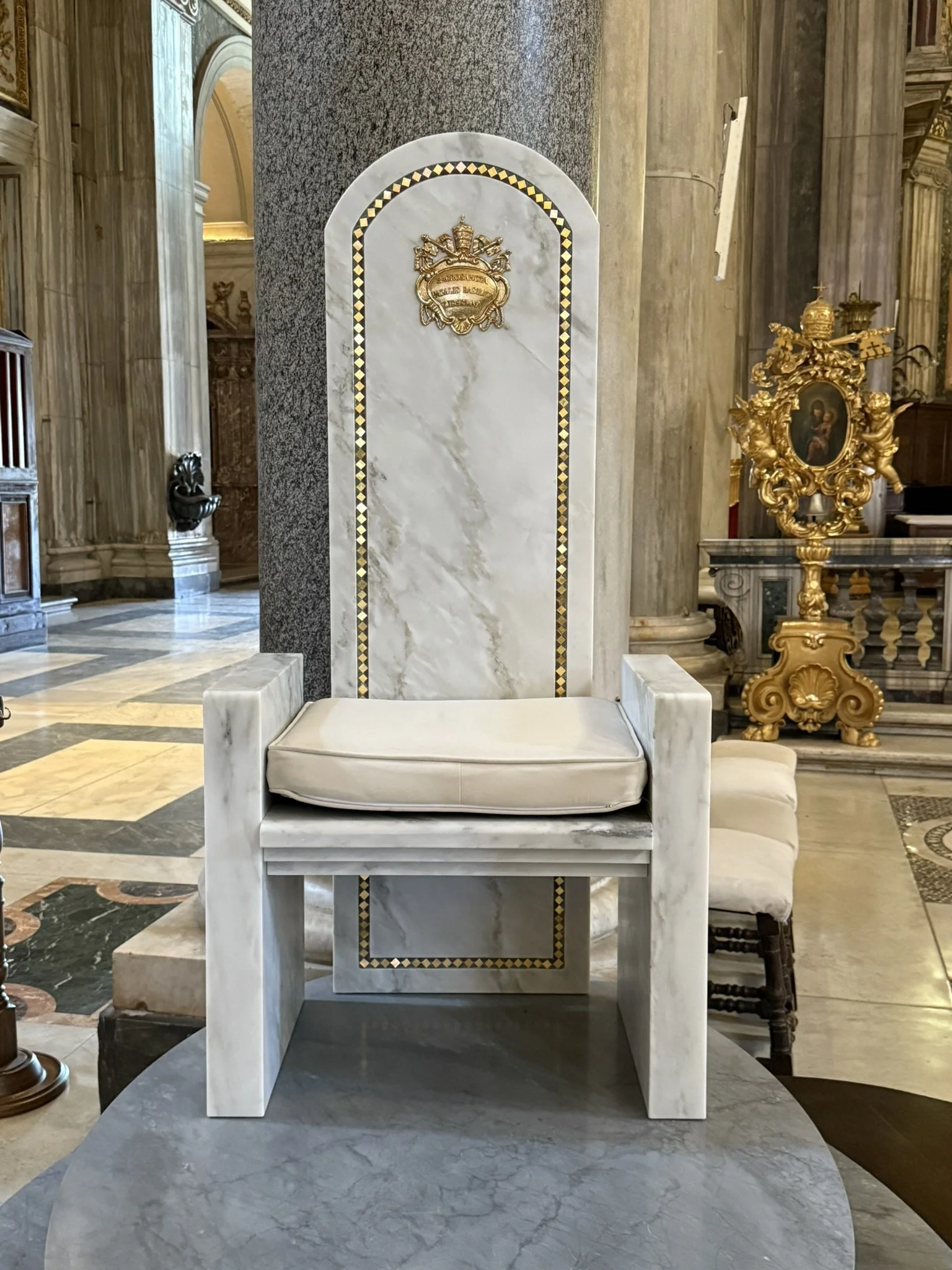
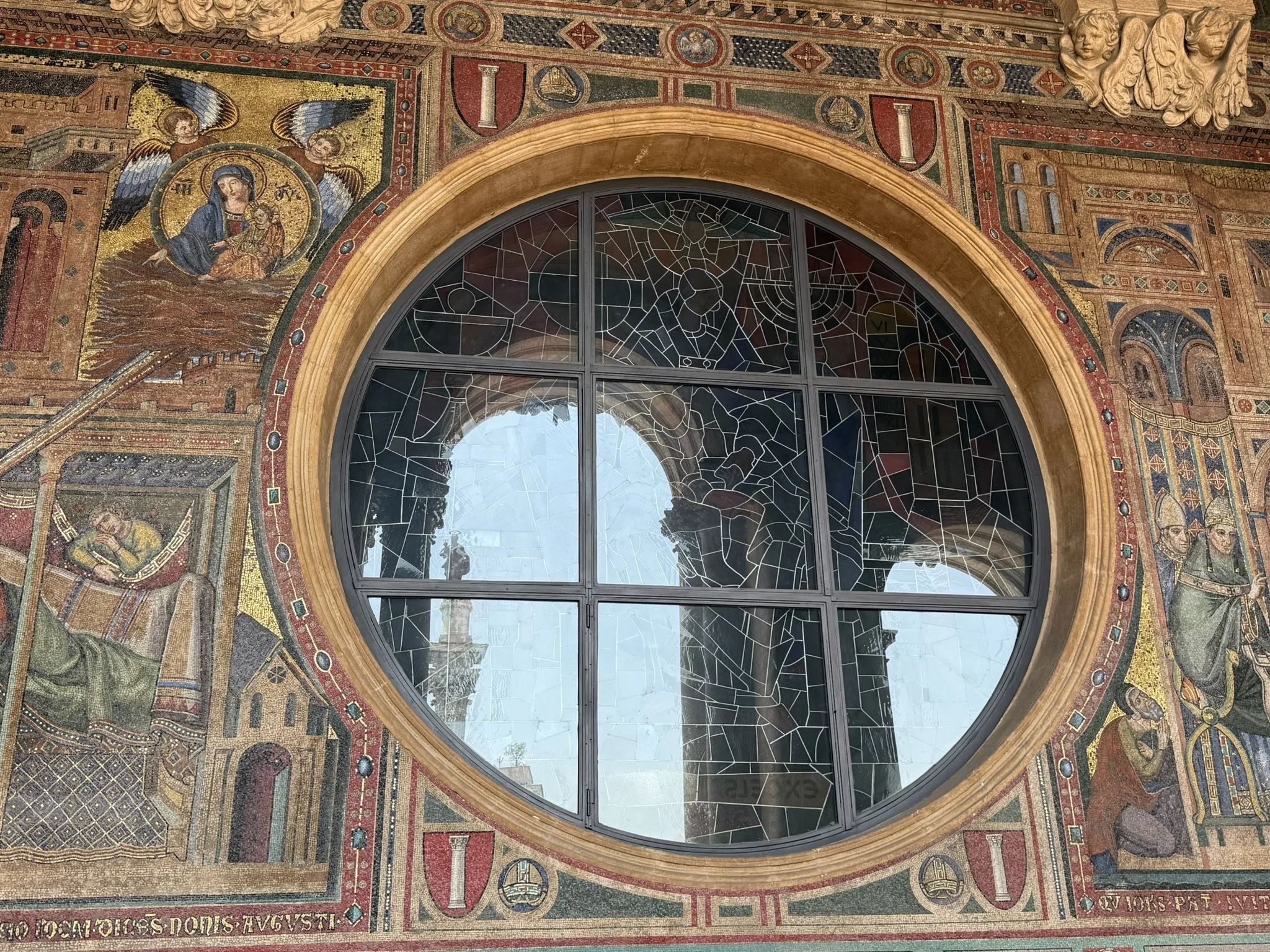
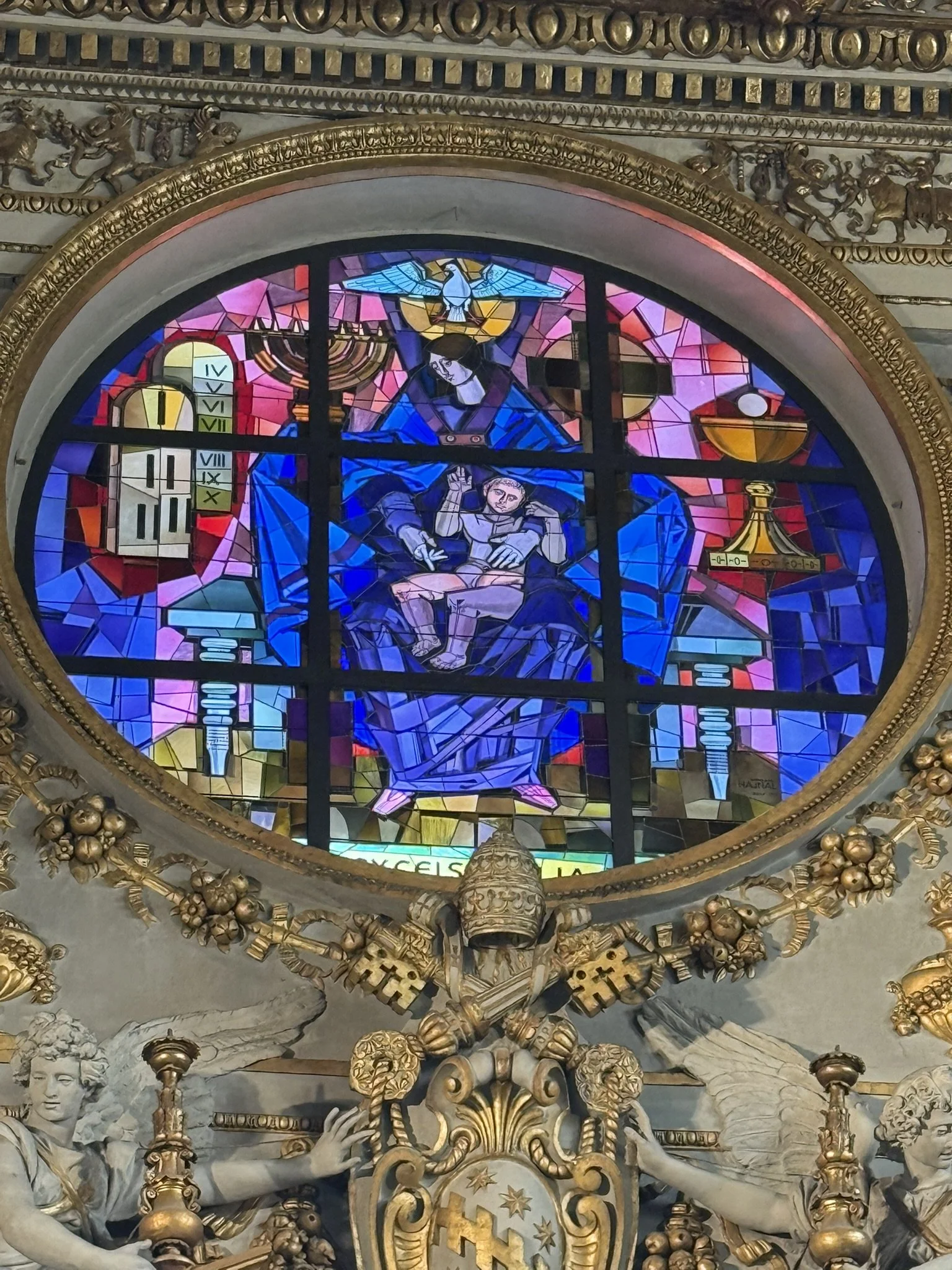
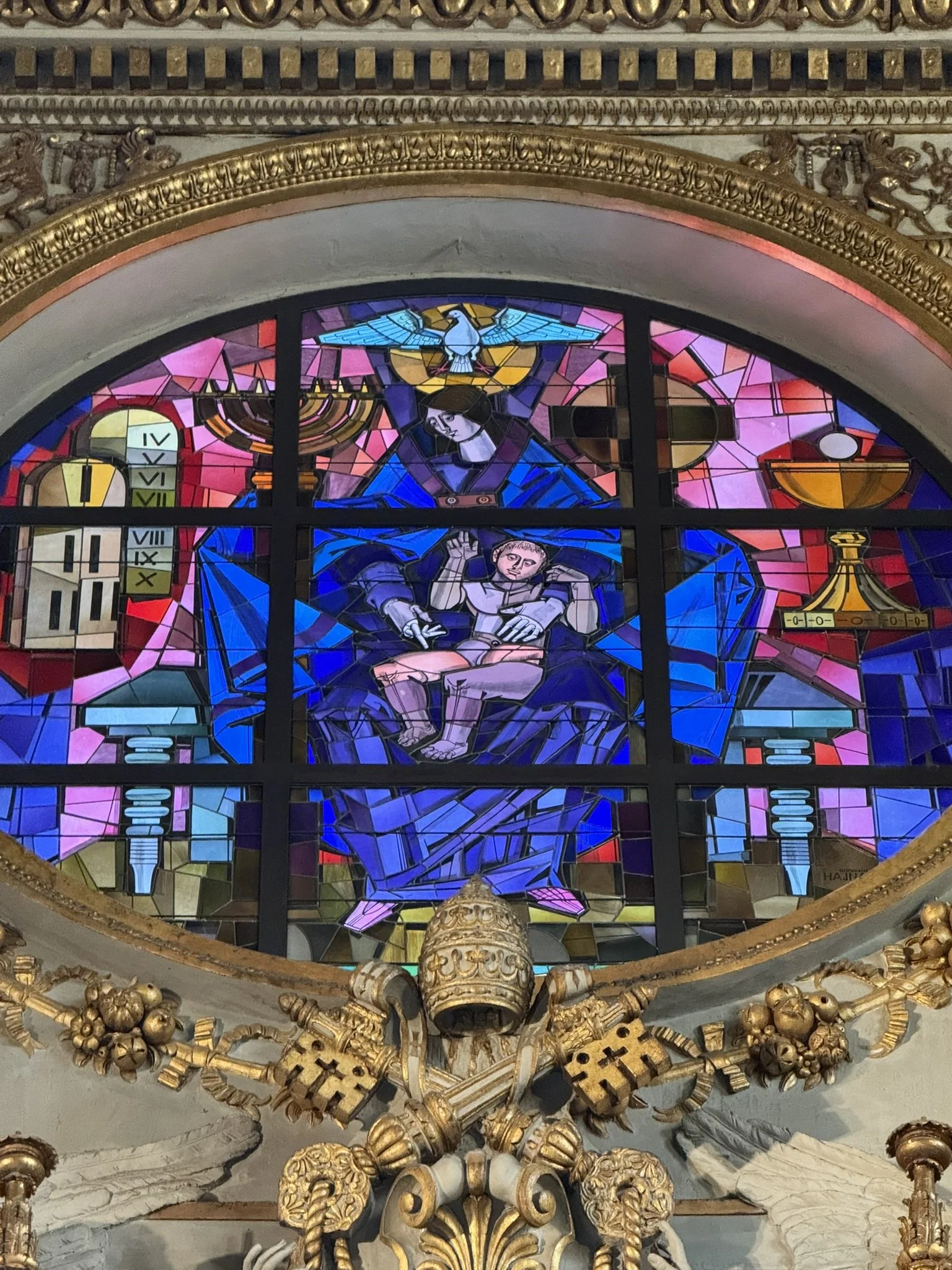
I want to say something else about Mary for a moment, and then something about us. So often, Protestants focus on the dogmas and devotions of Mary, seeing them as threats to our worship of God. For some reason, it seems like many think that our praise of Mary and our belief in the gifts bestowed upon her imply we see her and not God. But Mary, like us, is a stained glass window. Her radiance, all she has, all she is, all of her gifts, are only from the merits of Jesus. She is beautiful only because of God. She is immaculate only because of God. Like the Ark of the Covenant was only holy and set aside because God dwelling there, Mary is only holy and set aside because of God’s love. Without God, there are no dogmas of Mary.
We, too, are like this stained glass window. It’s pretty enough, I guess. I can see the artistry that went into it, and I liked it well enough to photograph it. But it was only when the SUN shined through that one fully appreciates its beauty and artistry. Indeed, only when it is illumined by the sun does it fulfill its final cause (its purpose for existing). 1) The world is better when we all see each other as stained glass windows: pretty and full of artistry. 2) We are most perfect when illumined by the Son.
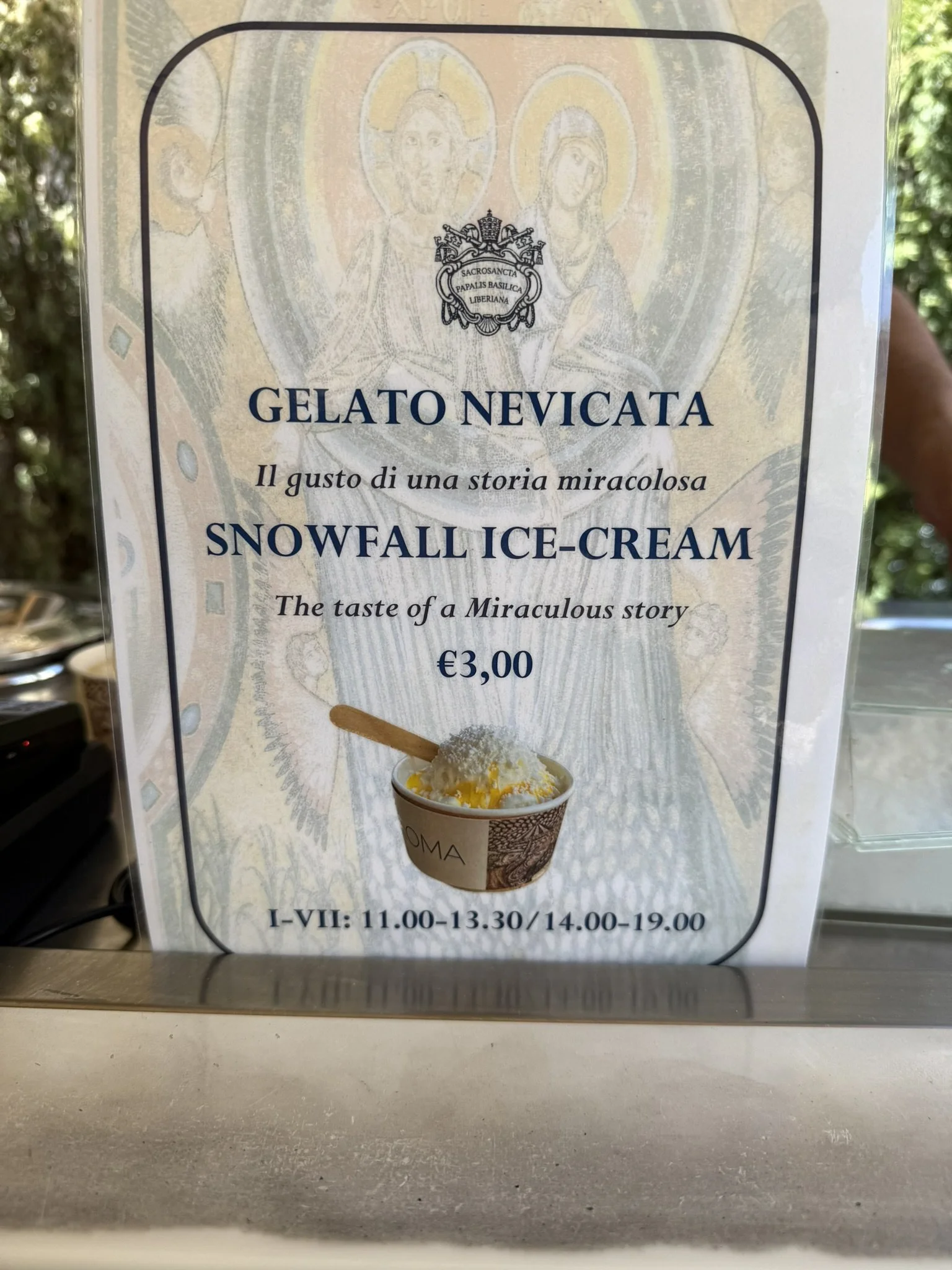
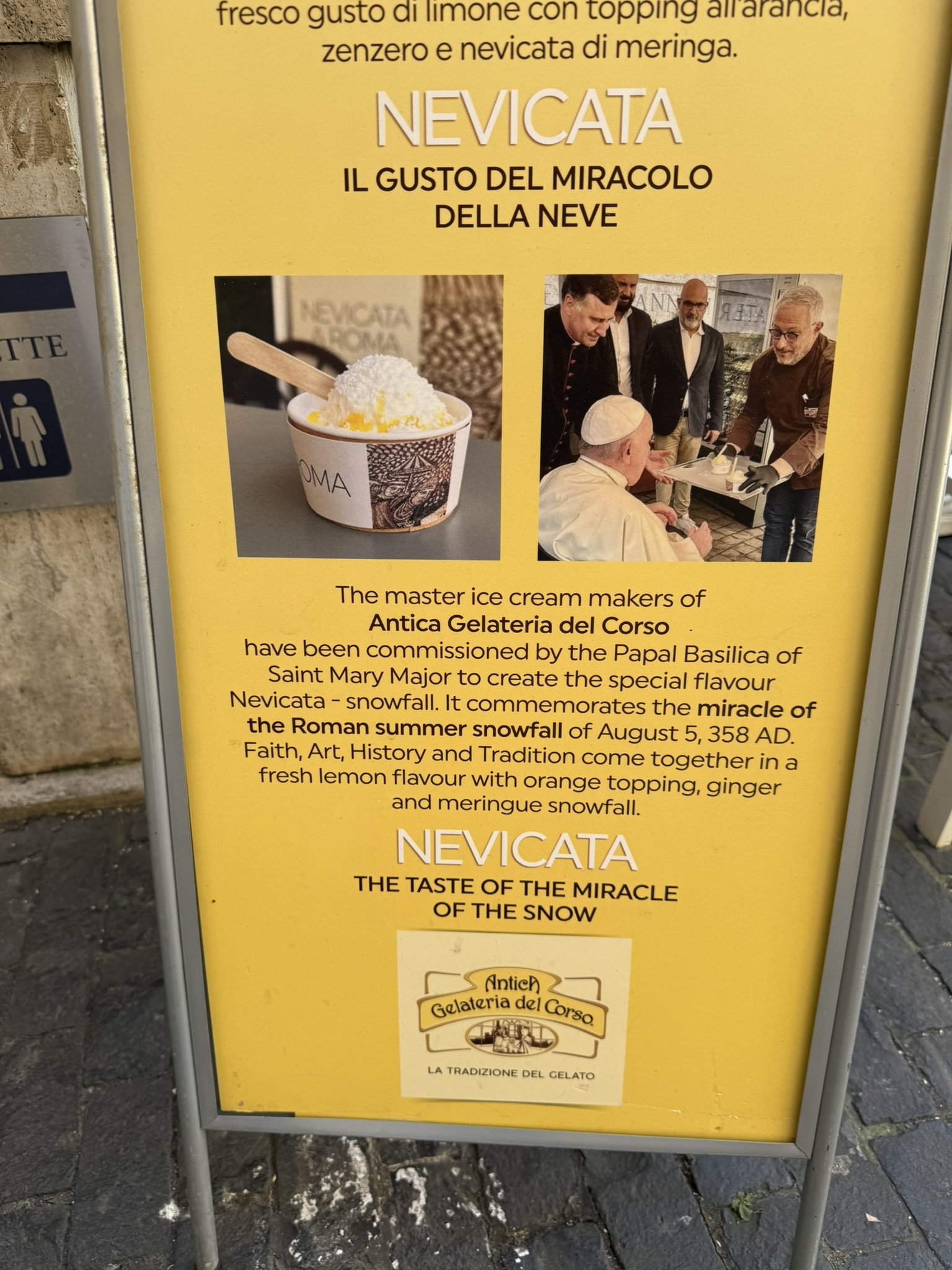
The basilica has a special dessert, with a play on lemons (brought from Israel to Rome, and a sign of status for ancient Roman elites) and the snow legend.
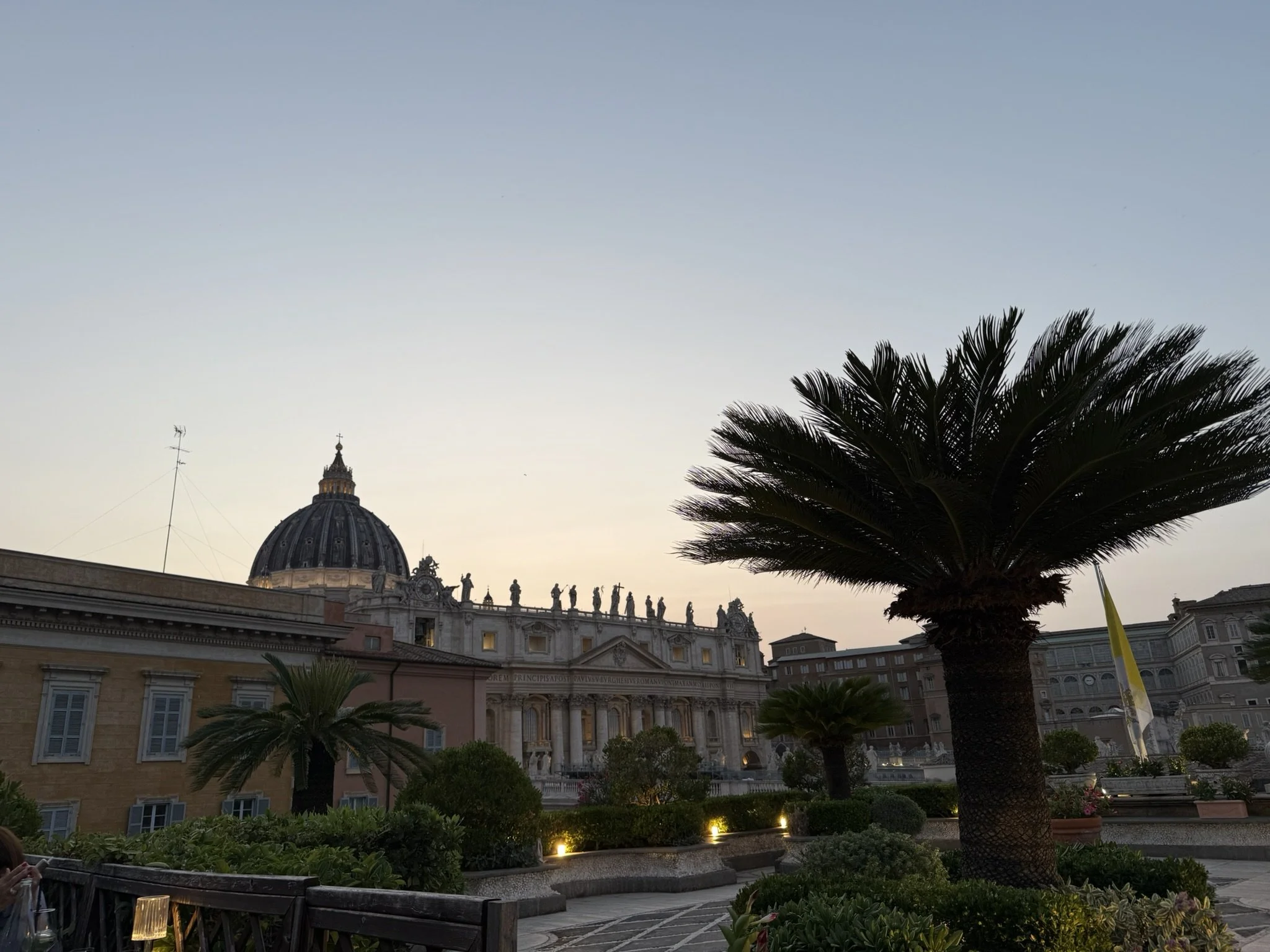
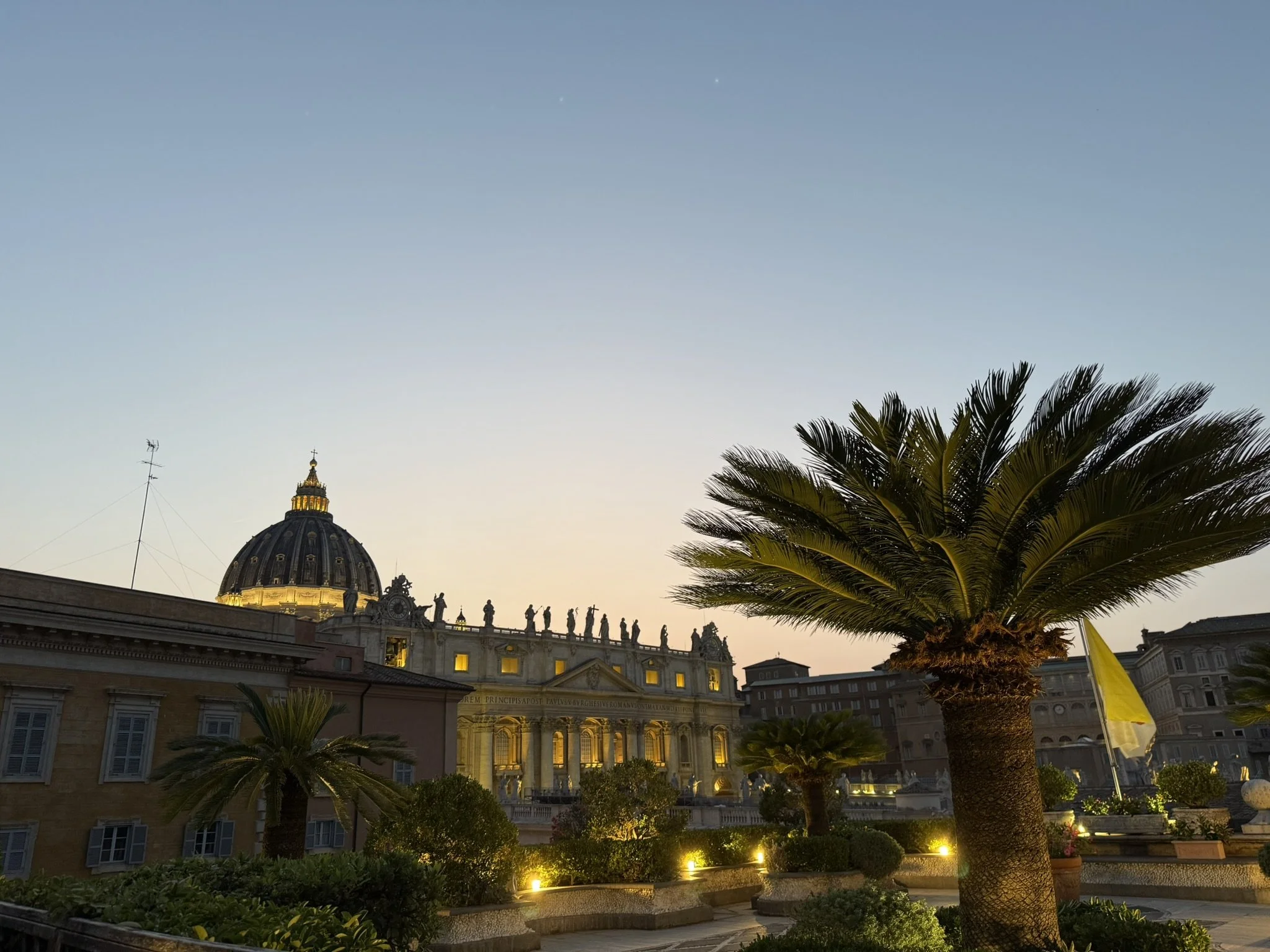
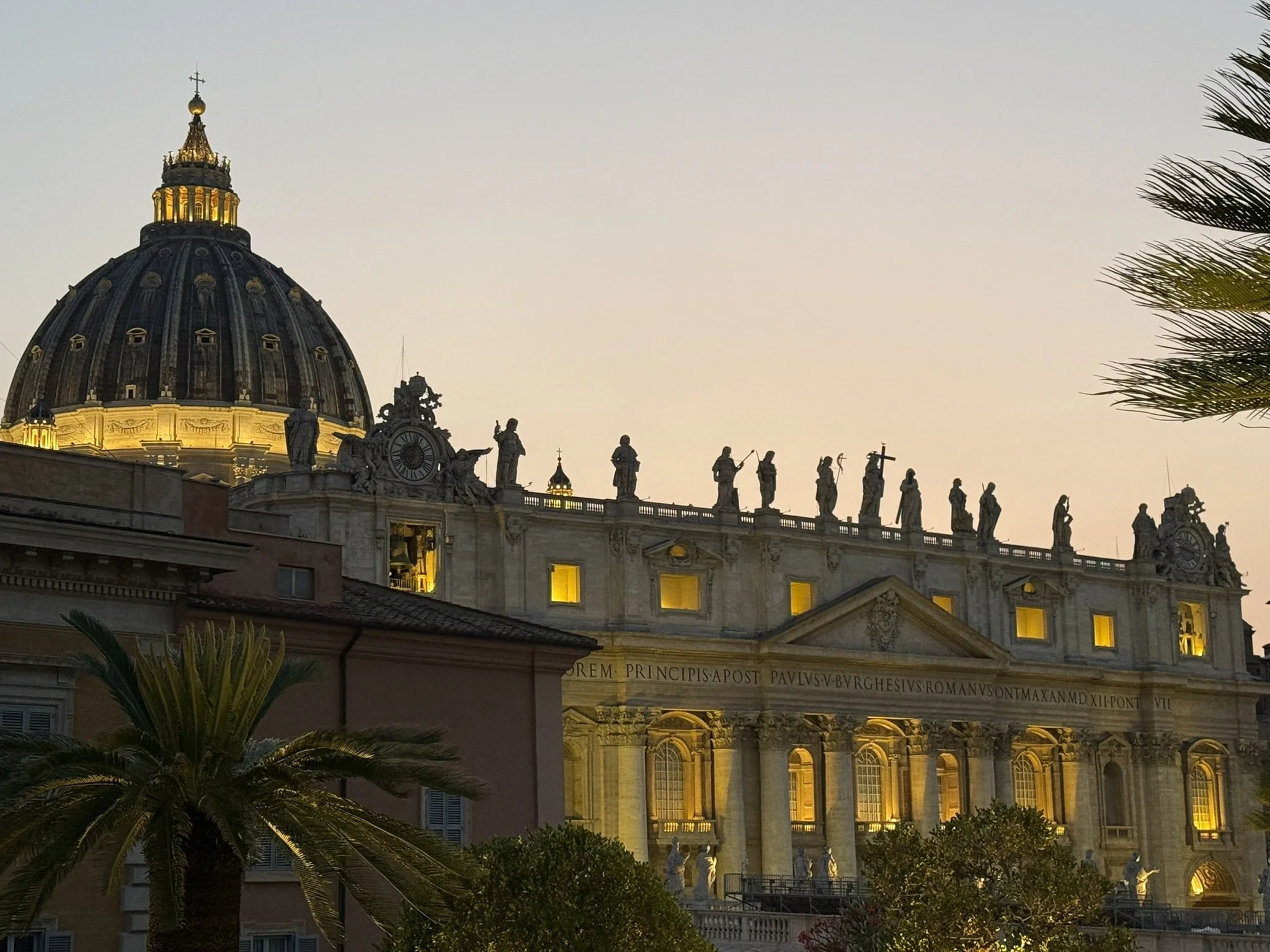
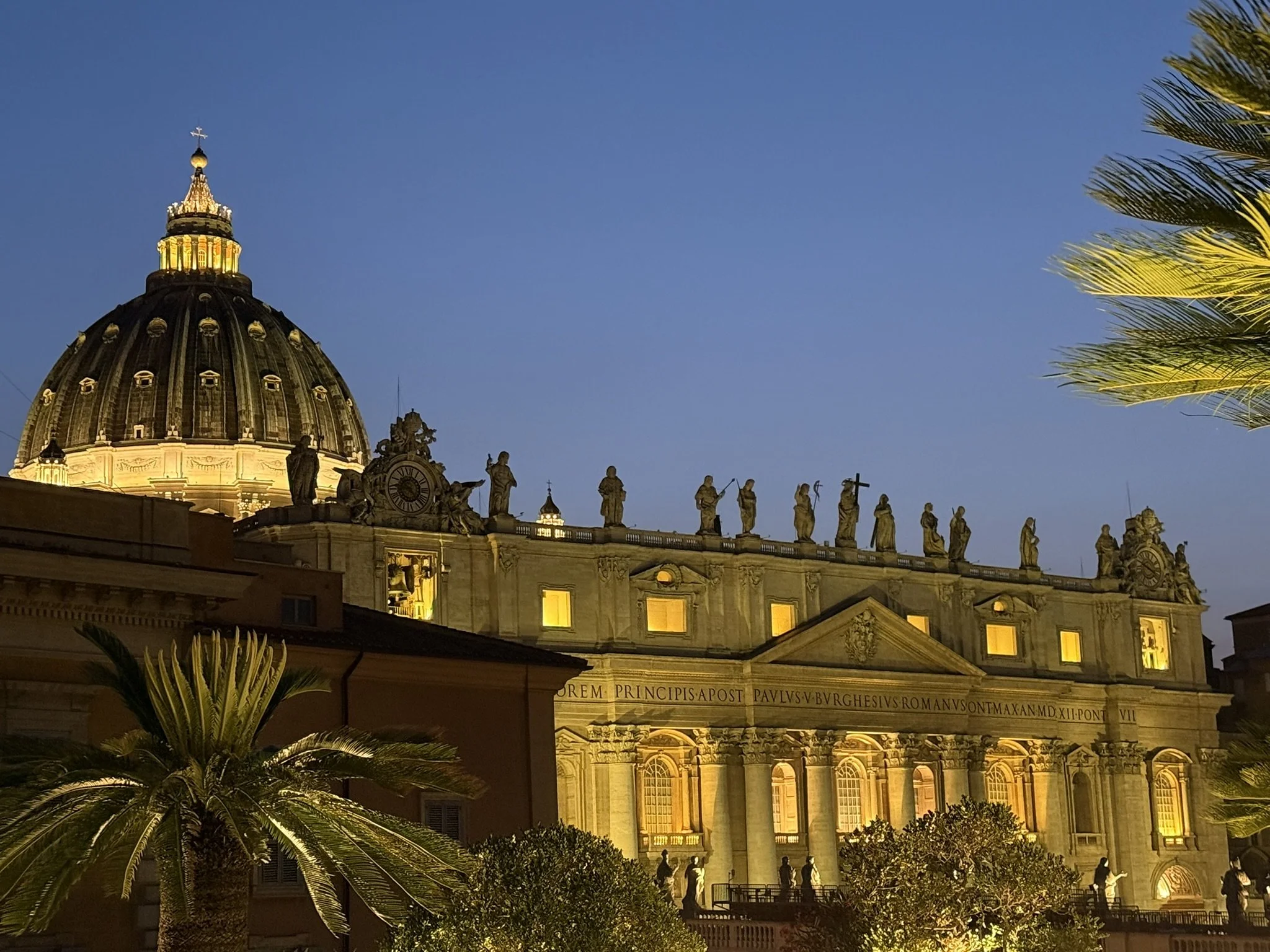
We closed out the night with a rooftop nightcap at our hotel. We sat for a while, talking, meditating, and just sitting in the love of each other and the splendor of St. Peter’s. Click to enlarge images.