Last Summer, my wife and I went on pilgrimage to Rome for the Jubilee Year. Here is our story…
This was one of the coolest legs of our pilgrimage, but it was also one of the spiritually harder ones. Let’s get into it…
The Basilica of St. Clement (San Clemente) is one of the coolest churches to visit, particularly if you like history. The Irish Dominicans who currently oversee the church have done an amazing job with the archeological exhibit underneath the church. The church itself was built on a home, Mithras temple, and imperial mint from the 1st century AD. The basilica was built in the late 300s, and was slowly expanded over the next seven centuries. On top of that was built the basilica you see today (built and expanded over time, of course).
As a result, San Clemente has a lot of history, art, and symbolism. It has survived almost two millennium.
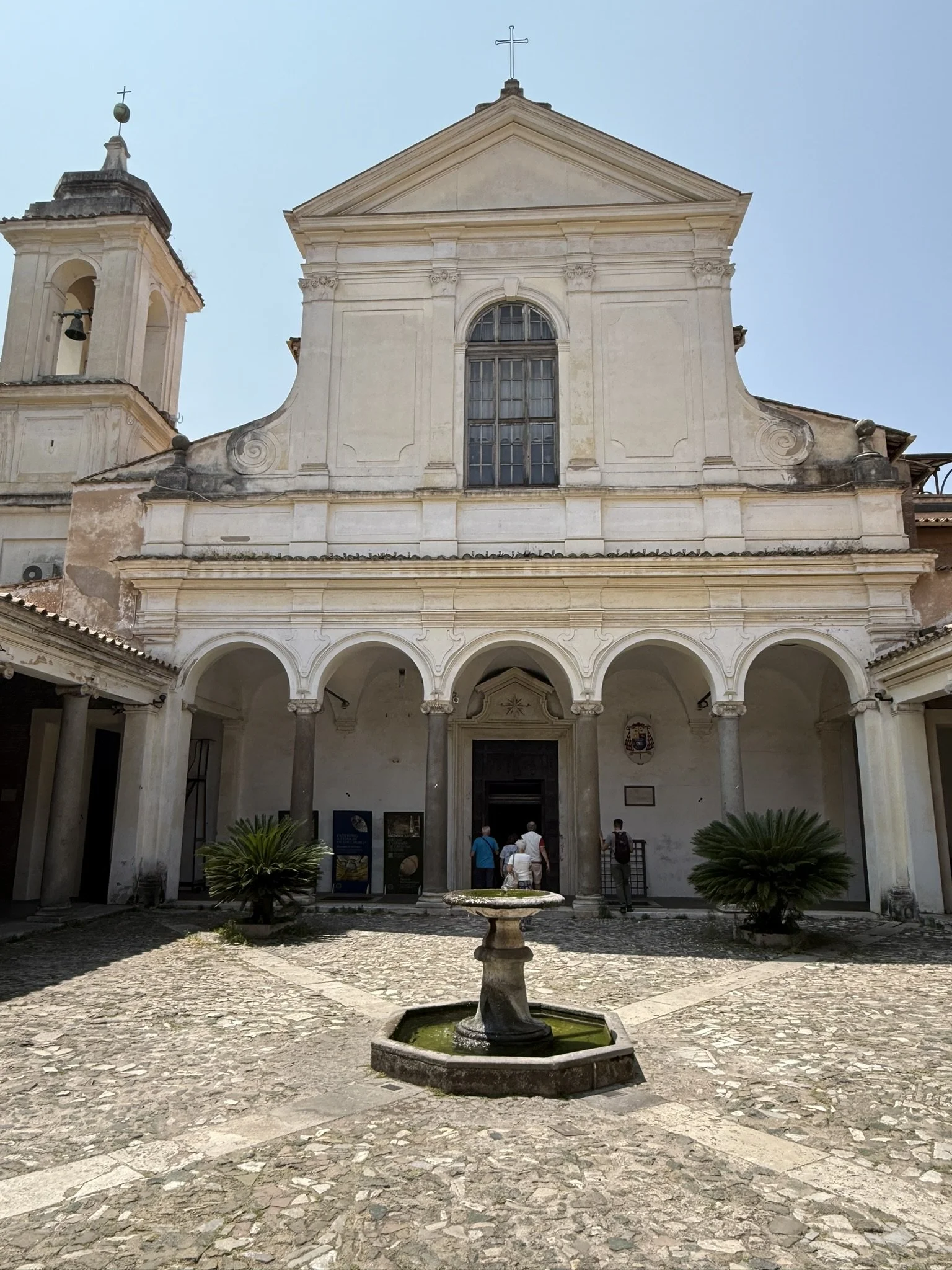
The courtyard. Interestingly, you have to walk down a set of stairs to get to San Clemente itself. So even today you can see how Rome and the surrounding area is still building on top of the past. Like the Church’s history, it does not disappear. Instead, even when not seen, it is buried underneath and supports what is lived today.
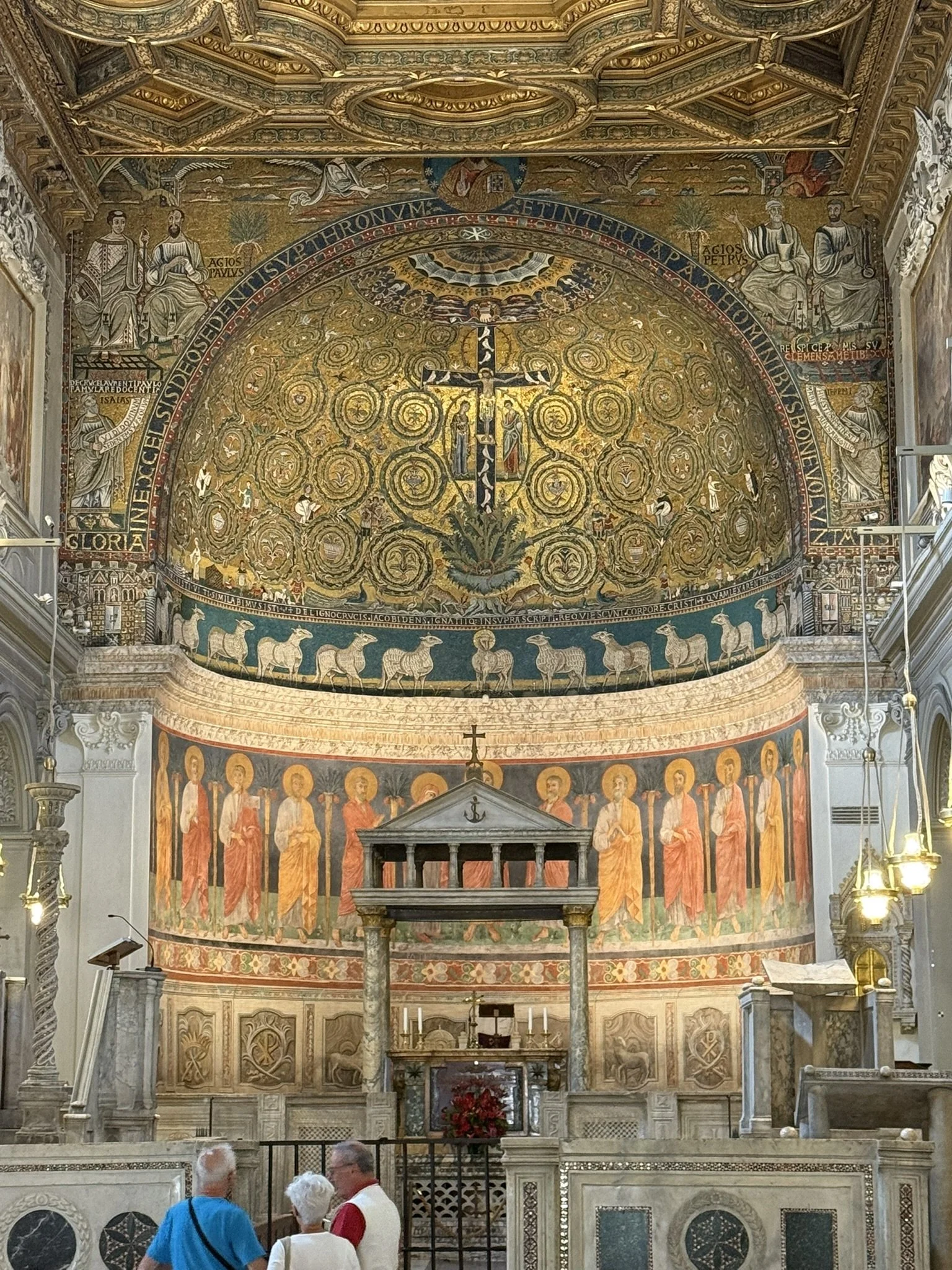
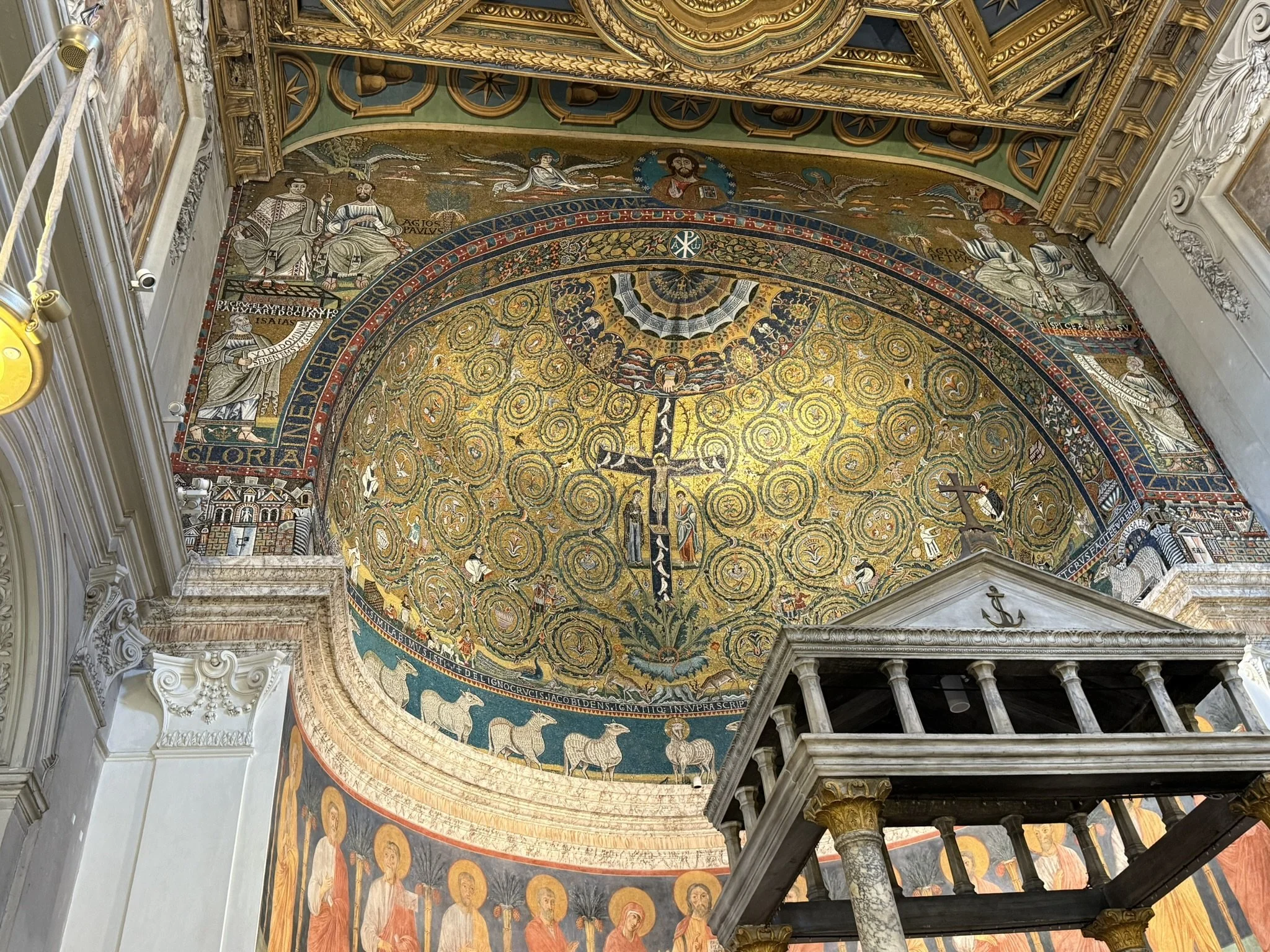
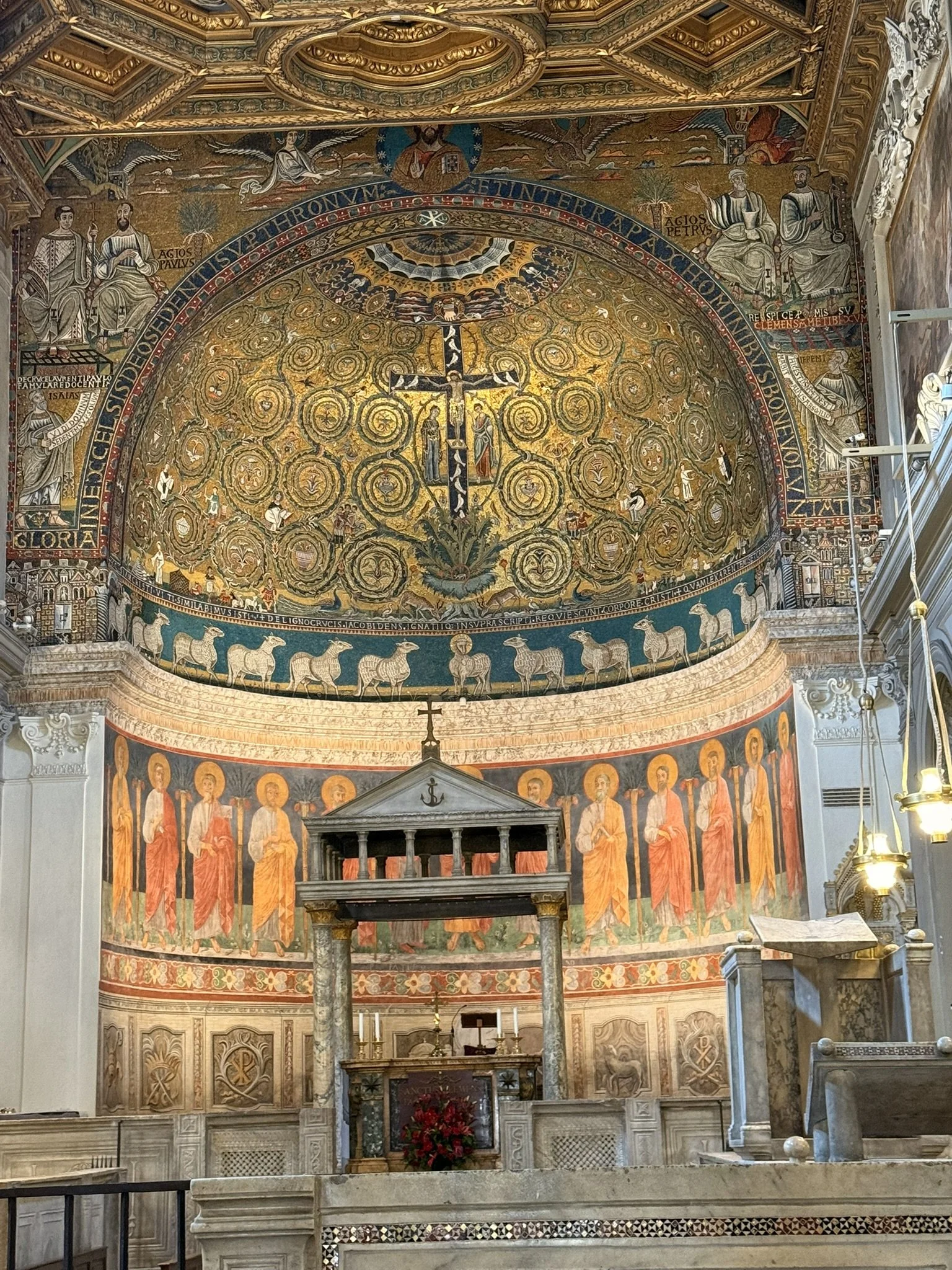
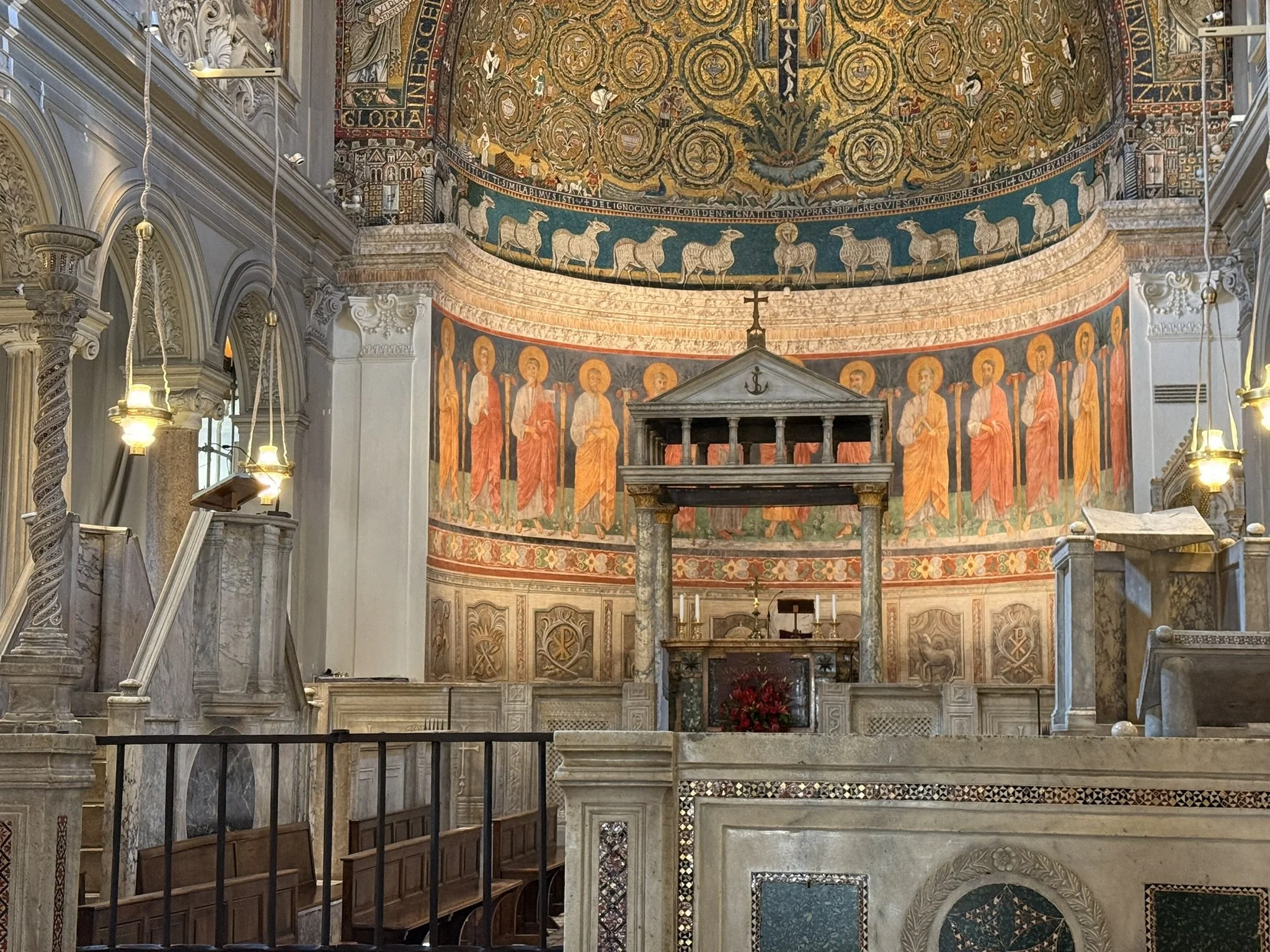
Similar to the apse of St. John Lateran, the apse of San Clemente centers on a crucifix. It may help to click the picture for a larger image. From this crucifix you can see a vine coming from it and creating the spirals surrounding it. The cross is the Tree of Life, and the actions Jesus performed on that cross results in life. There are the two traditional people standing beside the cross (Mary and St. John). Uniquely are the twelve pigeons (not doves) who are also on the cross. Pigeons are symbolic of messengers, just as the Twelve Apostles were messengers who carried the Gospel from the cross to the world. Above the crucifix you can slightly make out the hand of God, who appears to be holding a crown (a wreath of triumph, more specifically).
While you can’t make them out from my photo, there are tons of figures in the mosaic, like St. Gregory, St. Jerome, and St. Augustine. There are also a significant number of symbols, too many for me to all put here (shepherds tending sheep like Jesus is the chief pastor; a woman feeding chickens like the Church feeds the sacraments to the Faithful, peacocks symbolizing eternal life, a lamb walking out of Bethlehem, etc.).
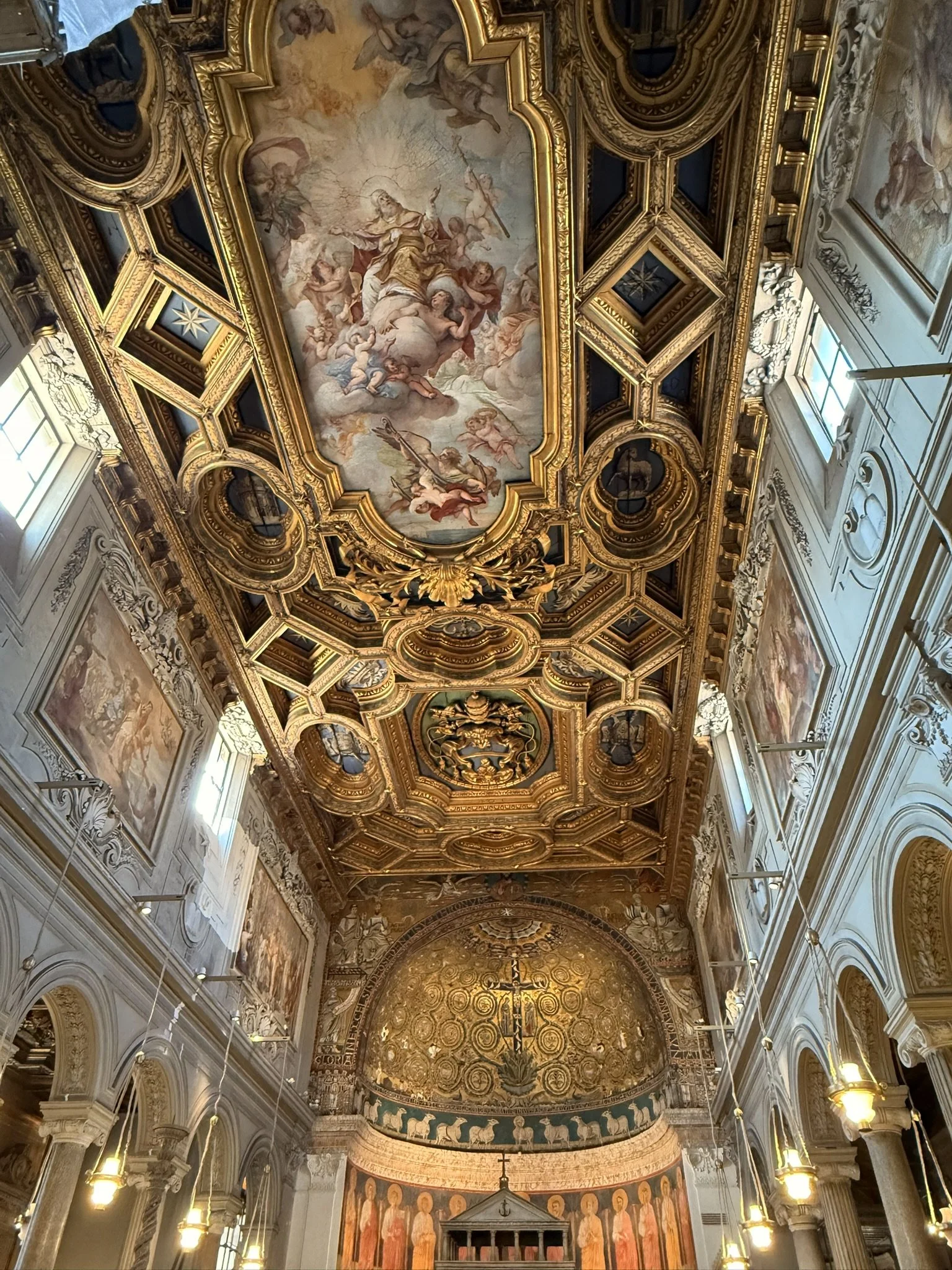
It’s hard to make out, but also look at the triumphal arch that encompasses the apse. At the top you see the Pantocrator. Because it is hidden by the later-added ceiling, you can’t see the rainbows shooting out of Jesus’s head. On the top right are St.s Peter and Clement (the basilica’s titular saint). St. Clement was the 4th pope (some Christian writers list him as the 2nd), in the late 100s, and he is considered the first of the Apostolic Fathers. By the way, he’s holding an anchor, which is how he was martyred (drowned tied to an anchor). On the other side are St.s Paul and Lawrence (Lawrence is the one with the hot grill under his feet).
The rest of San Clemente is likewise ancient, beautiful, and fascinating. For example, there are some very old depictions of the crucifixion. Note the closeup of St. Longinus! A rare sight.
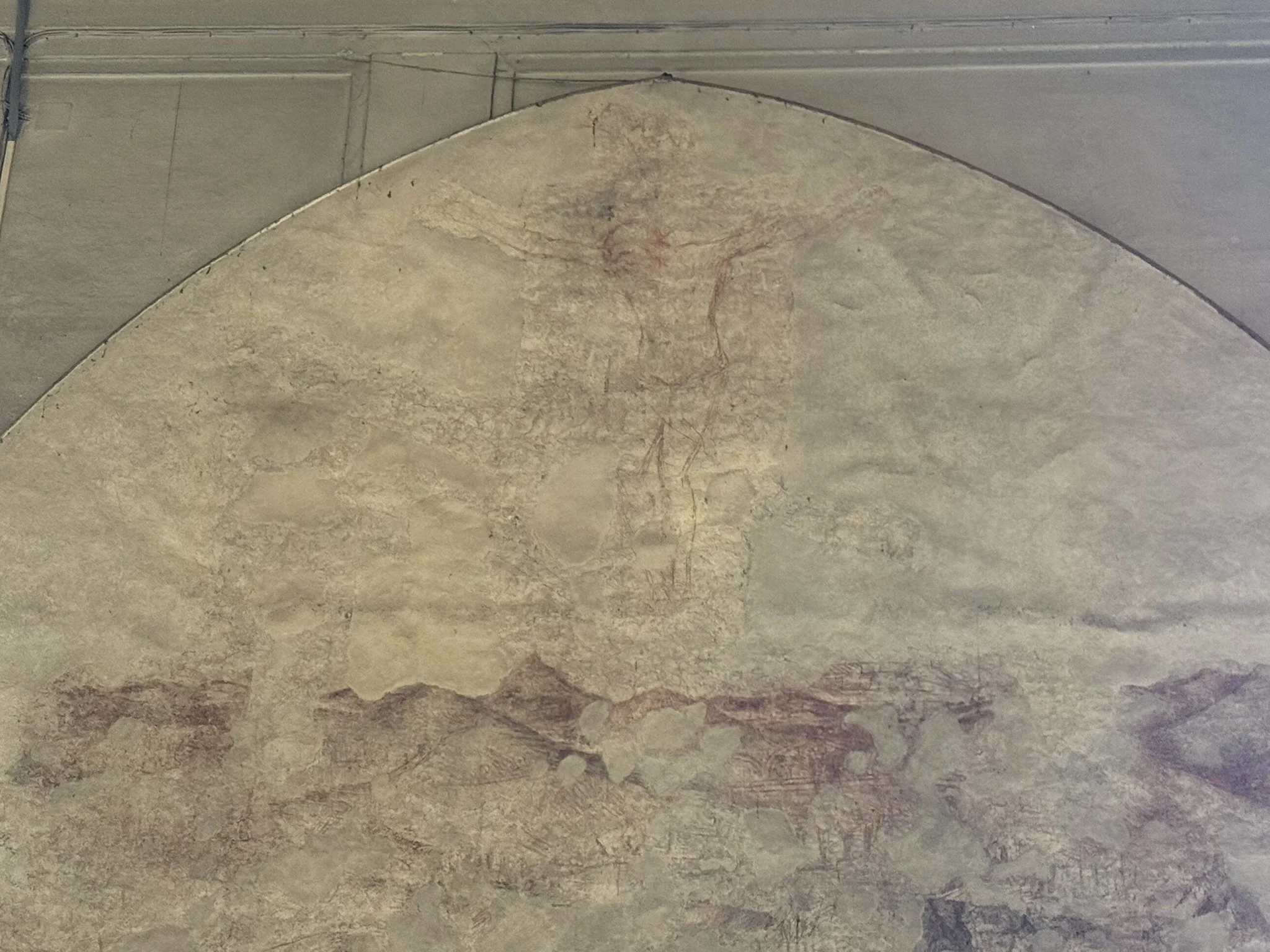
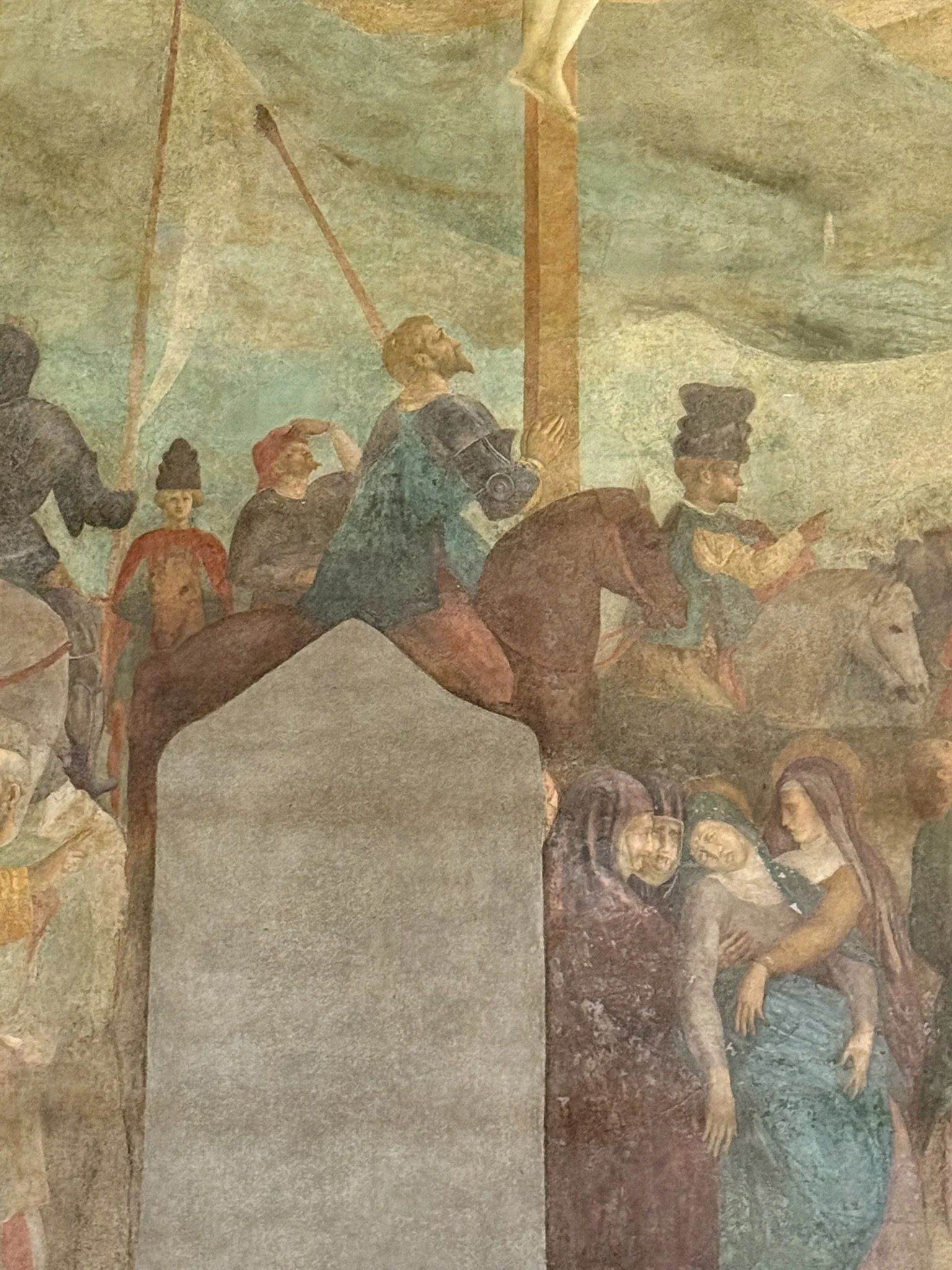
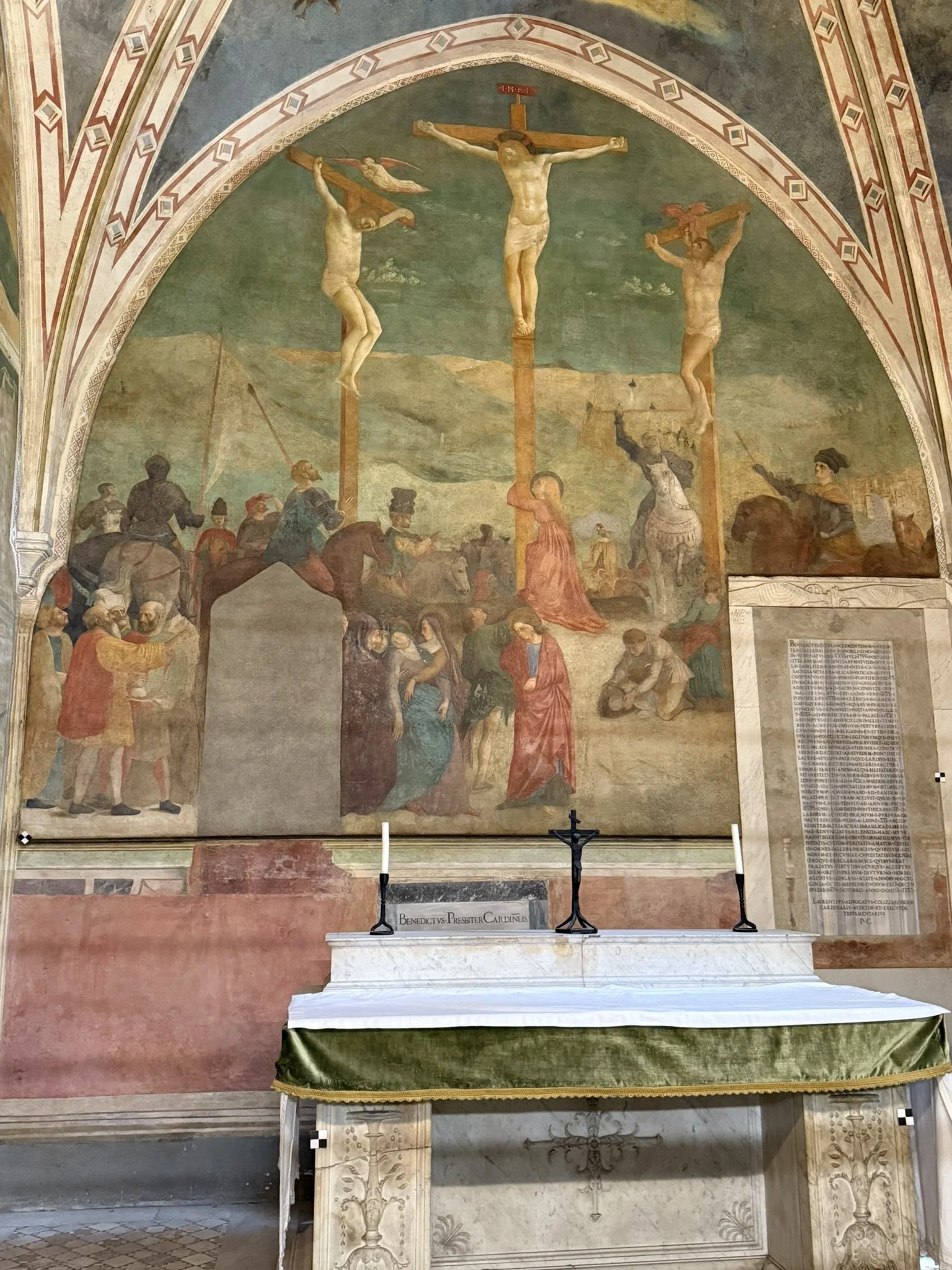
There is also a shrine with tombs of St.s Cyril and Methodius, both of whom created an alphabet, translated the Bible into Slavic, and Christianized the Slavs. St. John Paul II prayed often in this chapel for his native Poland.
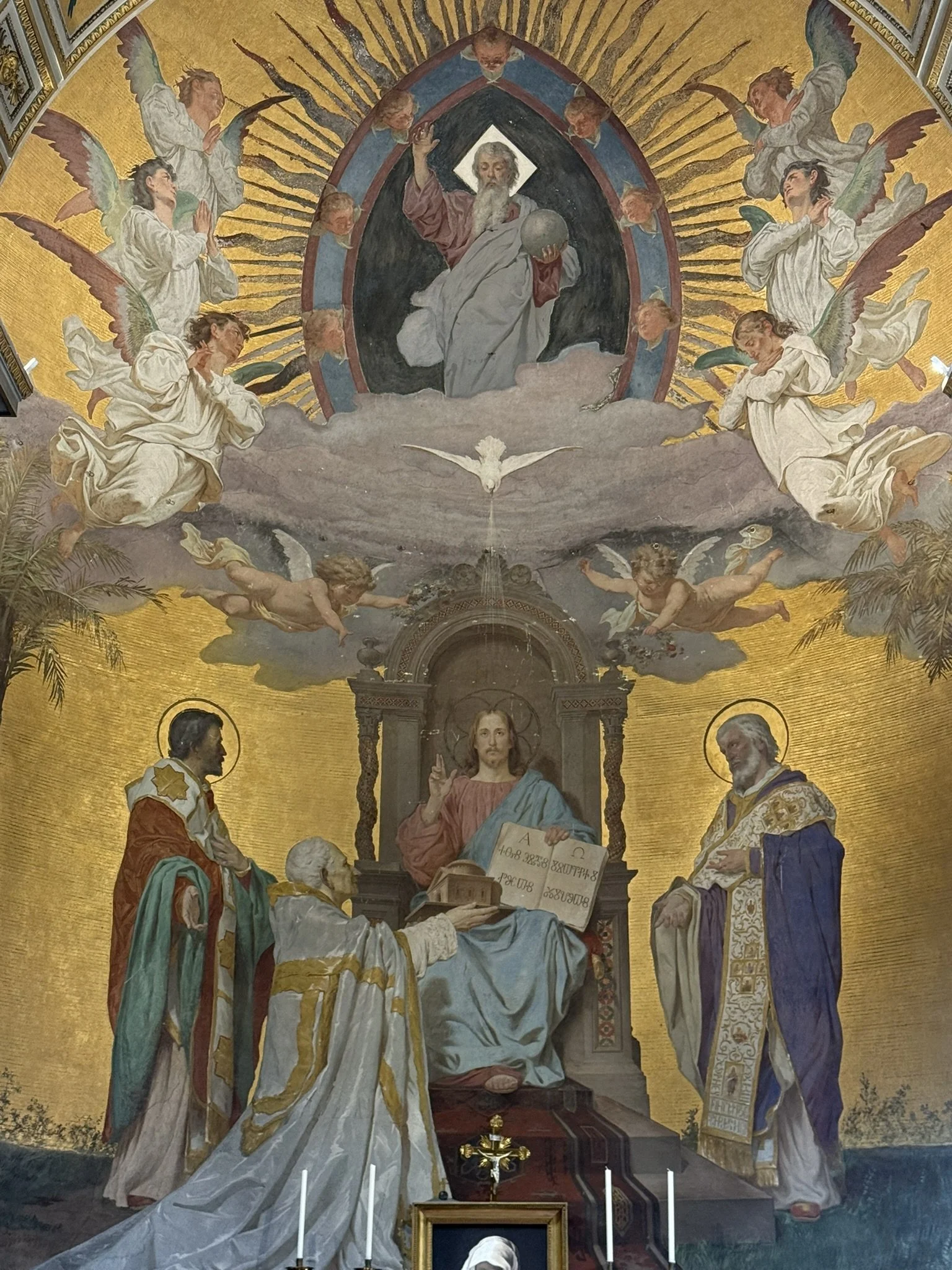
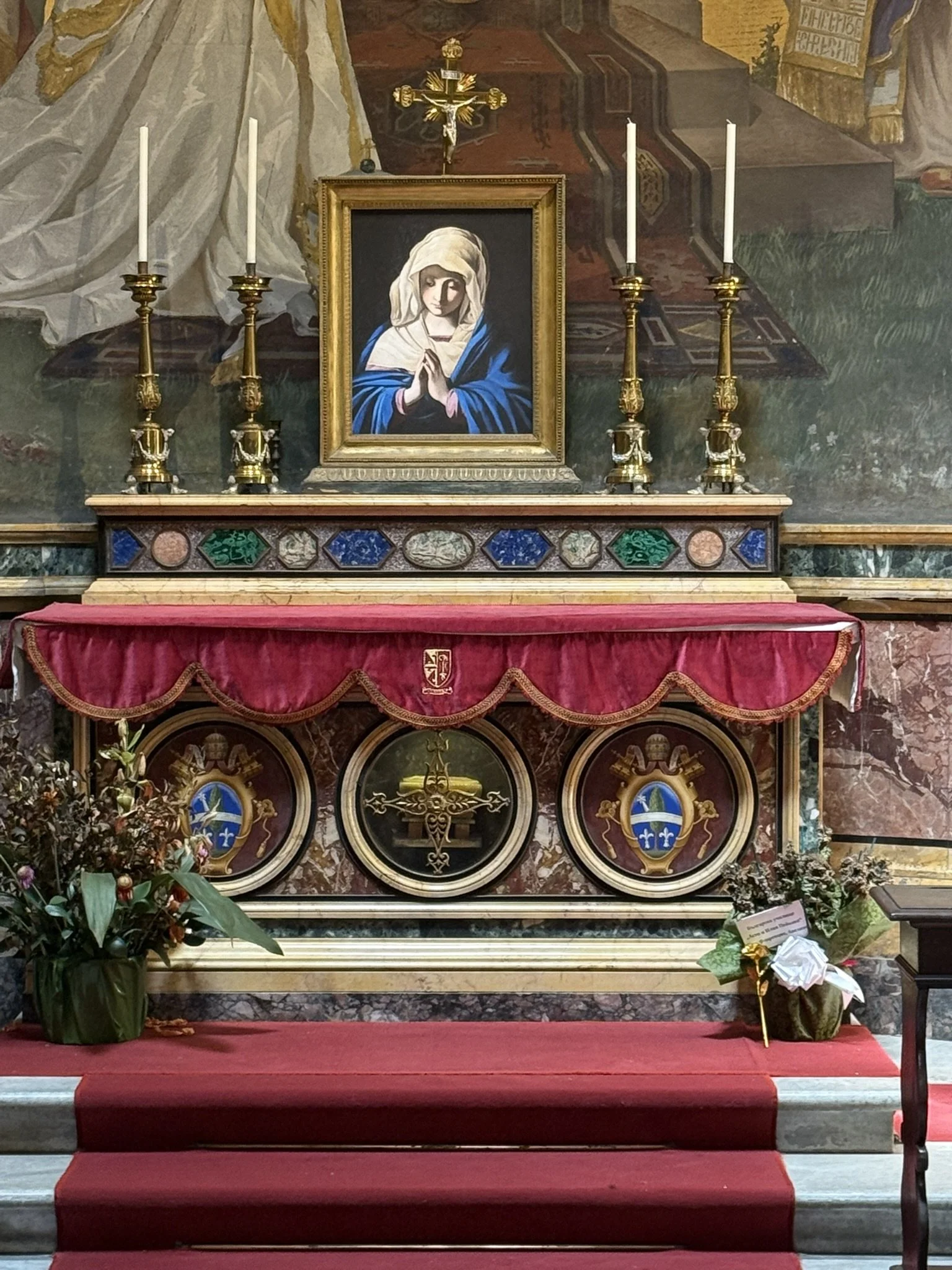
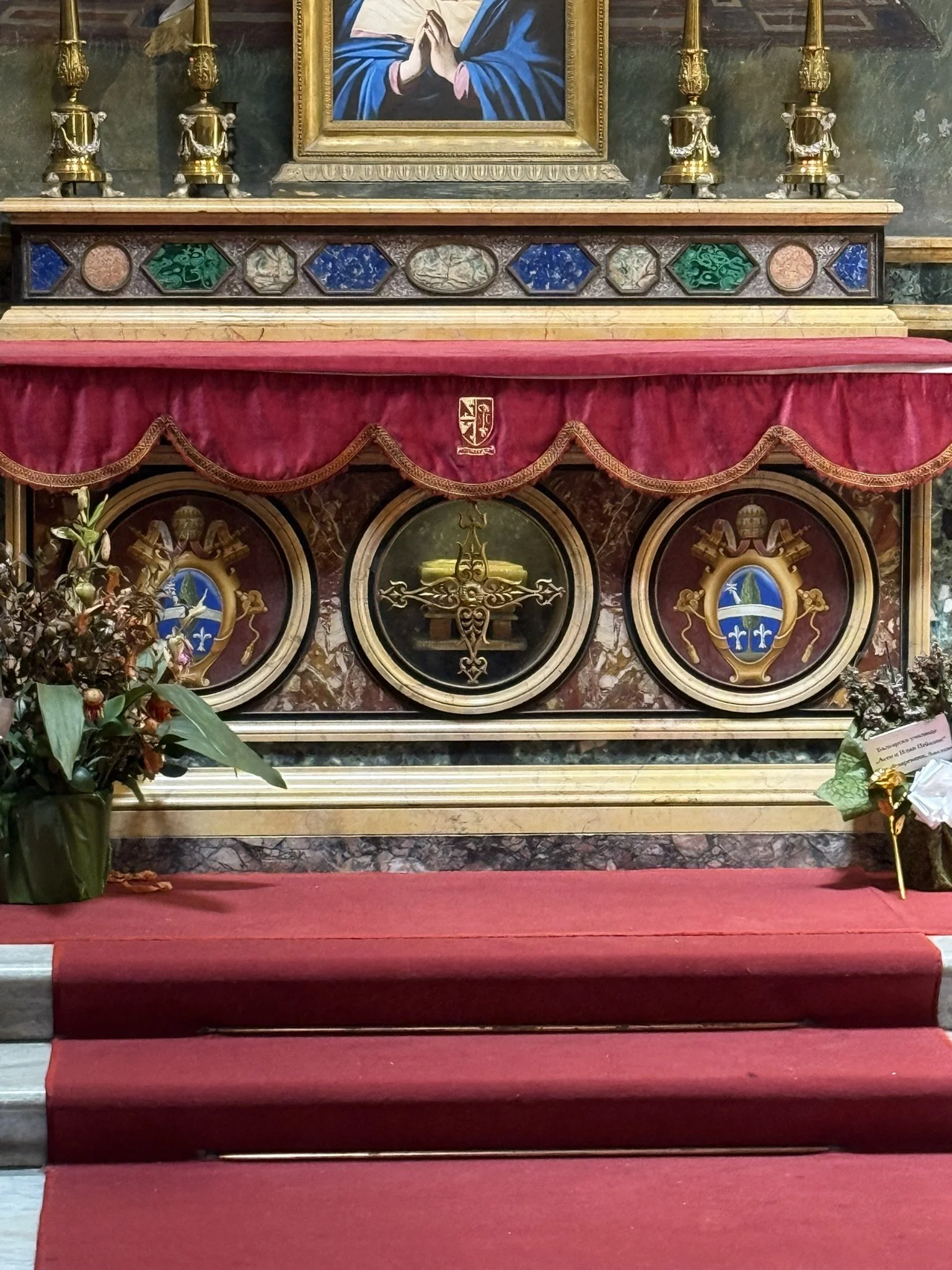
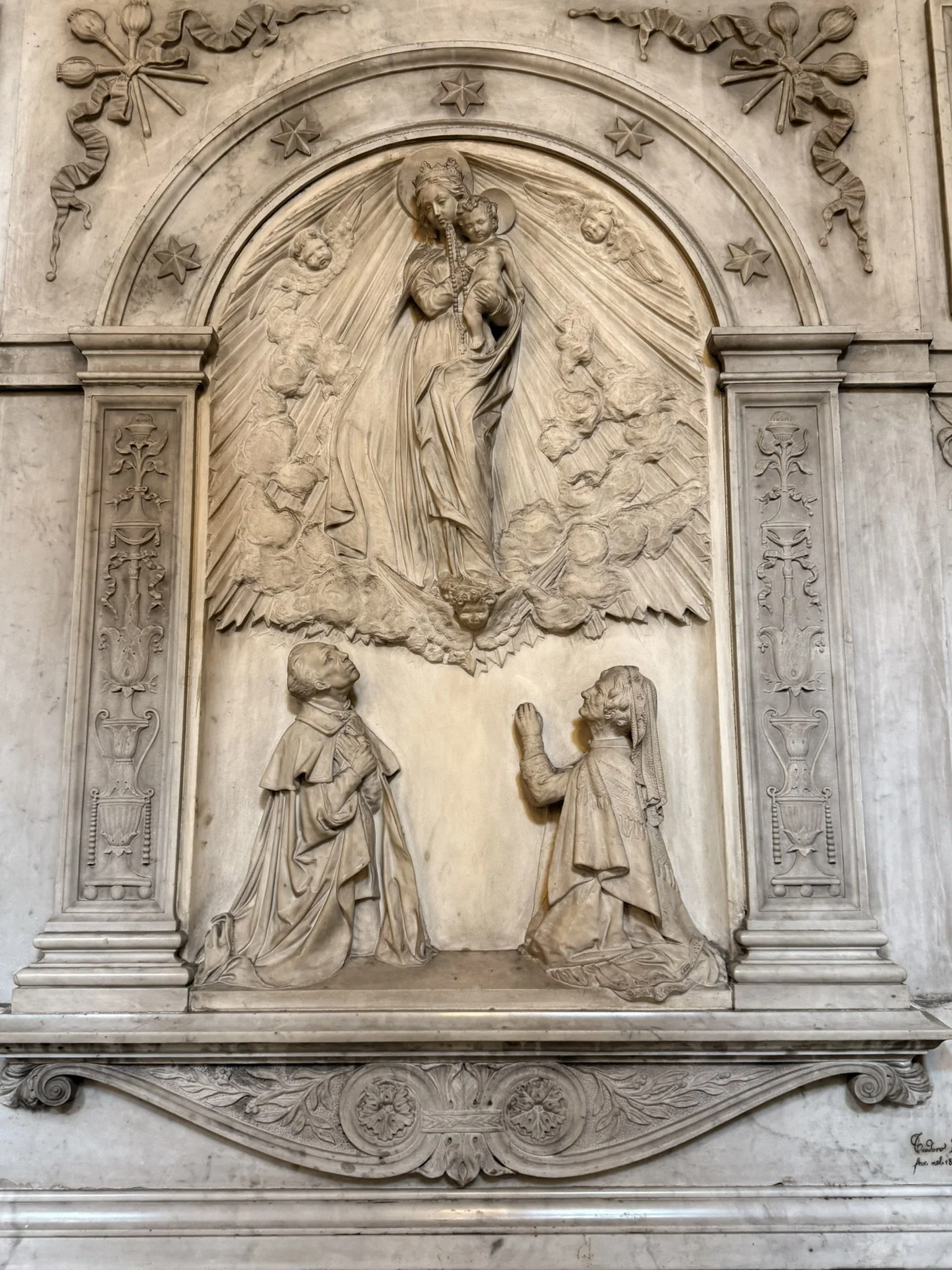
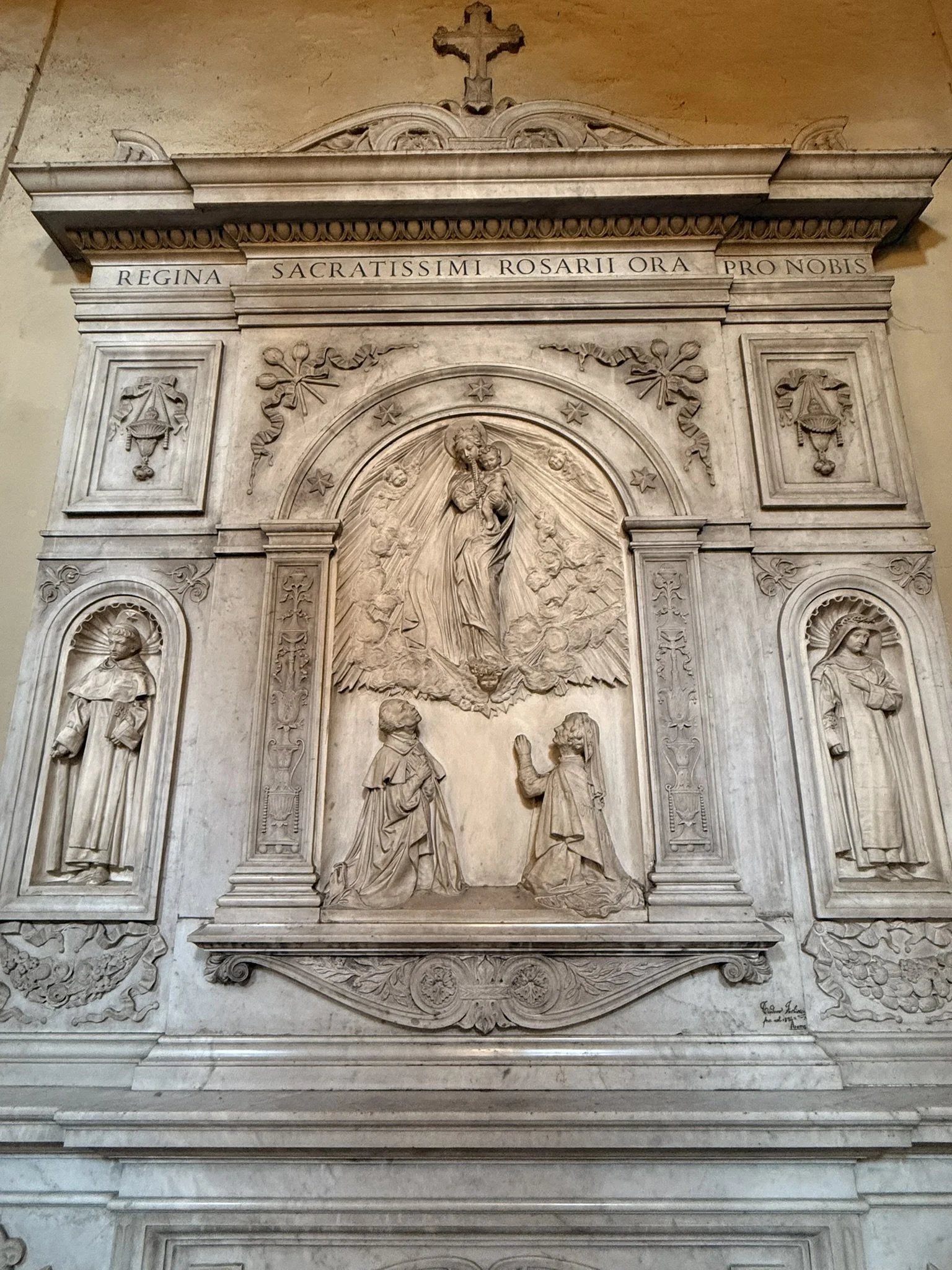
A lot of art as well.
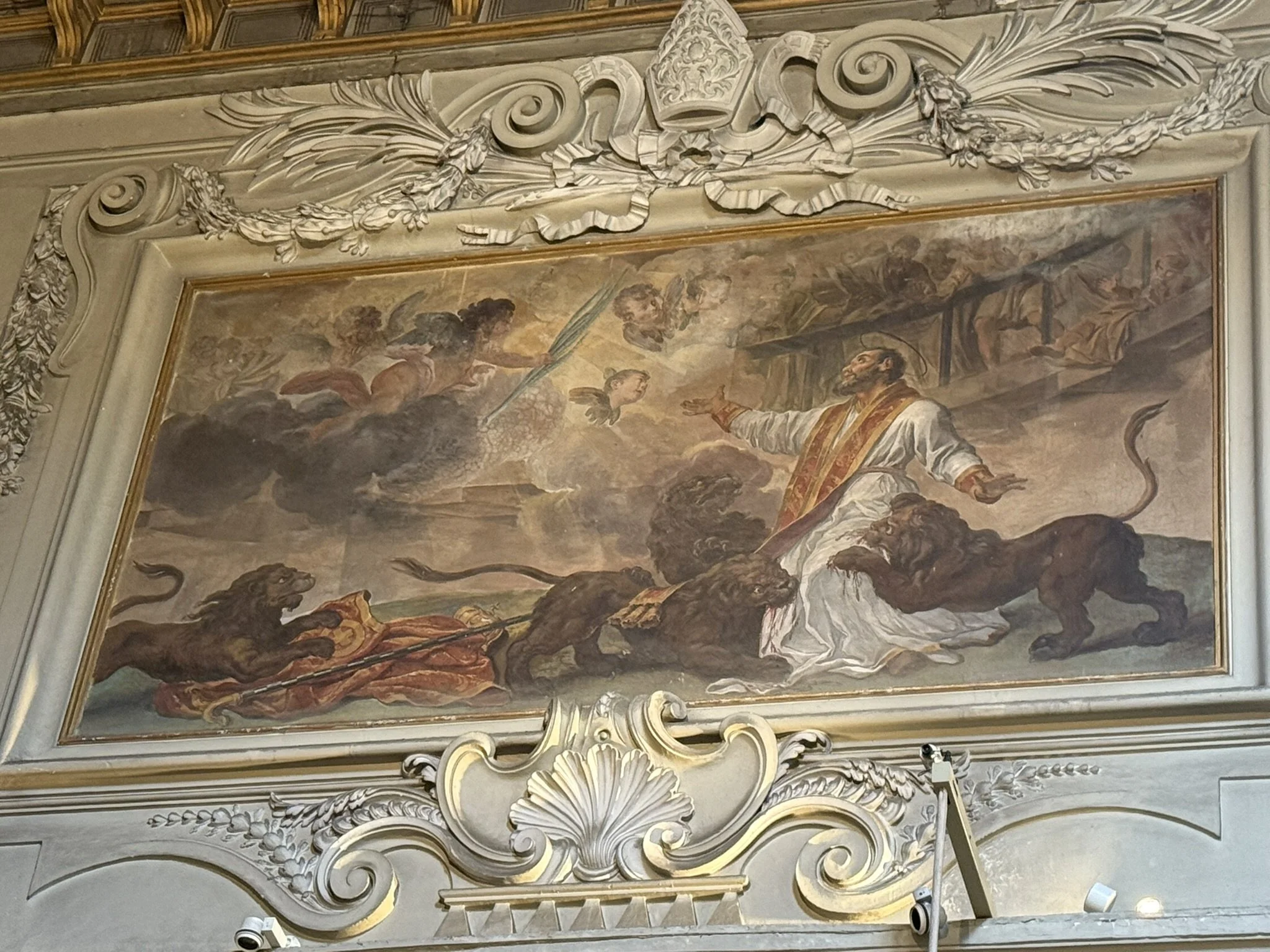
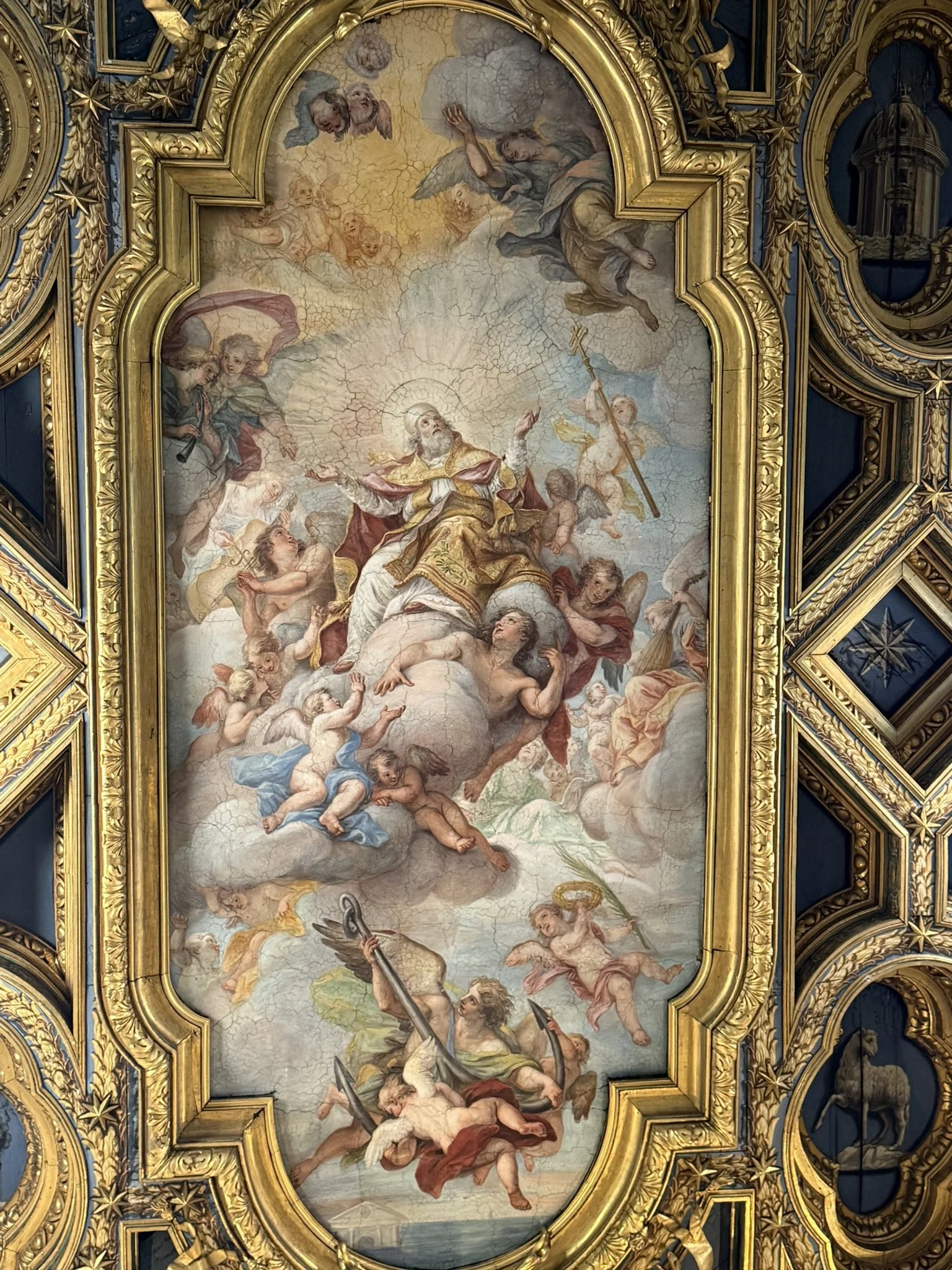
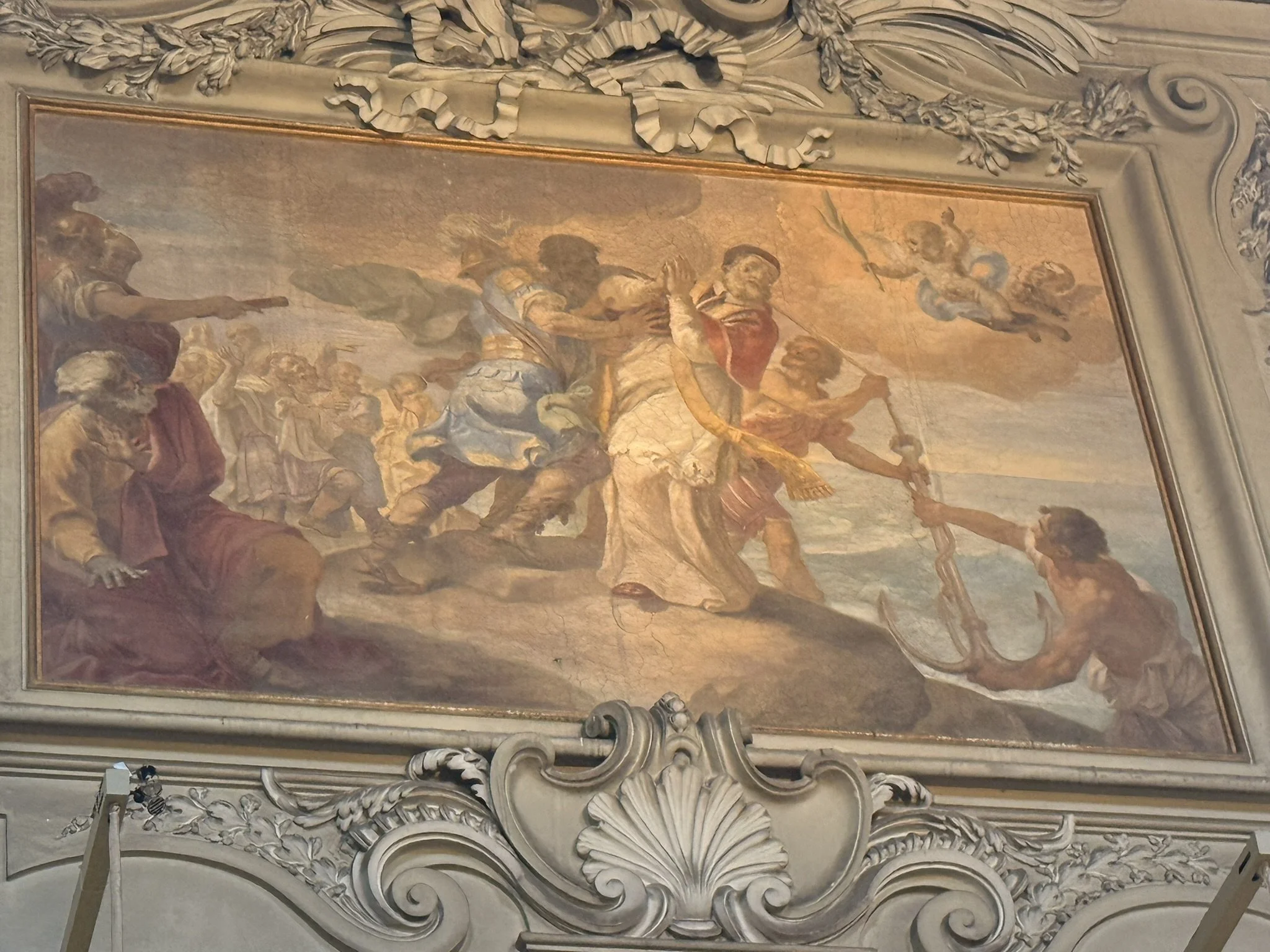
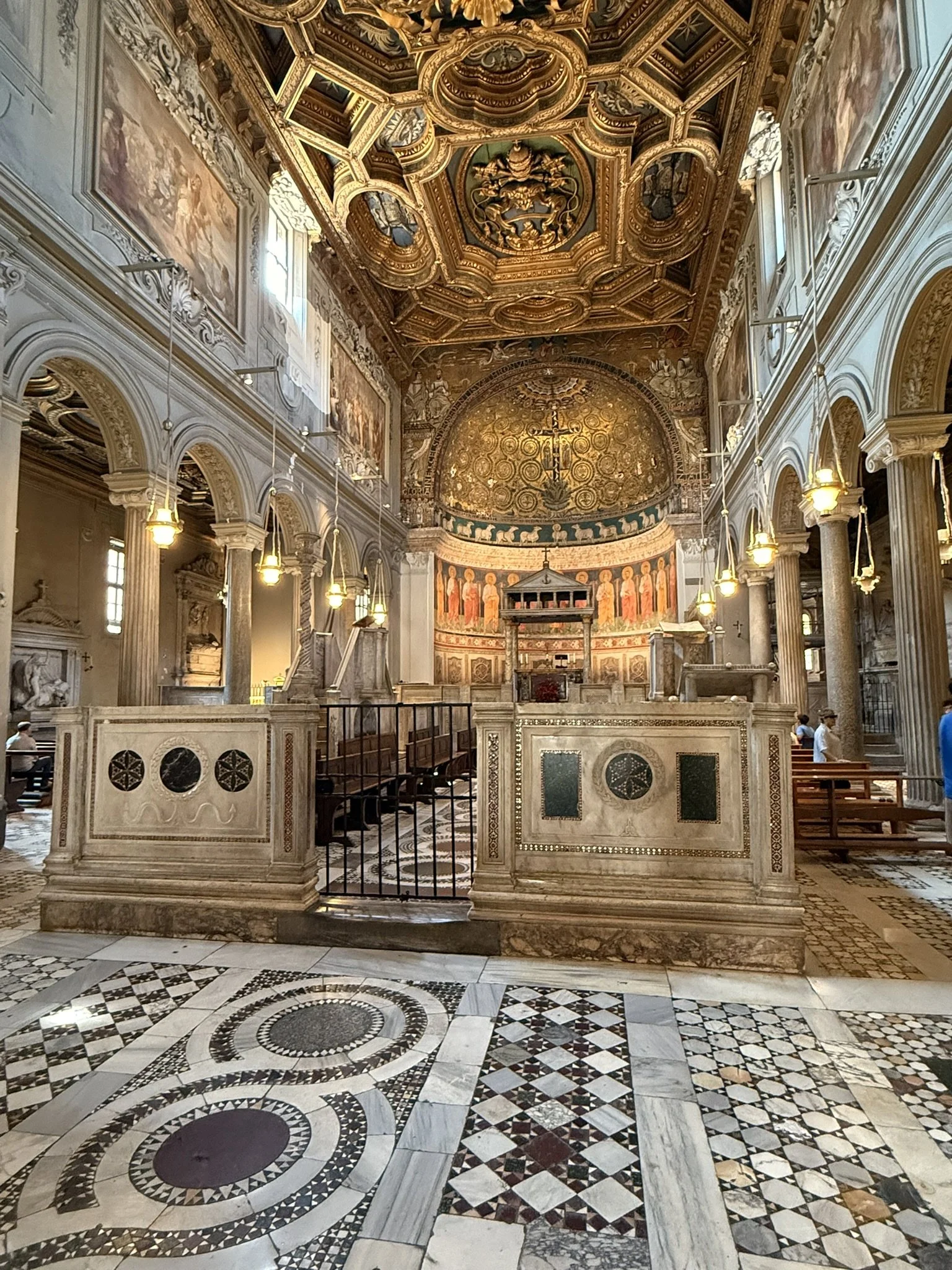
The coolest part of the basilica is that you can actually go down into the excavations. Sadly, photos are not allowed. However, you can see some of the frescos here. In those ruins, you can see the earliest known inscription of Latin into Italian. There are also clear examples of the importance of Mary (in one image, for example, she wears an empress’s headdress, clearly showing her important as queen.
You eventually make it to the lowest level. These stones are from the 1st century, around the 60s. This means you can walk on the same stones people tread upon while the Evangelists were writing the Gospels! There’s a palpable sense of history down there.
What’s fascinating, then, is that you can walk, pray, and breathe where Christians for centuries did so before you. You are merely a part of the Church, not the focus. It is easy to make the Catholic Faith into a wheel with you as the spoke: your Faith revolves around you, your understanding of the Faith is unique and the right one, or maybe you feel that Christianity is reaching some sort of apex or end. Hogwash. Walking where people stepped as the Gospels were written, roaming under arches where priests processed a millennium before your birth, and celebrating Mass in the upper basilica where faithful prayed against the Reformation. It’s overwhelming. In particular, it reminds one that one’s own grievances and problems with others is childishly silly in the overall scheme of Church history.
Having visited a busy and literally multilayered church, we made our way to a different one.
San Lorenzo Fuori le Mura (St. Lawrence Outside the Walls) is an empty church. While it’s one of the 2025 Jubilee Year churches, one of the original Seven Pilgrim Churches of Rome, and is in fact one of the Patriarchal Basilicas (assigned to the Patriarchate of Jerusalem), very few actually visit. While there, we only encountered two other visitors. I briefly spoke to one of the workers, who expressed his appreciation for our pilgrimage, and said that so few people visit the church any more.
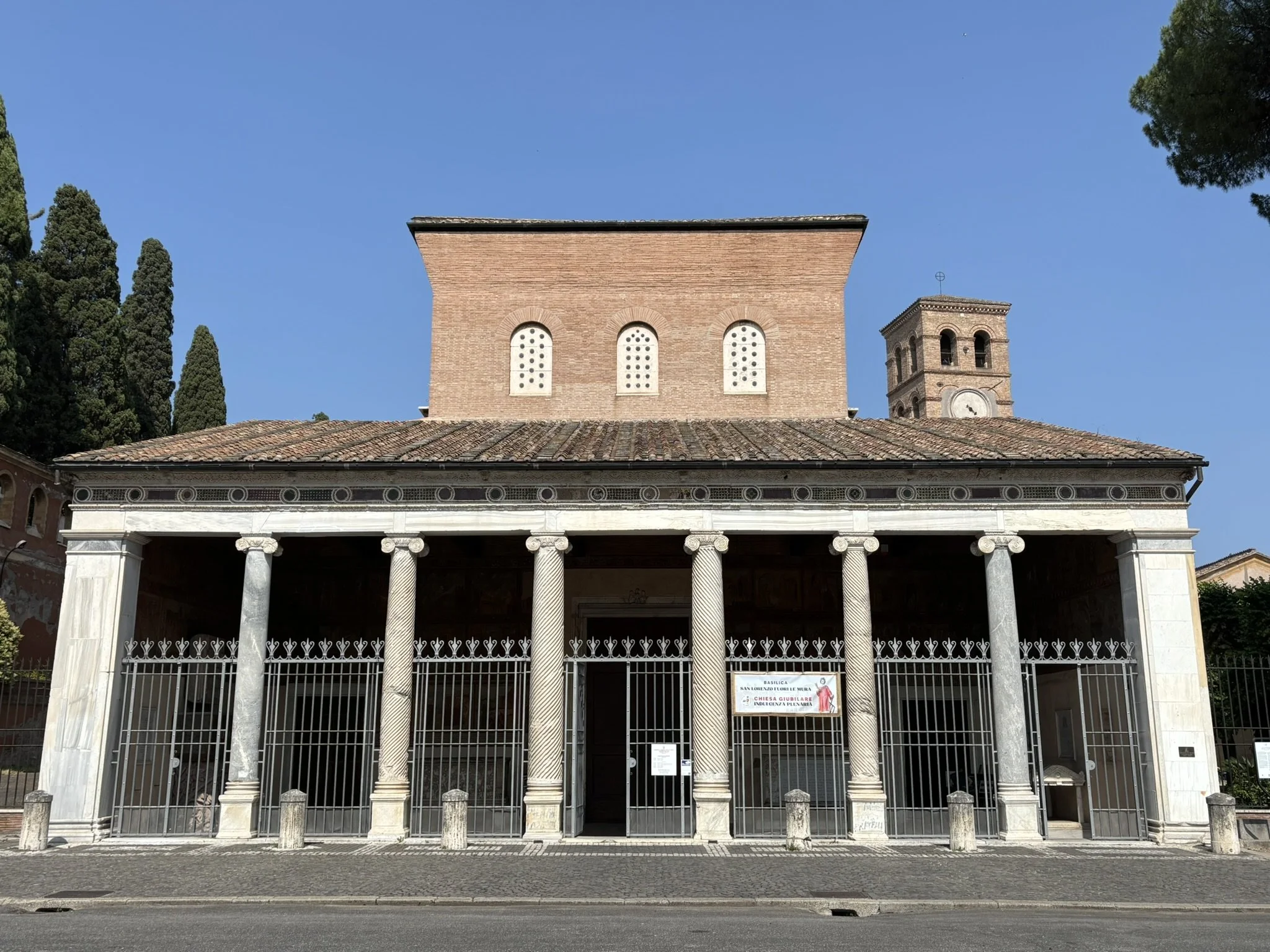
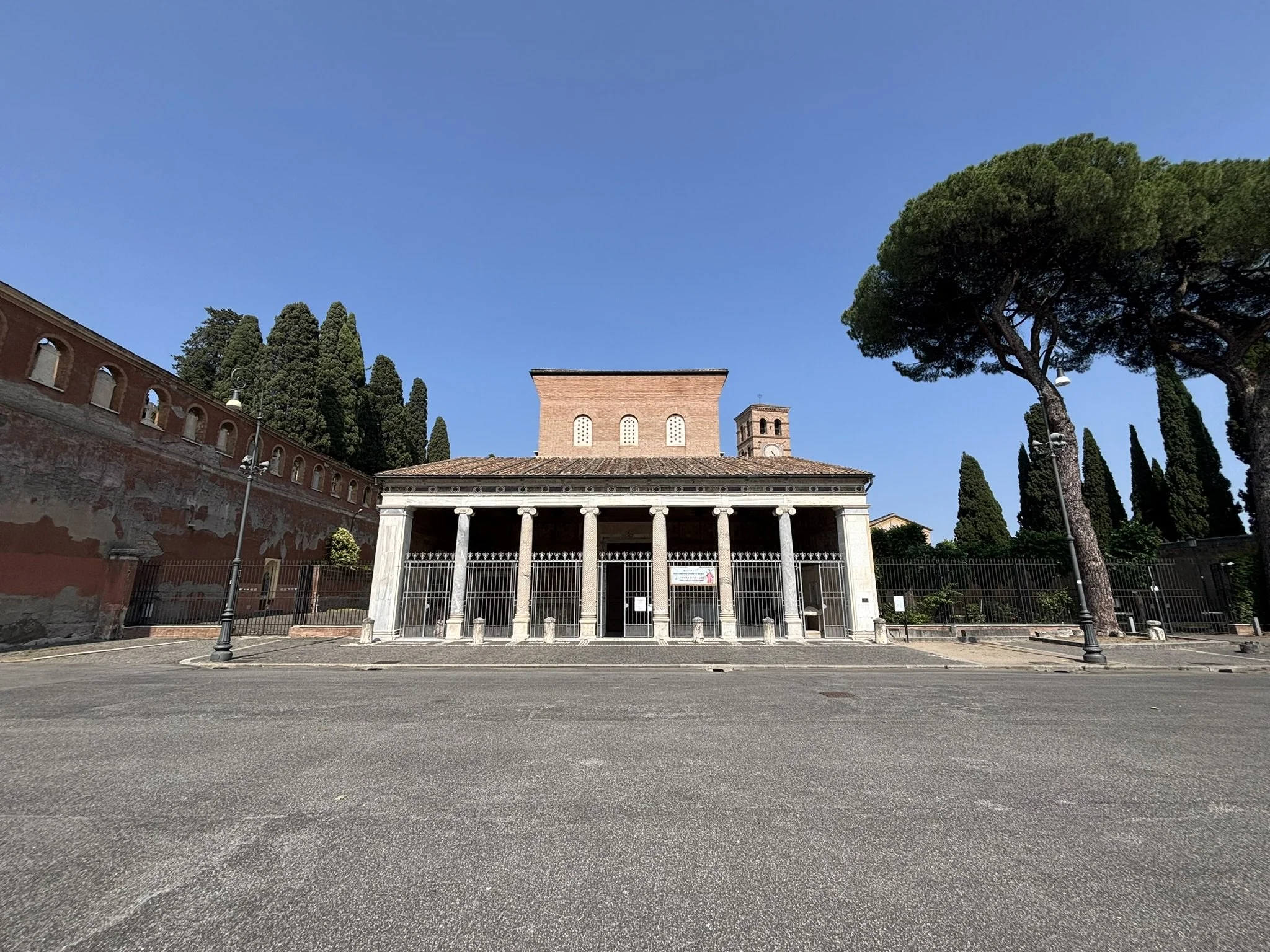
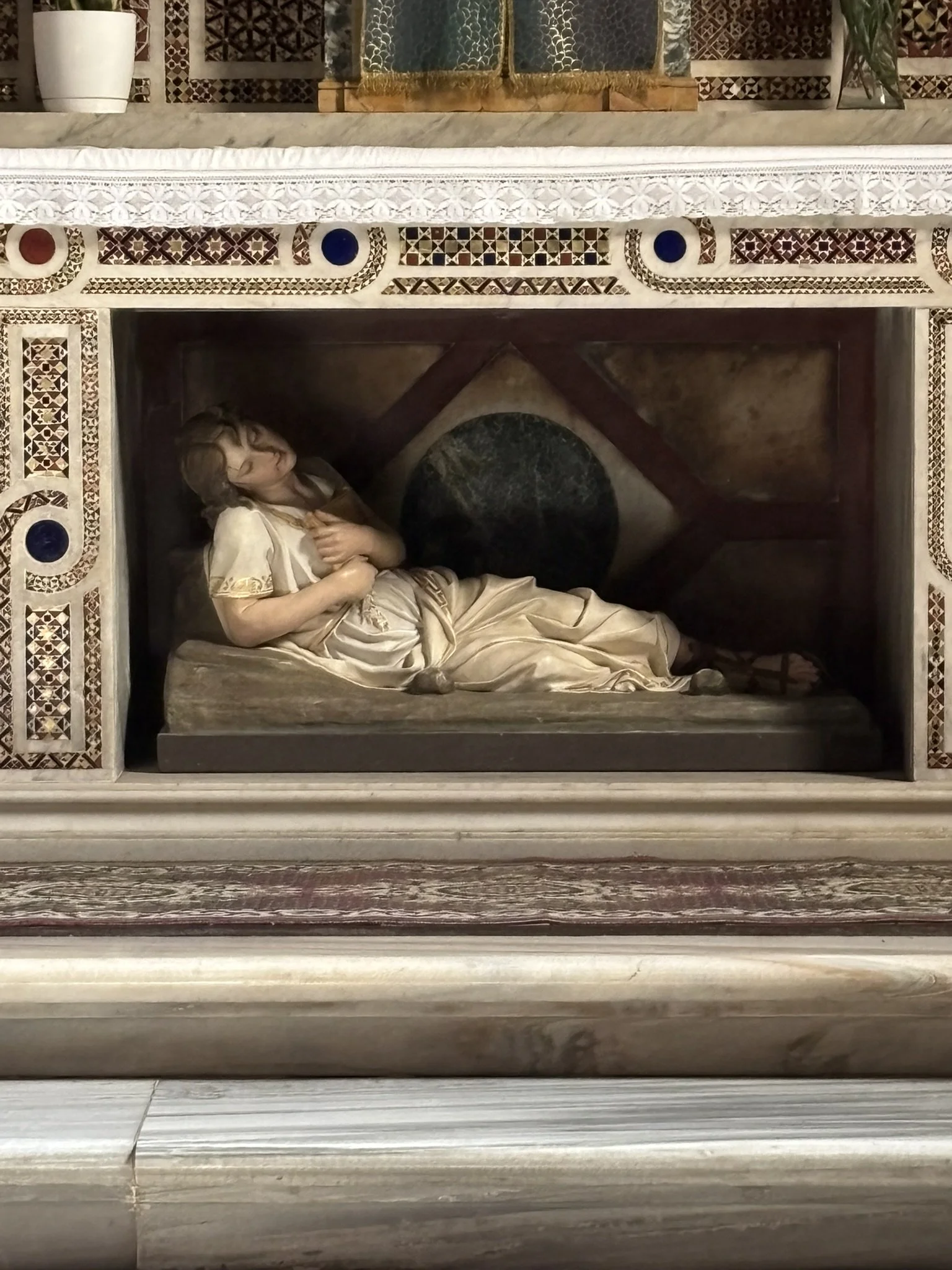
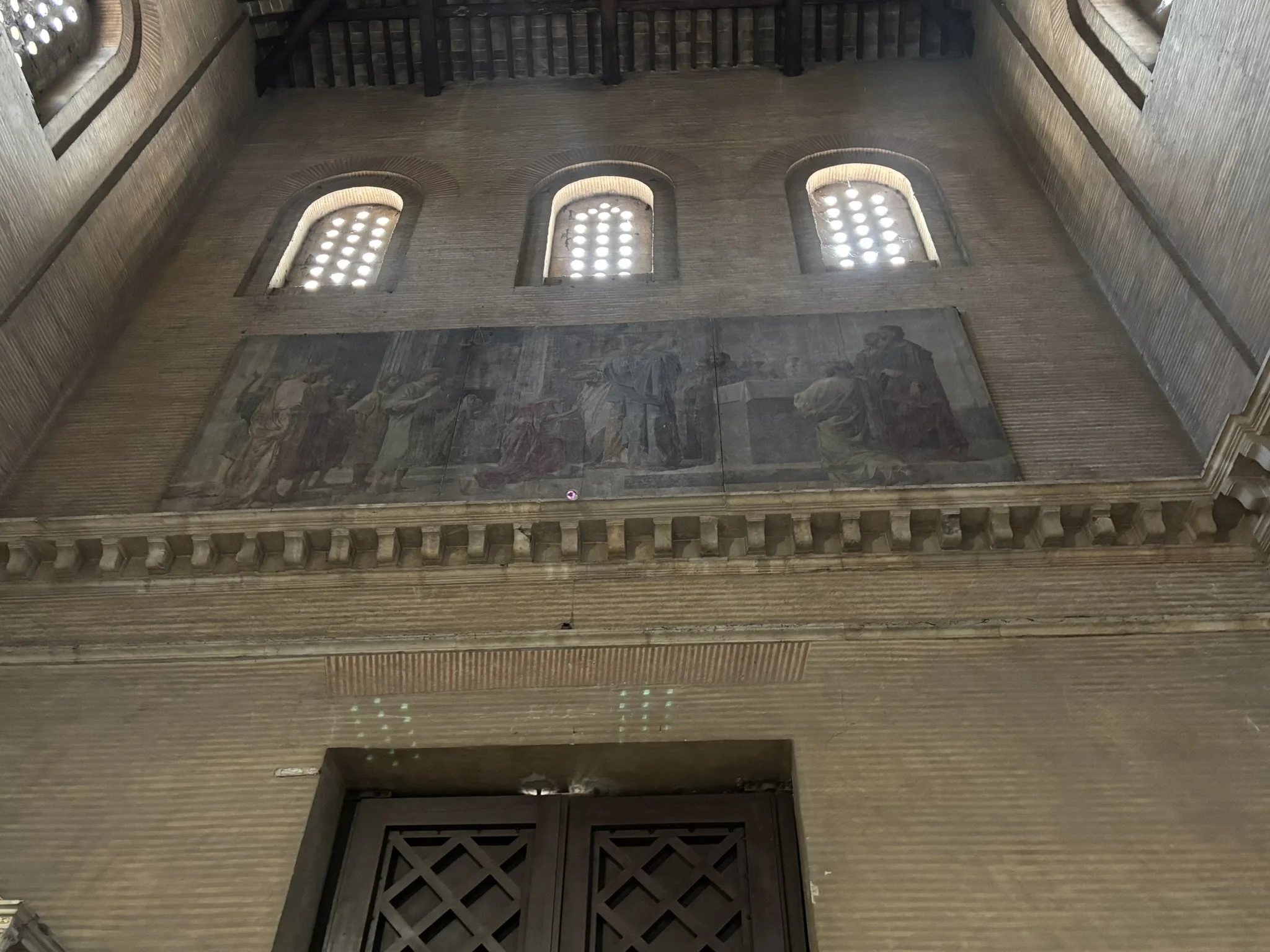
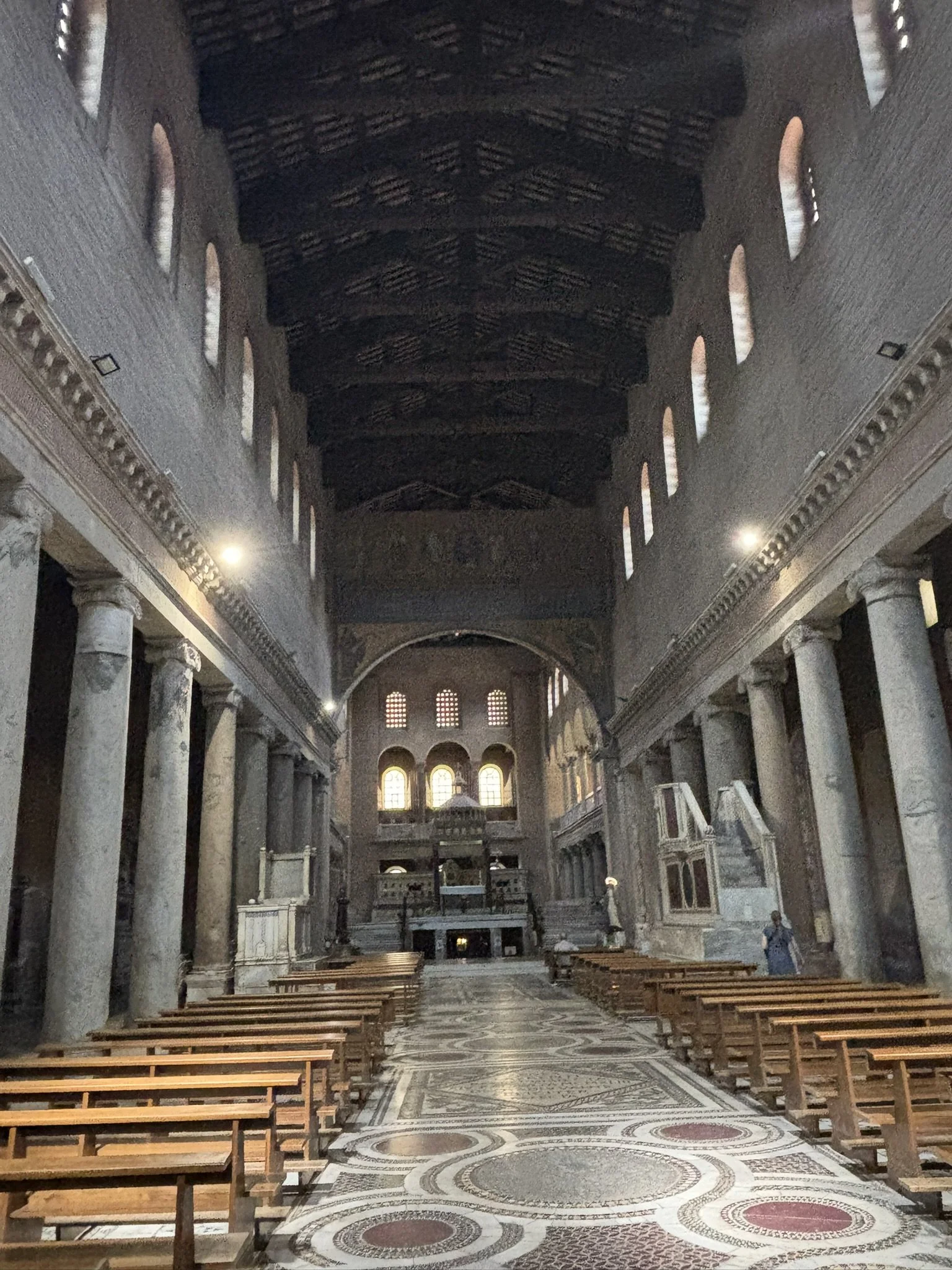
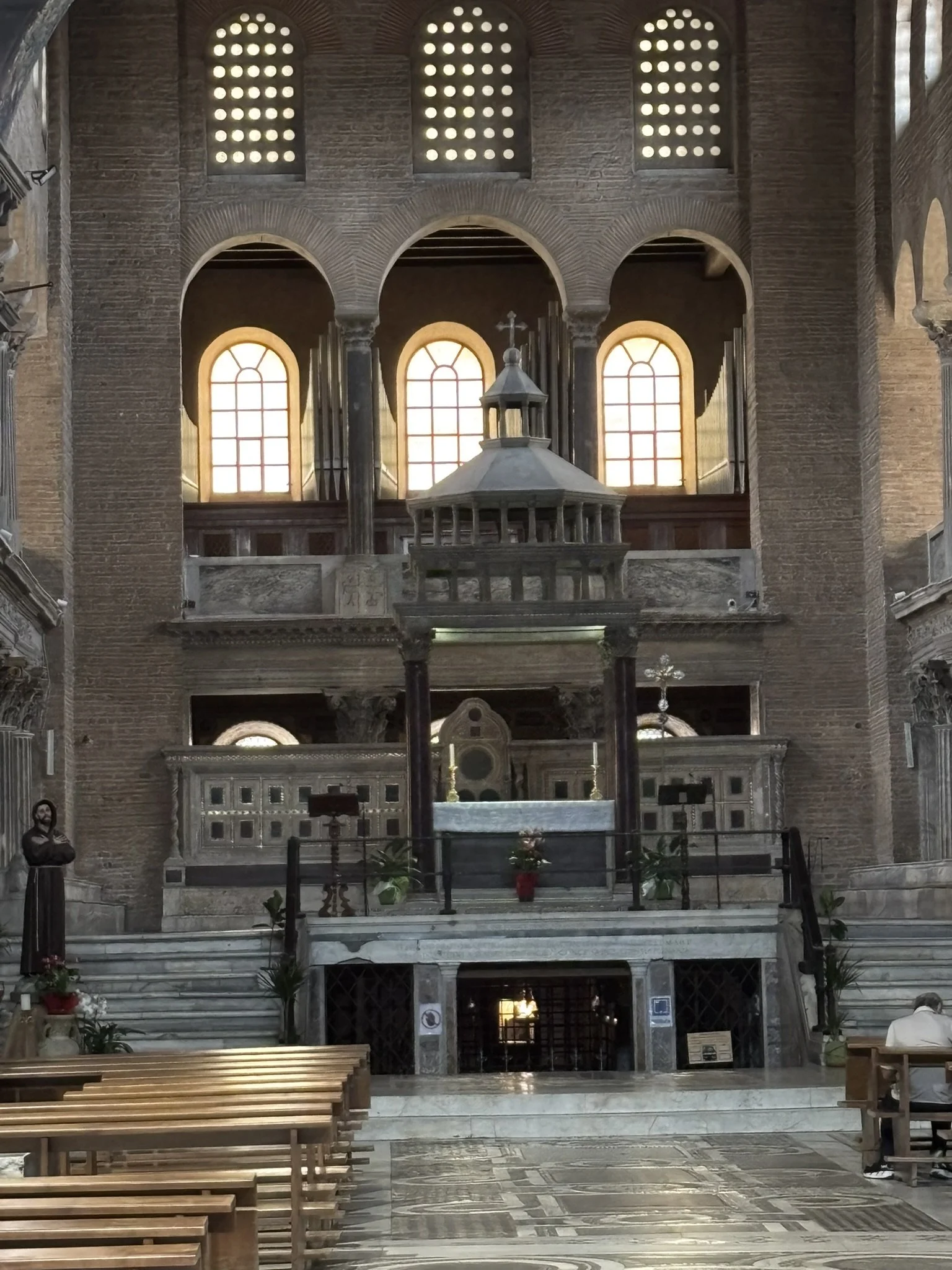
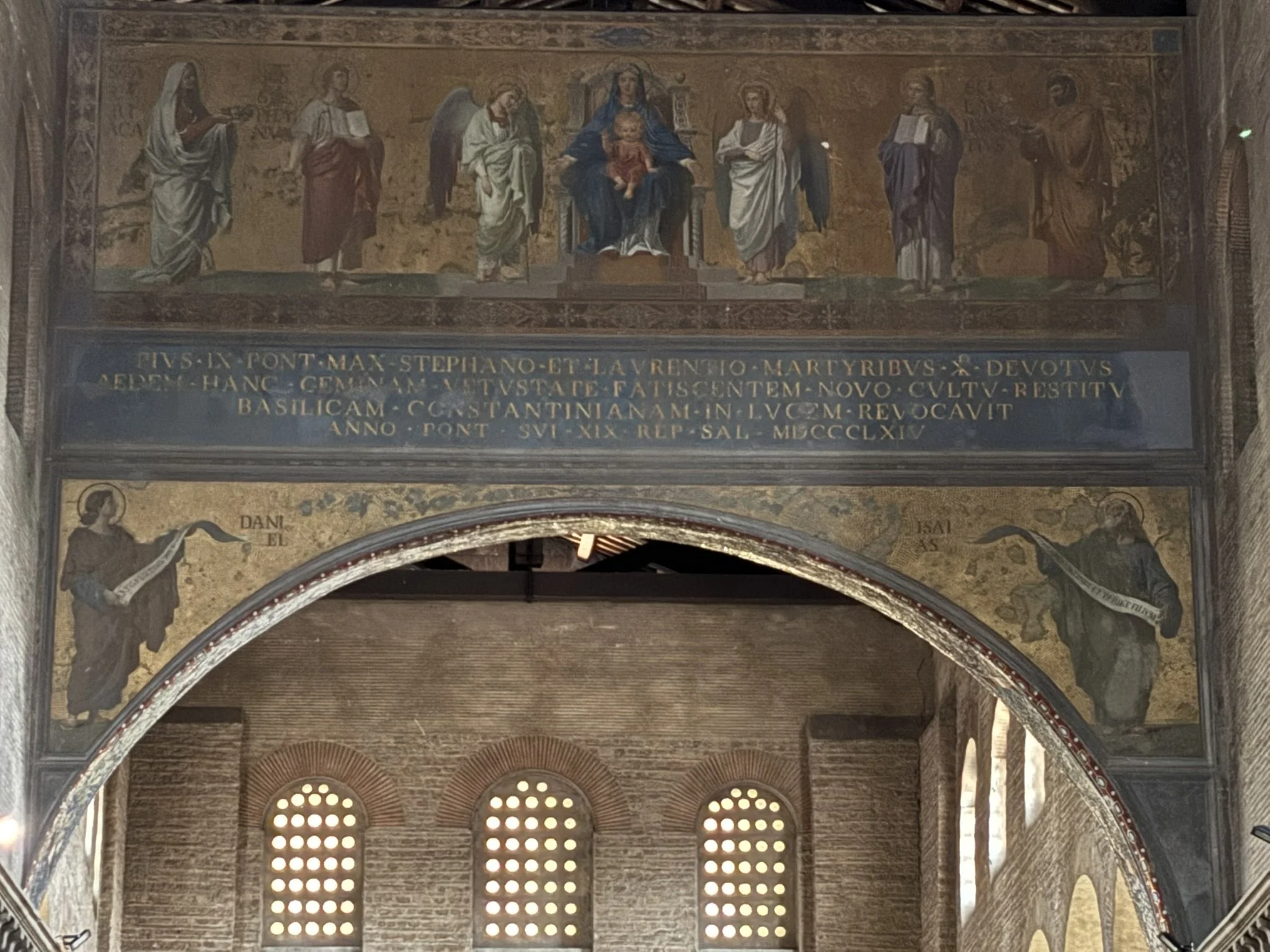
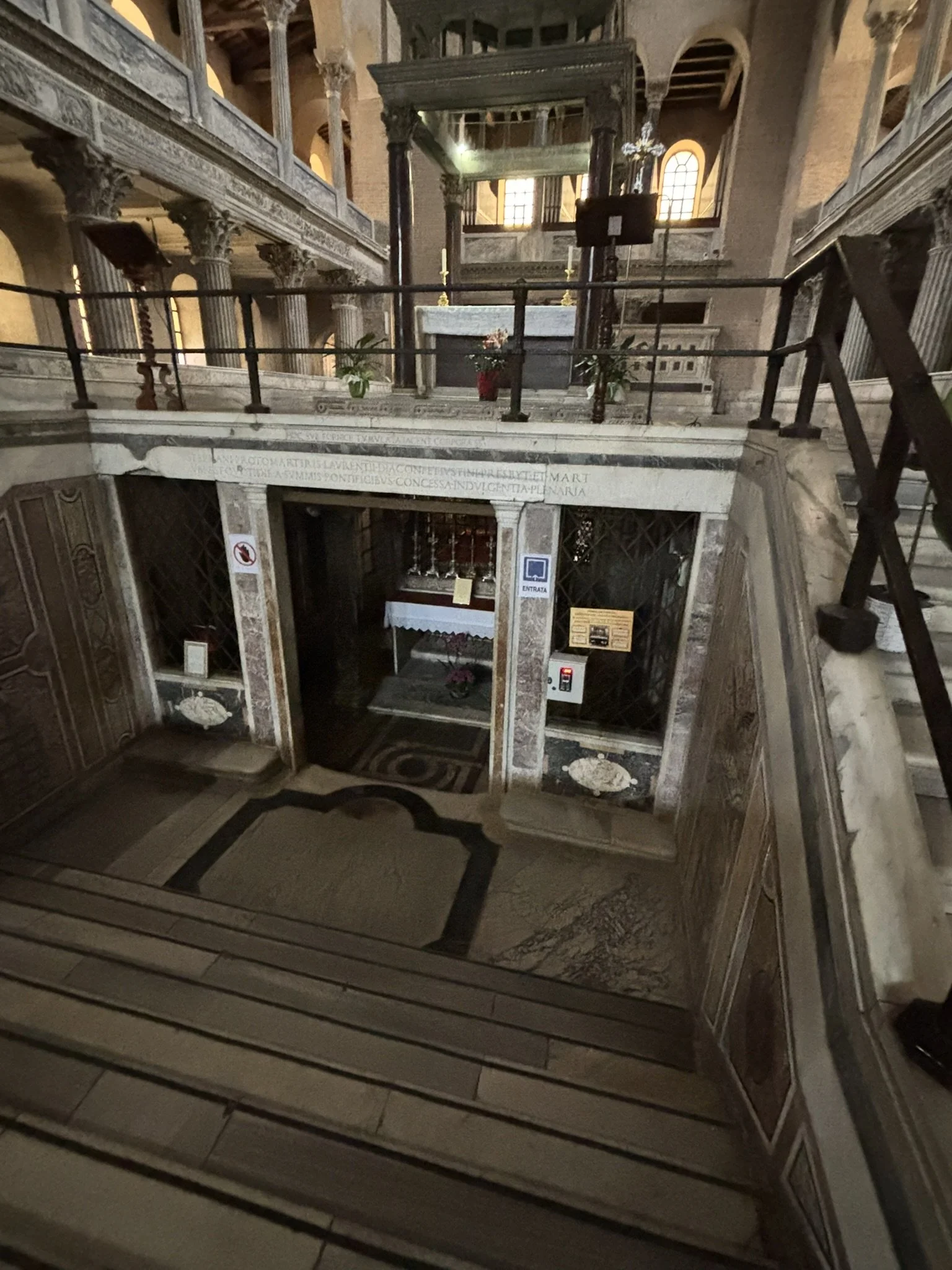
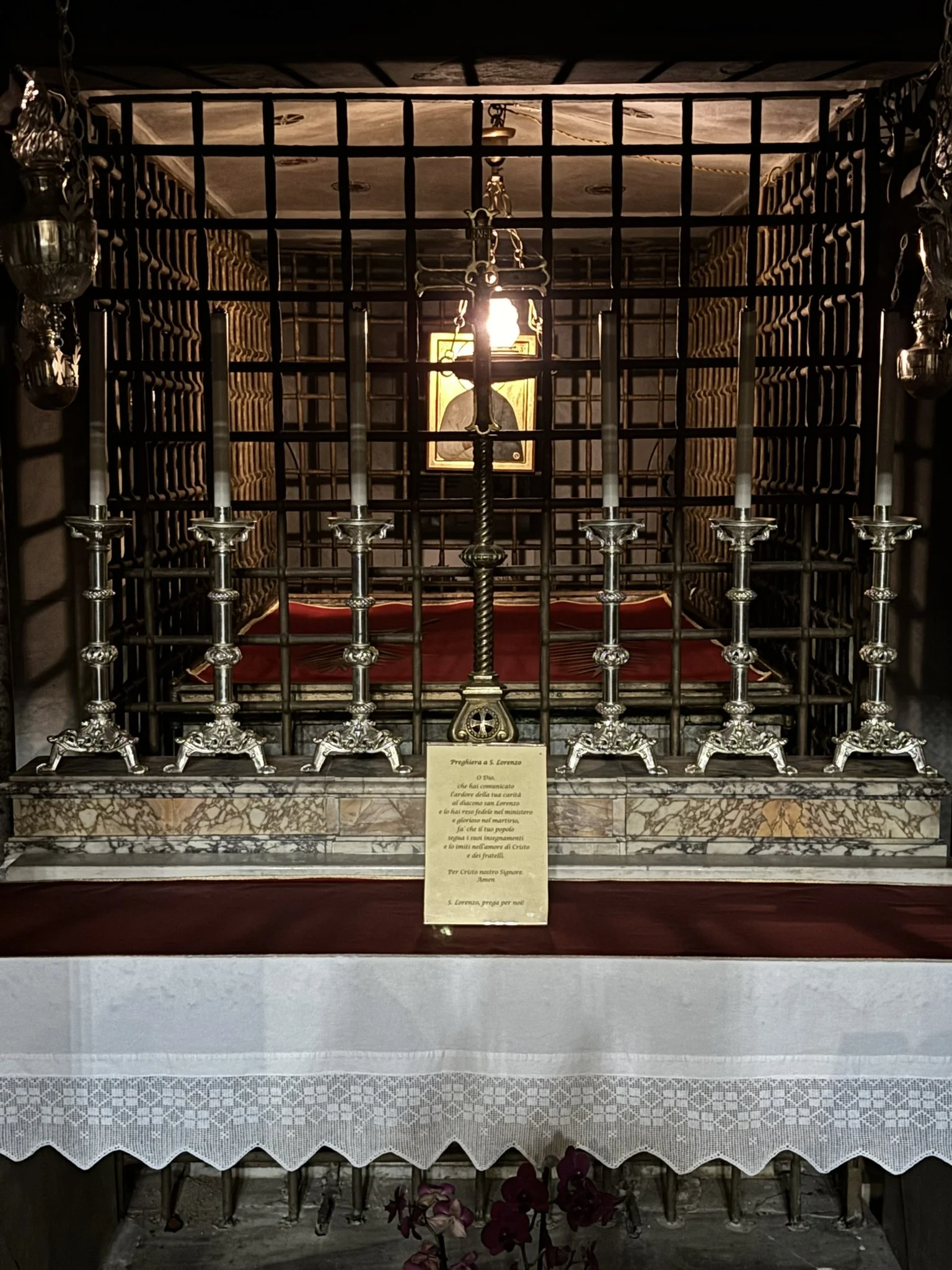
There are two people buried here for whom I have an affinity: the deacon St. Lawrence and the deacon St. Stephen.
St. Lawrence is a little different. He was originally captured in the catacombs I visited and wrote about in the last post. Since he was a deacon, Lawrence was responsible for the local church’s material goods and charity. The Roman Prefect hauled in St. Lawrence and told to bring all of the riches of the church in three days. When Lawrence returned, he brought with him many of the city’s poor, suffering, and disabled. Lawrence told the prefect that these were the treasures of the Church. The prefect didn’t see the humor (and honesty) in that, so he ordered Lawrence to be killed. Lawrence was placed on a grill over a fire. After a while, he told his executioner “Sir, if you don’t mind, please turn me over. I’m done on this side.“
This part of the pilgrimage was bittersweet. While planning the pilgrimage, I was in the process of applying to the diaconate. My wife and I were (and are) certain that God was calling me to that vocation. I had a village of support, and a large prayer circle who committed themselves to prayer and spiritual, emotional, and childcare support. Unfortunately, shortly before leaving for the pilgrimage, the priest who had originally supported my application withdrew his support out of an act of anger on his part.
Coming before these two saints was painful: the betrayal I felt from a priest I thought was a friend, the loss of a vocation I was being called to, the fact that I knew I needed to move on but couldn’t. I fell on my knees before the tomb - the throne? - of these two paragons of the diaconate. I prayed. I remembered where my wife and I had just spent so much time exploring in San Clemente. The Church is so significantly larger than myself. I play a role in it, but only as part of the structure. Faithful have come before, Faithful will come after. I do my part in the moment I find myself, but not in order to make the Faith focused on me. Remembering St. Stephen’s ability to forgive St. Paul, and at his feet, I prayed that I may begin that journey of forgiveness for a much smaller slight.
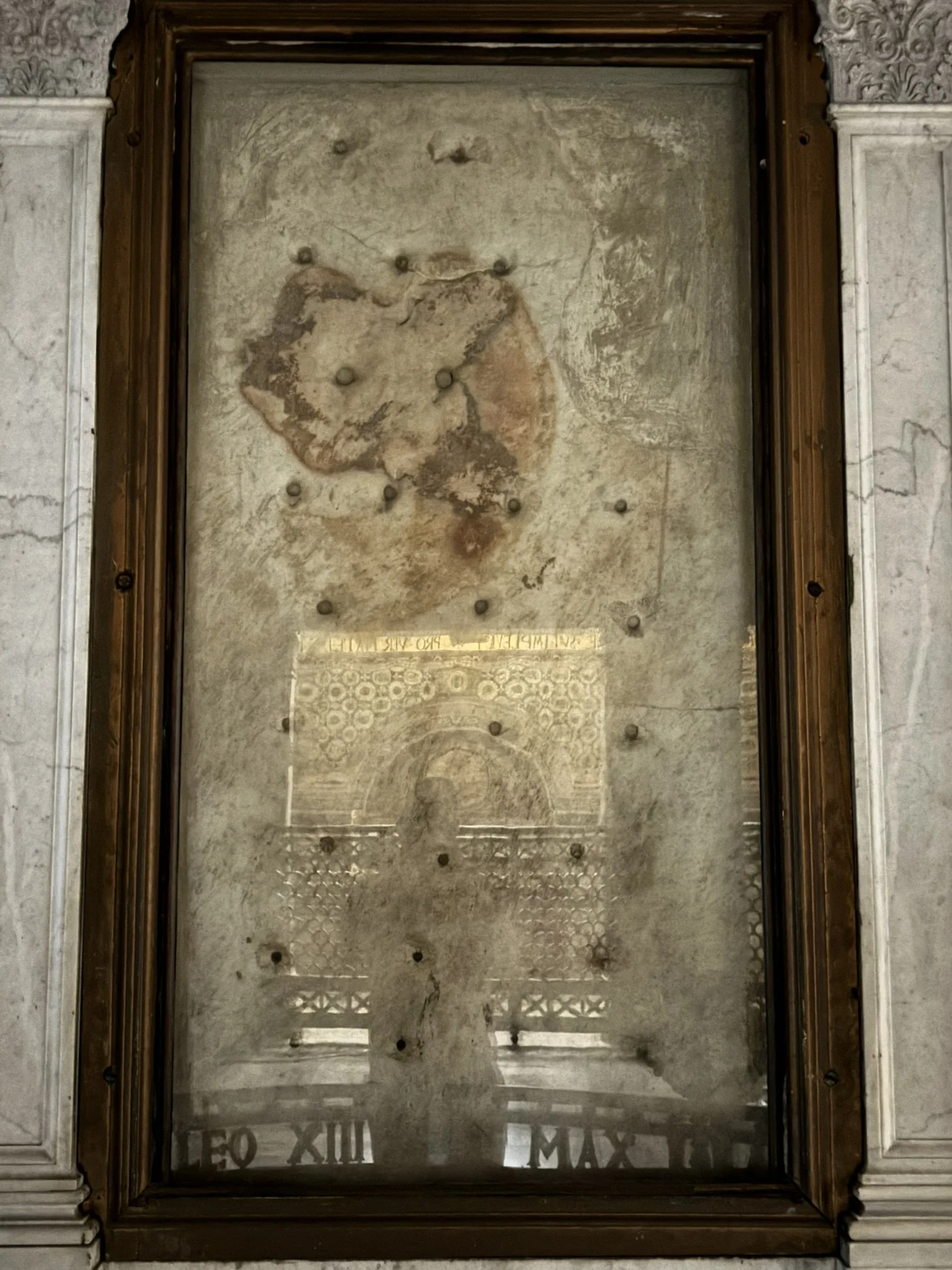
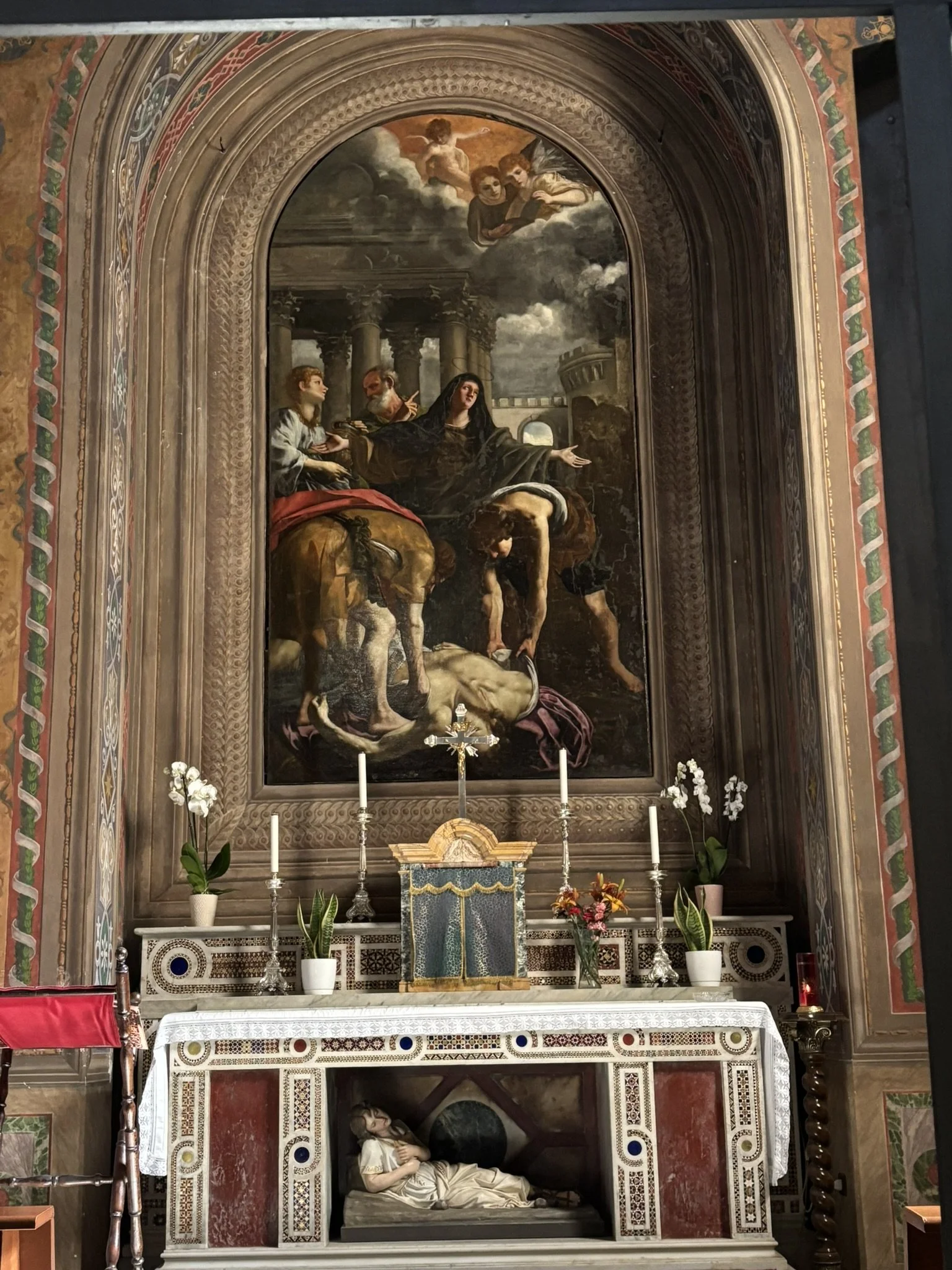
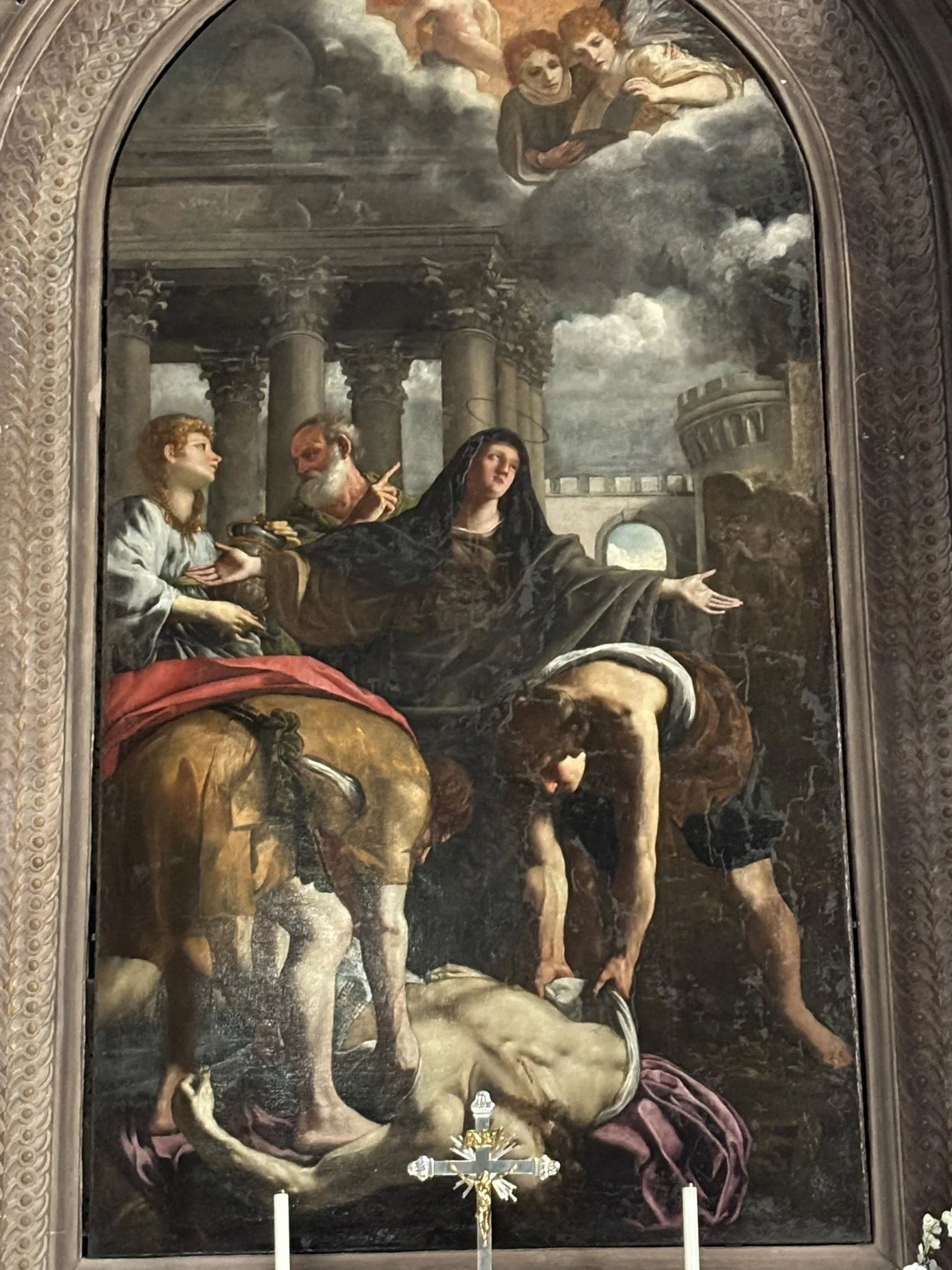
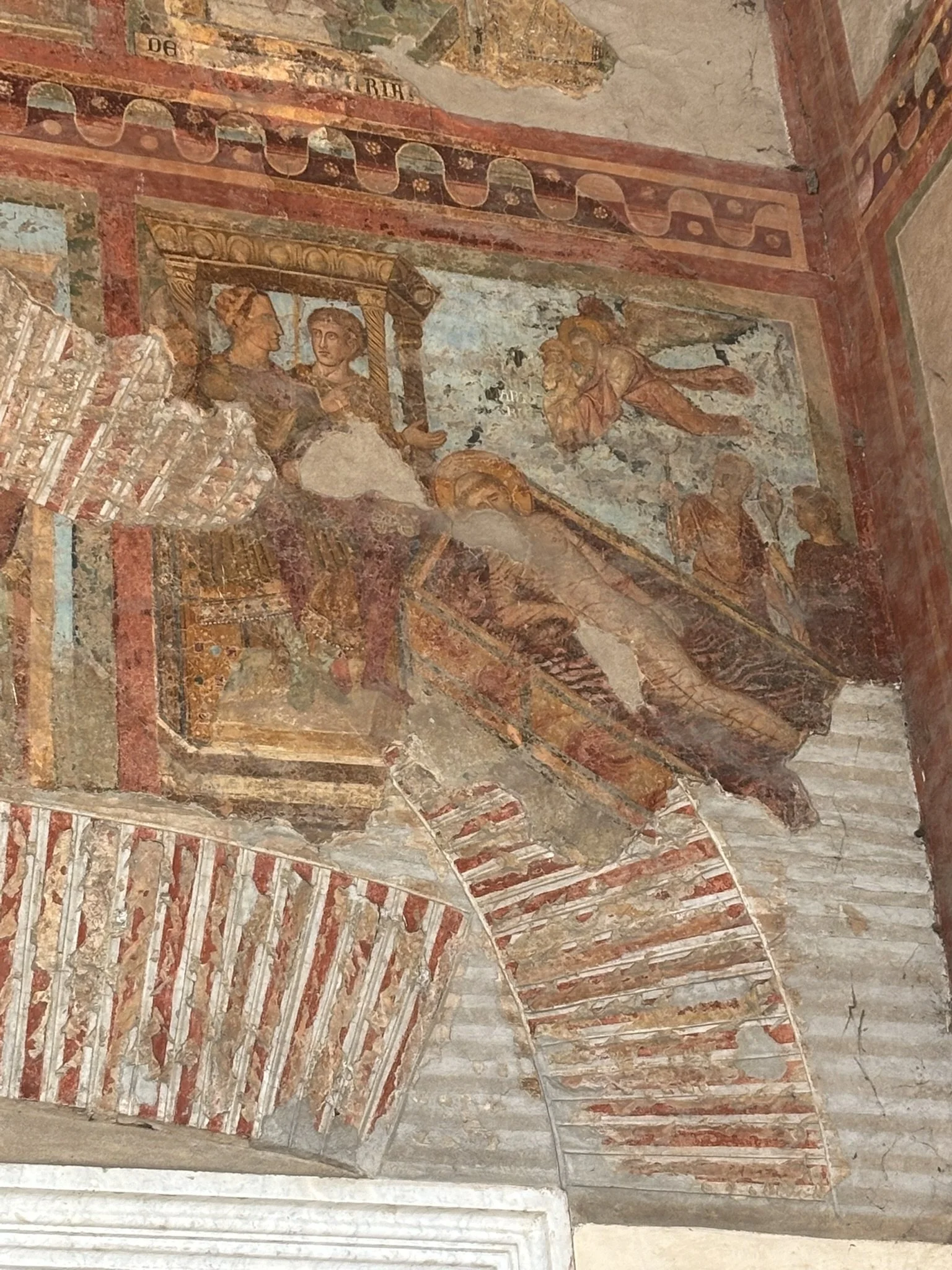
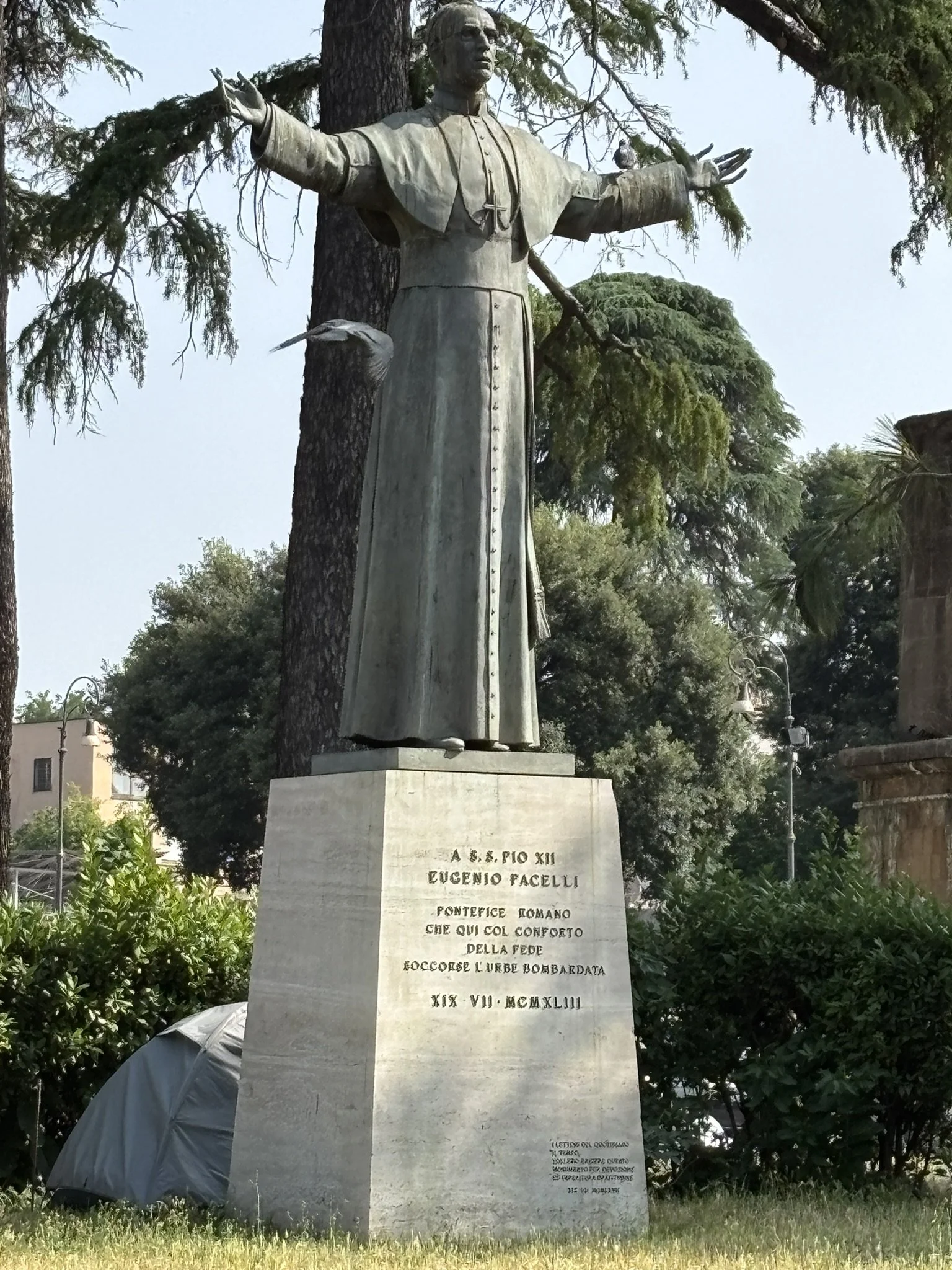
St. Lawrence is also the burial location of many surprising people. Pope Pius XII’s parents are there (when the neighborhood was heavily damaged from Allied bombings in WWII, Pius was celebrated for coming and visiting the survivors. There is a statue commemorating him outside), as well as Pope Pius IX (longest-reigning pope in history, after St. Peter; also convened the First Vatican Council). Pope Zosimus is also buried there (Top 10 pope names, for sure. He actually convened the Roman clergy to San Clemente in the 400s to discuss whether a follower of Pelagian was, in fact, a heretic or not).
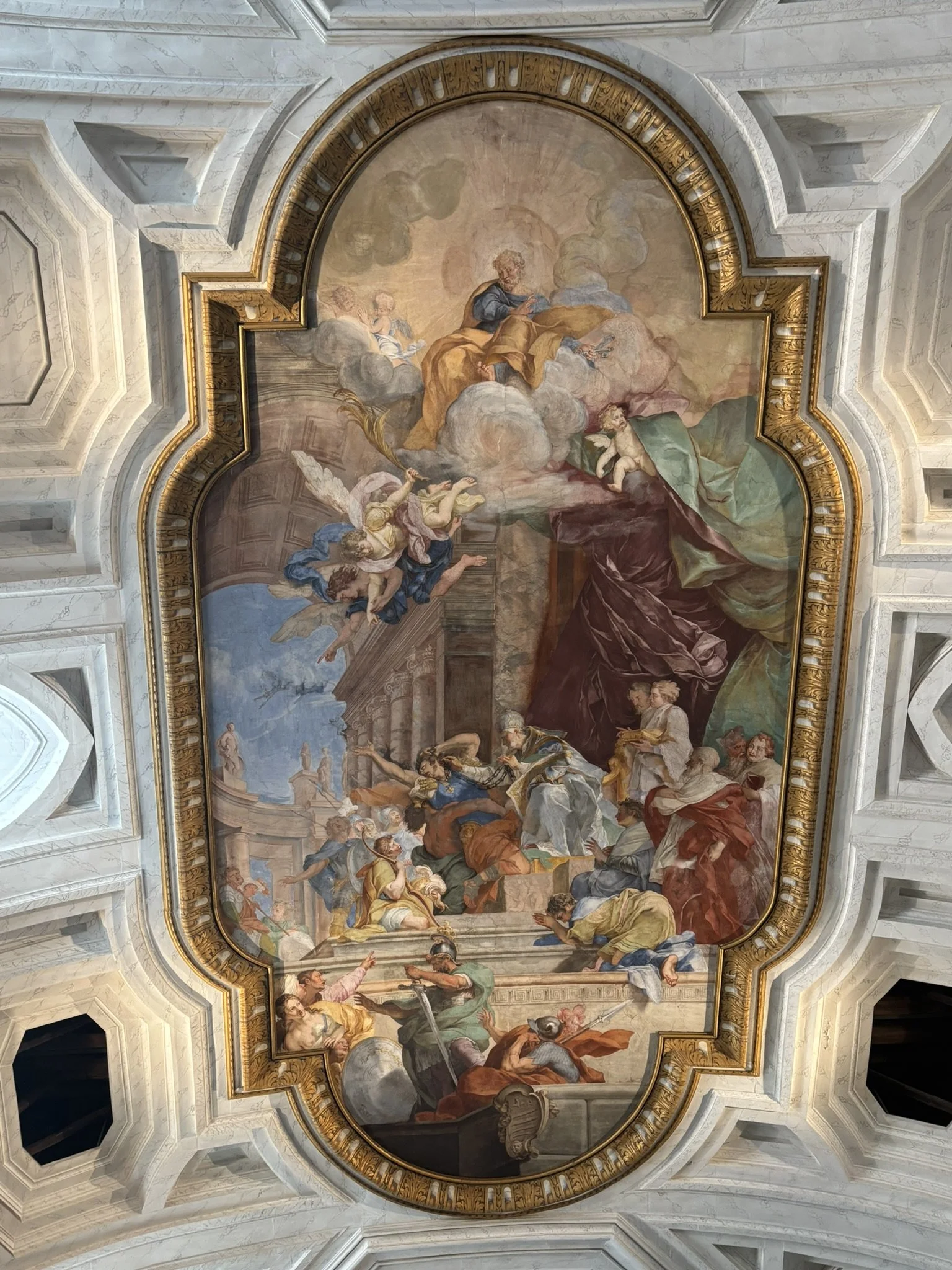
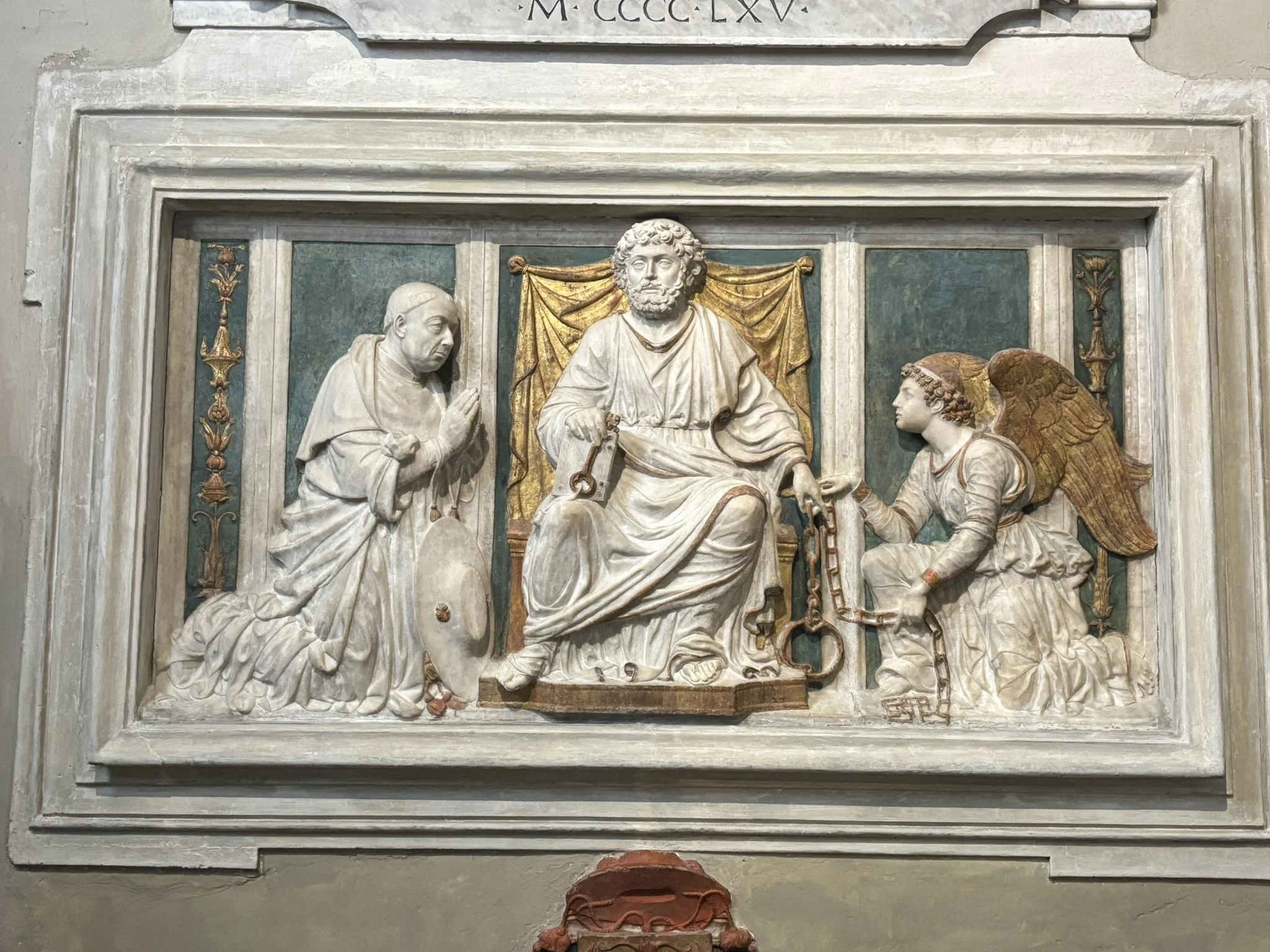
Next was St. Peter in Chains (San Pietro in Vincoli). Built in the early 400s, it was specifically erected to house the chains that bound St. Peter when he was a prisoner in Jerusalem (the story can be found in Acts 12). The history of these chains is interesting, and gives a level of historicity to the chains that can’t be as easily dismissed as some relics. When those chains were compared with the chains of St. Peter from his final imprisonment, they miraculously fused together, resulting in the chain you see today.
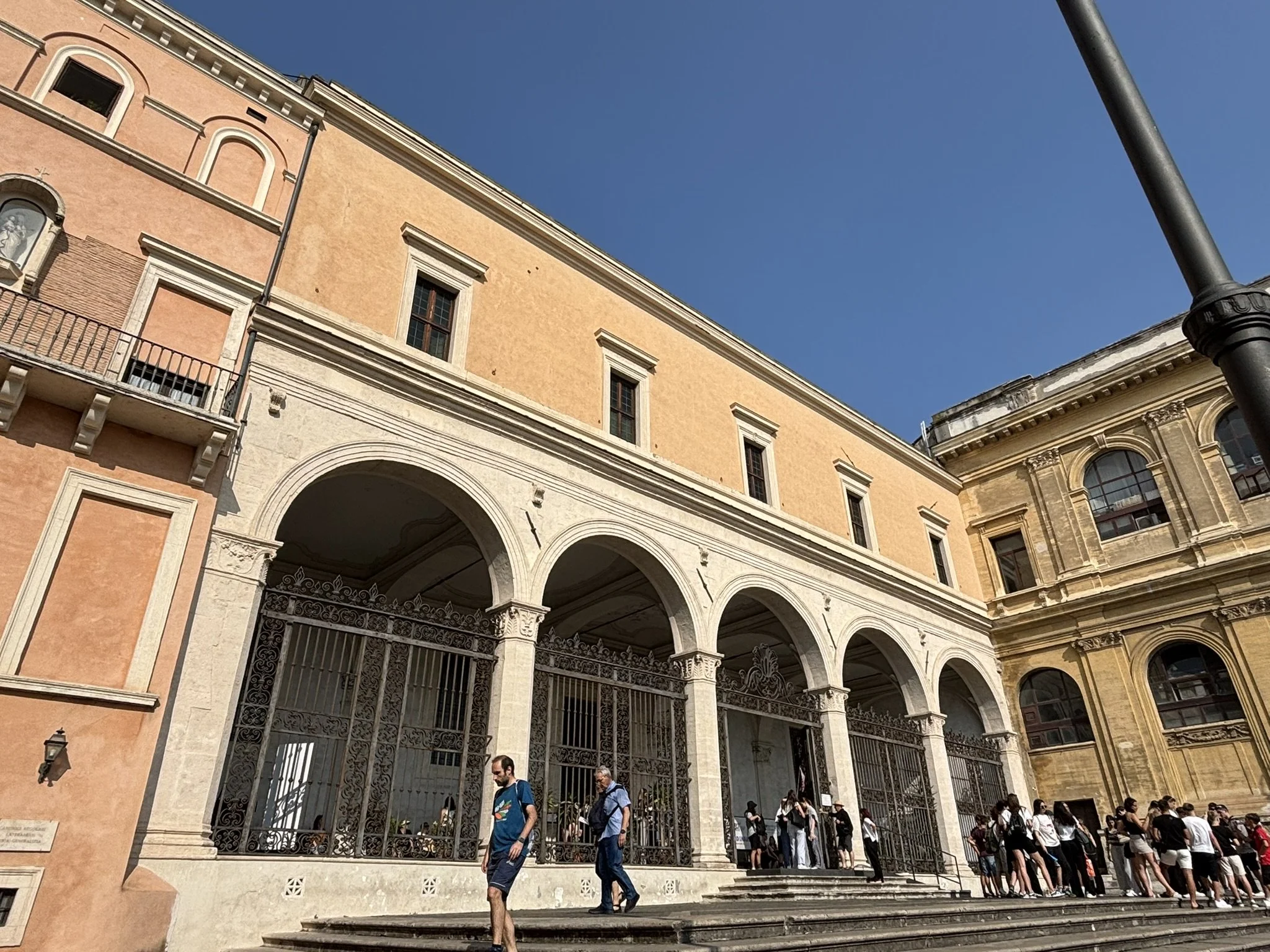
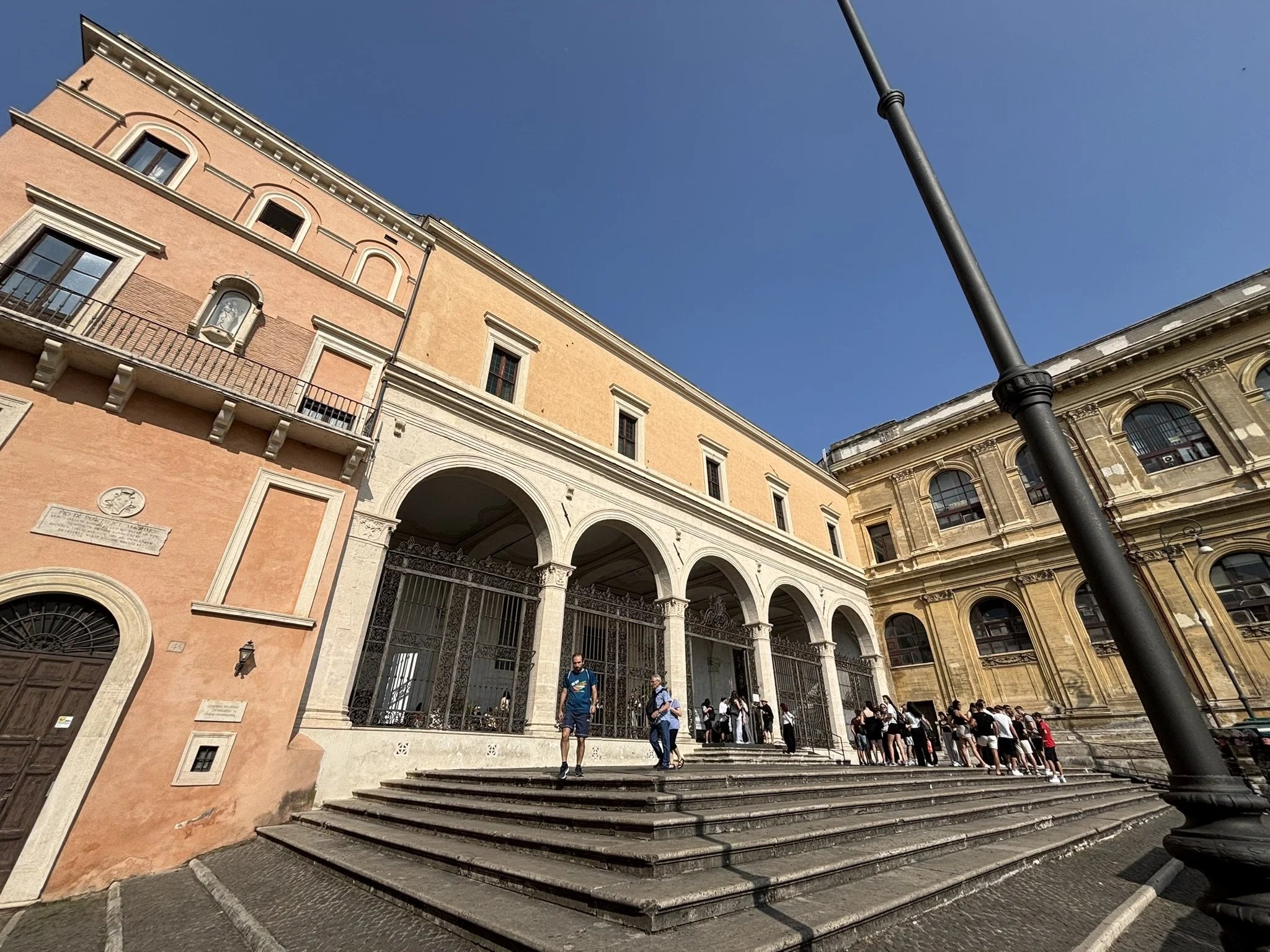
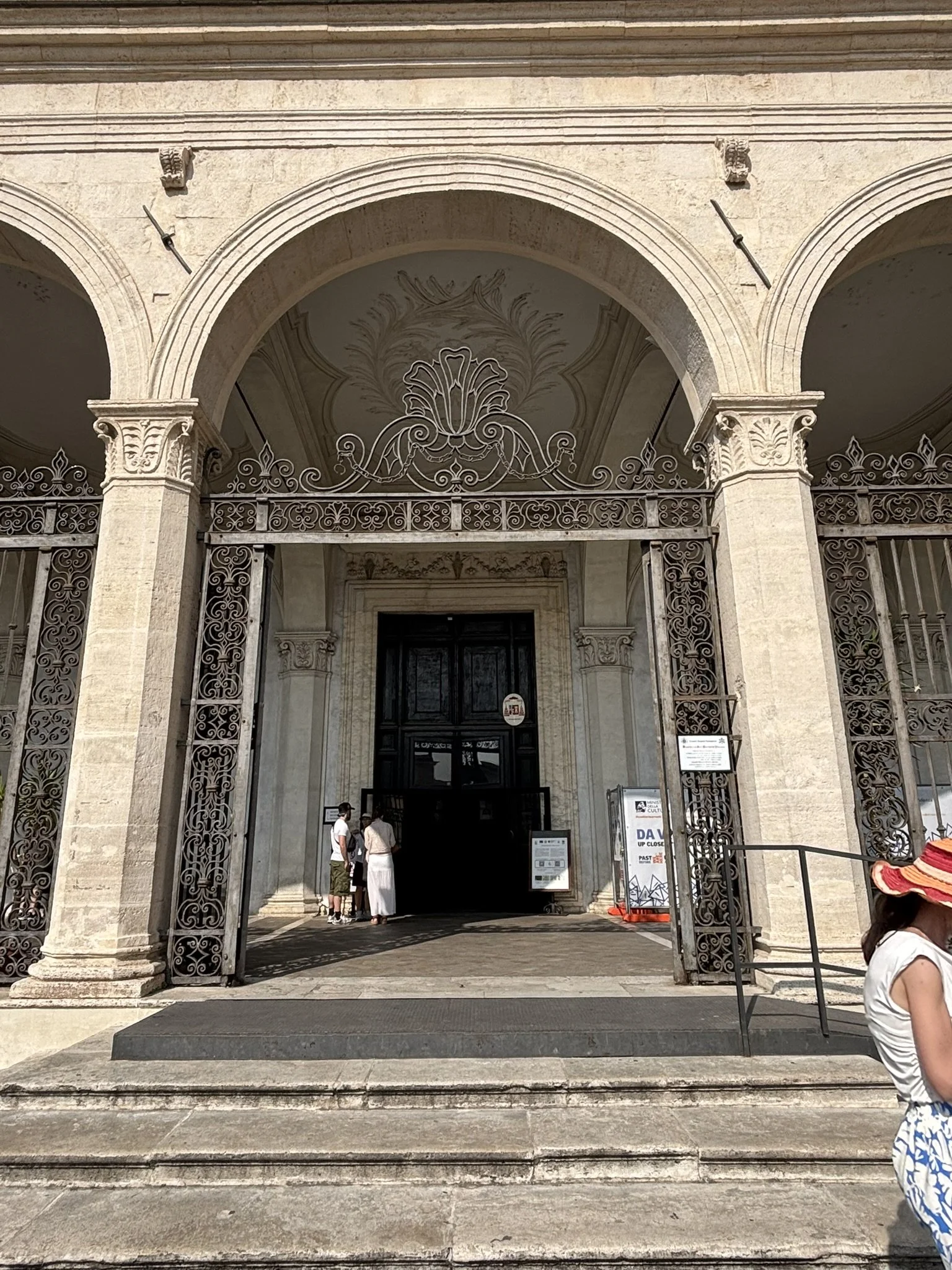
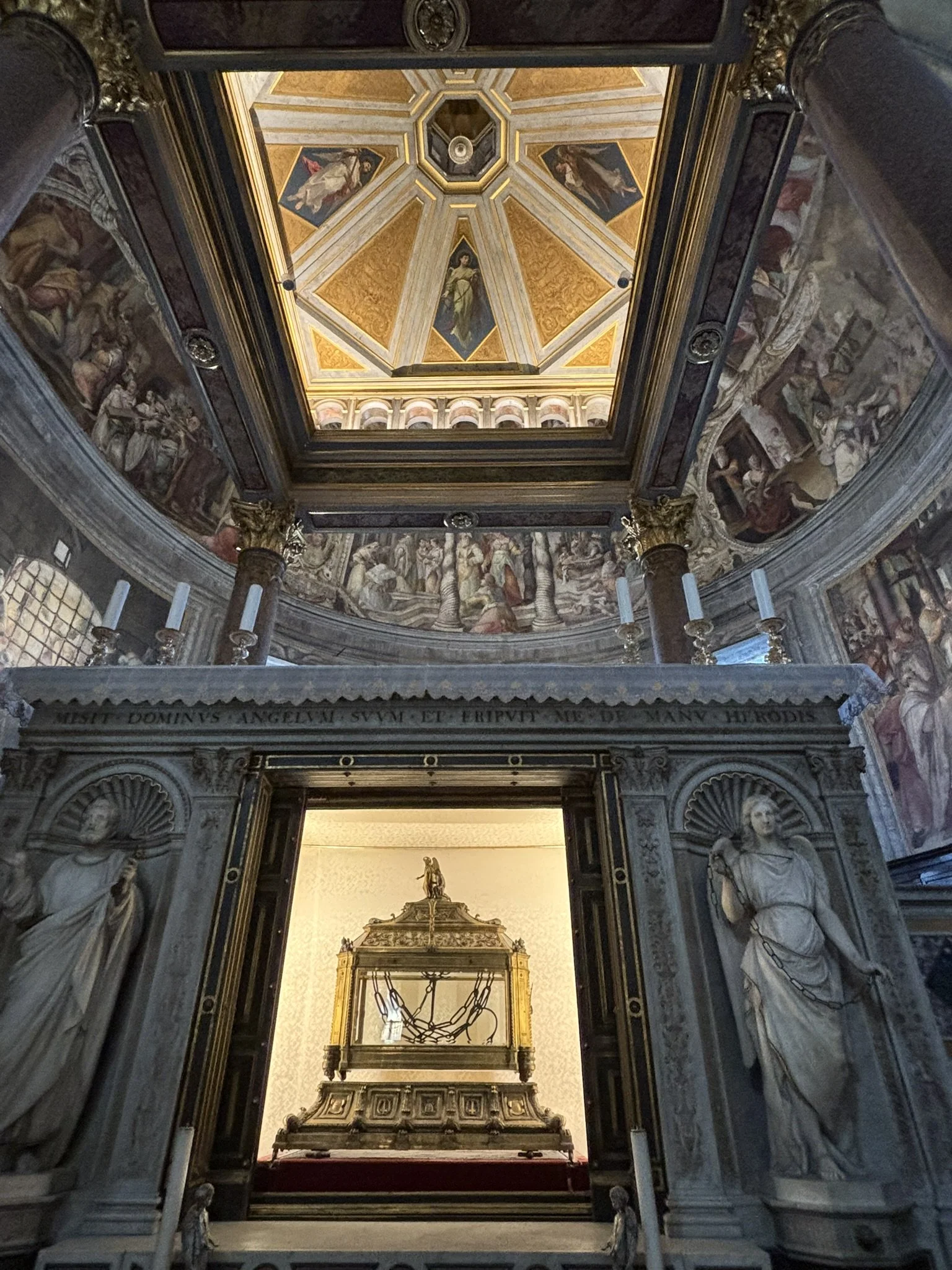
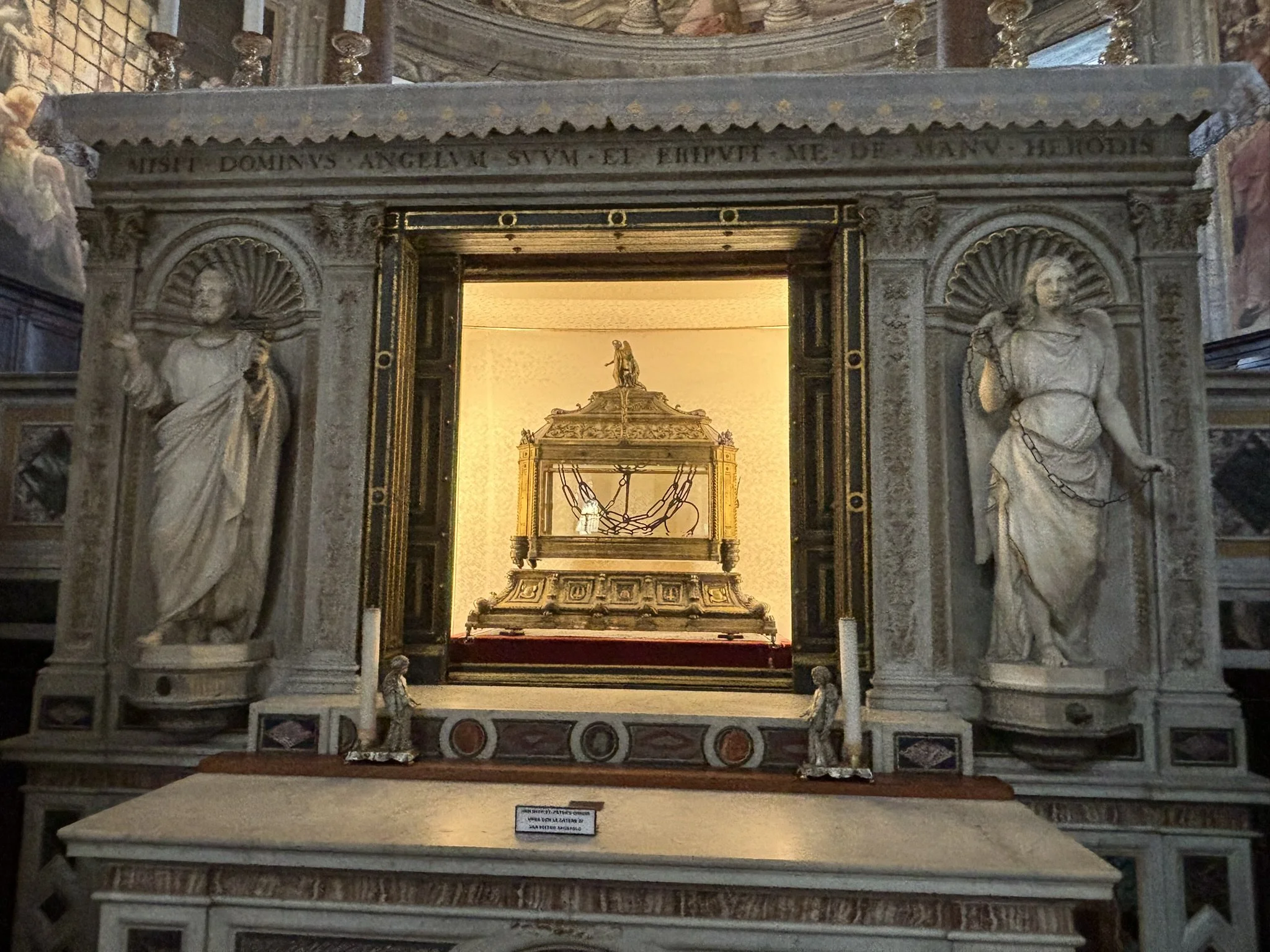
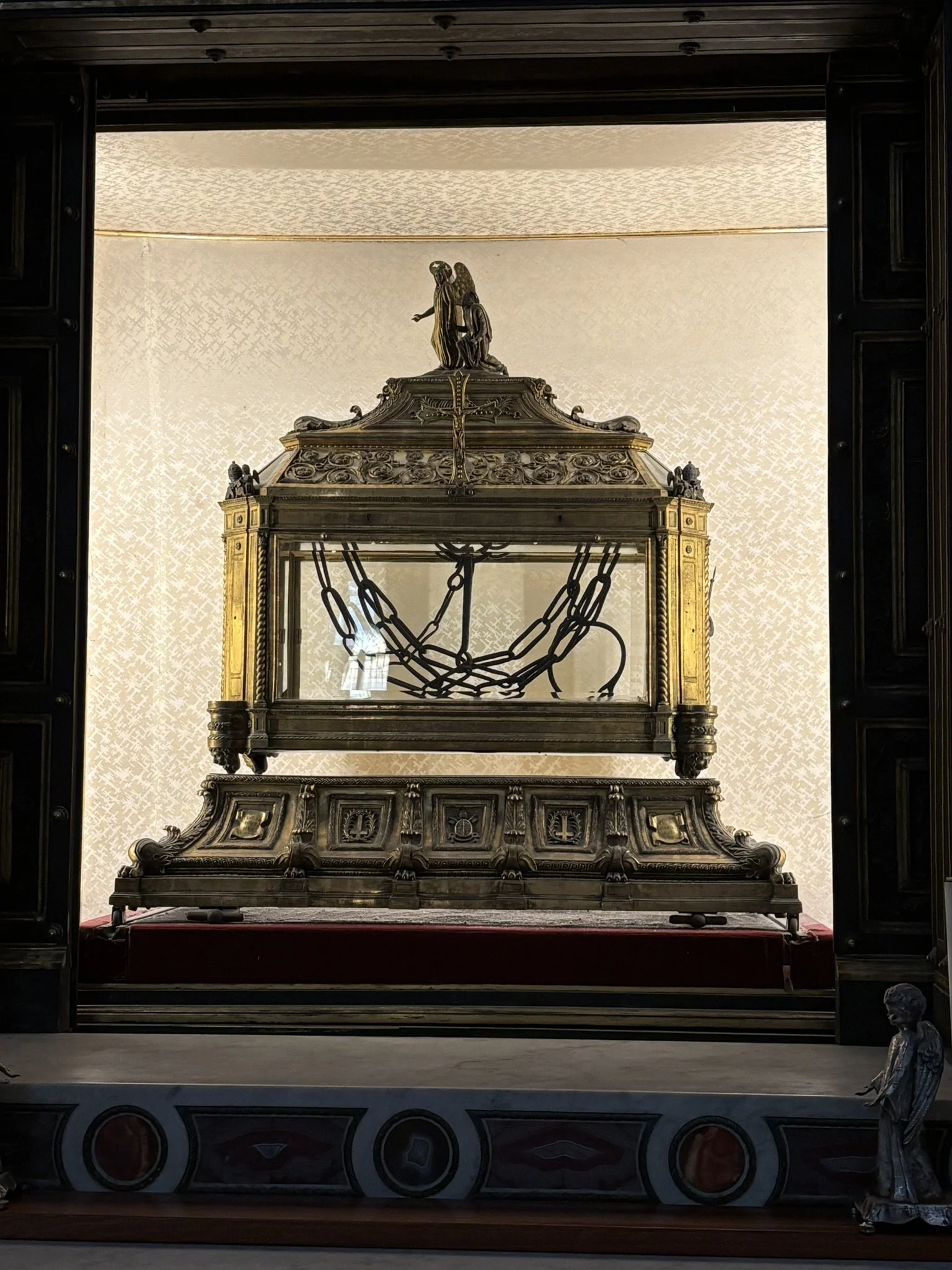
That’s not the only interesting thing inside the church. Michelangelo’s Moses (1515) is also located here. In a smart fusion of technology and art, they have set up the sculpture so that lights recreate the path of the sun. Moses was created specifically to create different visual effects. Over the span of 5 minutes, then, you can see all the ways that Michelangelo intended his work to be viewed. Also, the horns on Moses’s head are not from a misunderstanding of the Old Testament (even in spite of what a guy was telling his girlfriend who he was clearly trying to impress). Instead, the horns are symbolic of radiance and beams of light. the two words are similar in Hebrew. The reason for it, though, is because horns are easier to depict that small rays of light.
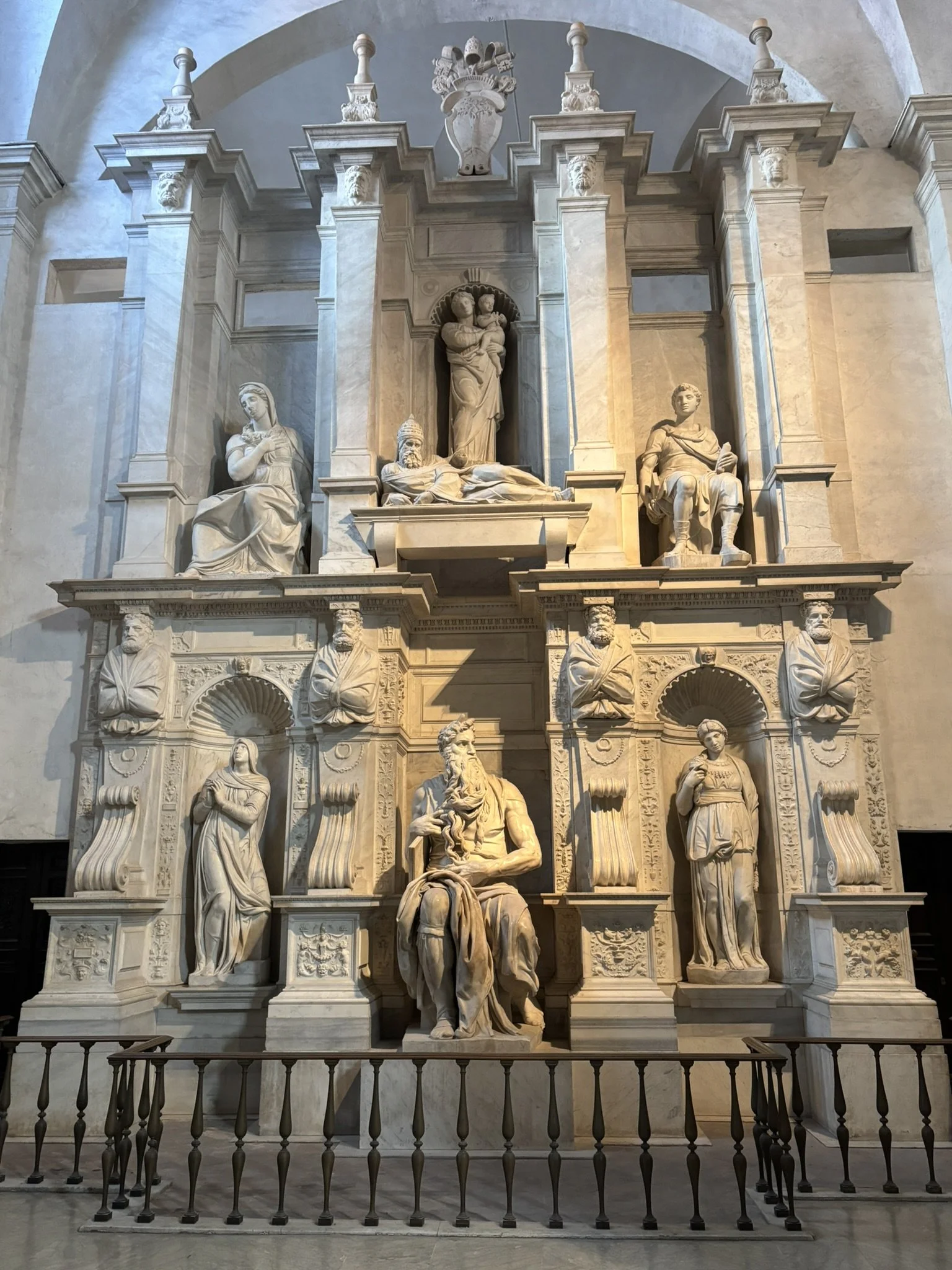
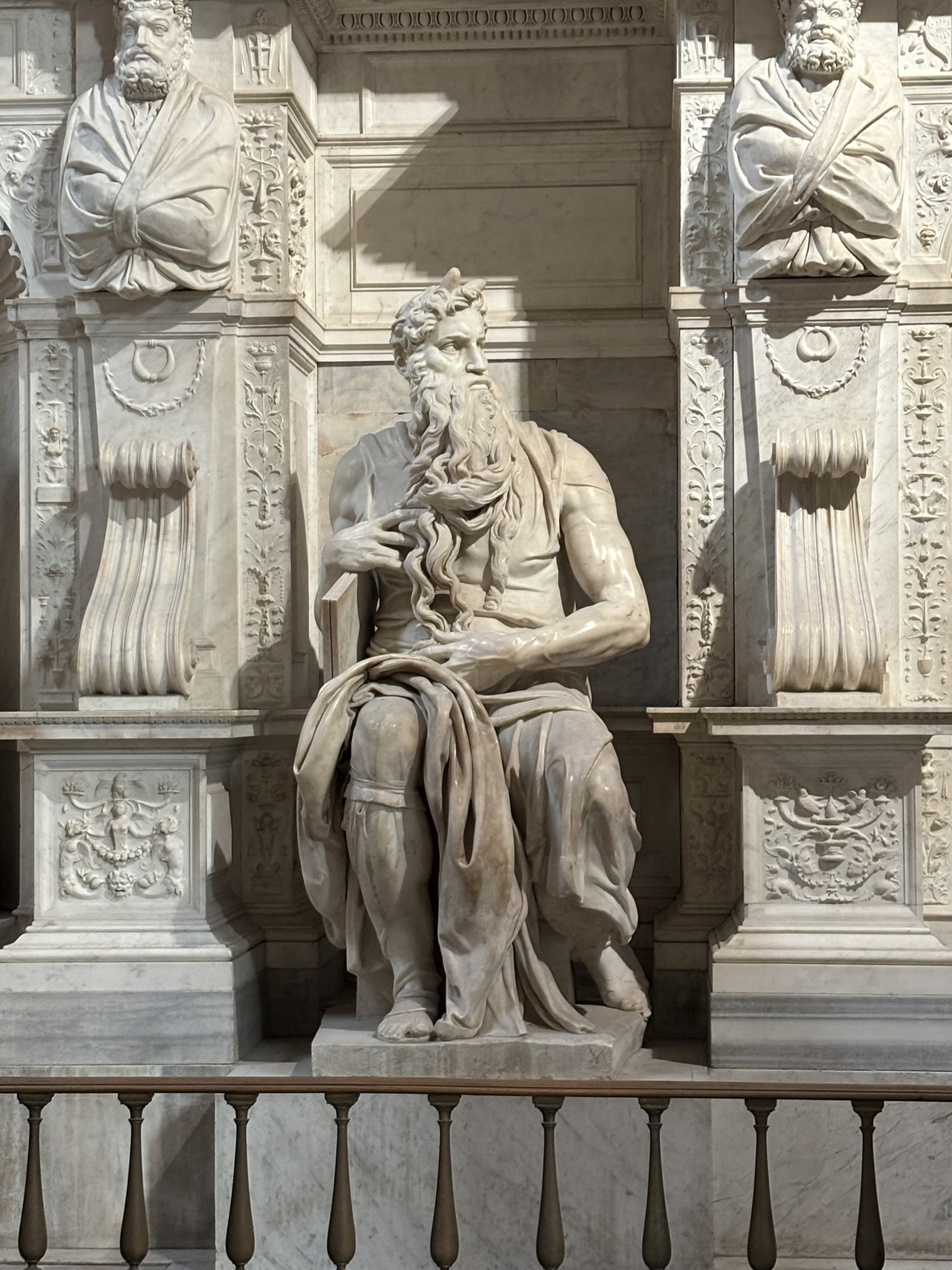
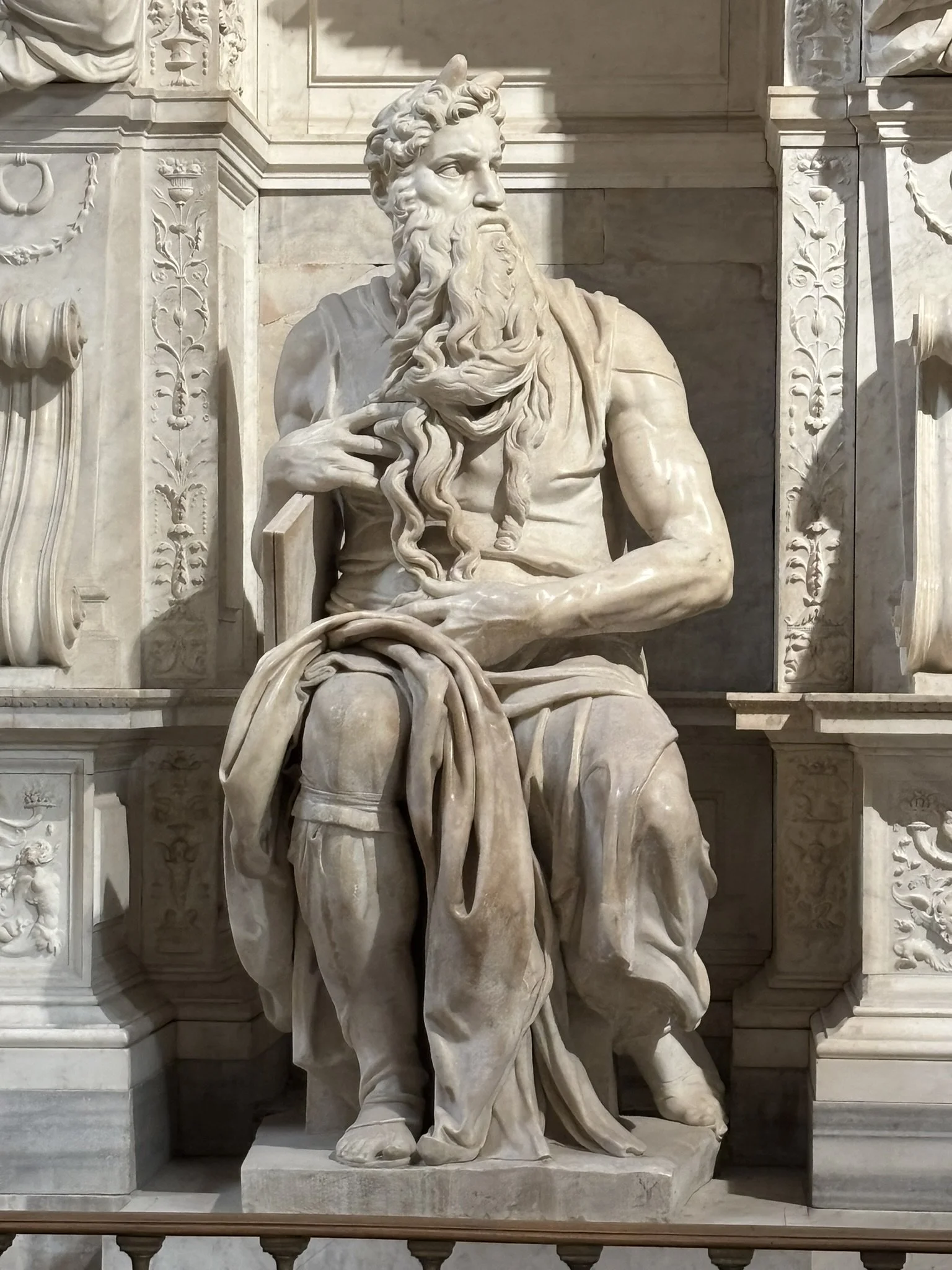
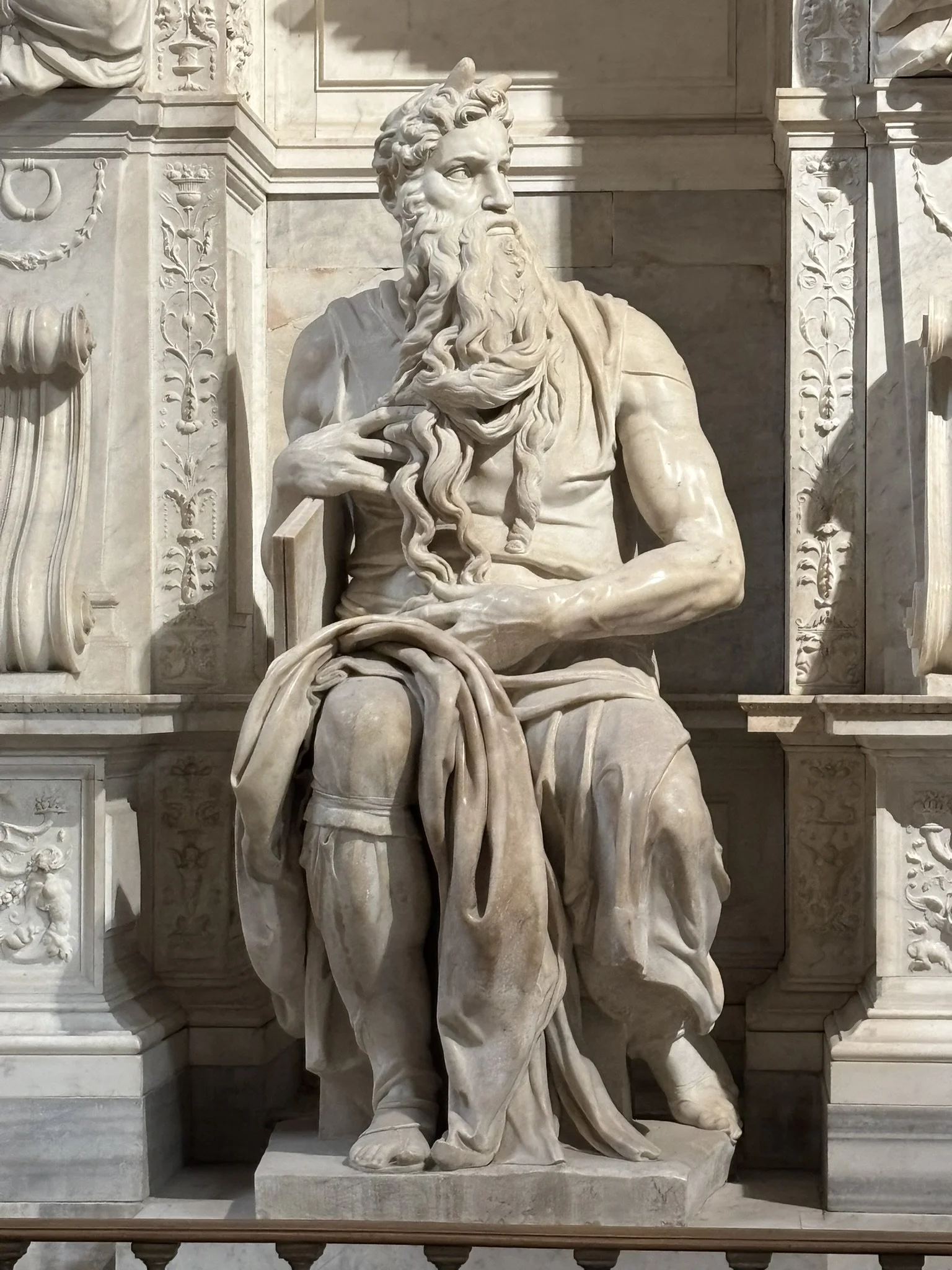
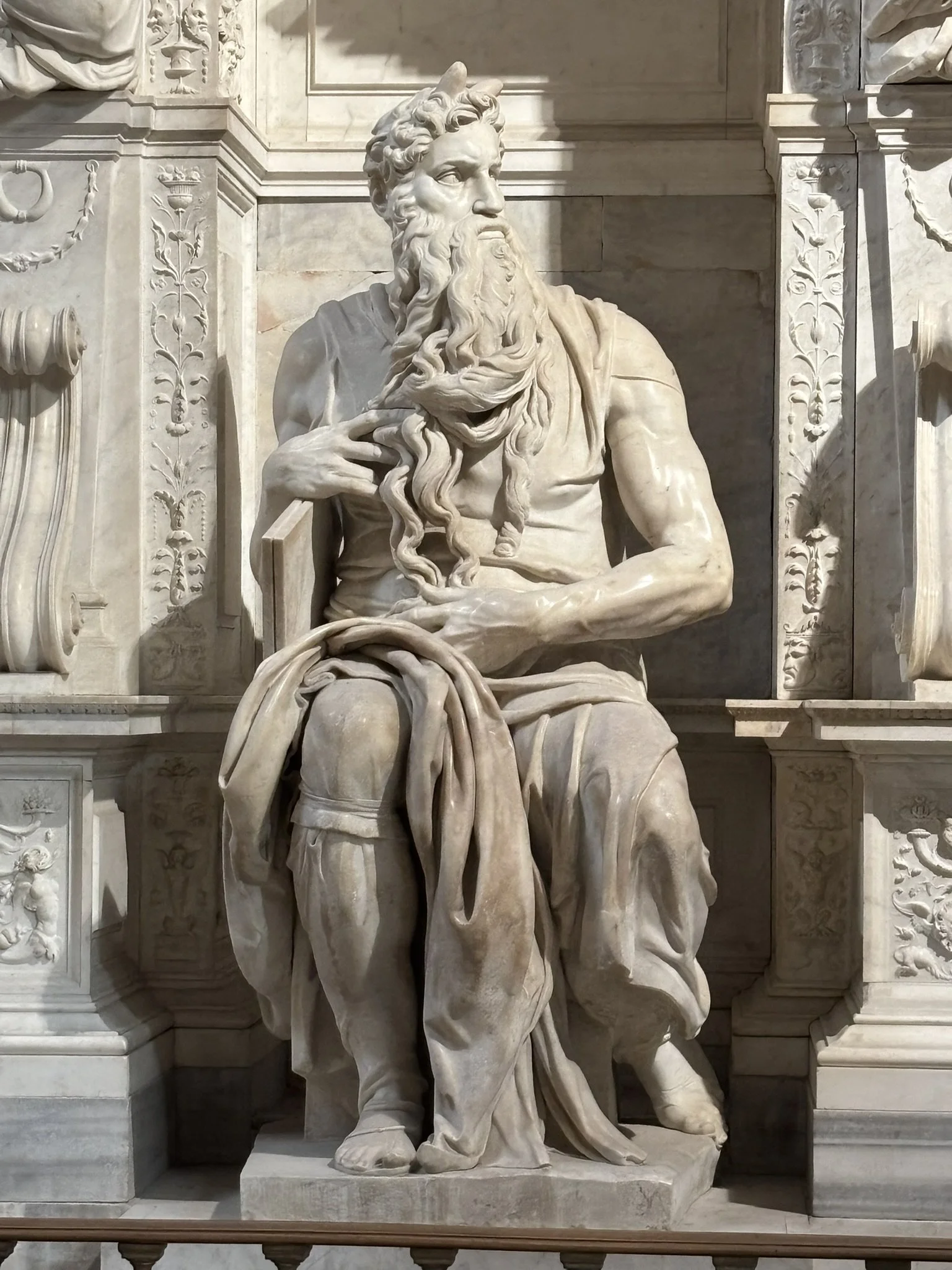
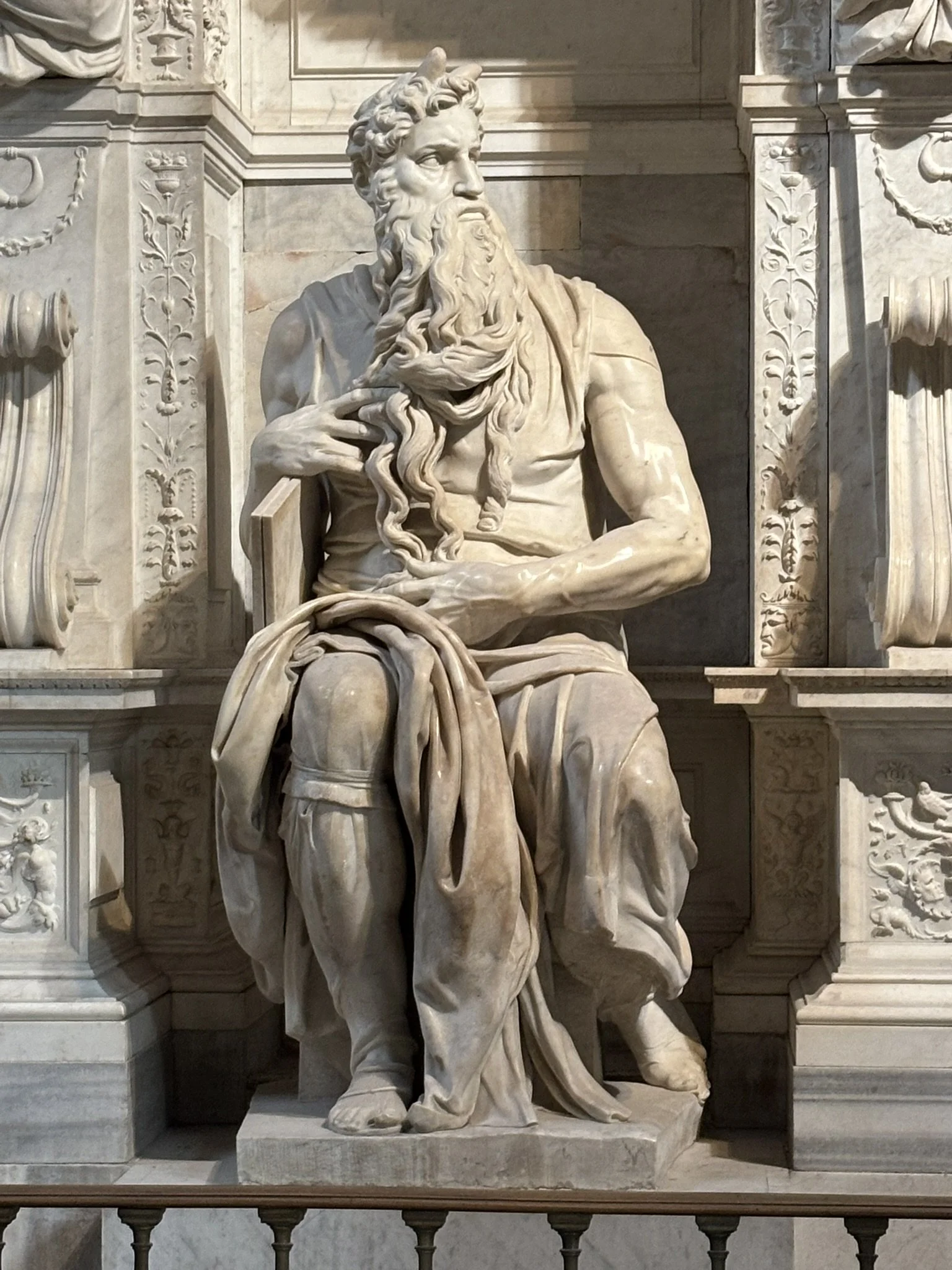
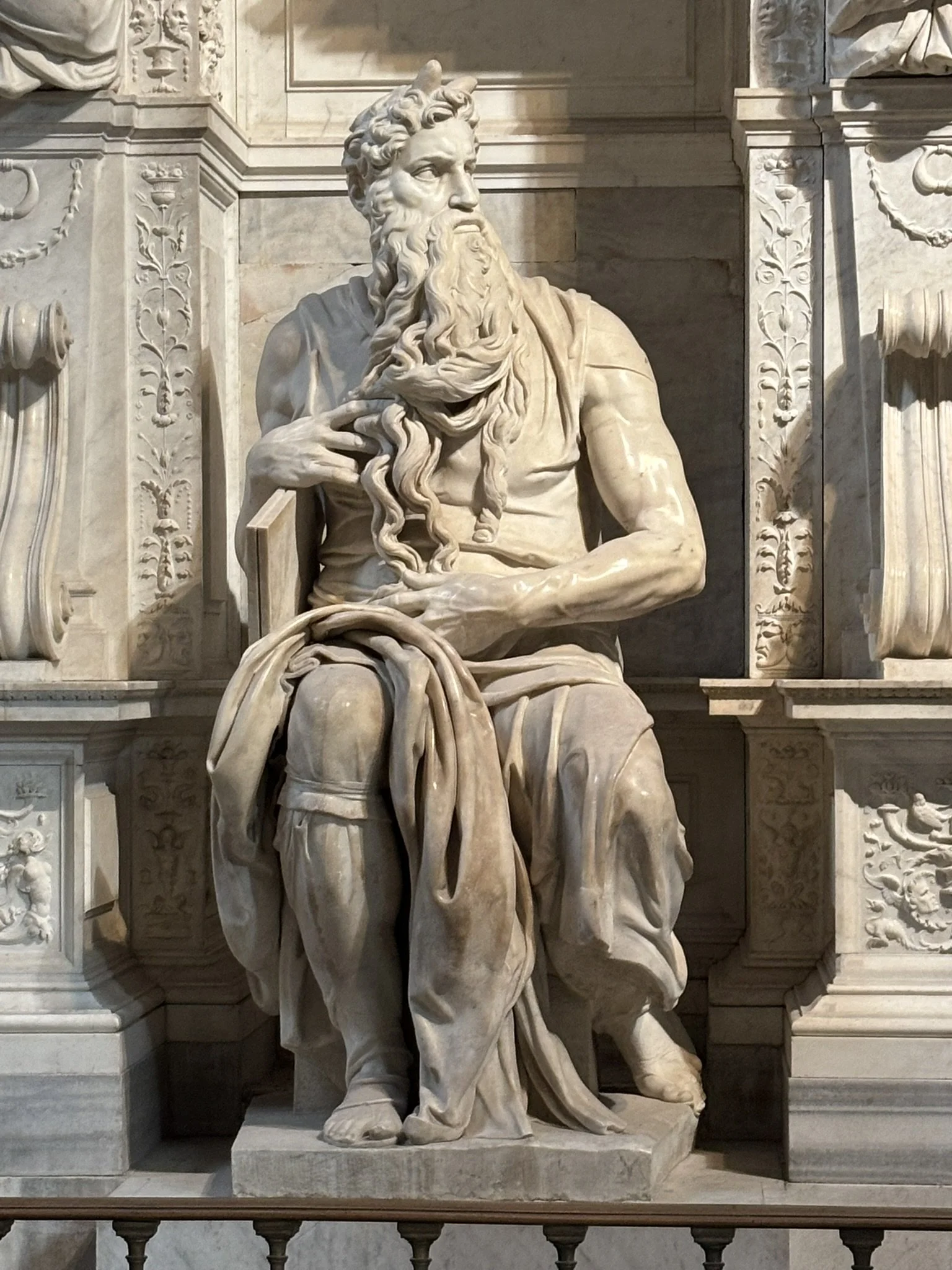
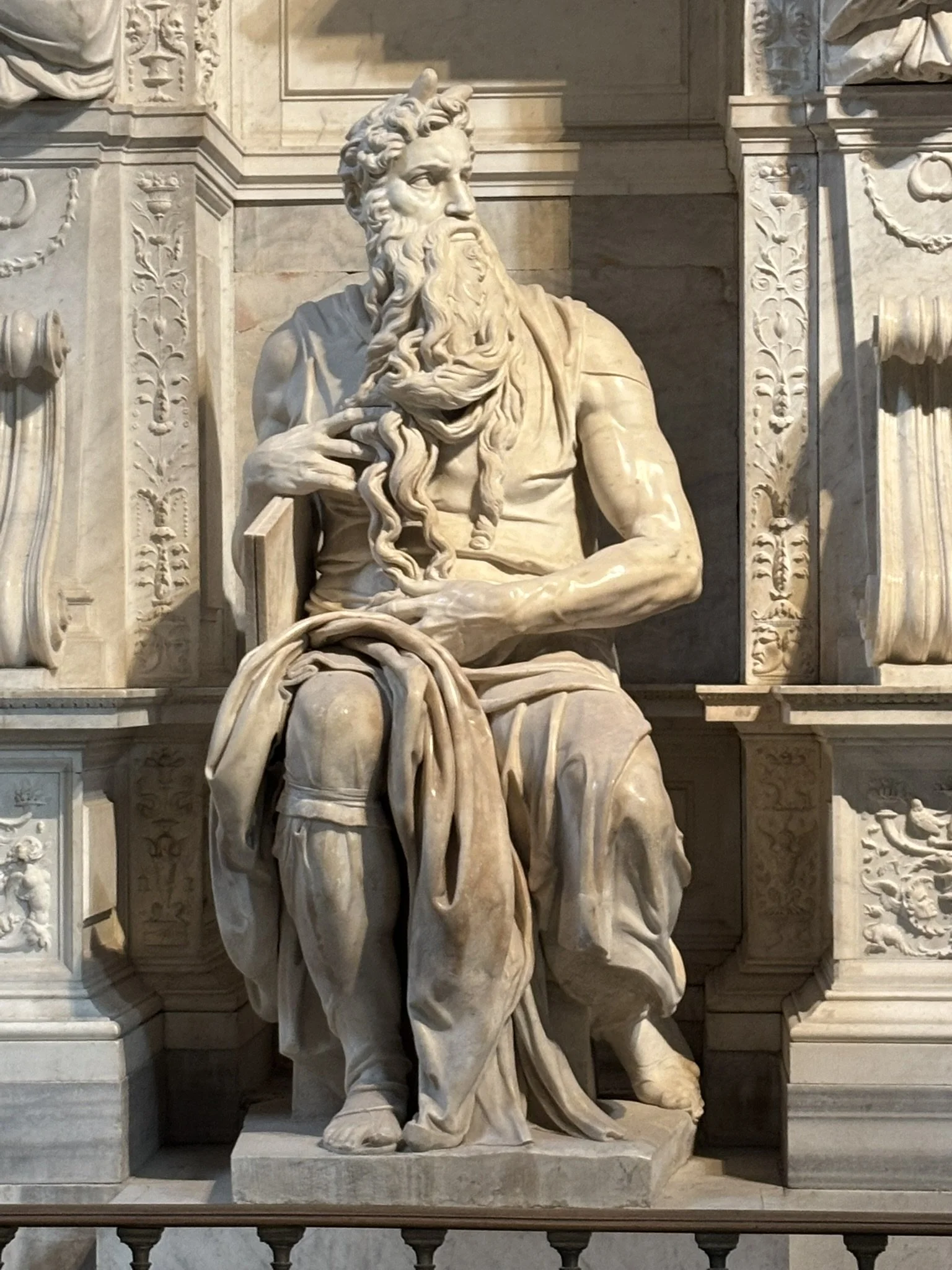
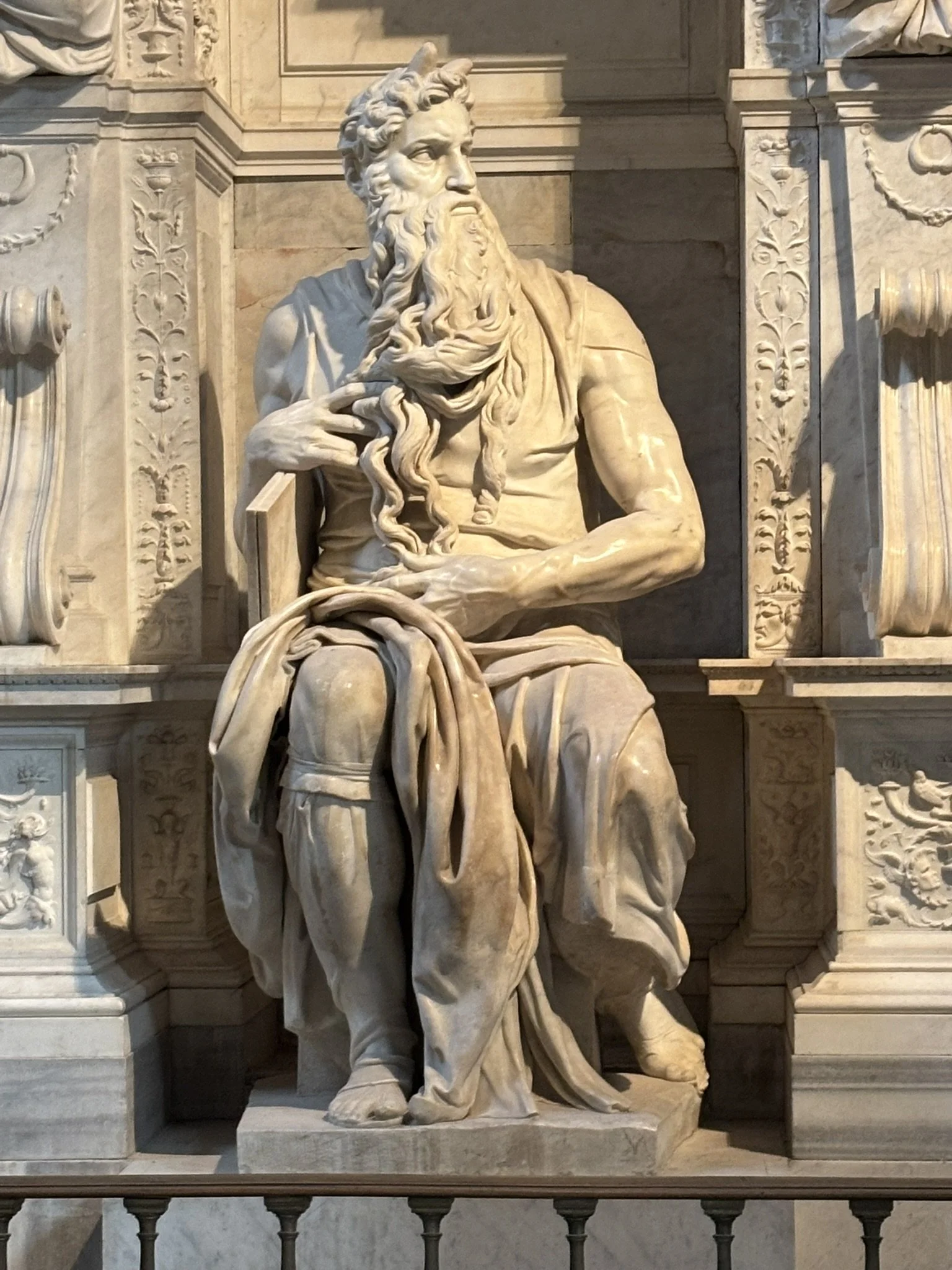
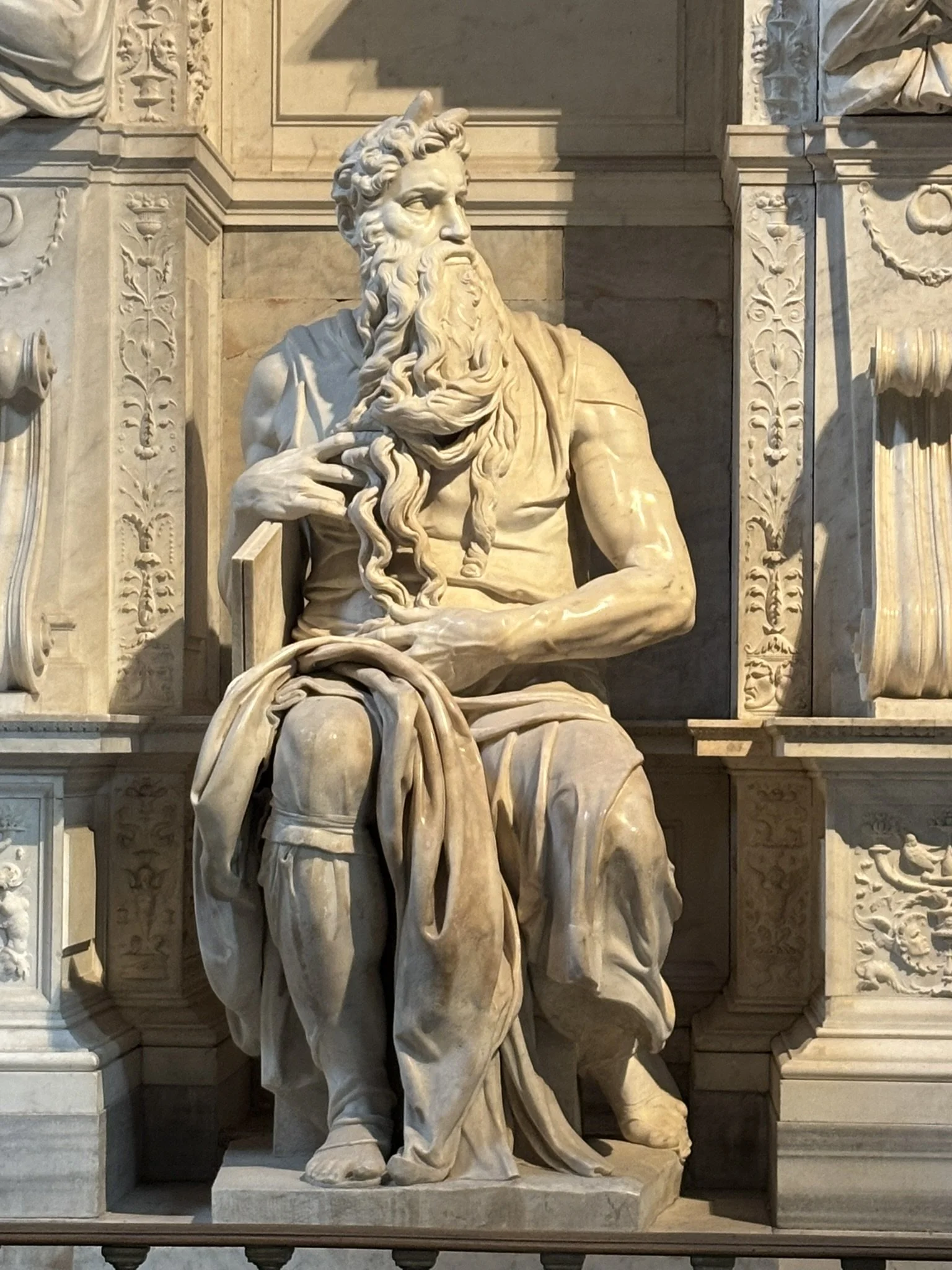
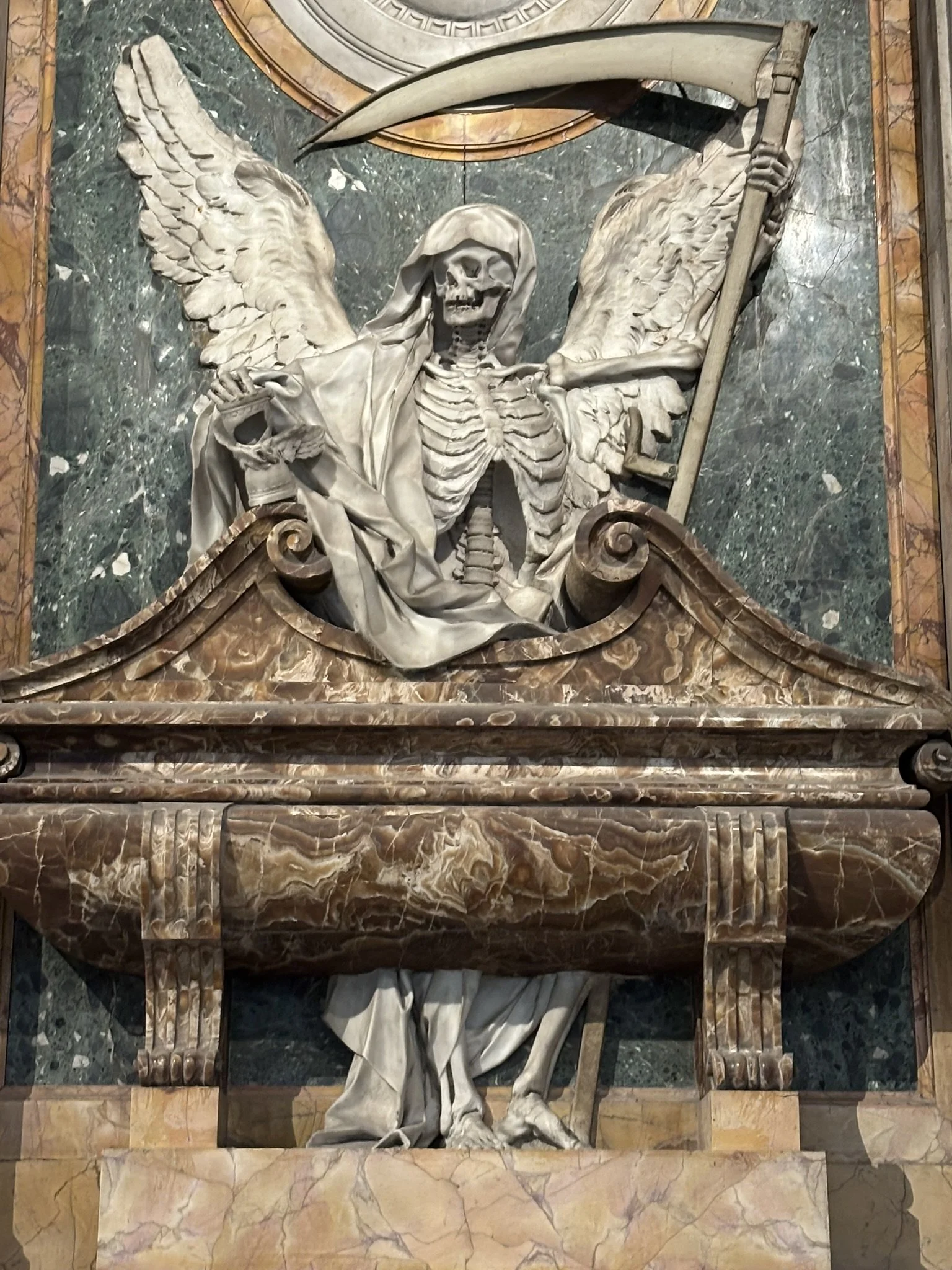
Also note the tomb with the skeleton Death. Some cardinals are cooler than others.
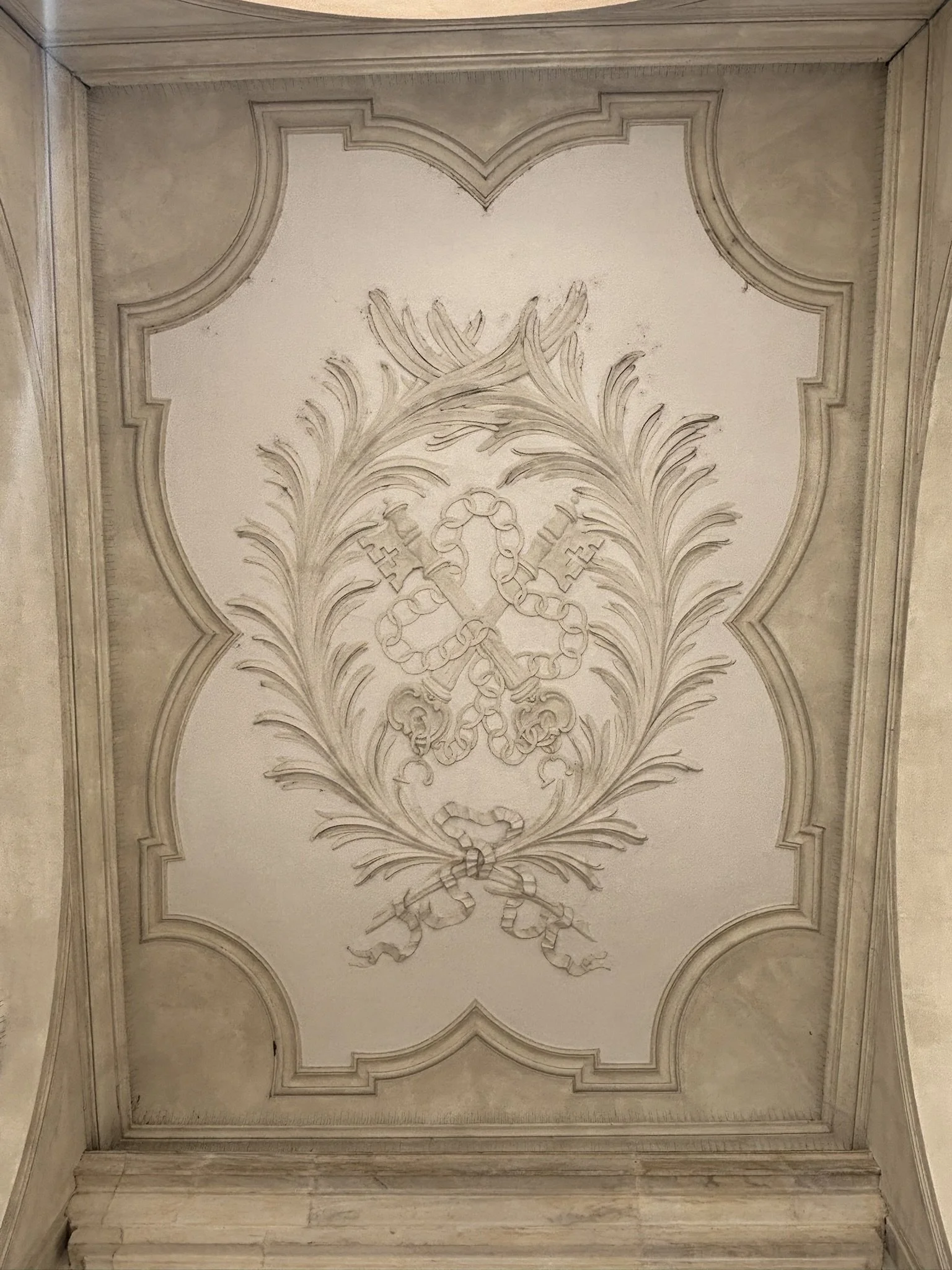
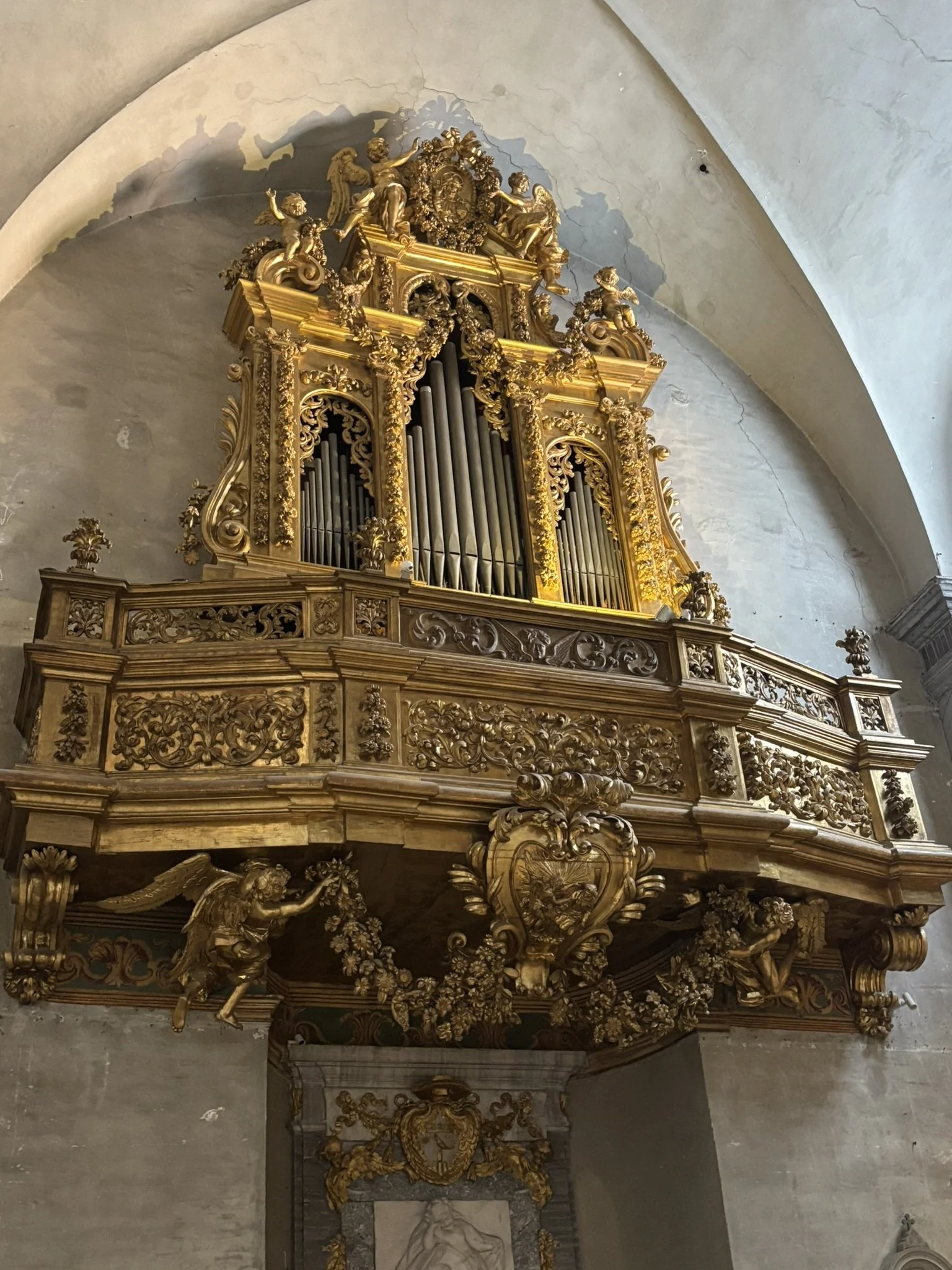
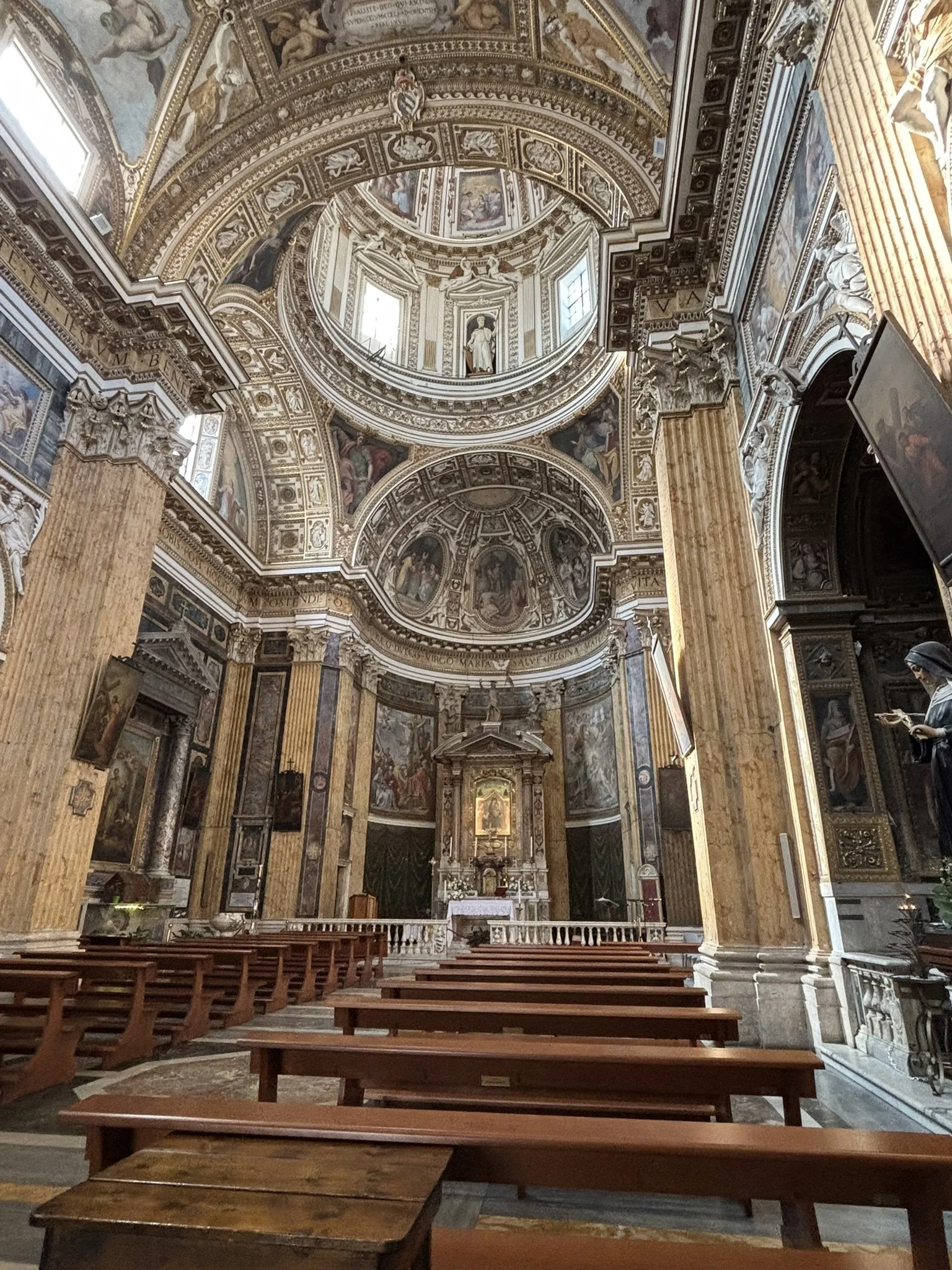
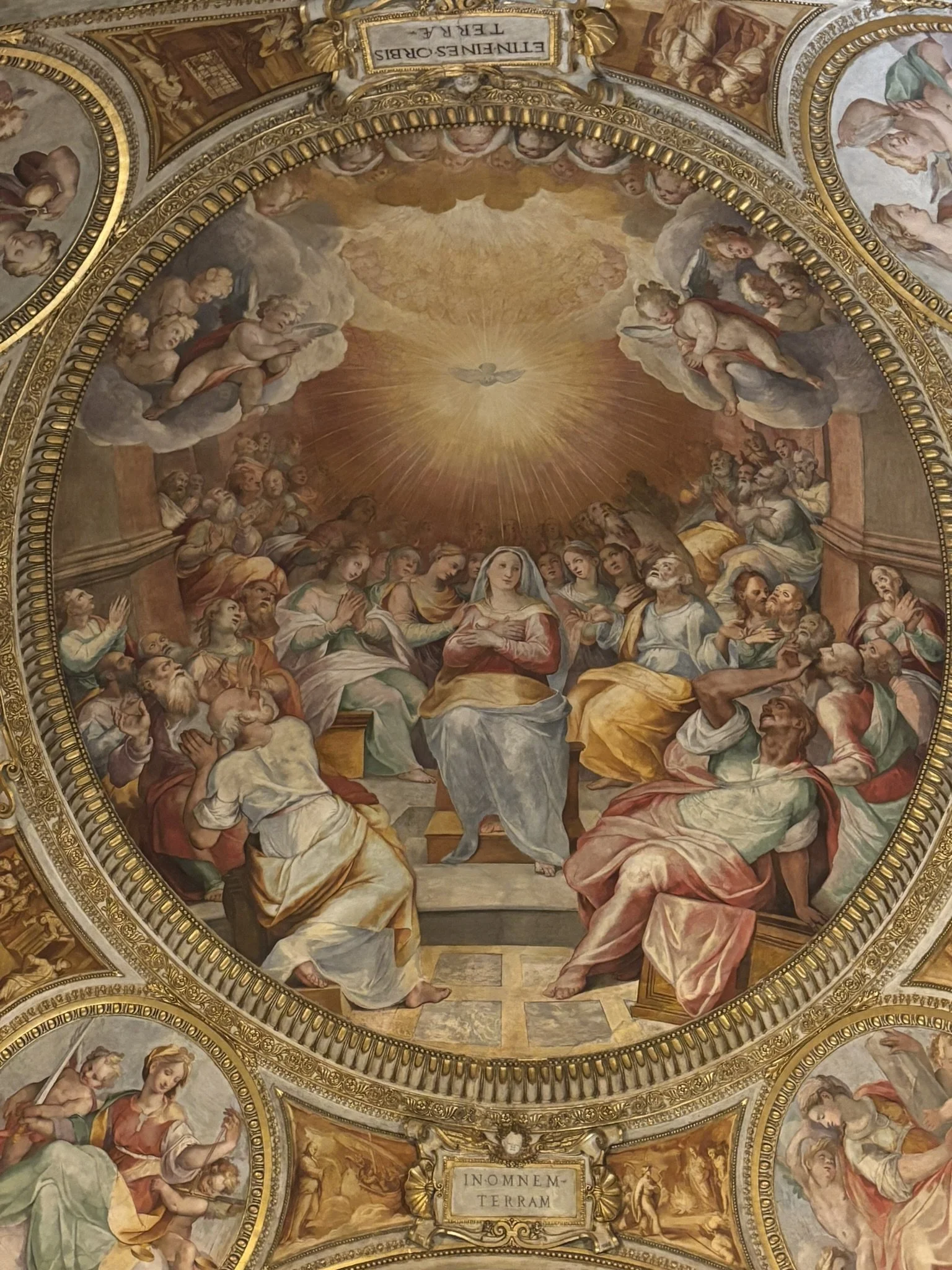
On the way home, we stopped by two other churches (by accident-ish). The first was S. Mariae ad Montes (Santa Maria ai Monti in Italian). Note the dome, which again draws your eyes, mind, and spirit upward, culminating in the image of God at the center (with a smart use of windows, to make light radiate from the image of the Father).
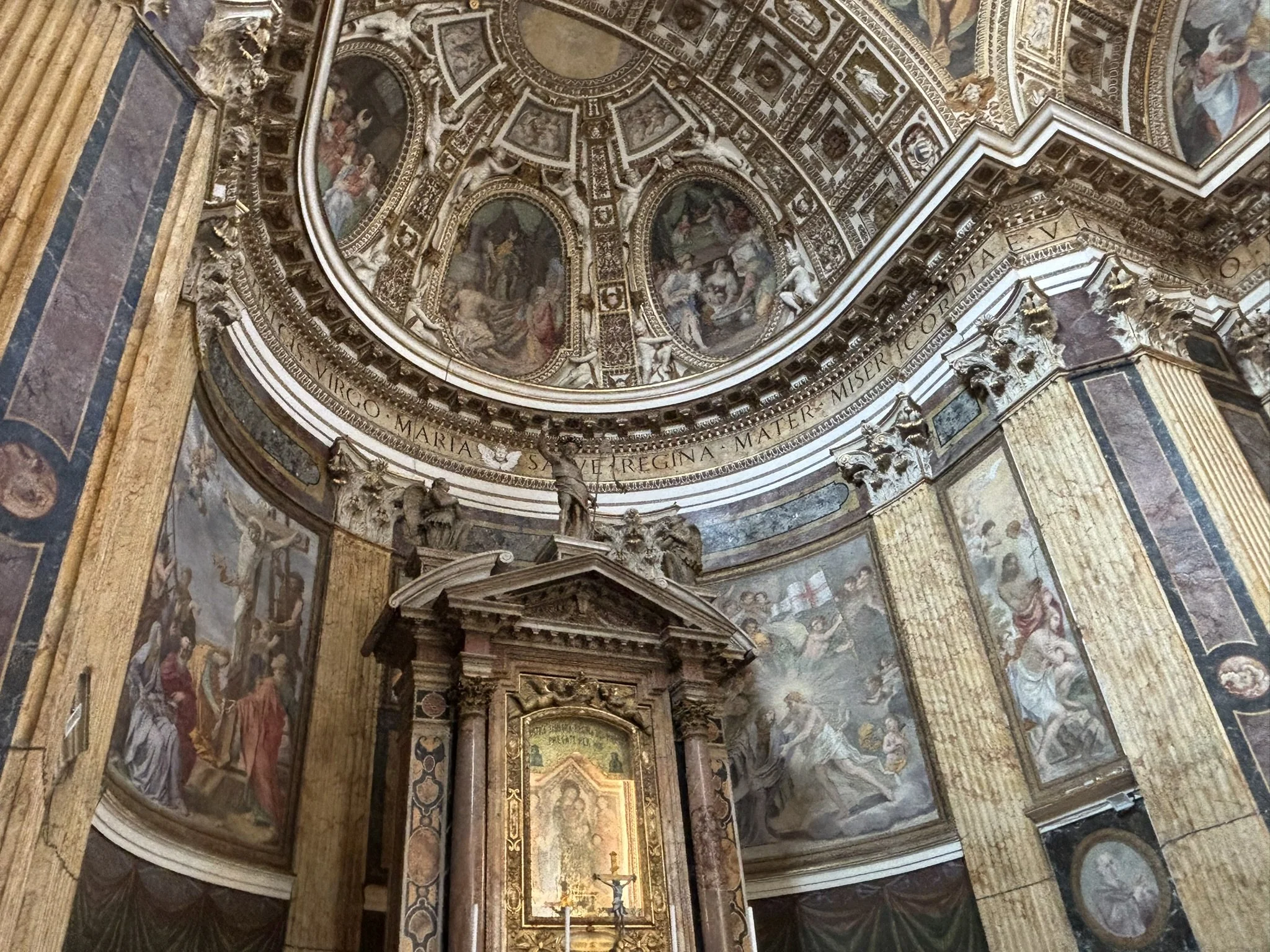
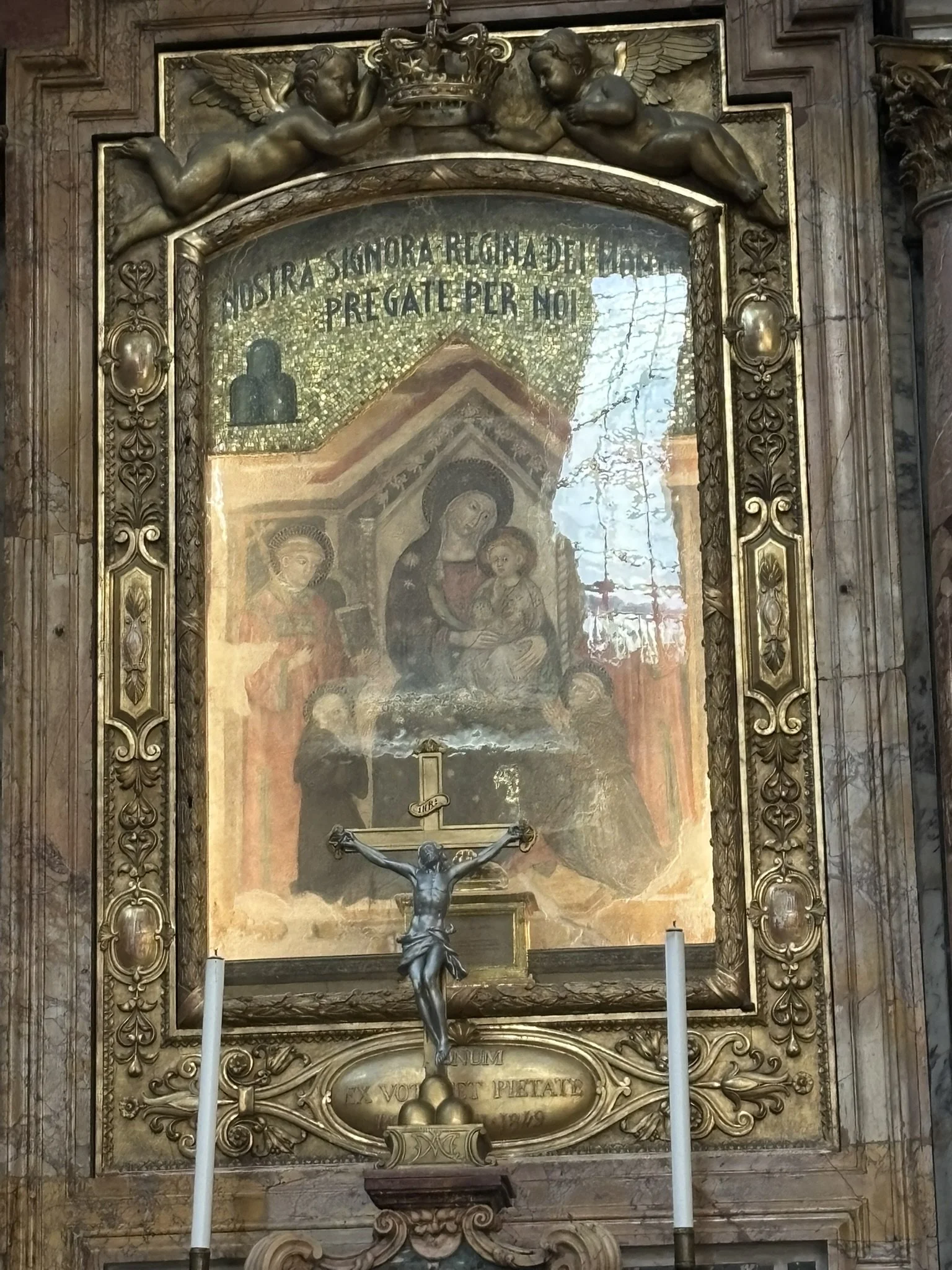
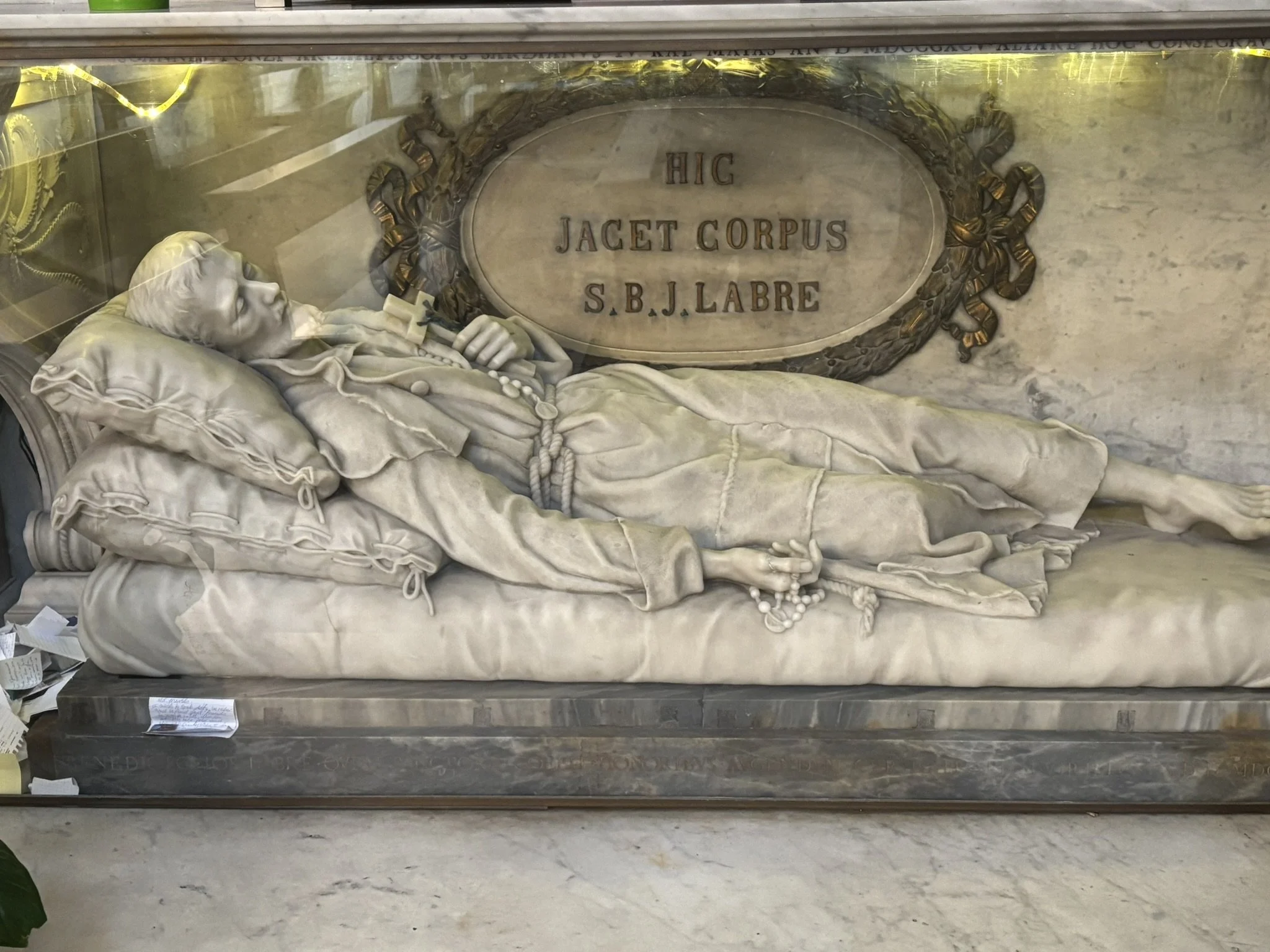
The altar and tomb you see in the last picture is that of St. Benedict Joseph Labre, the patron saint of the homeless and the mentally ill. He traveled on foot to various pilgrimage sites, sleeping on the ground outside. He once stayed with Matthieu and Marie… the parents of the Cure d’Ars. Even with so little, he was always generous with whatever others gave him. He eventually collapsed on the steps of Santa Maria ai Monti, blocks from the Colosseum where he had been living. He died during Holy Week.
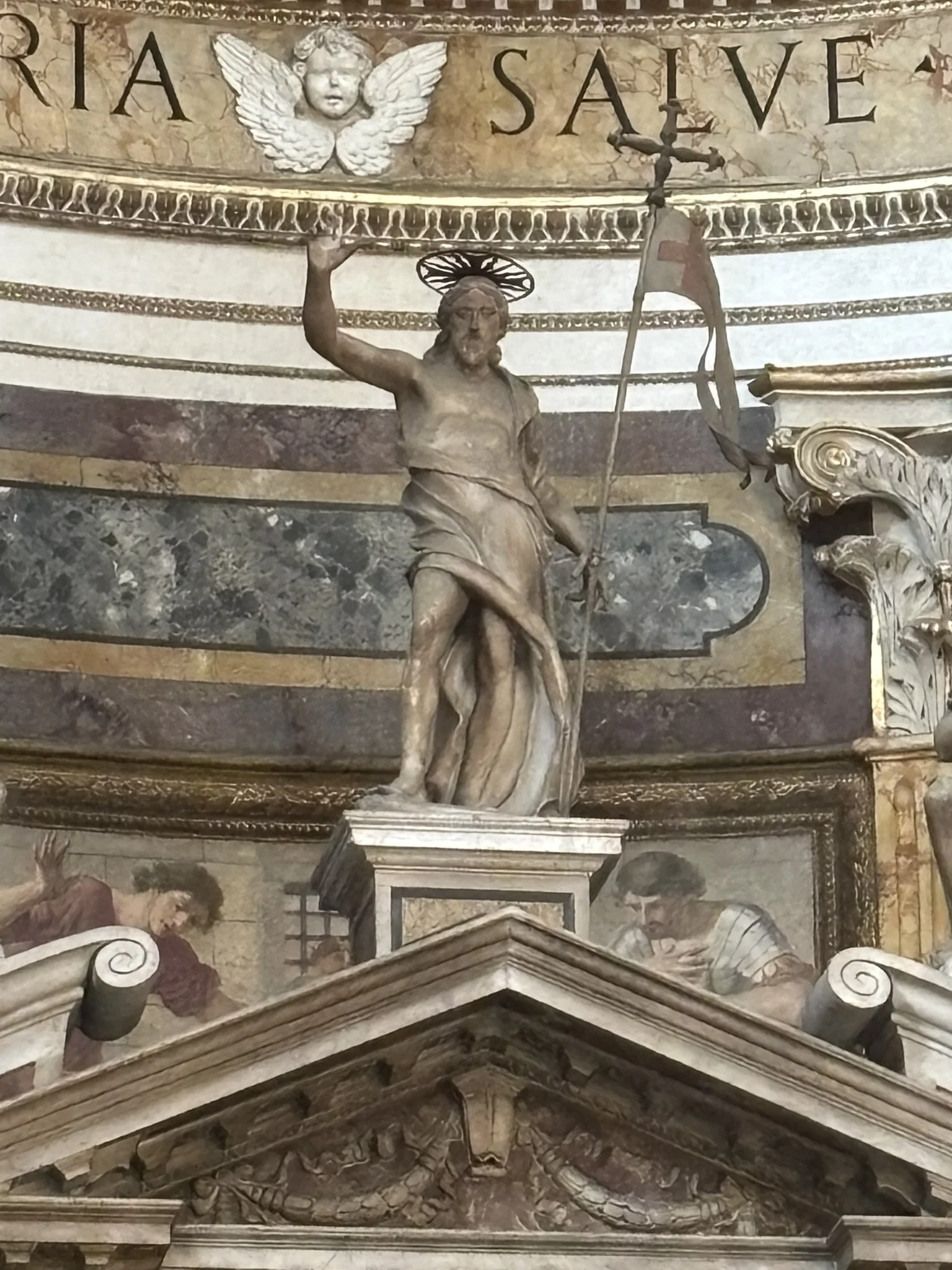
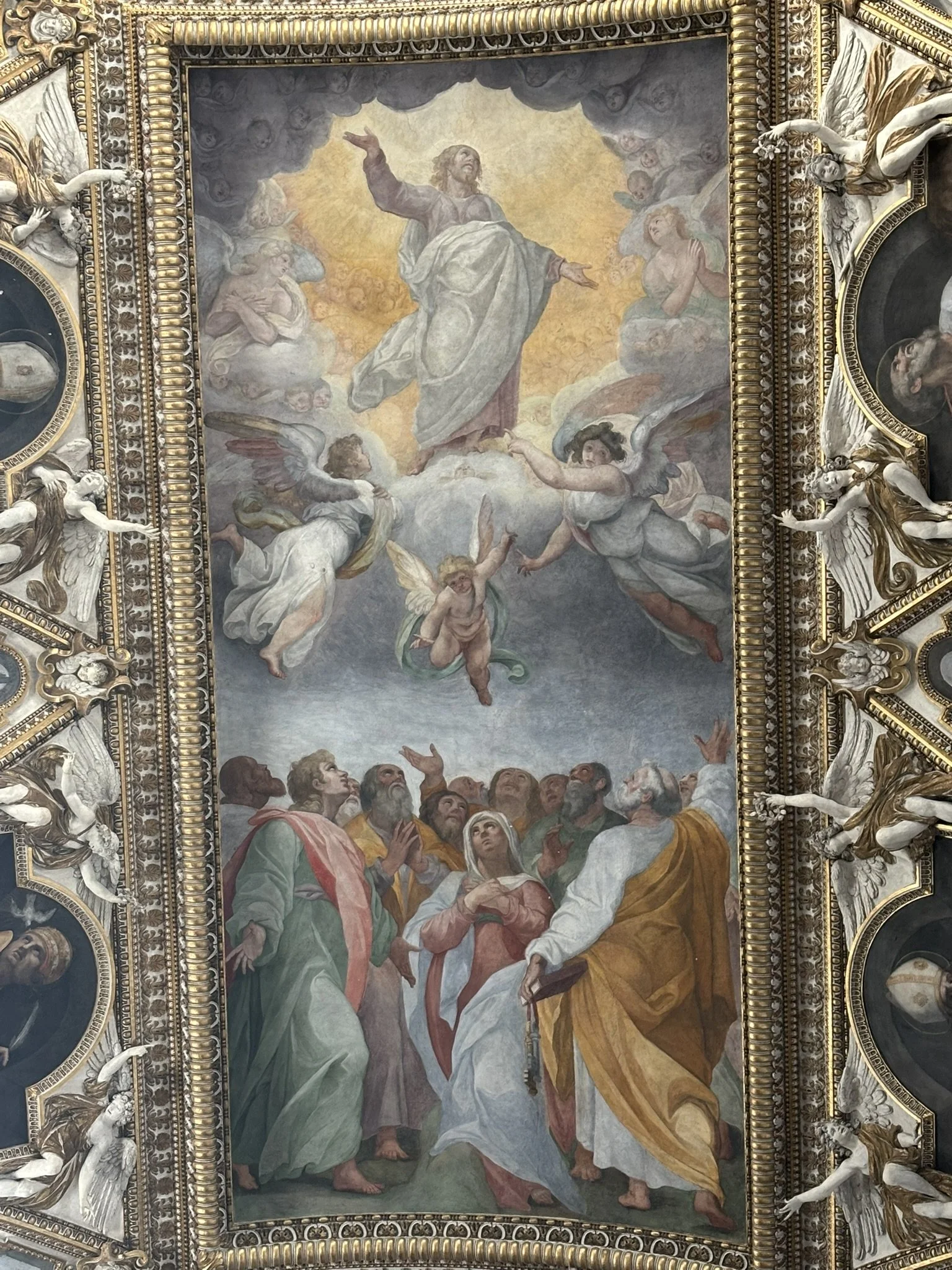
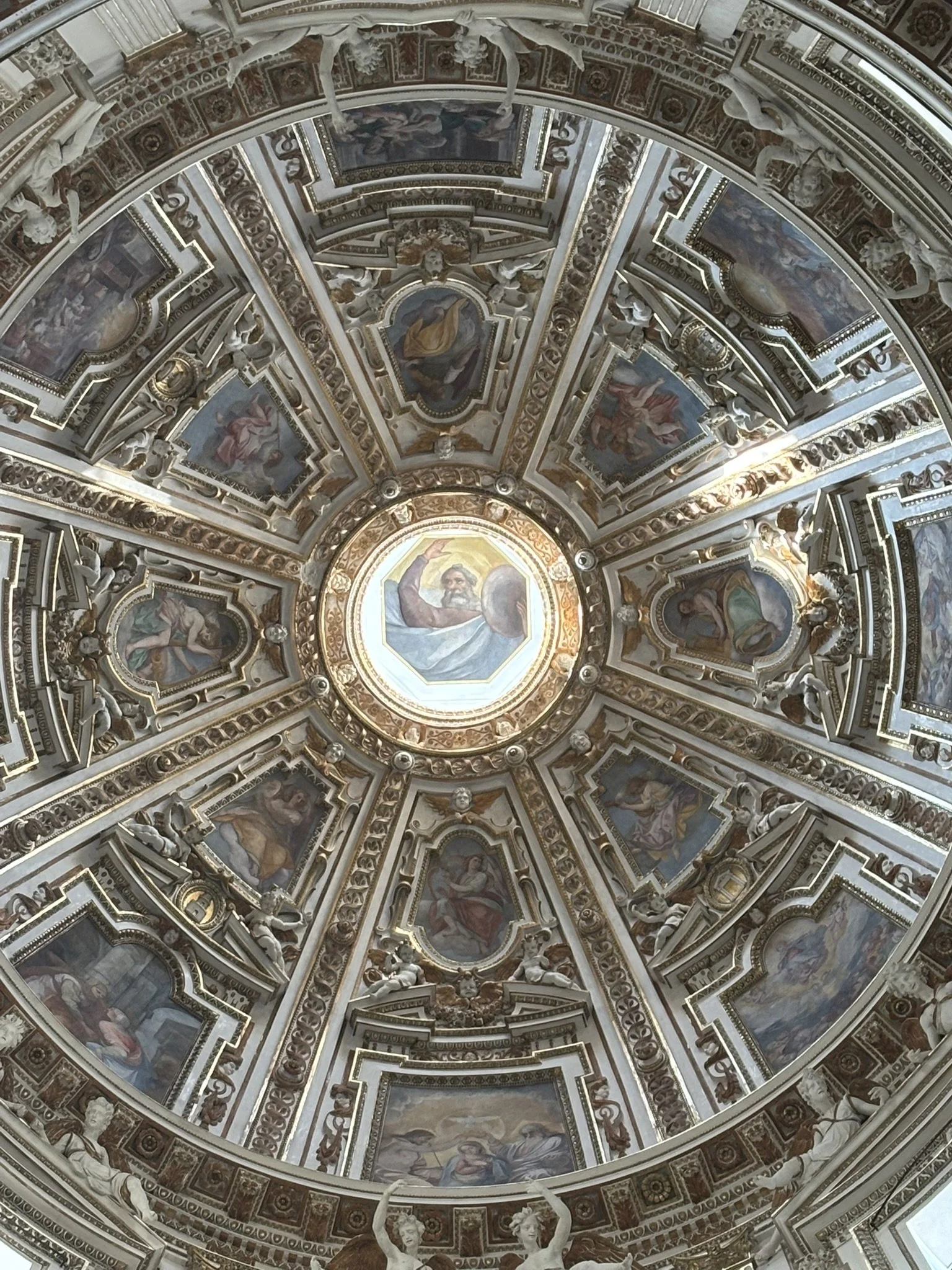
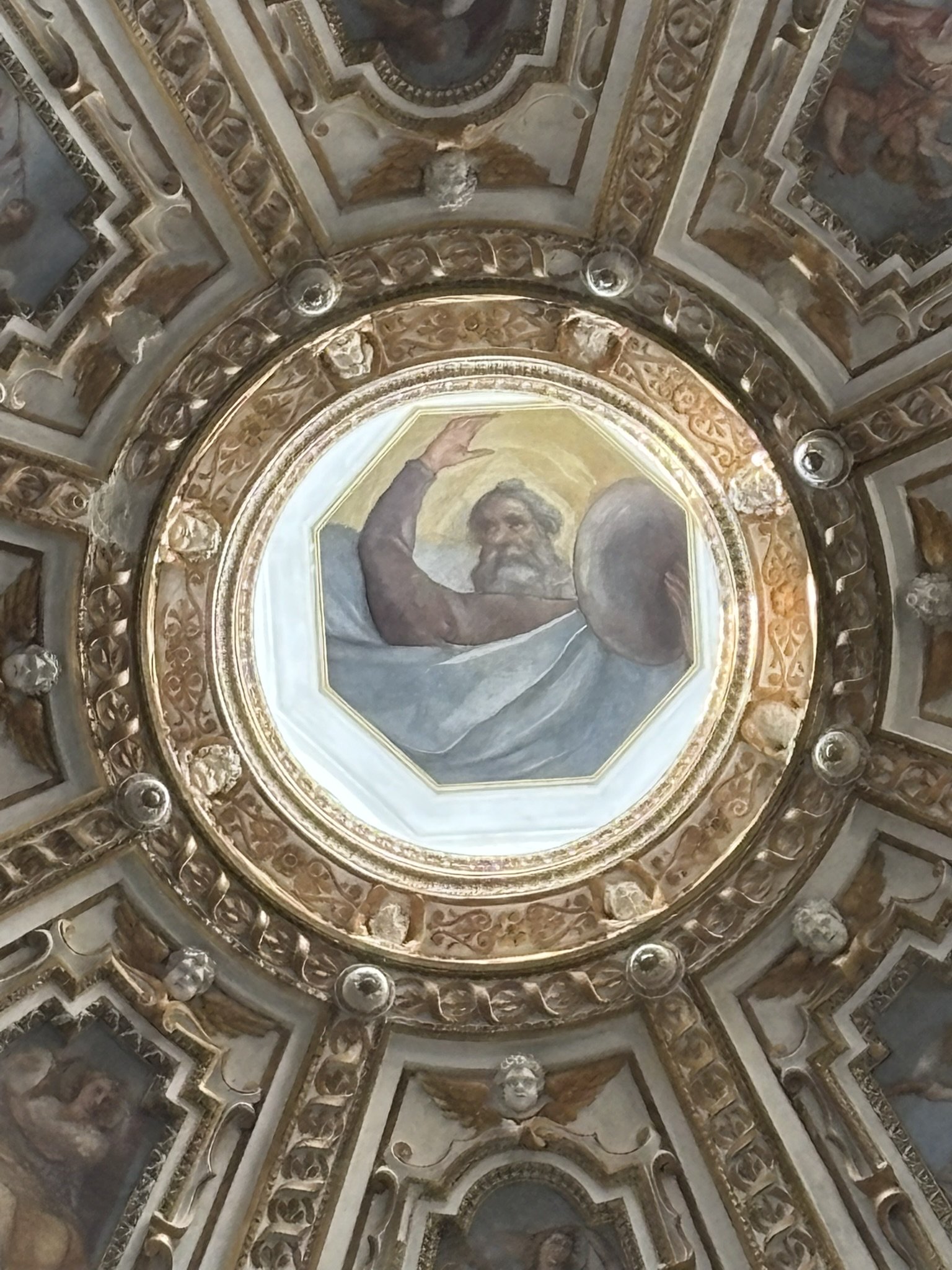
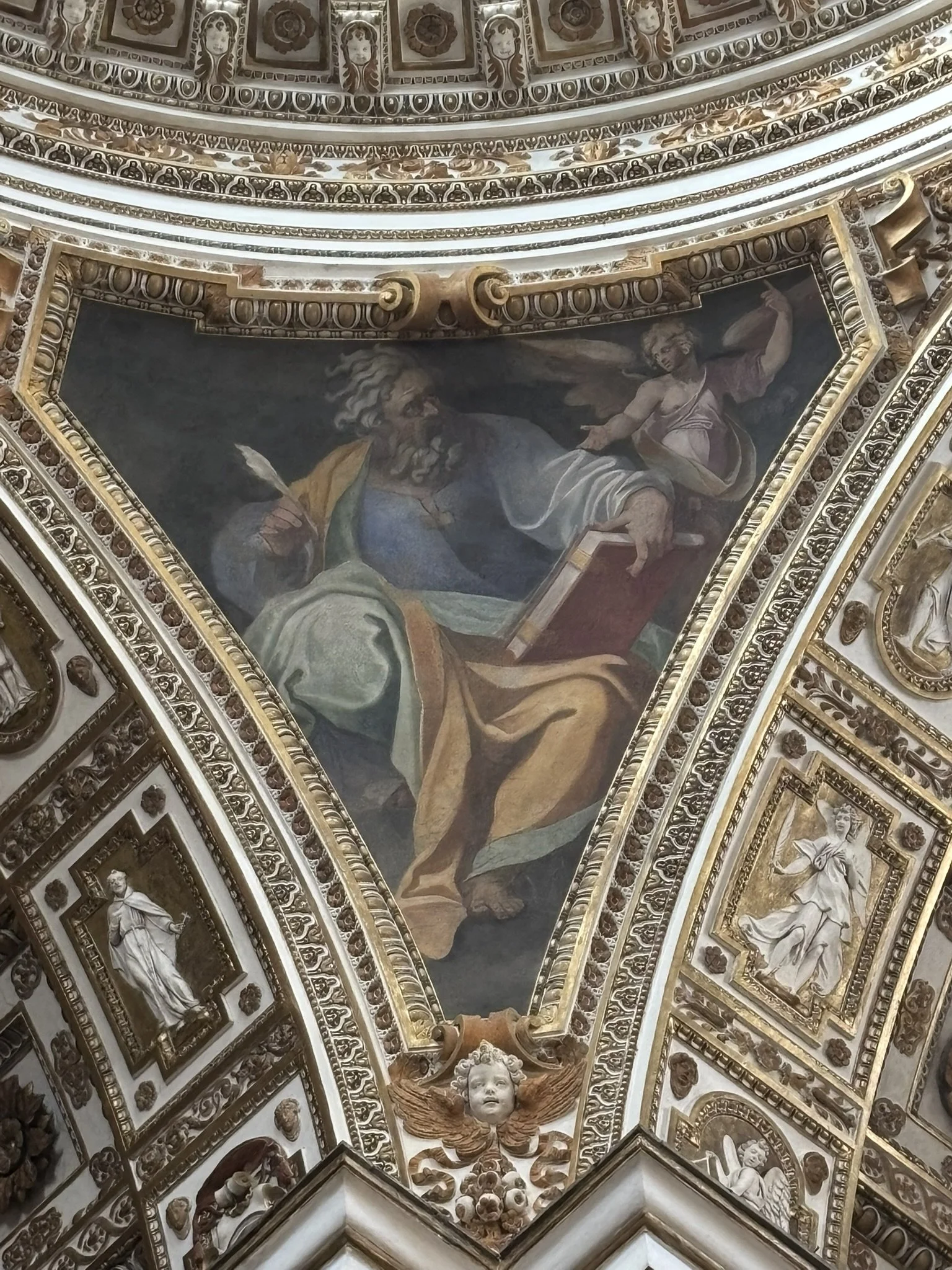
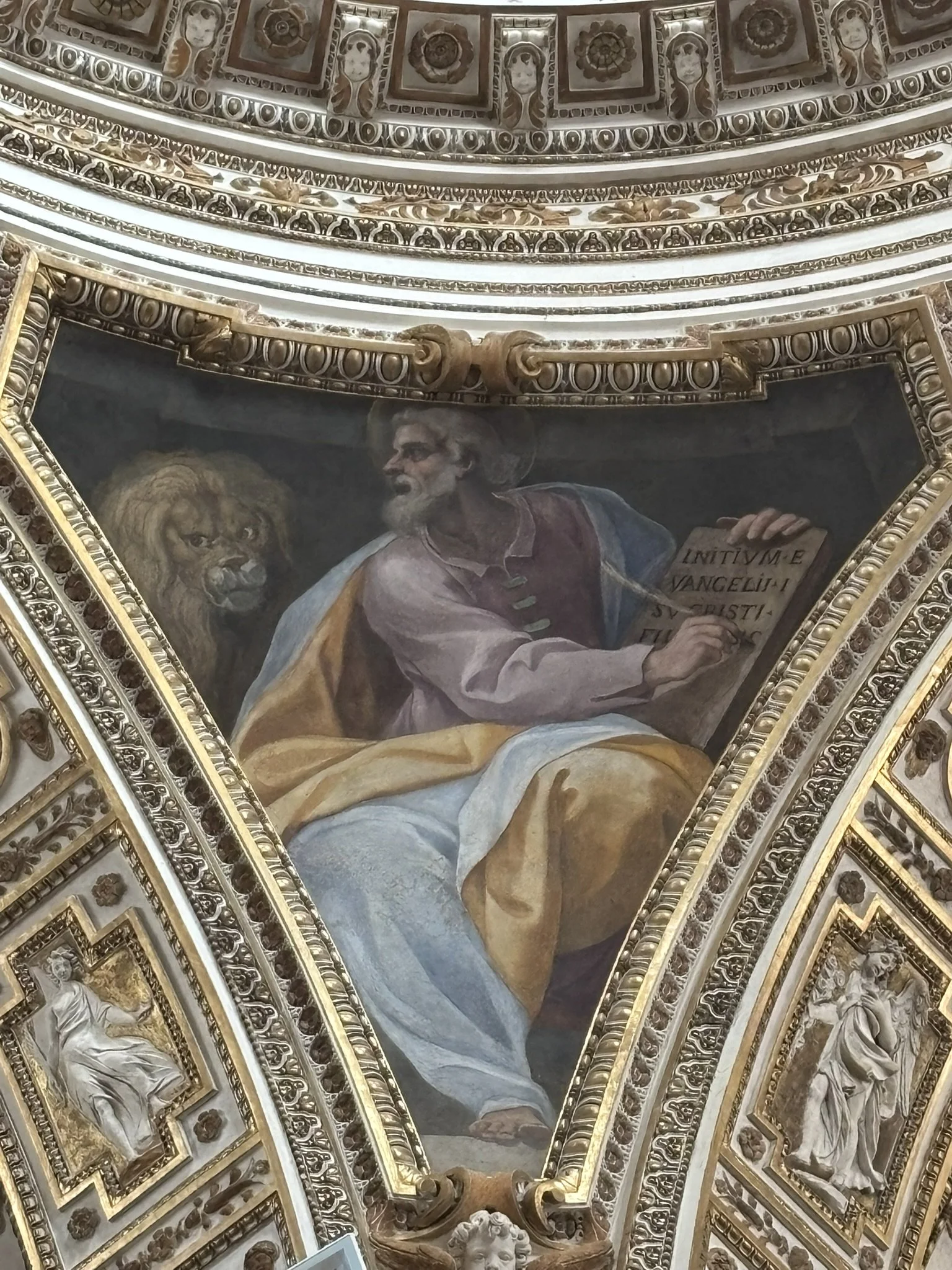
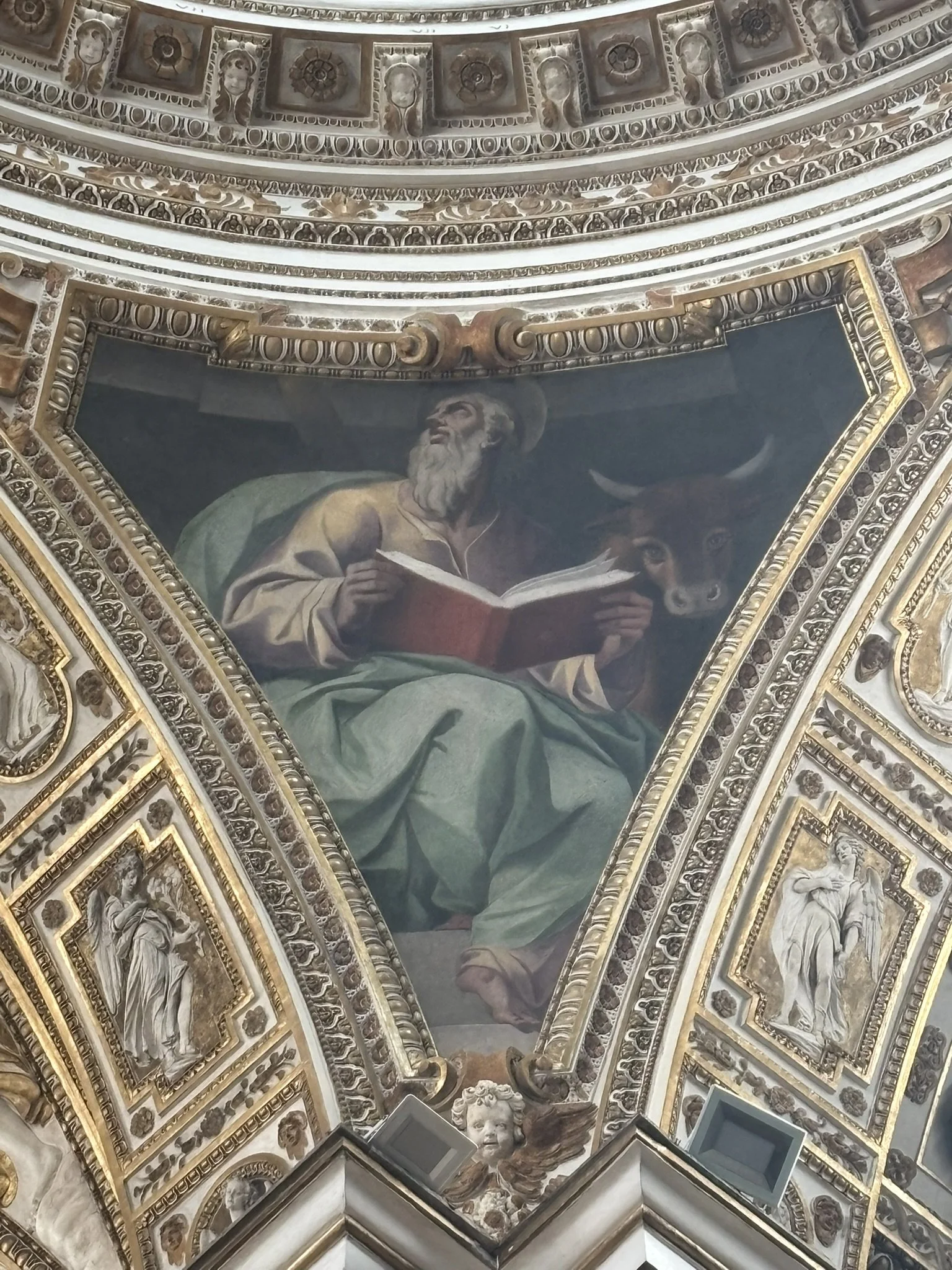
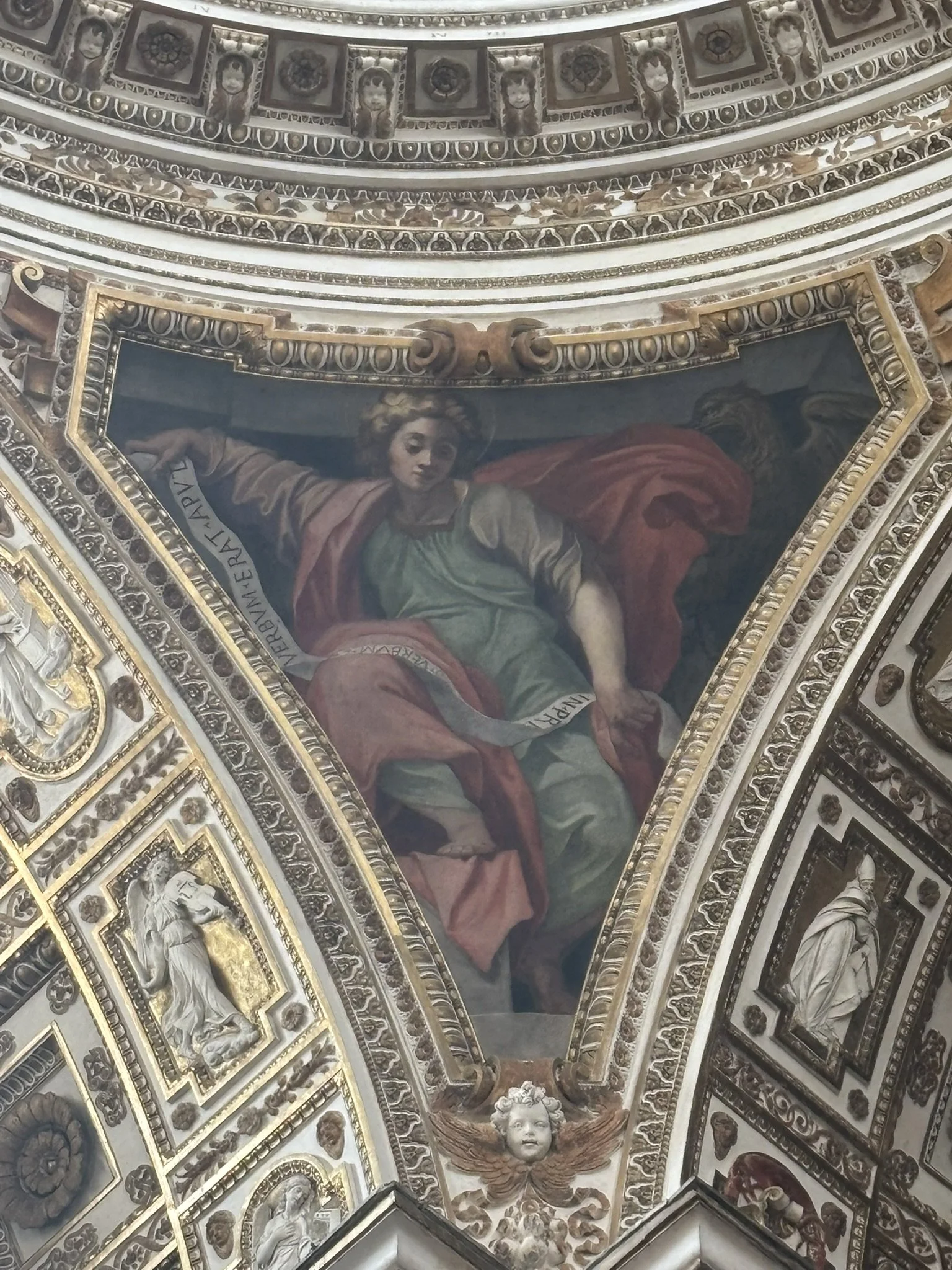
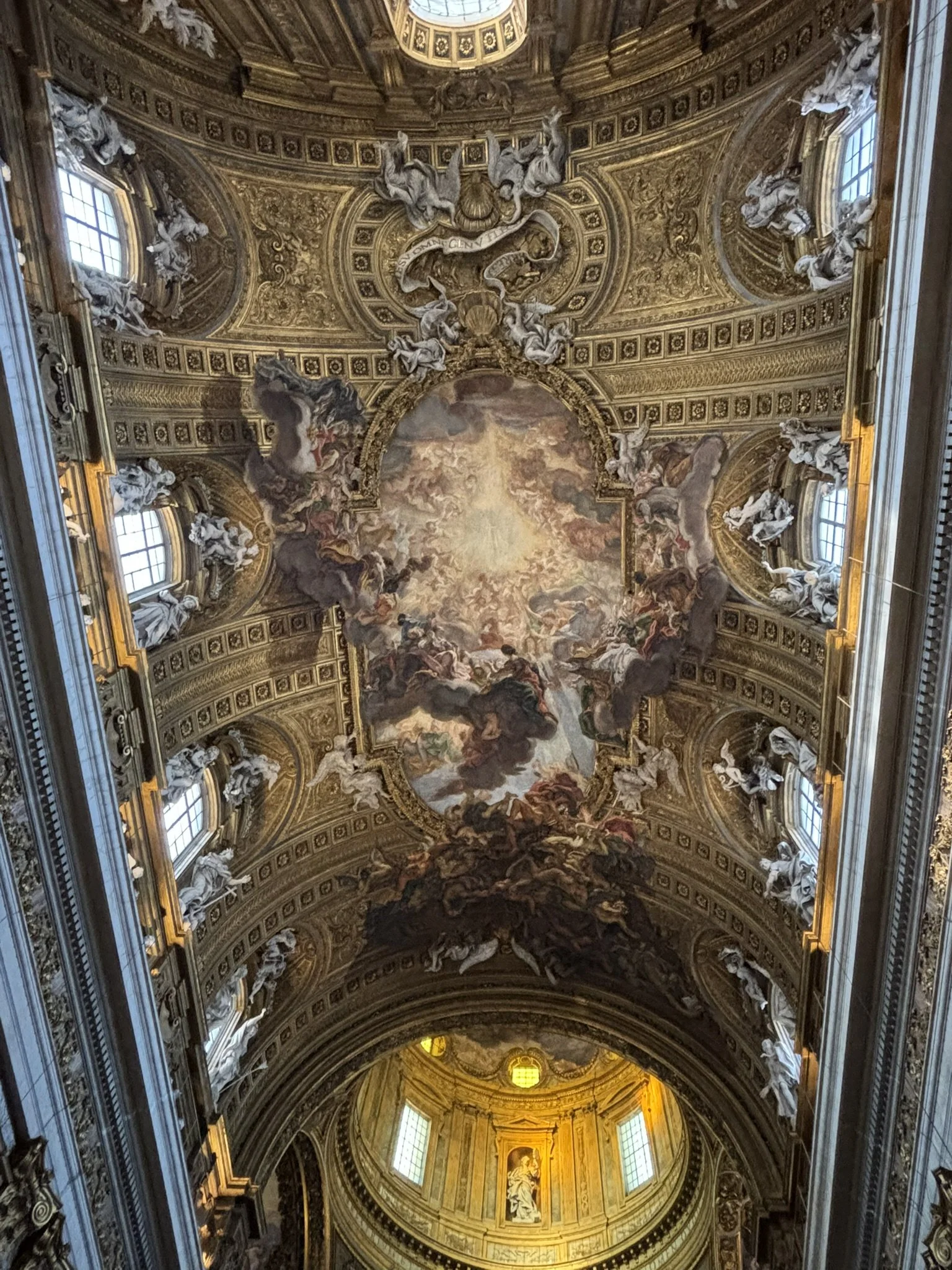
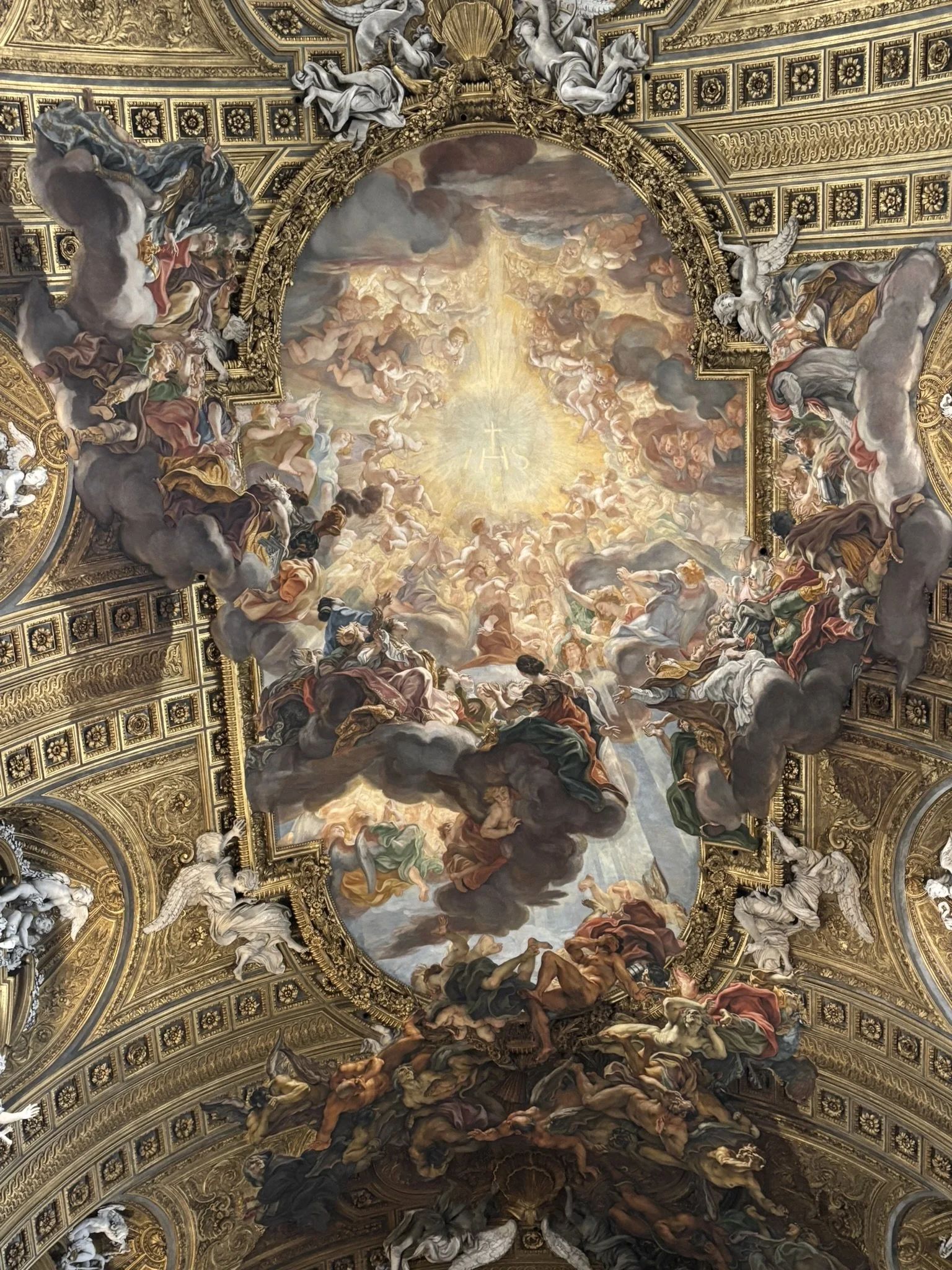
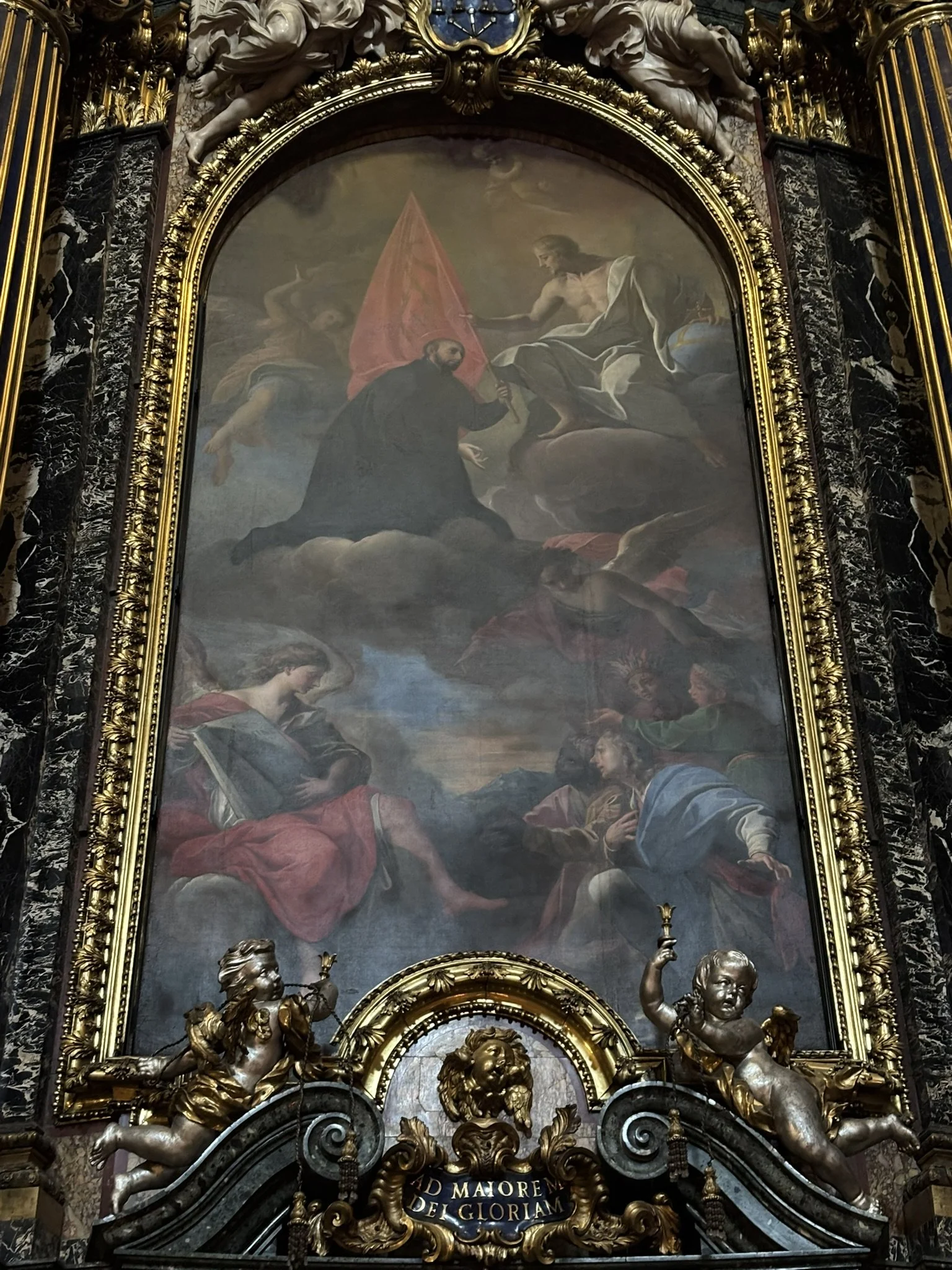
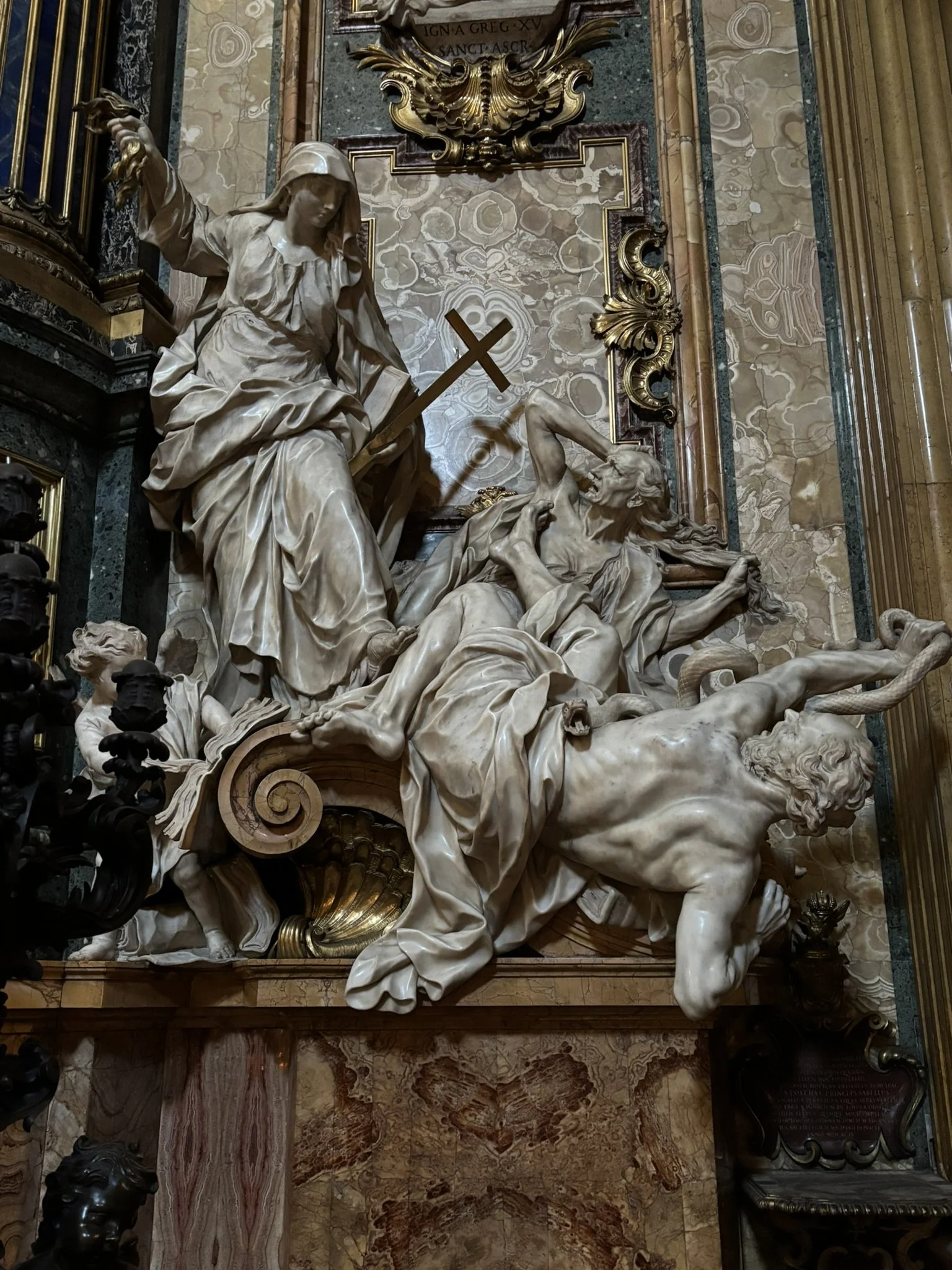
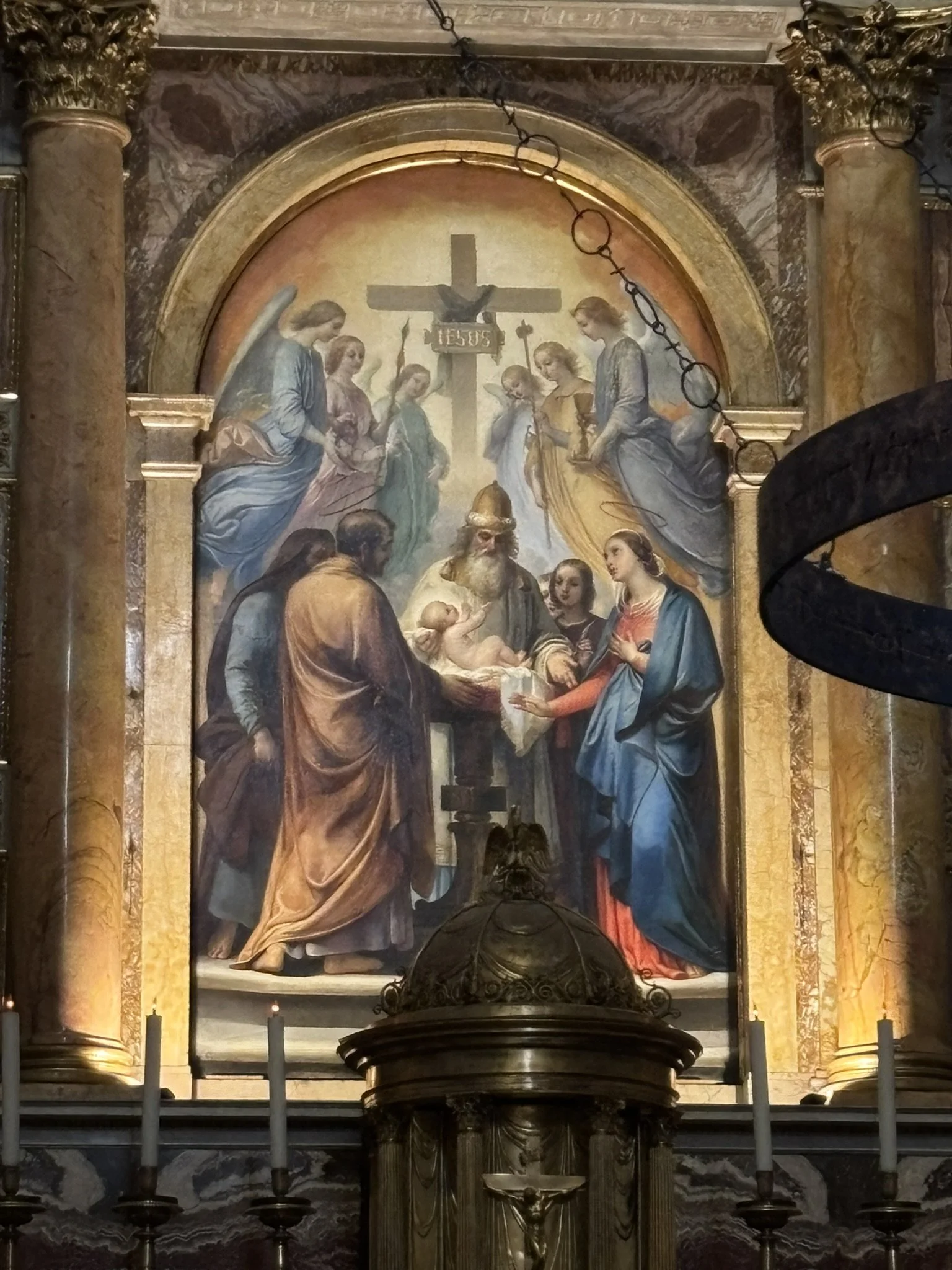
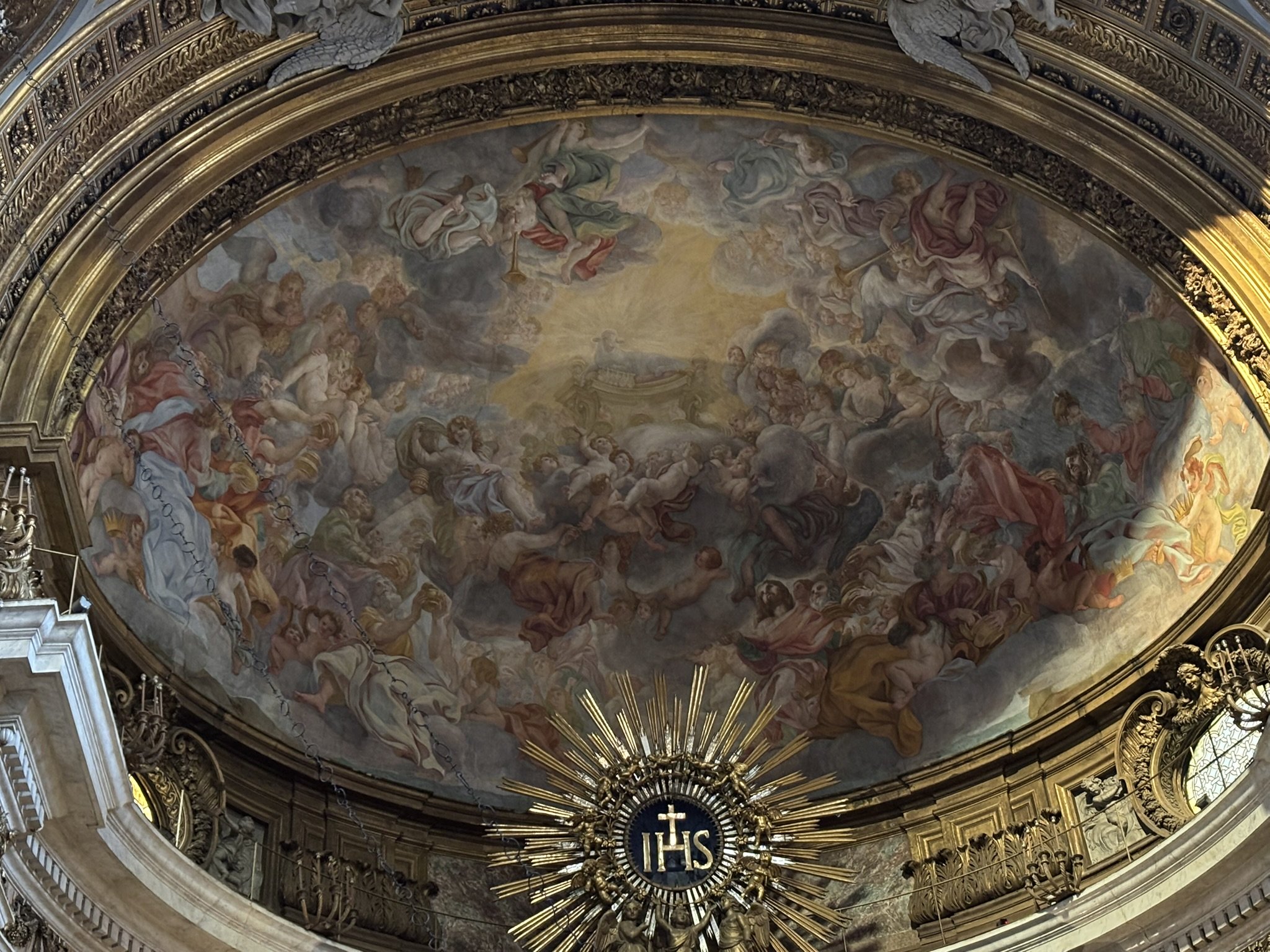
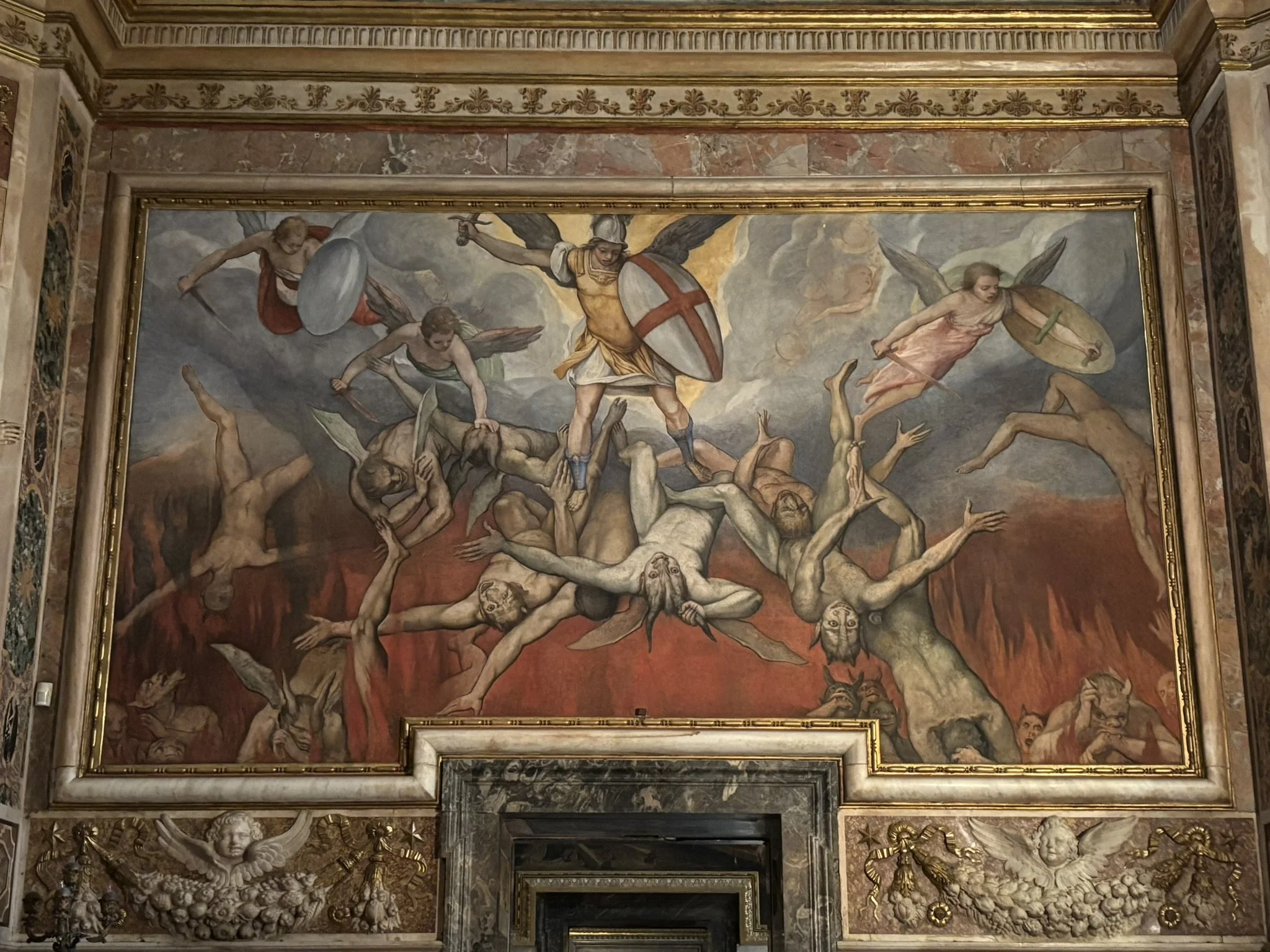
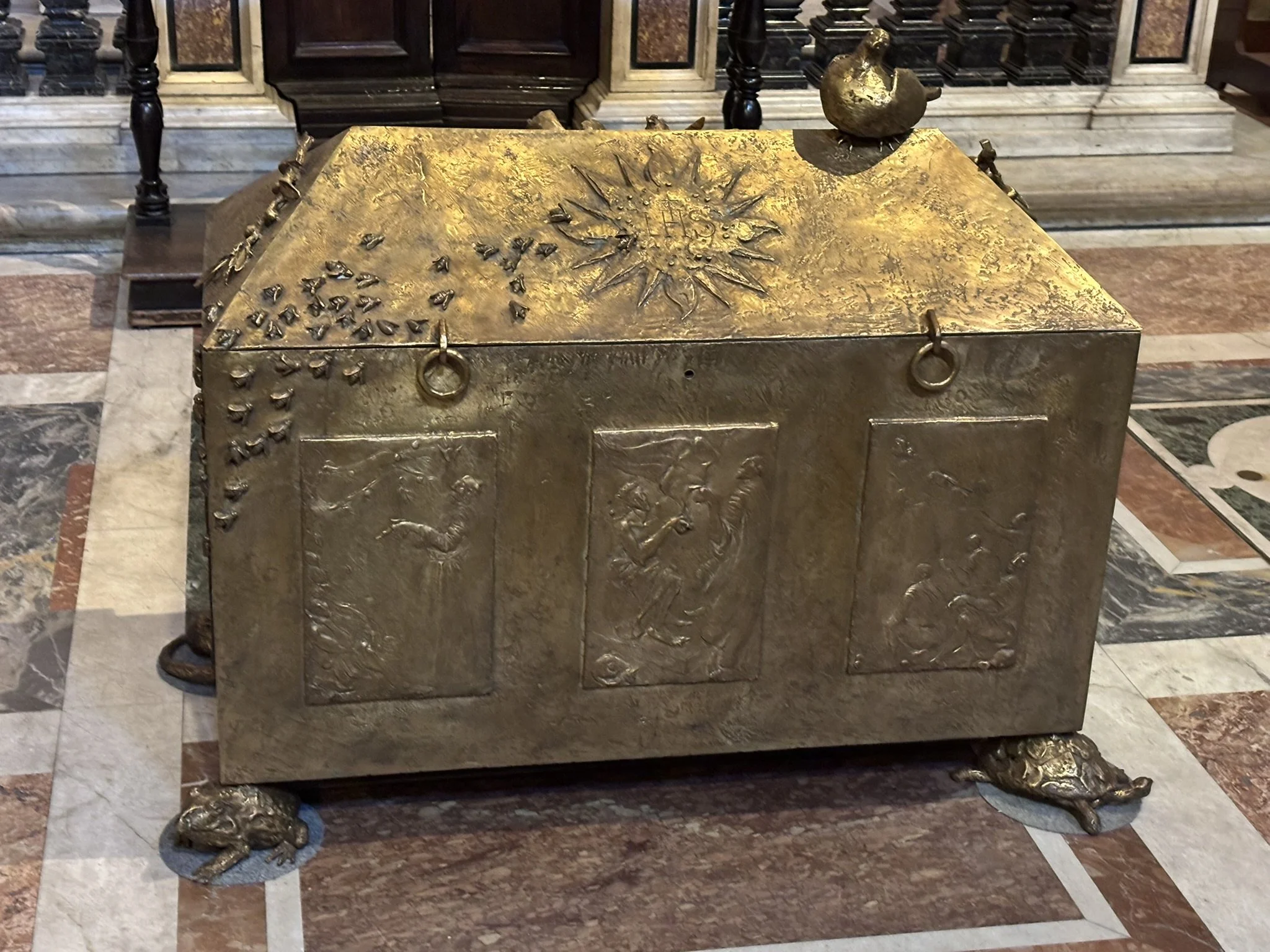
We also stopped in the Chiesa del Santissimo Nome di Gesu (Italian for Church of the Most Holy Name of Jesus). It is the mother church of the Society of Jesus (Jesuits), and built back when Jesuits knew how to build a church. Click through the pictures for the captions, or to see a larger image. These are worth it.
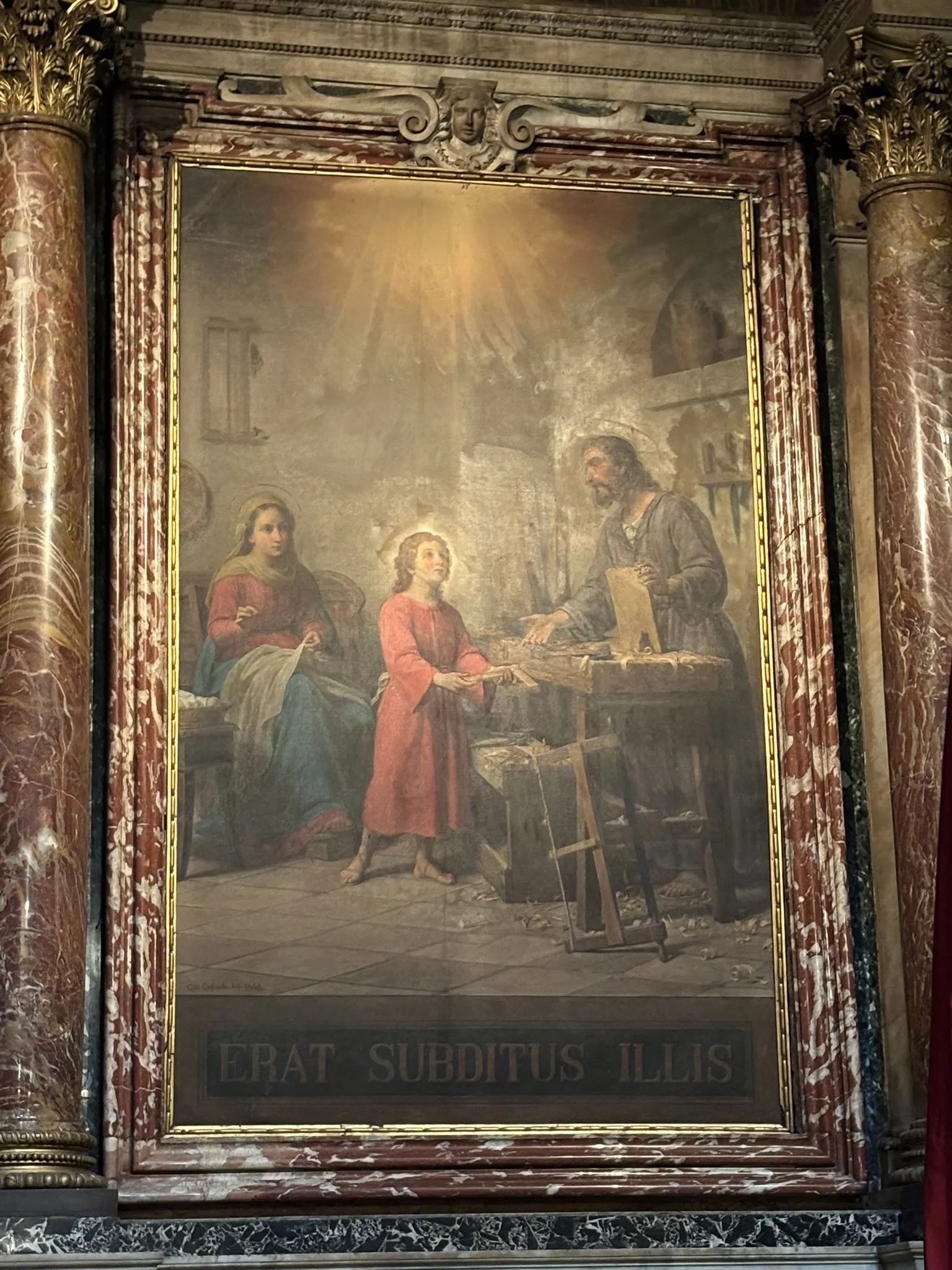
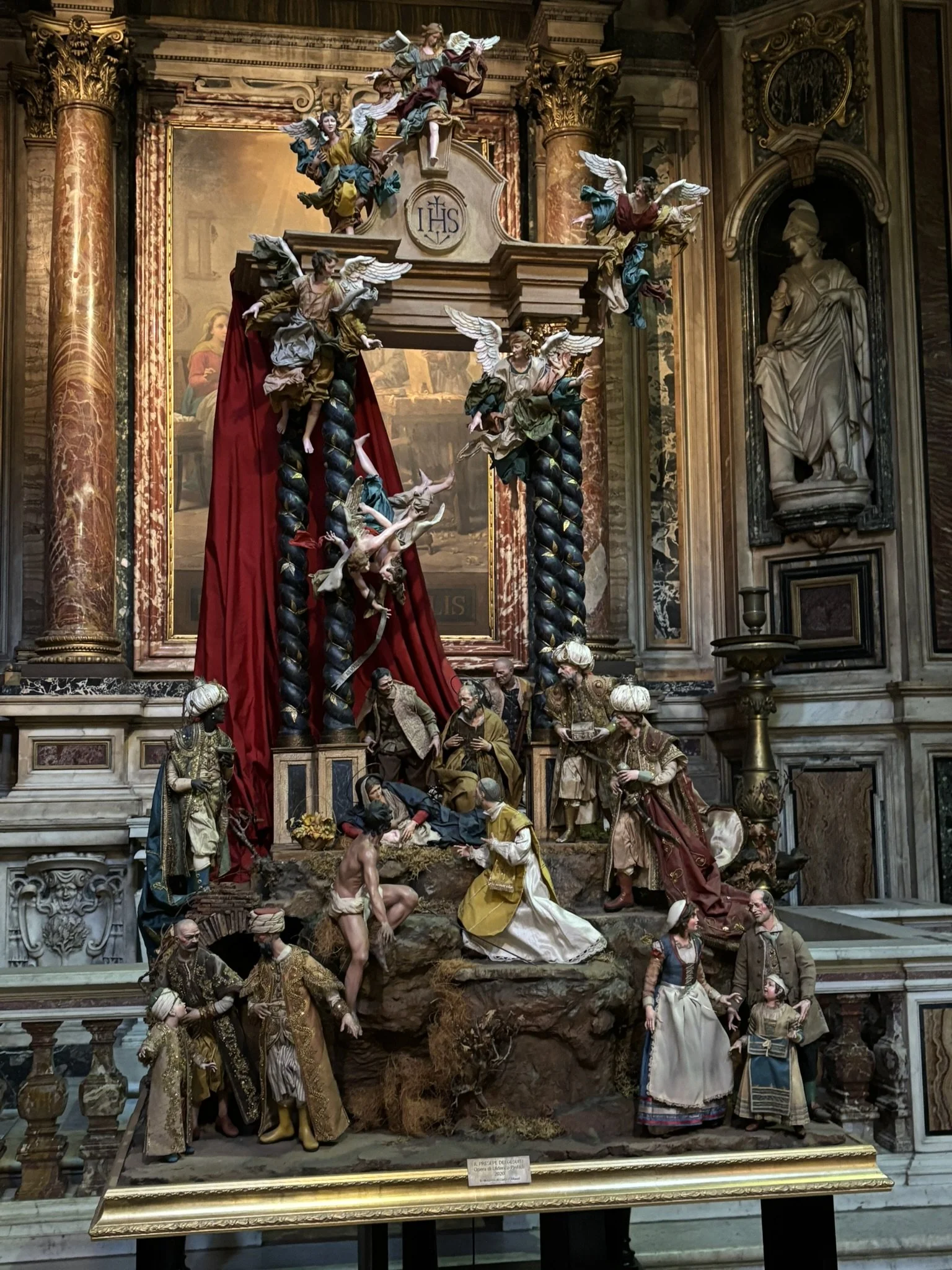
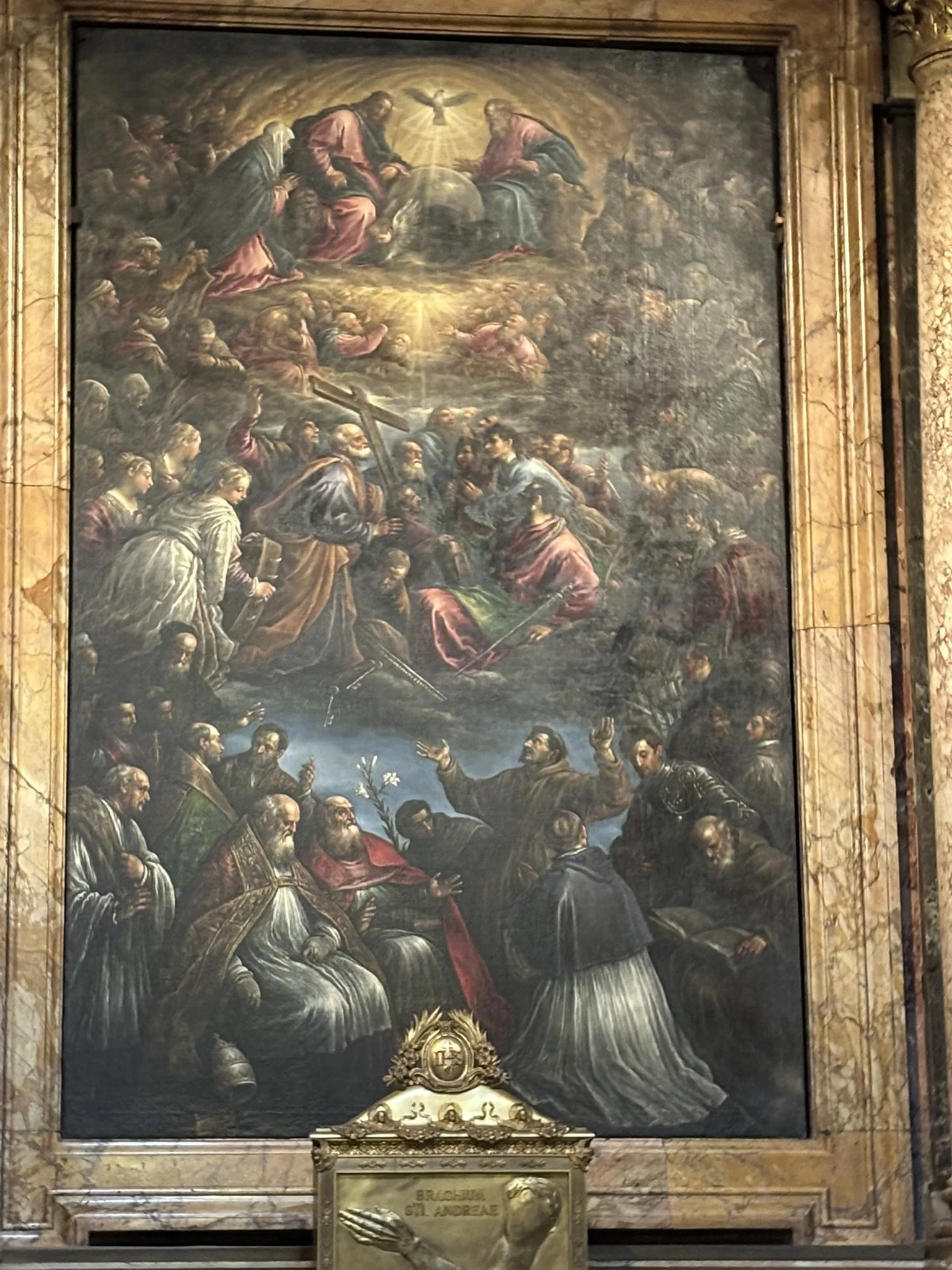
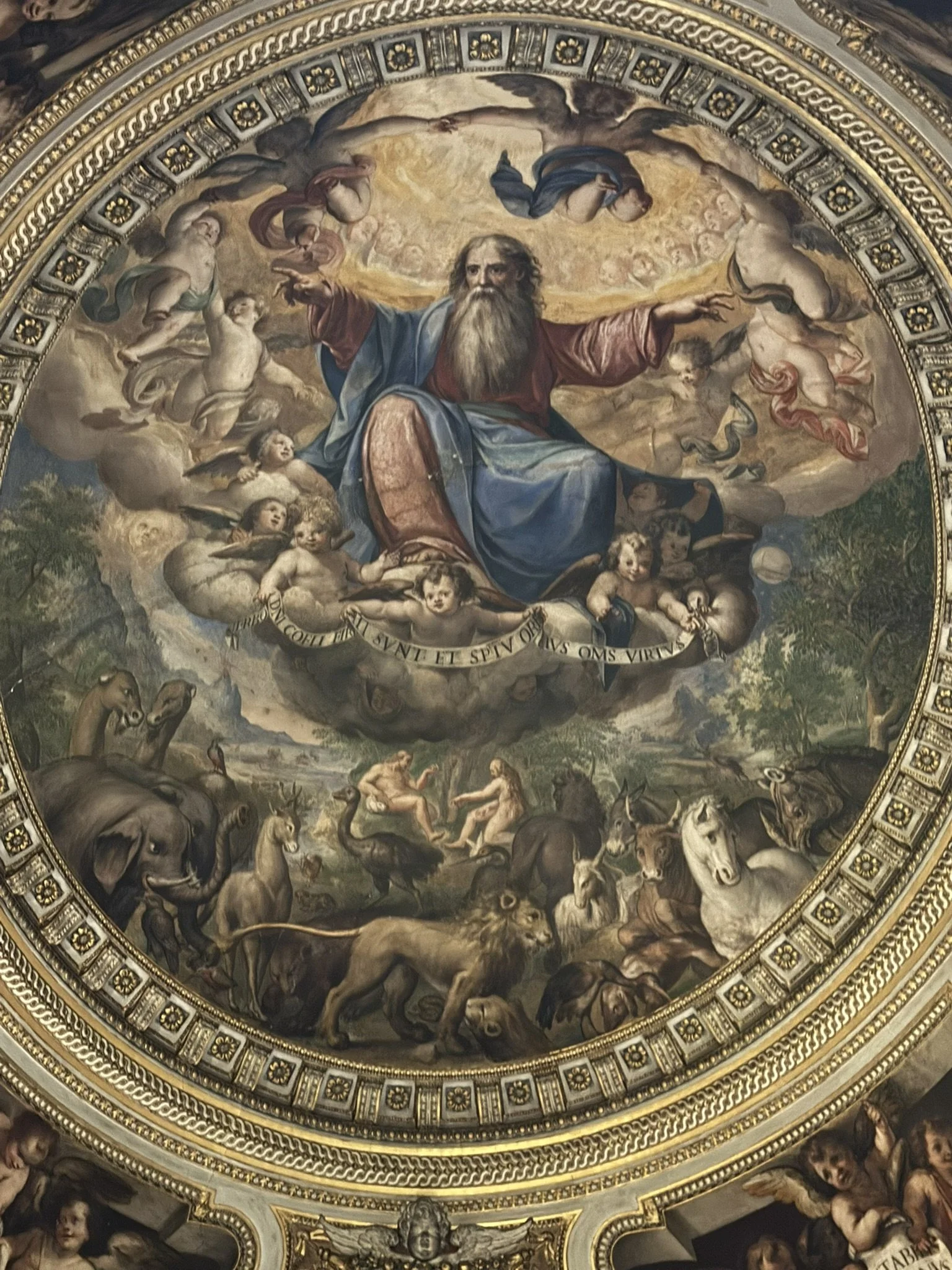
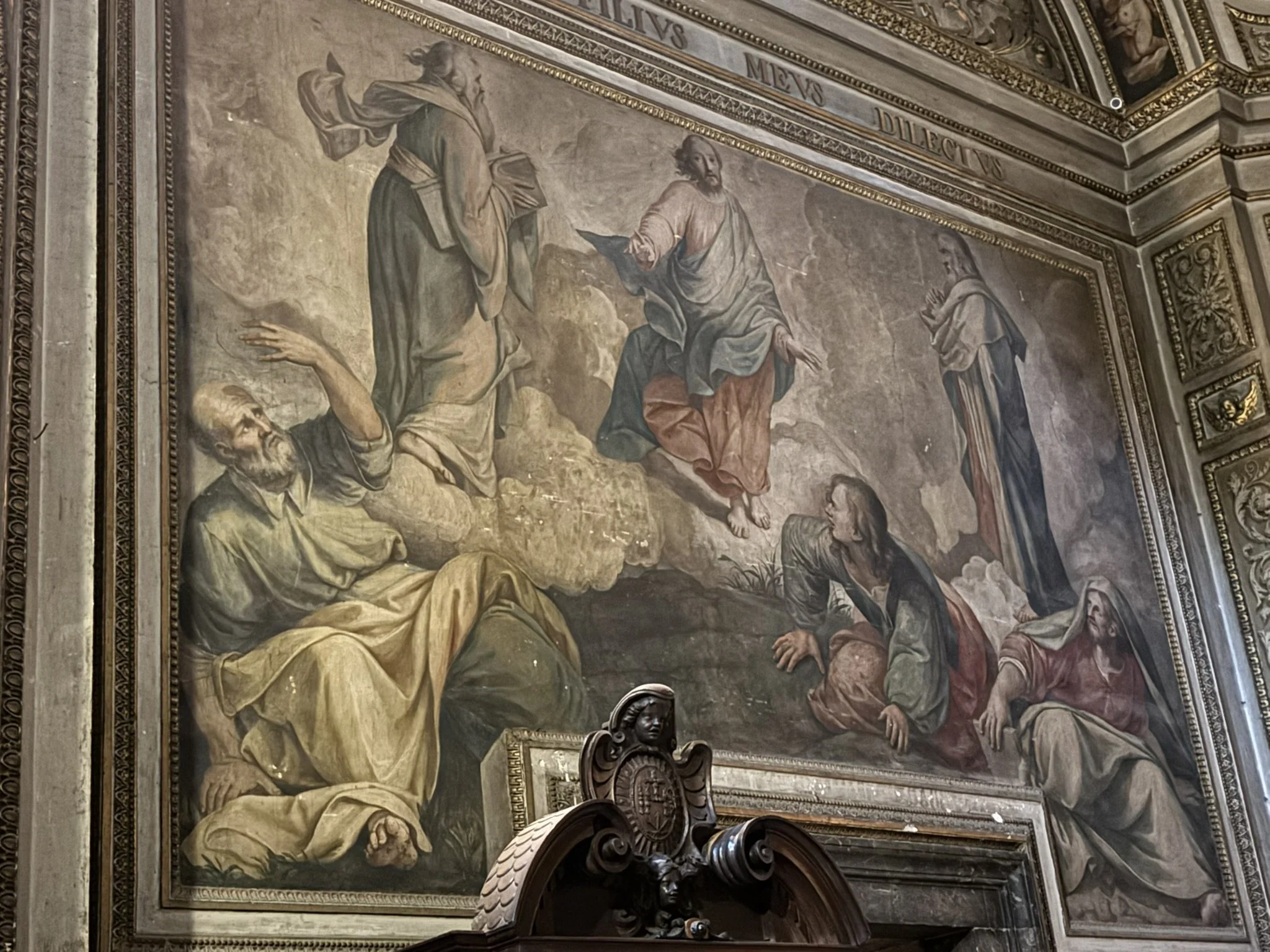
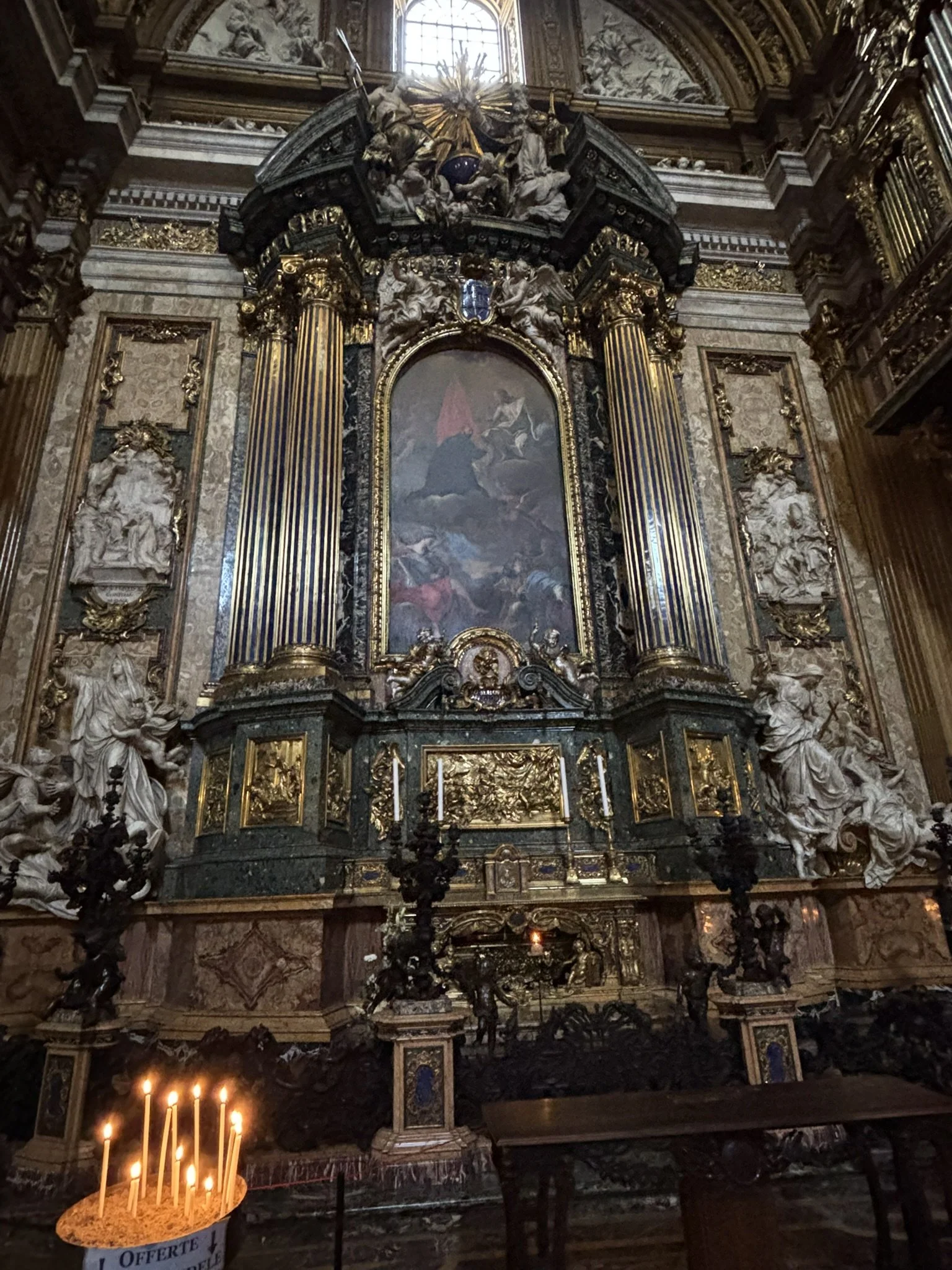
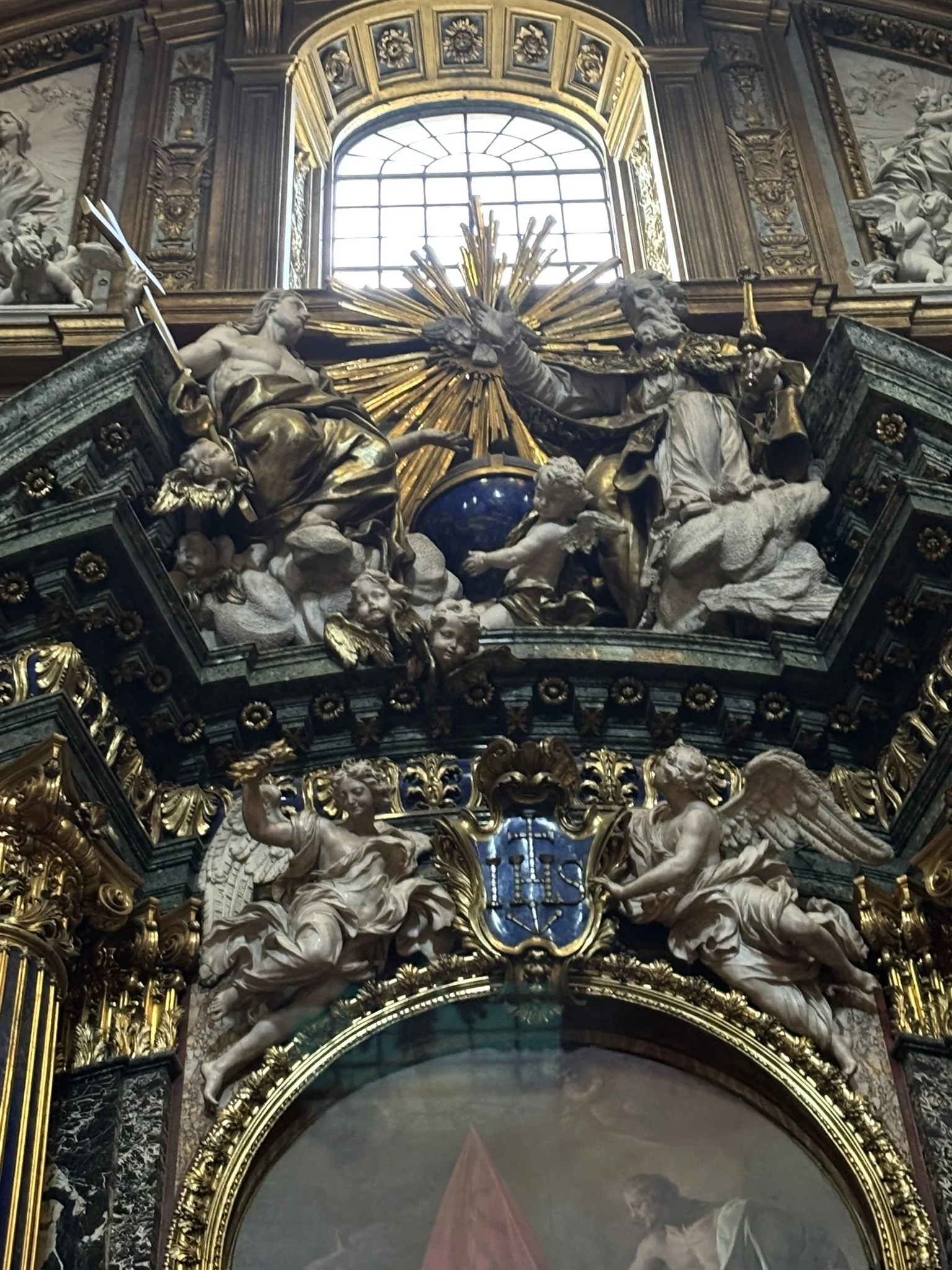
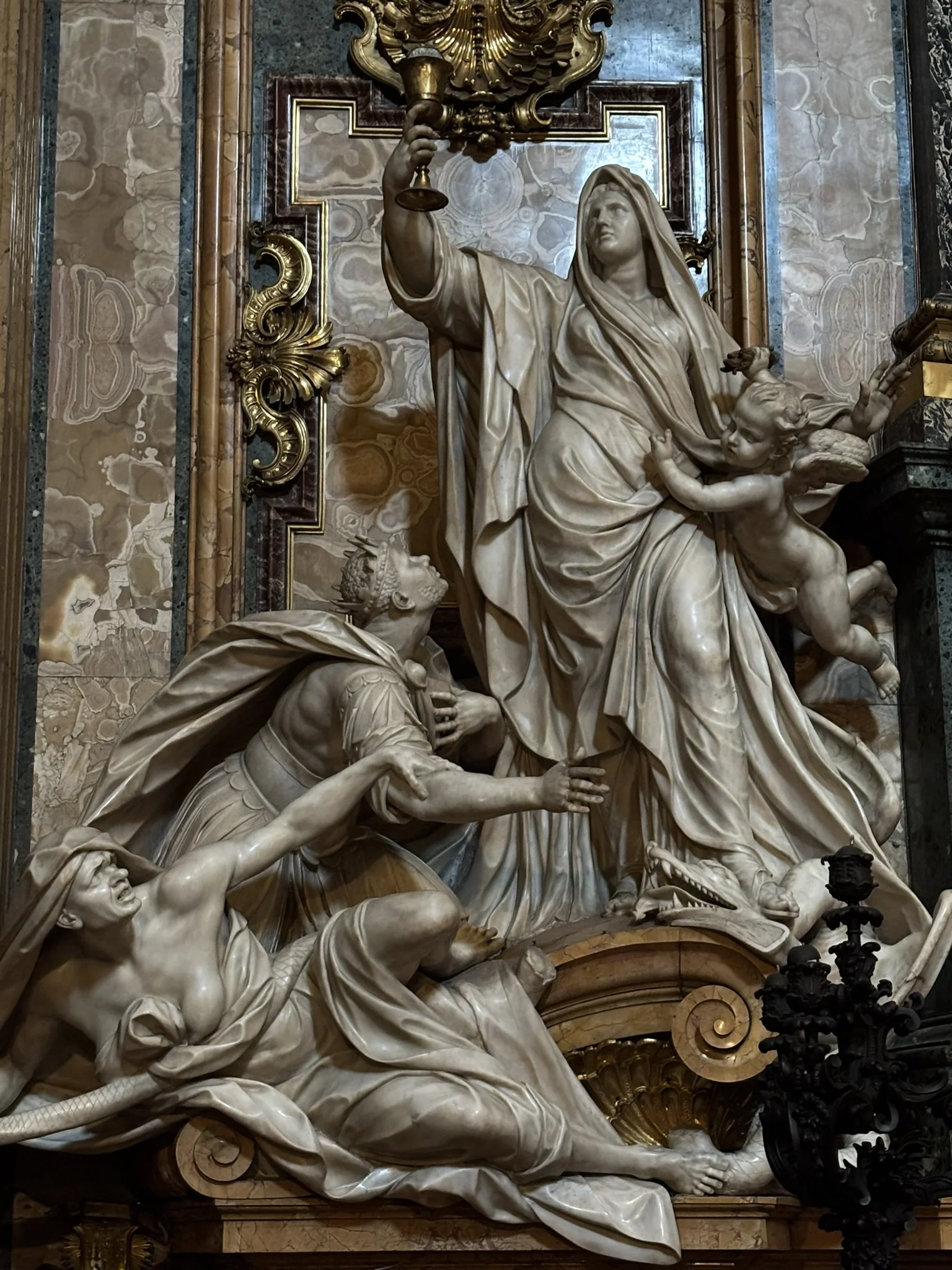
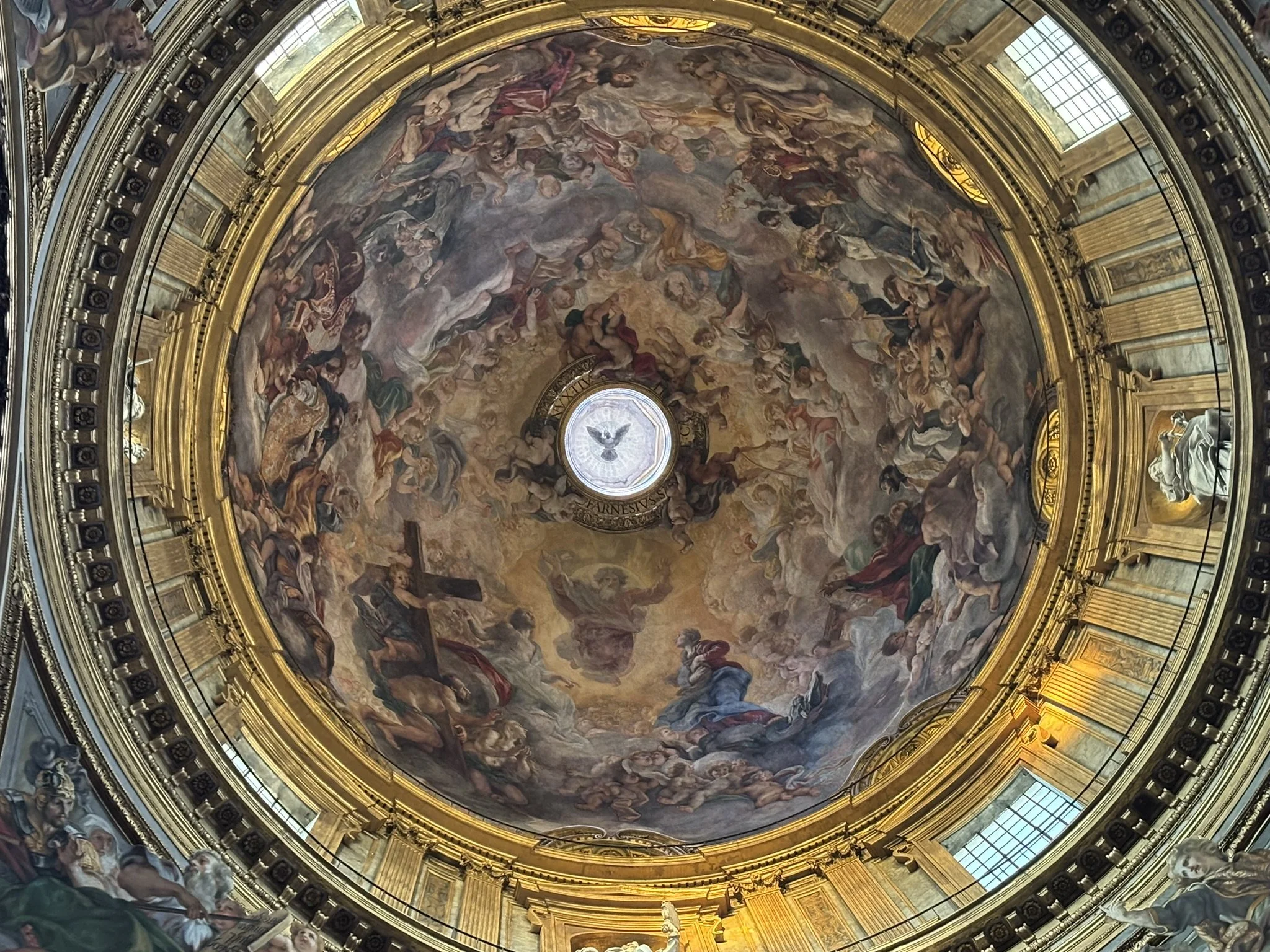
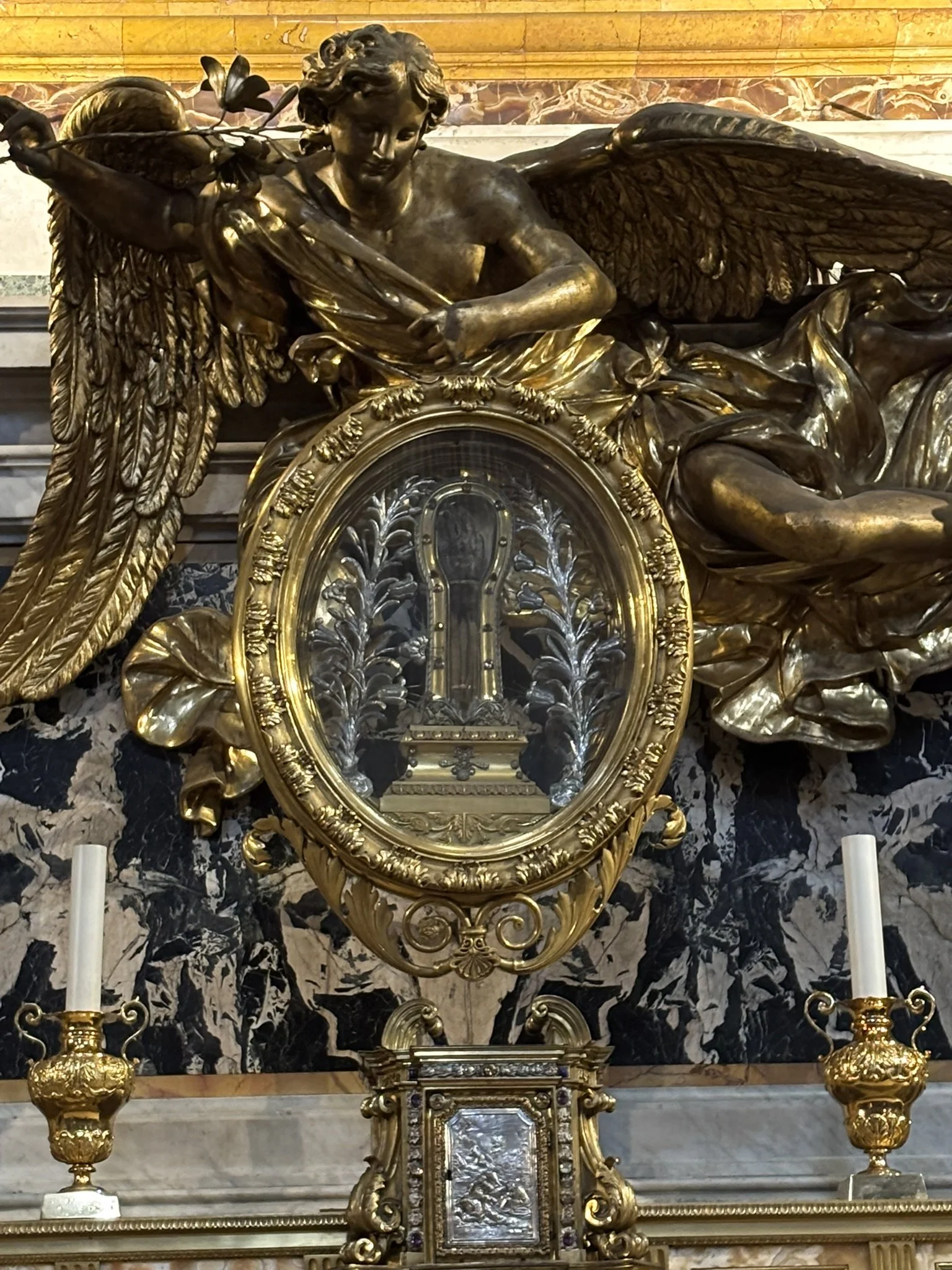
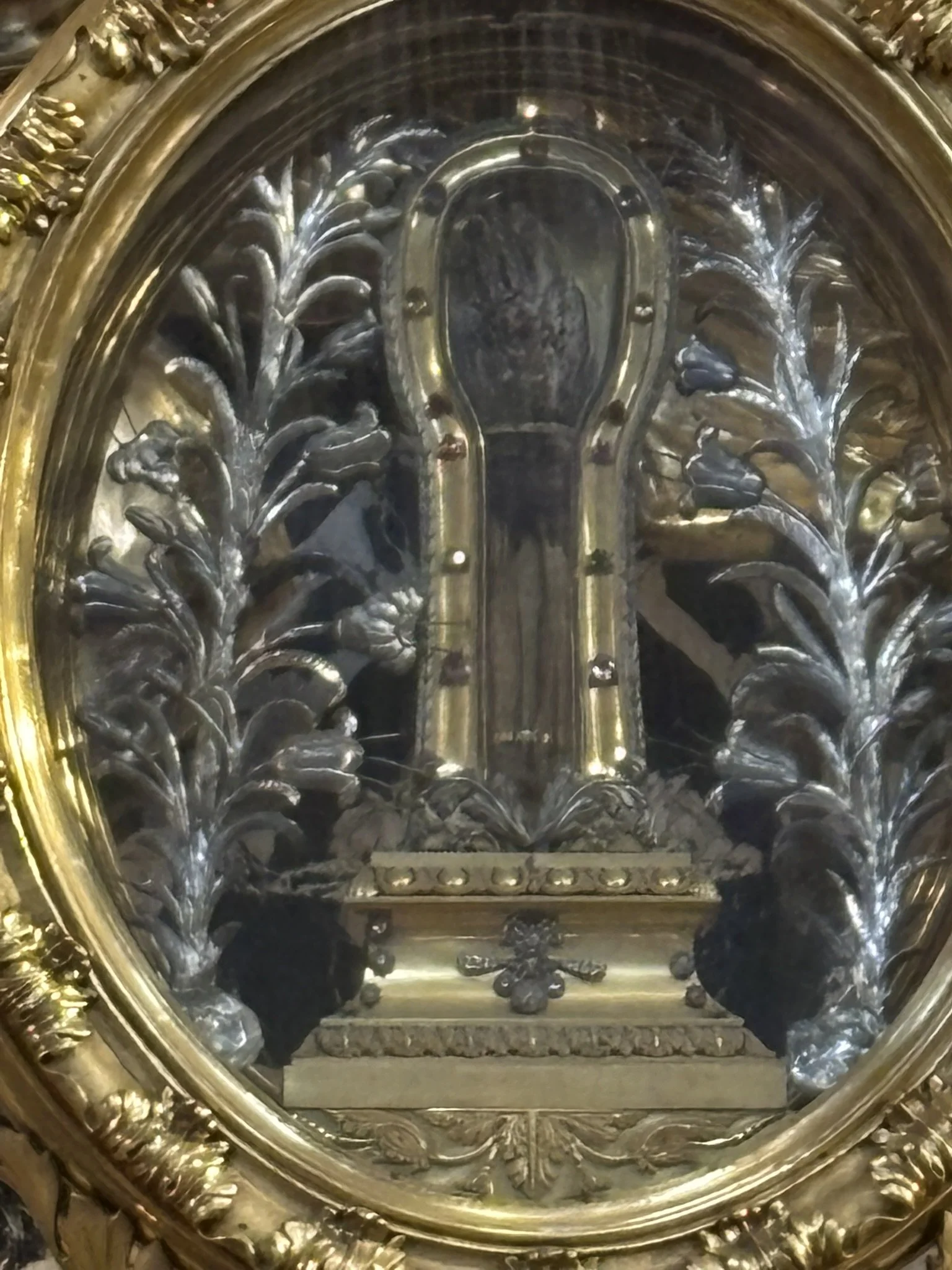
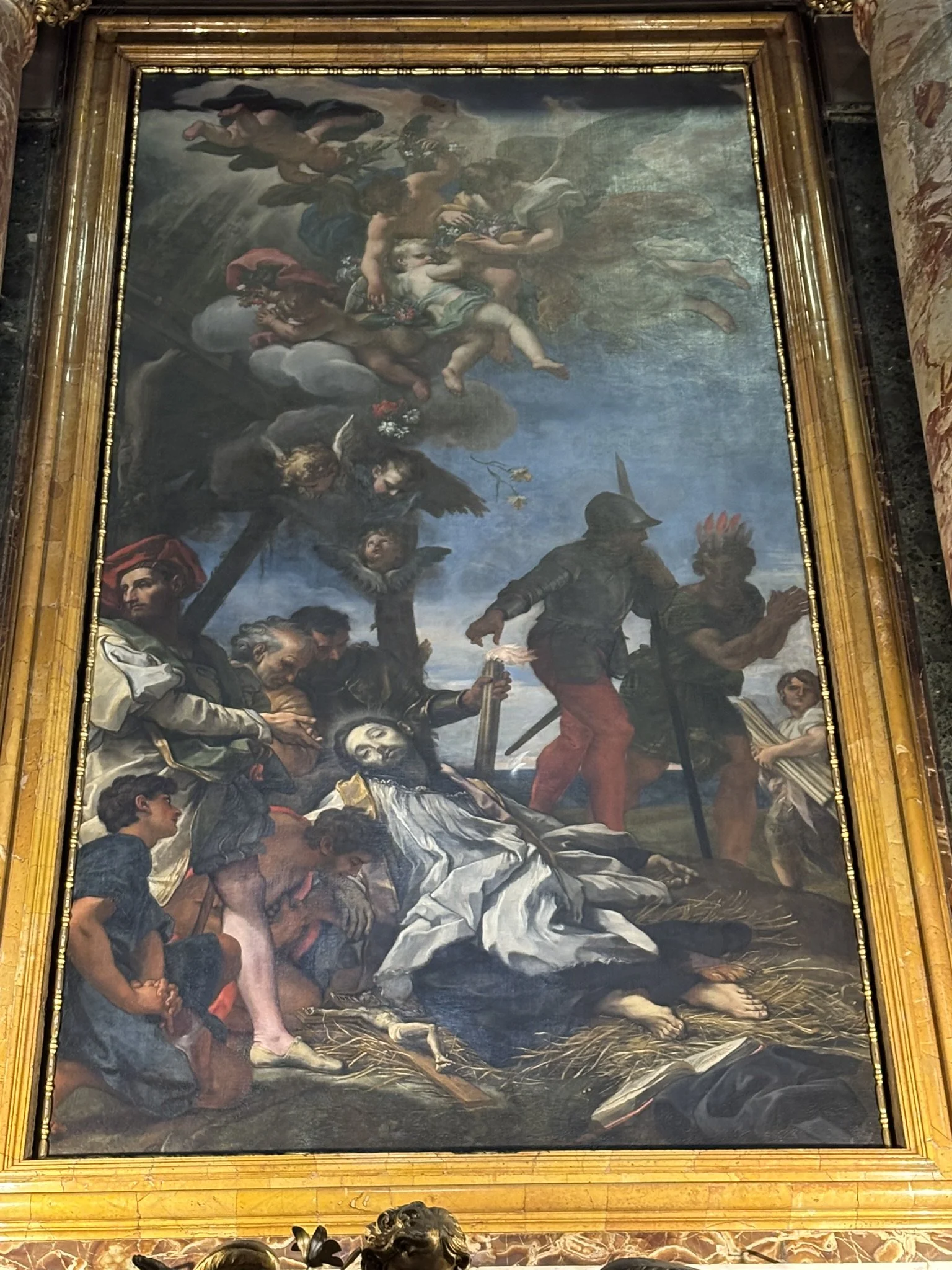
We closed out the evening with a walk home to freshen up before dinner with a dear priest friend who works in Rome. It was a great dinner at S. Cristina al Quirinale. It was such a good time that it was the only meal I didn’t finish in its entirety (too much good conversation), for which I feel embarrassment because the food was so delicious. Check our their website if you’re ever planning a trip to Rome.
