Last Summer, my wife and I went on pilgrimage to Rome for the Jubilee Year. Here is our story…
Another day, another papal basilica. We had to take a car to this one. Tip: walk as often as you can in Rome. It forces you to take in the city, rather than merely visiting various sites. You get a better sense of the city and her people this way, and often will catch things that you would otherwise miss.
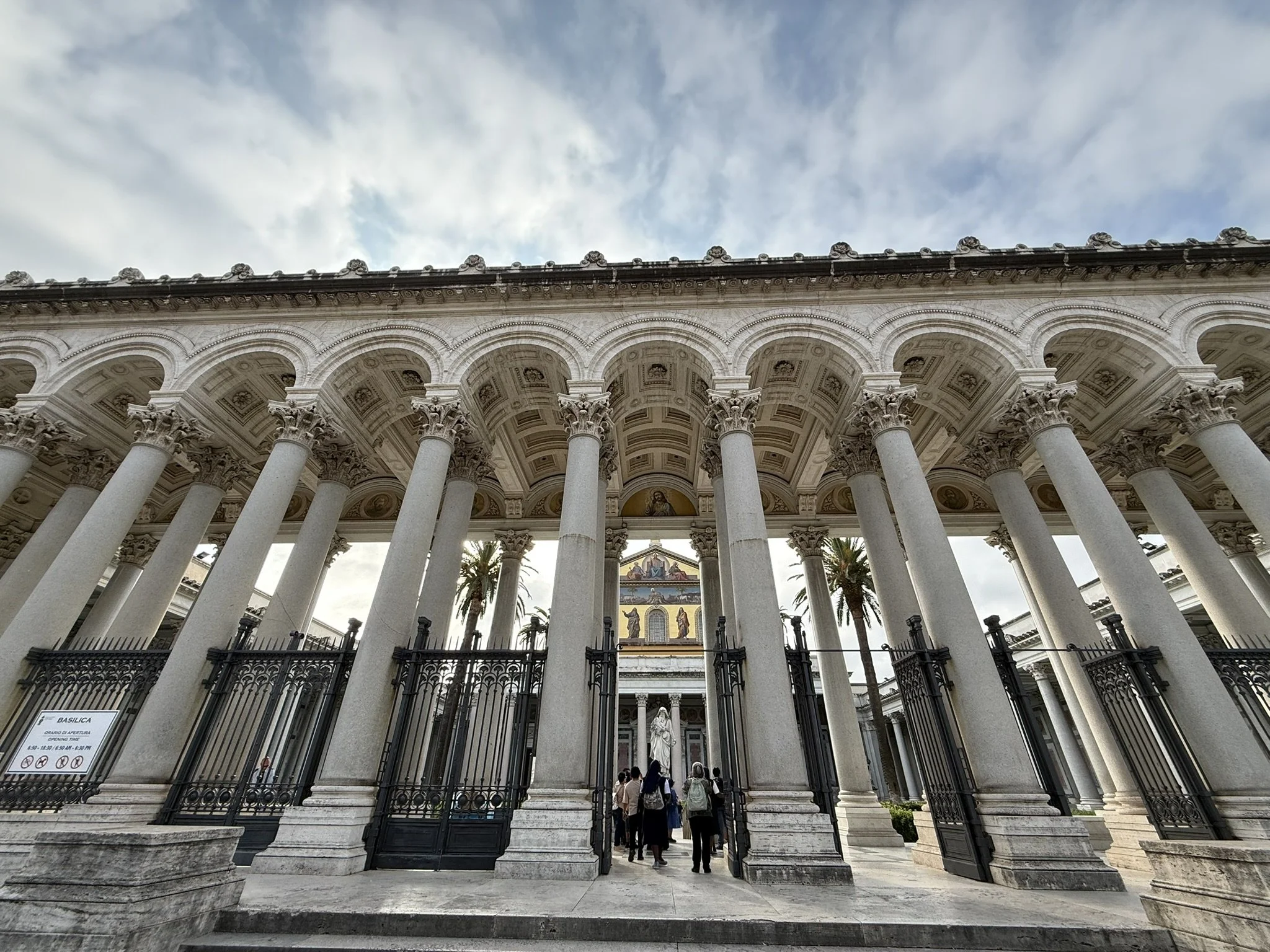
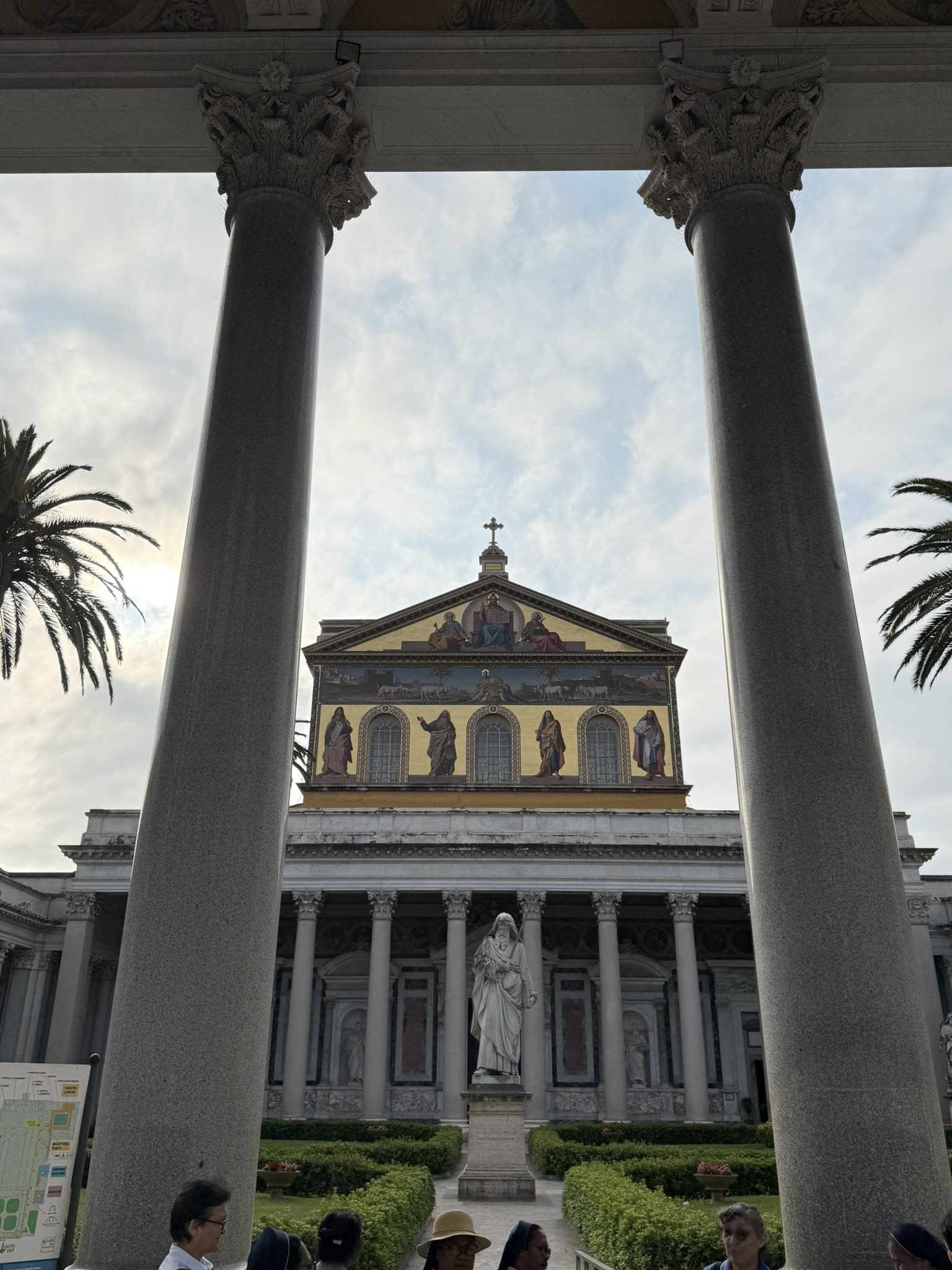
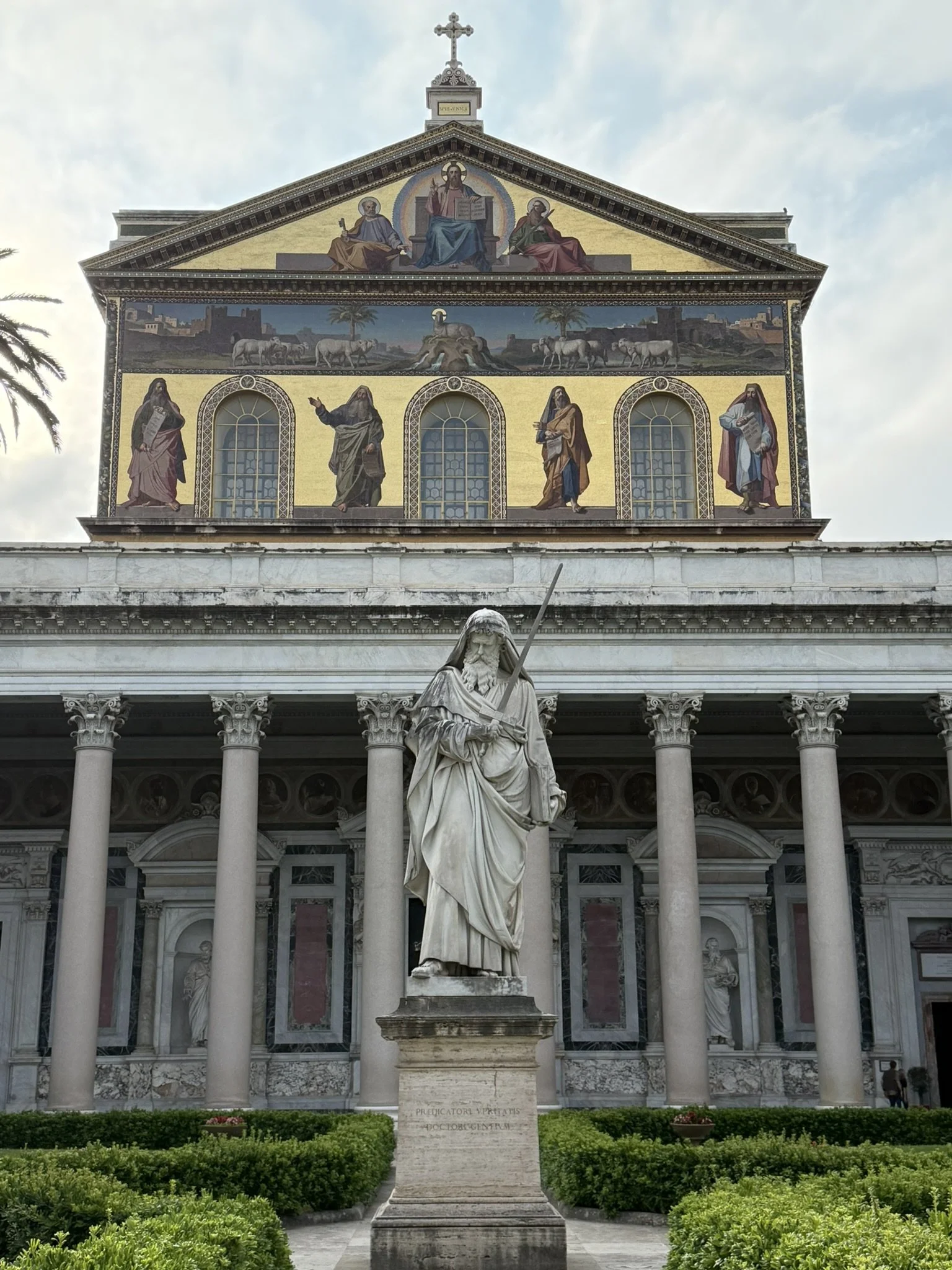
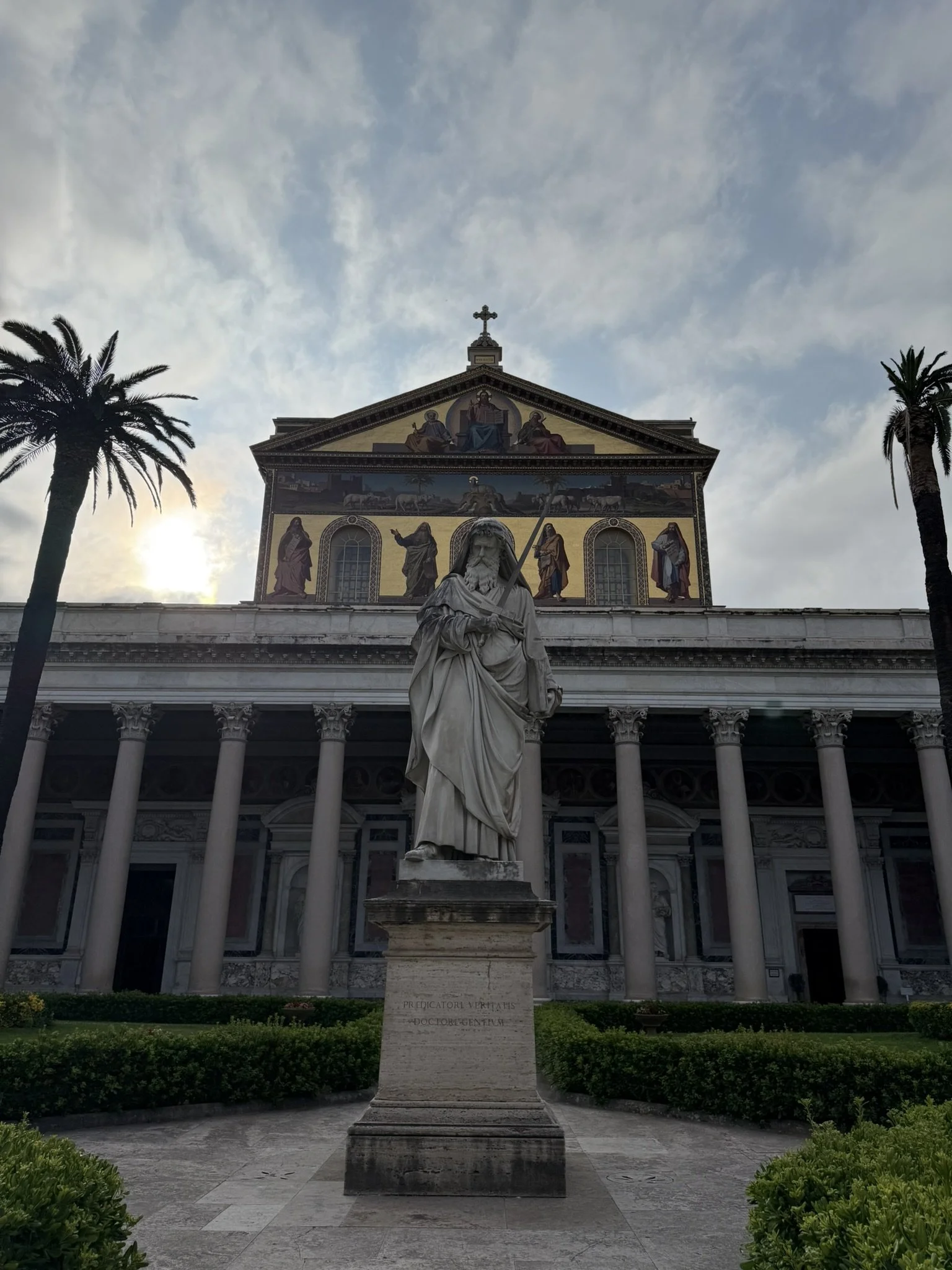
St. Paul Outside the Walls was our final of the Four Papal Basilicas, and the penultimate of the Five Patriarchal Basilicas. It’s called “outside the walls“ because it’s… well, it’s outside the walls of Rome (hence the car). St. Paul’s feels different. First, it’s not surrounded by a ton of buildings on every side. Second, as you approach it, you come to a garden as you come to the entrance of the church proper.
Some of this is a result of the many changes, editions, constructions, and destructions of the building over the centuries. The basilica itself was founded by Emperor Constantine and consecrated in 324. It was expanded in the late 300s. It saw extensive repairs and modifications in the intervening centuries, and survived earthquakes and armies. Sadly, in the 1800s, it was almost completely destroyed by a fire. This is even sadder because St. Paul’s had kept much of its bones for the last almost 1500 years! In 1825, Pope Leo XII asked for donations to reconstruct St. Paul Outside the Walls. Not only did donations comes from the Catholic faithful, but foreign dignitaries and sovereigns also assisted (such as the Russian Emperor giving some minerals and stone for the altars). As a sign elucidates at the basilica: “The new St. Paul’s, reflecting the mission of the Apostle of the Gentiles himself, became an international expression of generosity & richness.“
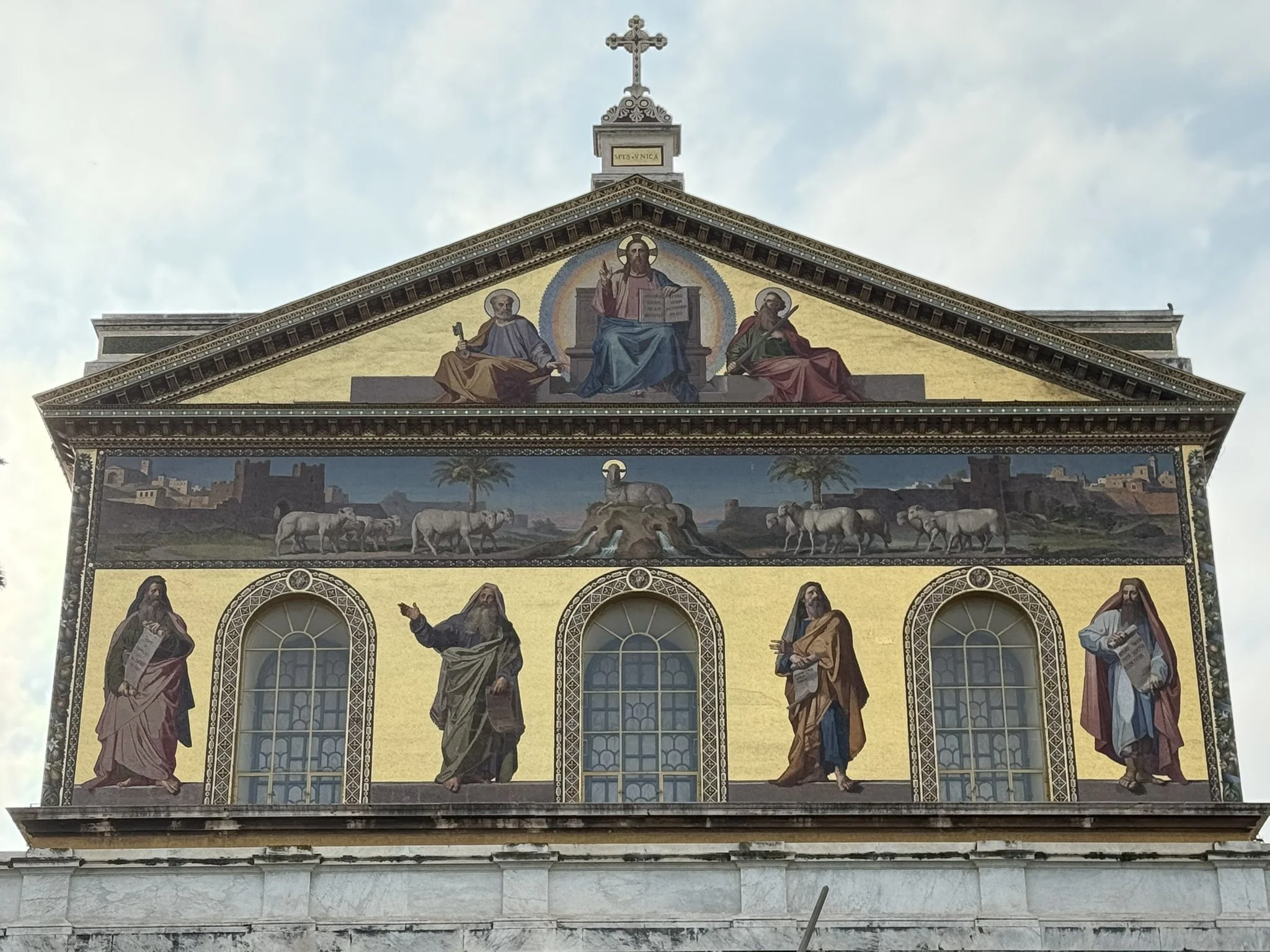
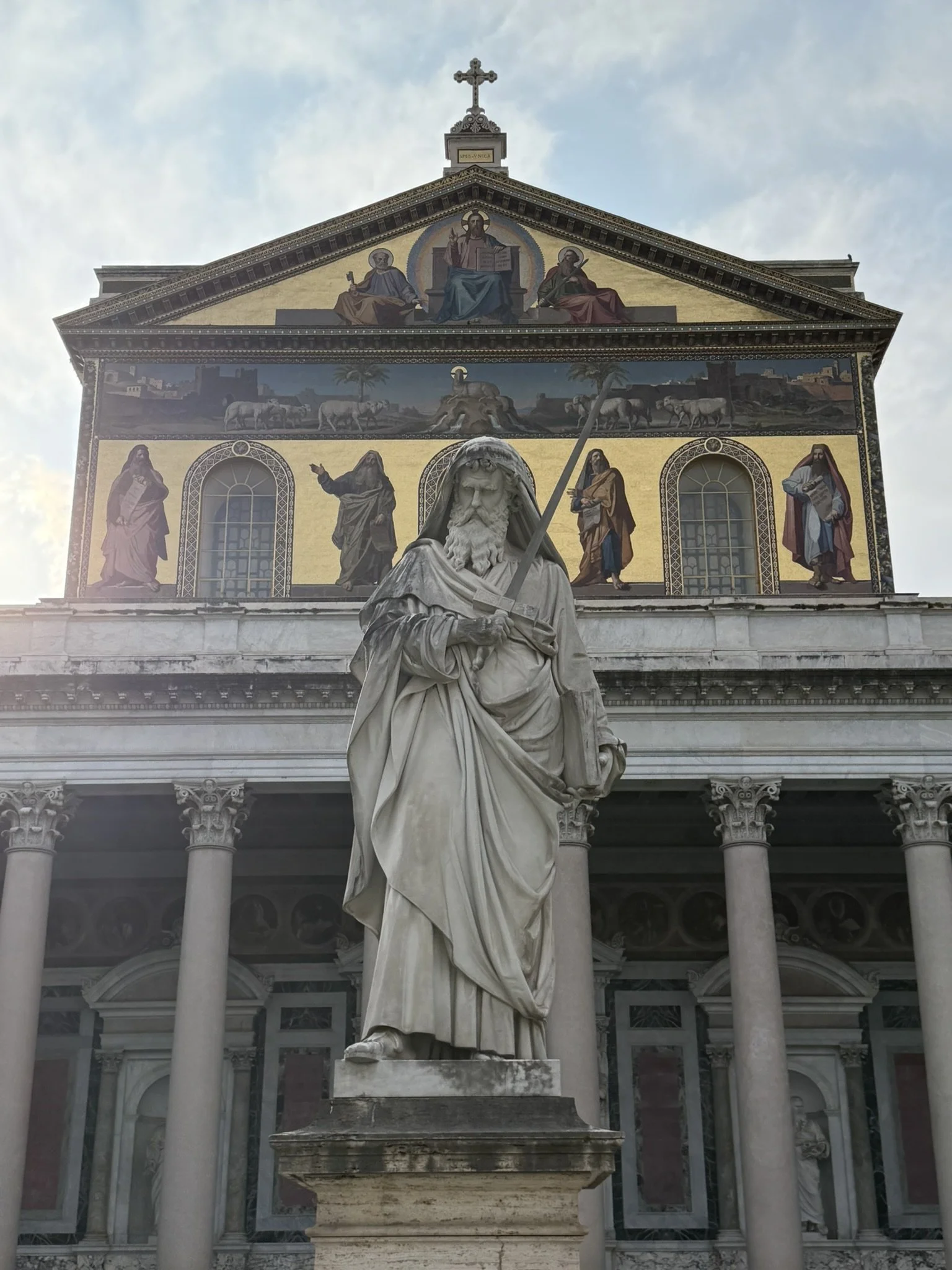
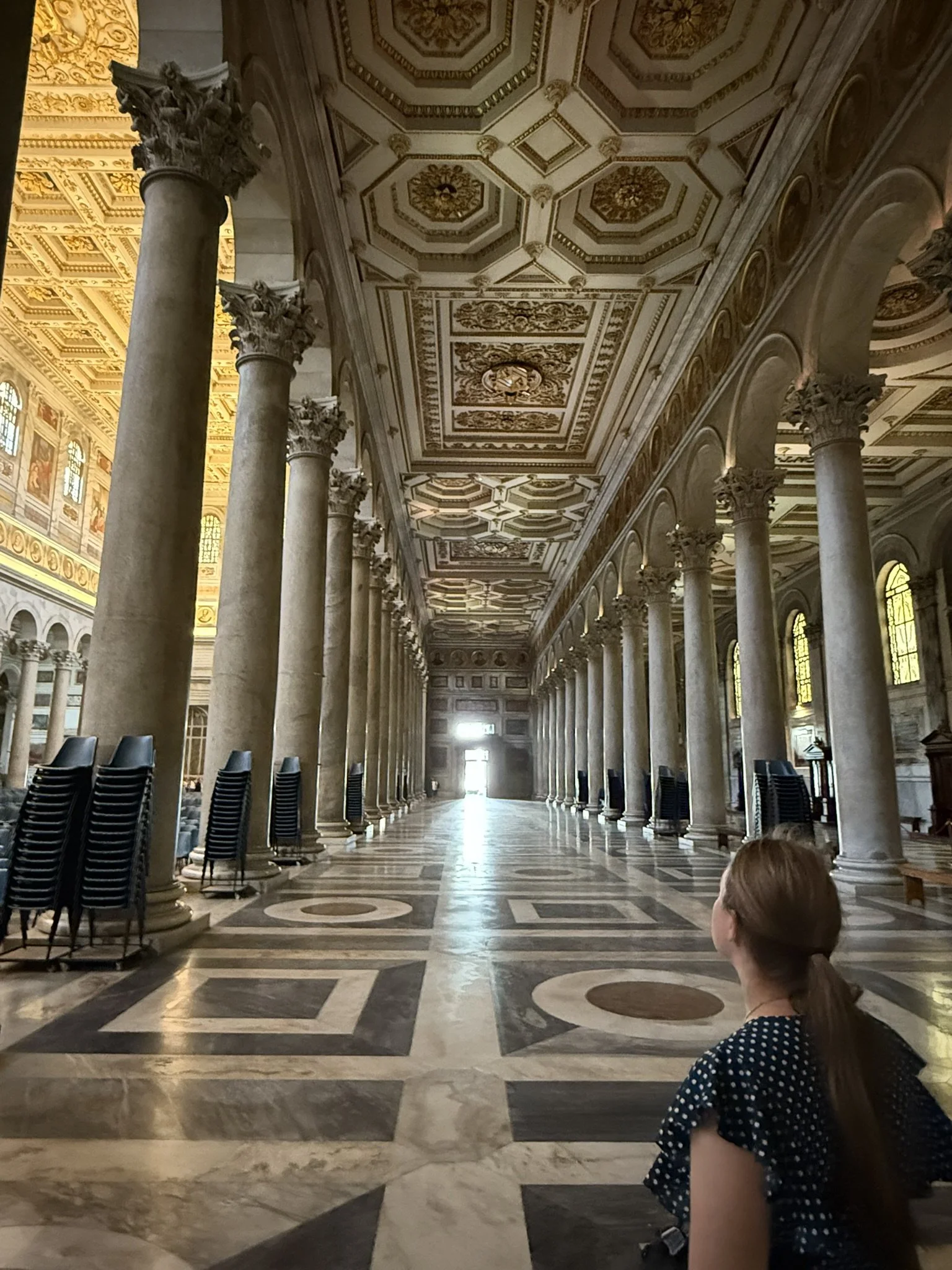
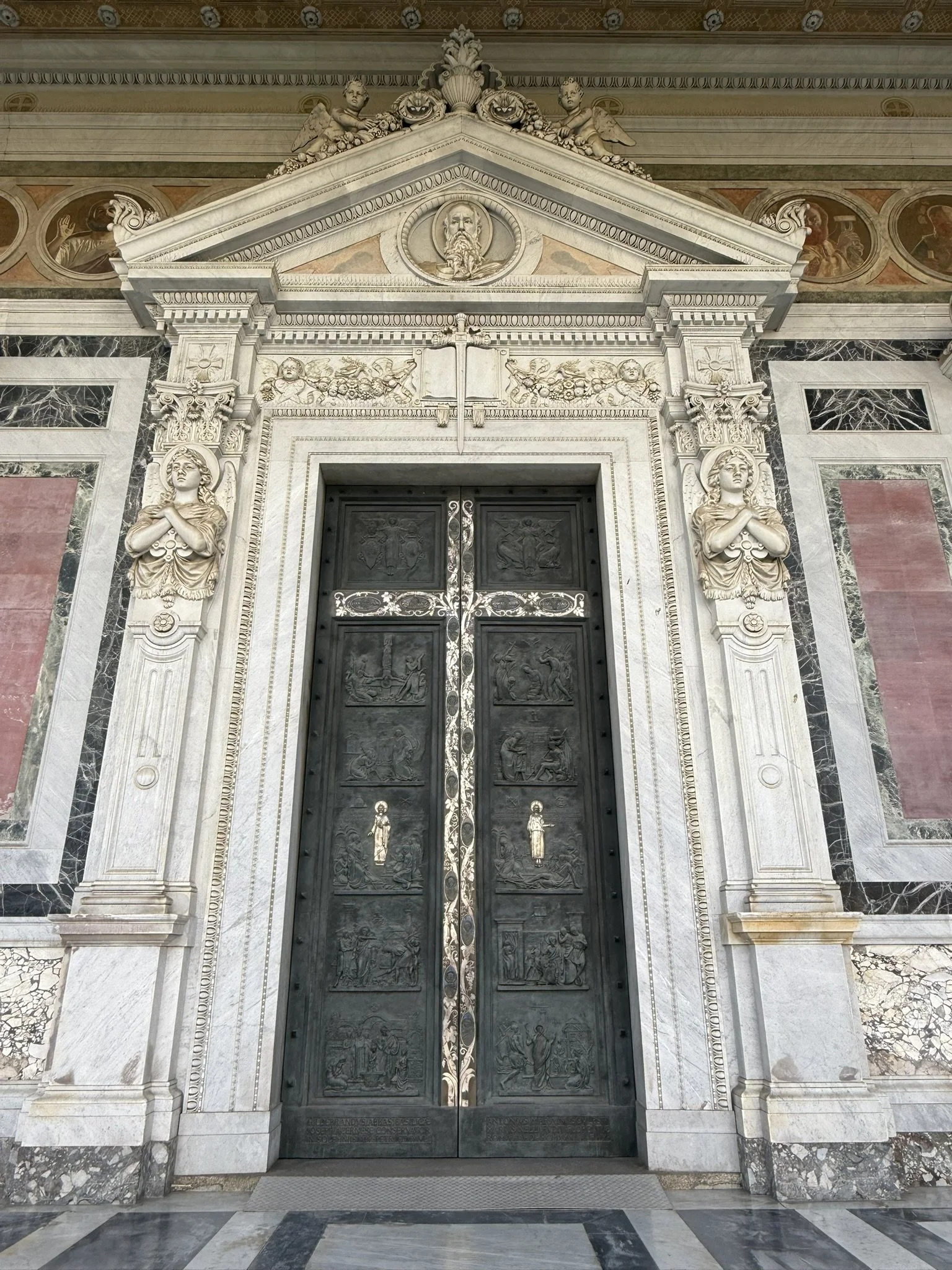
As a result, St. Paul’s has a different feel, which I think you can see from the photos of the outside.
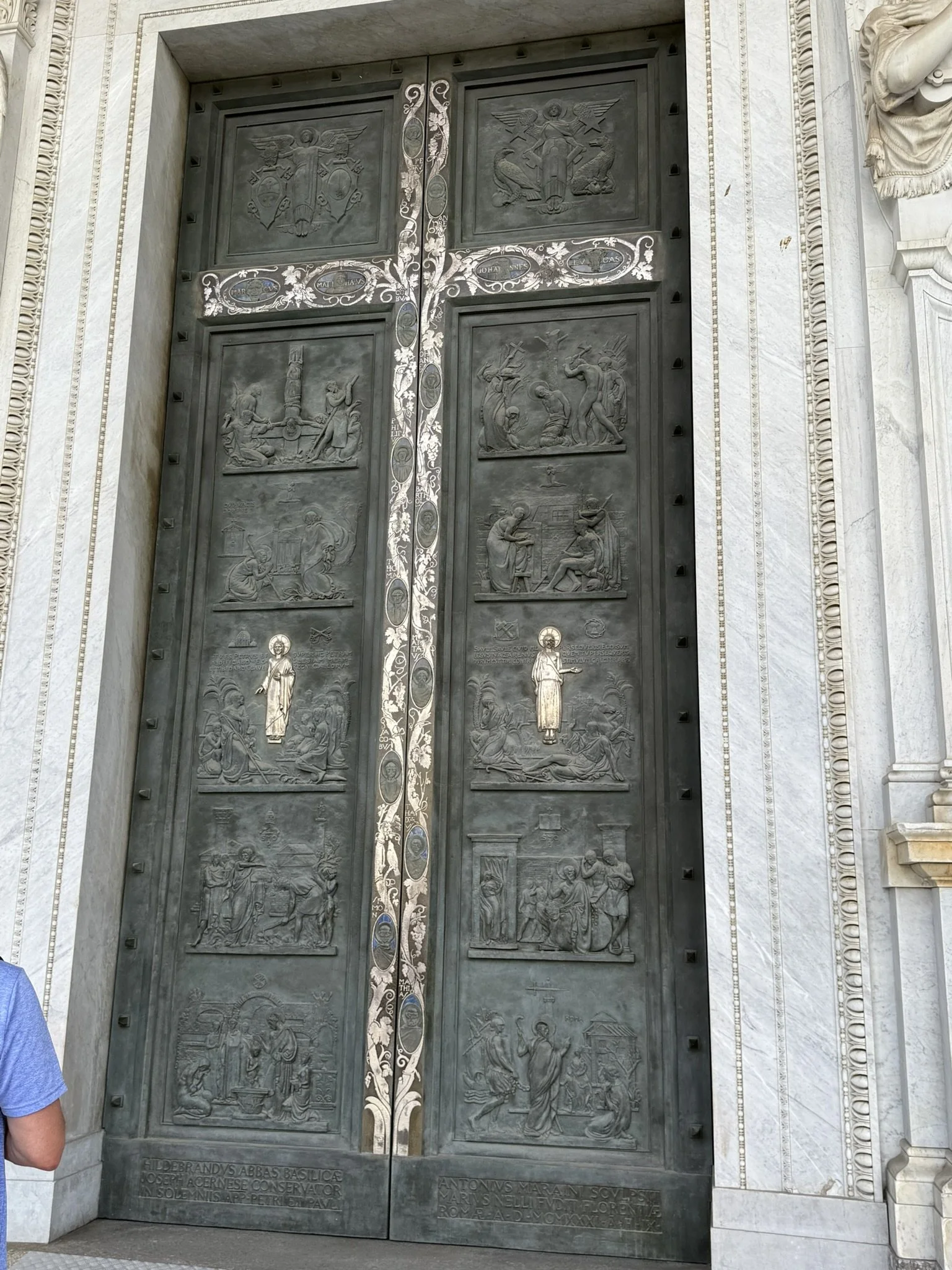
And, of course, the porta sancta. This completed our pilgrimage to visit all four Holy Doors. The video below is the second time we went through (we went through all the holy doors multiple times, often because it was the easiest way to get around).
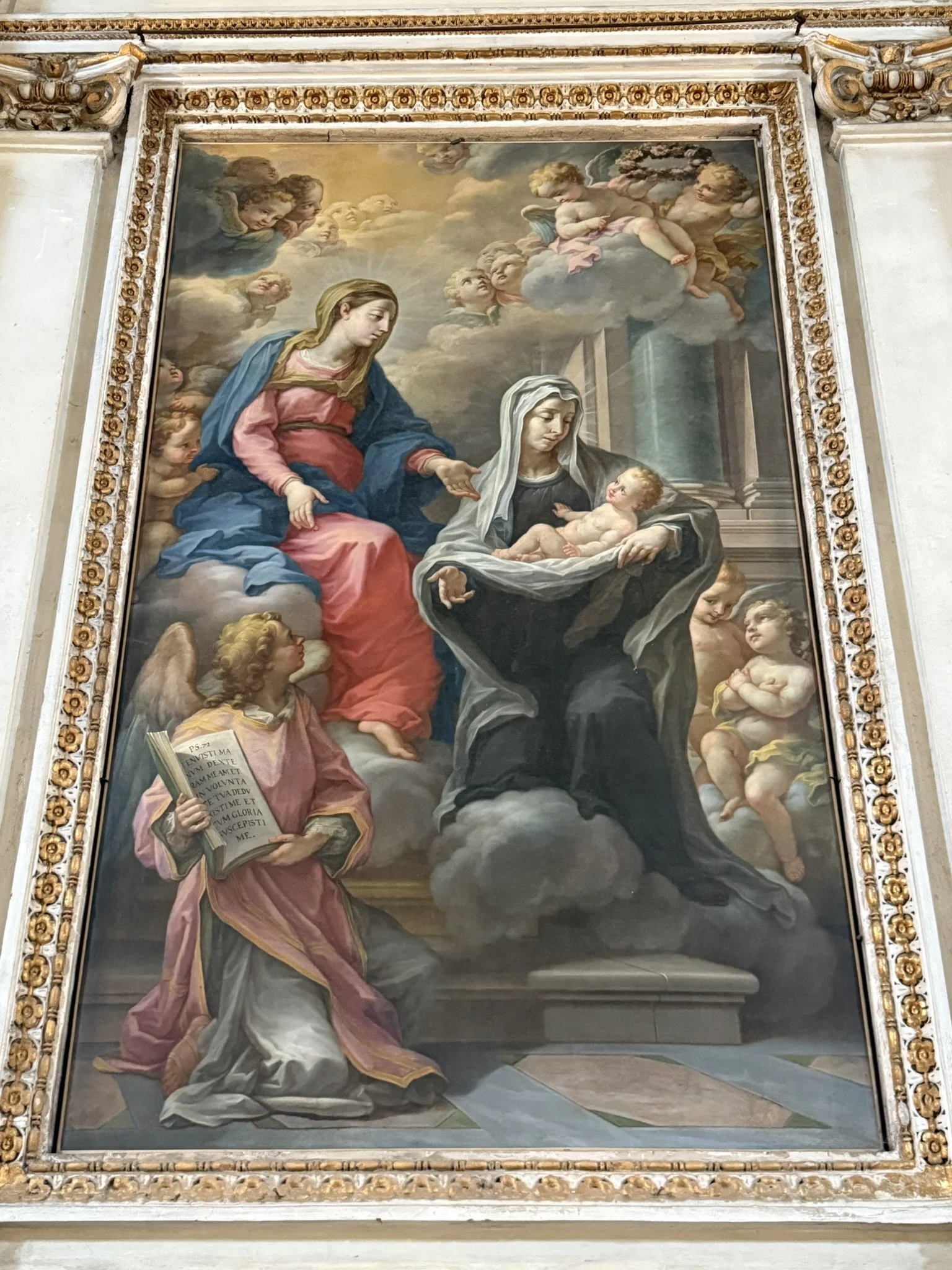
There are some gorgeous paintings, relating to St. Paul, throughout the basilica. There are also some really neat pieces. Please scroll through and read the captions. Of note is a crucifix that St. Bridget prayed in front of and a mosaic before which St. Ignatius of Loyola and the first Jesuits made their religious professions.
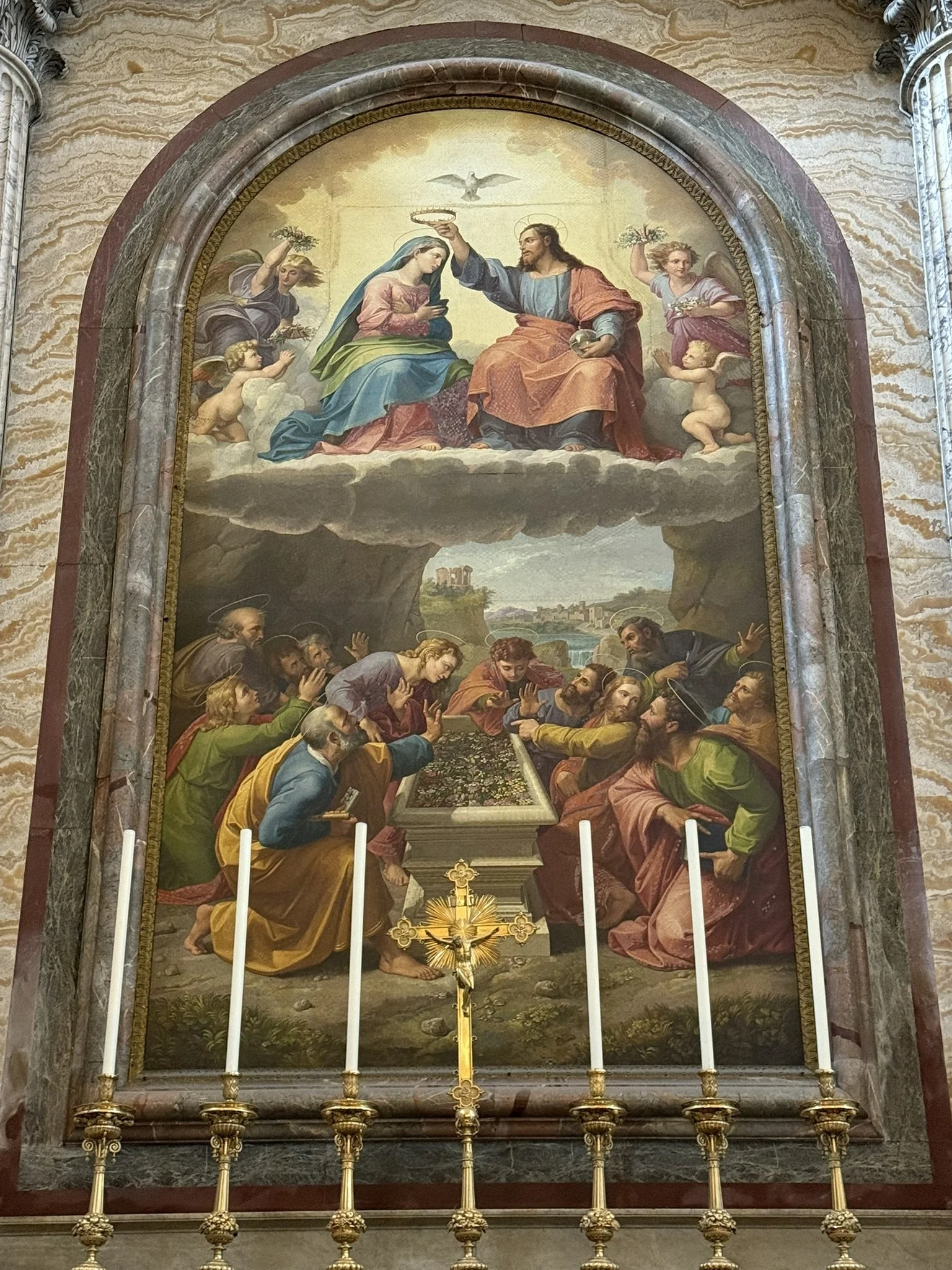
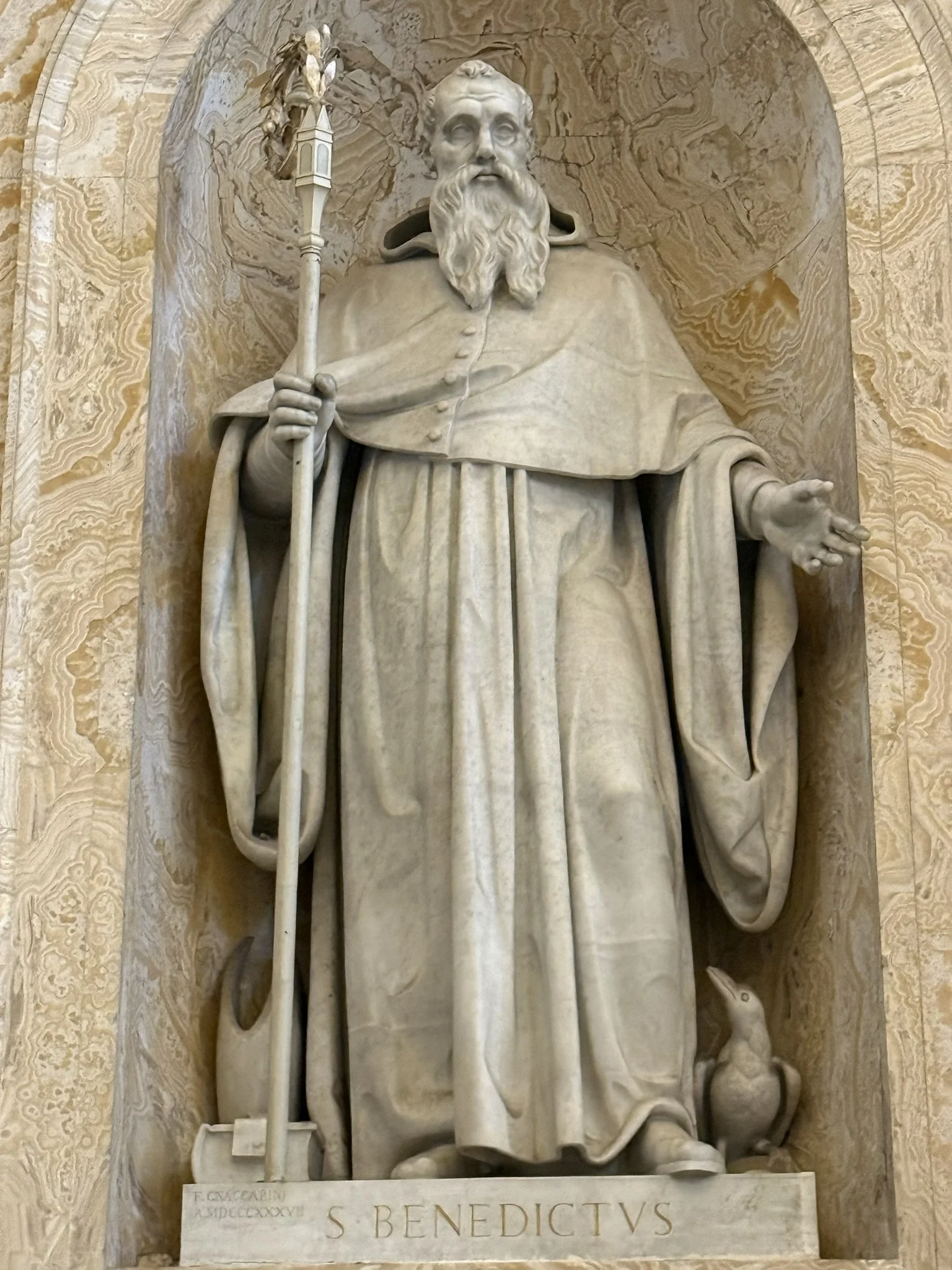
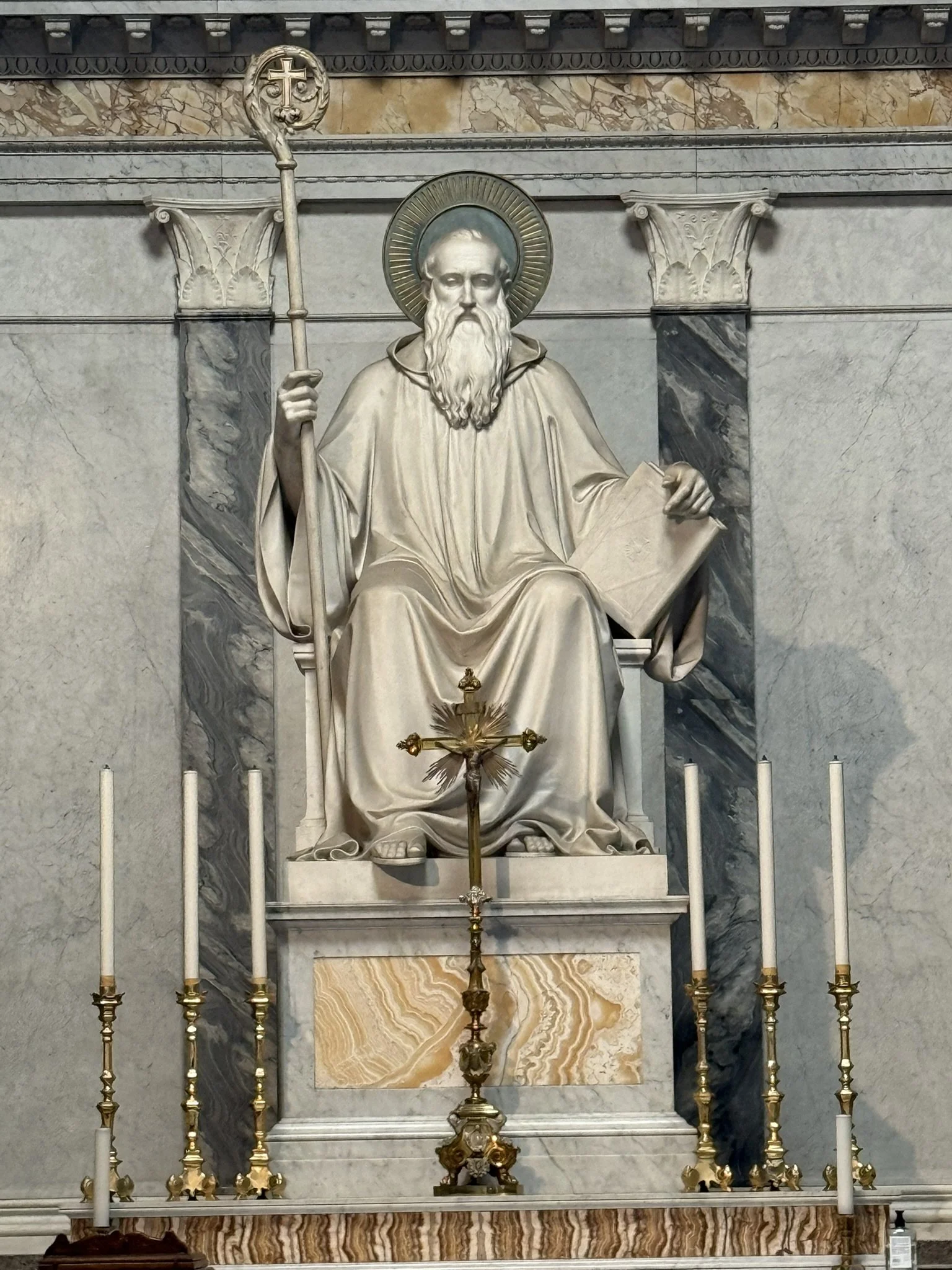
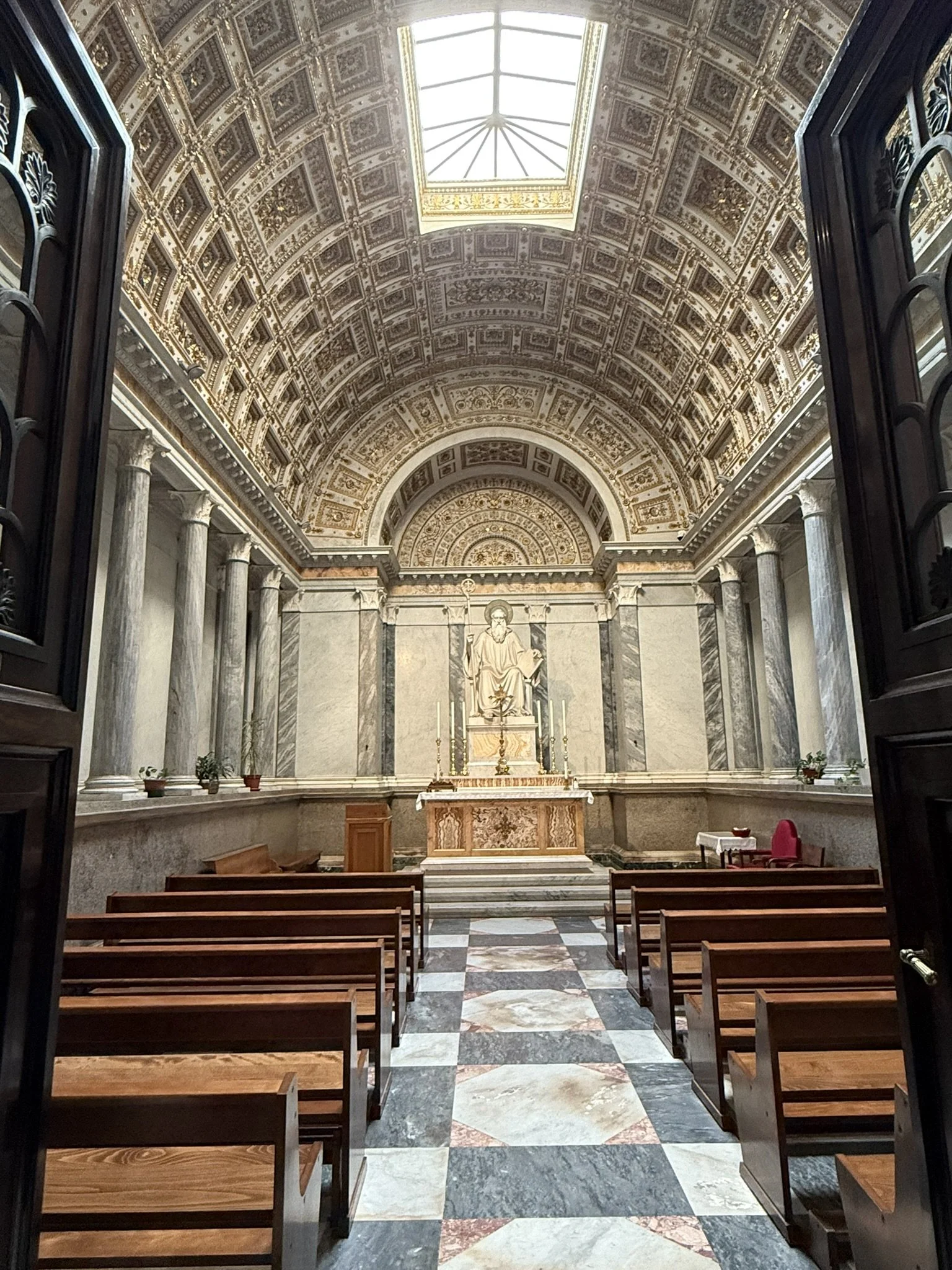
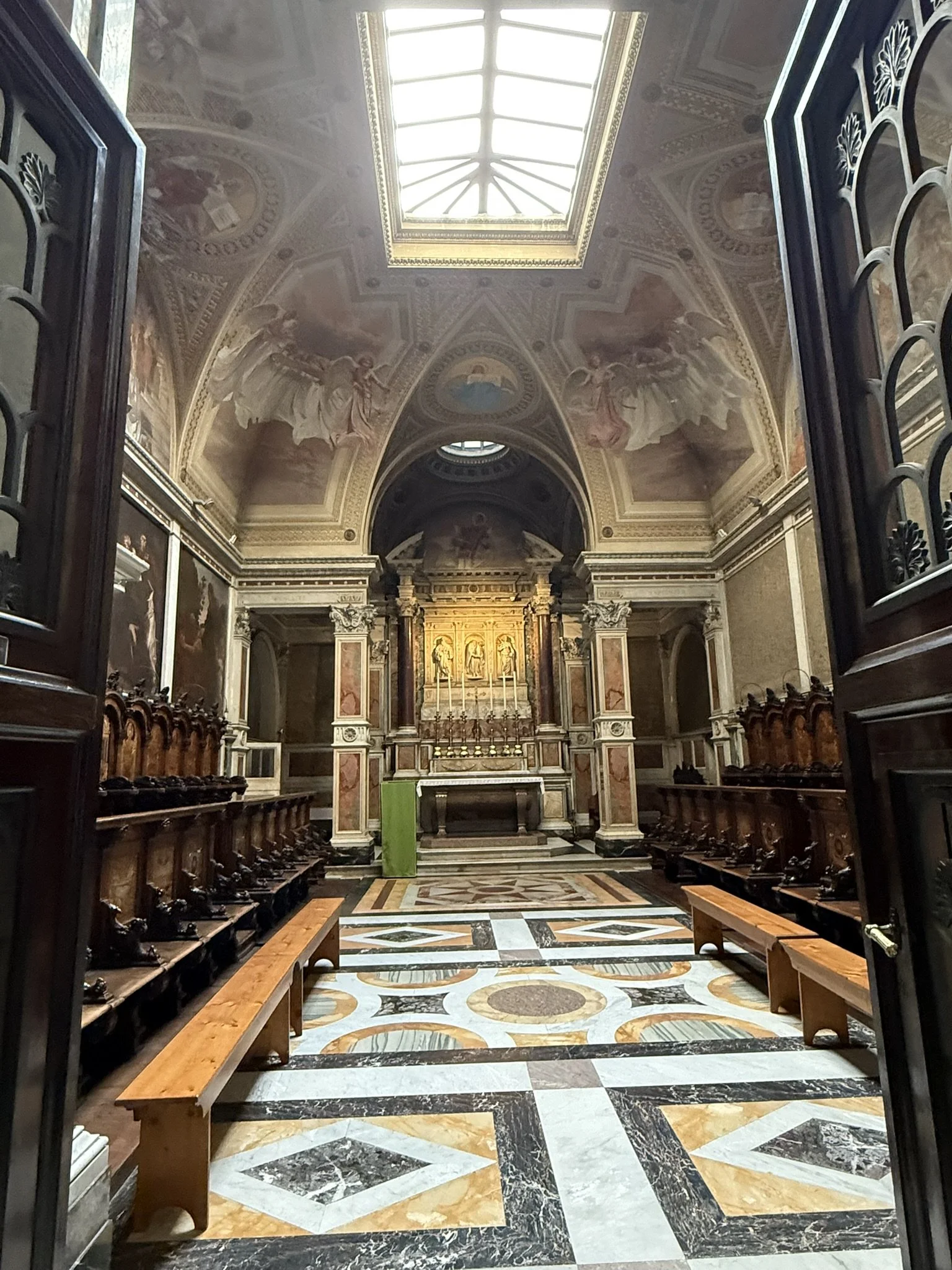
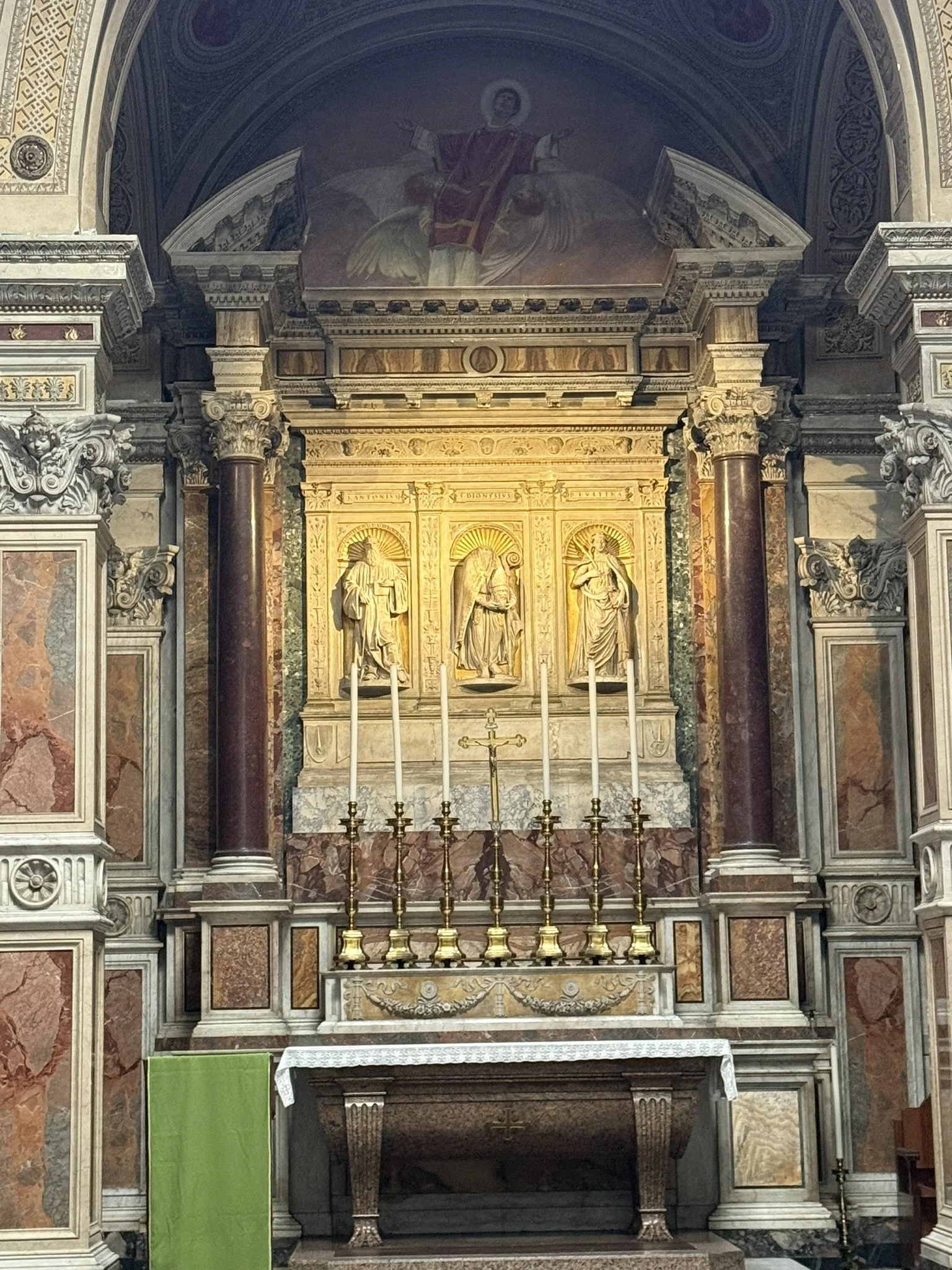
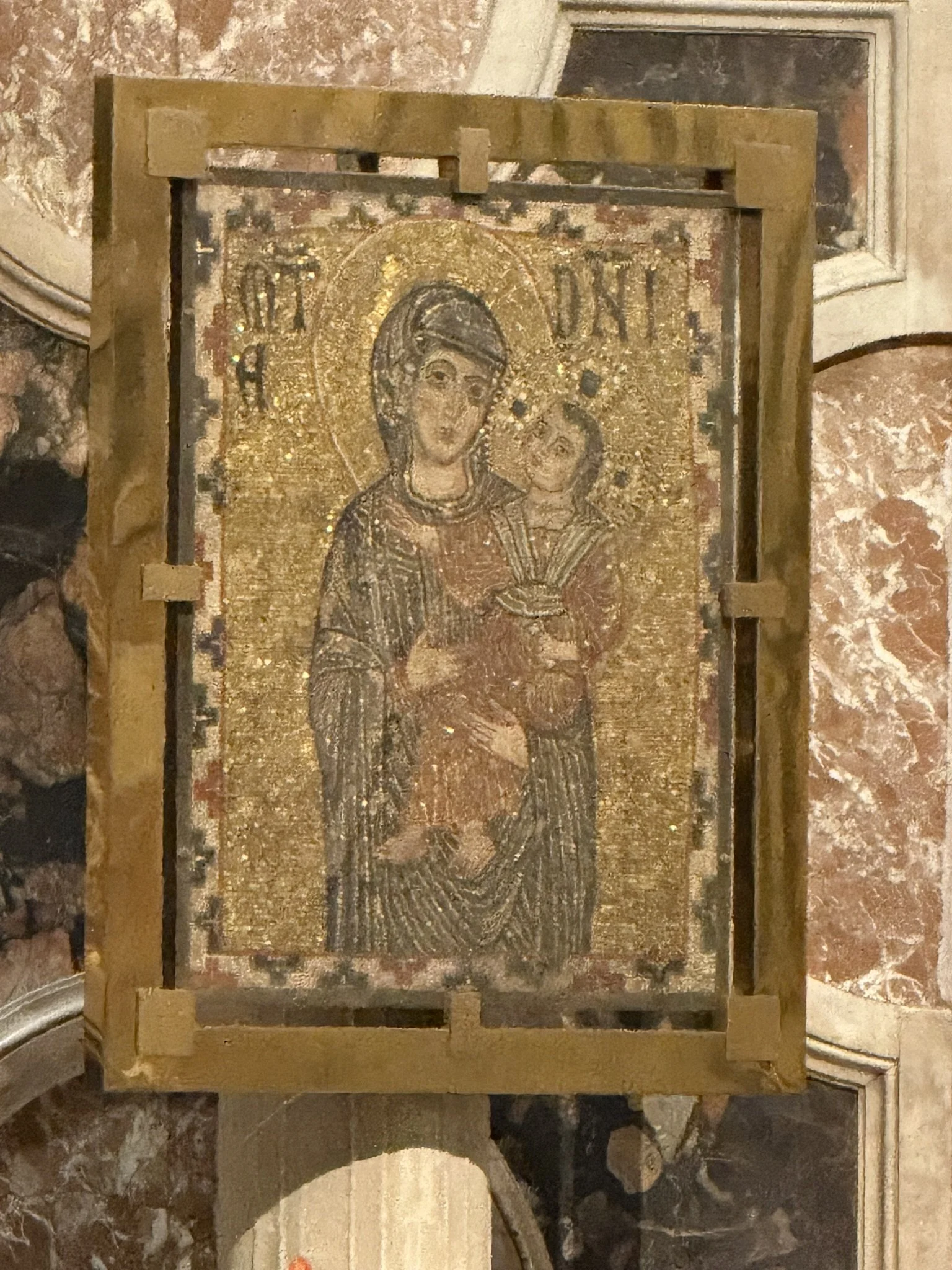
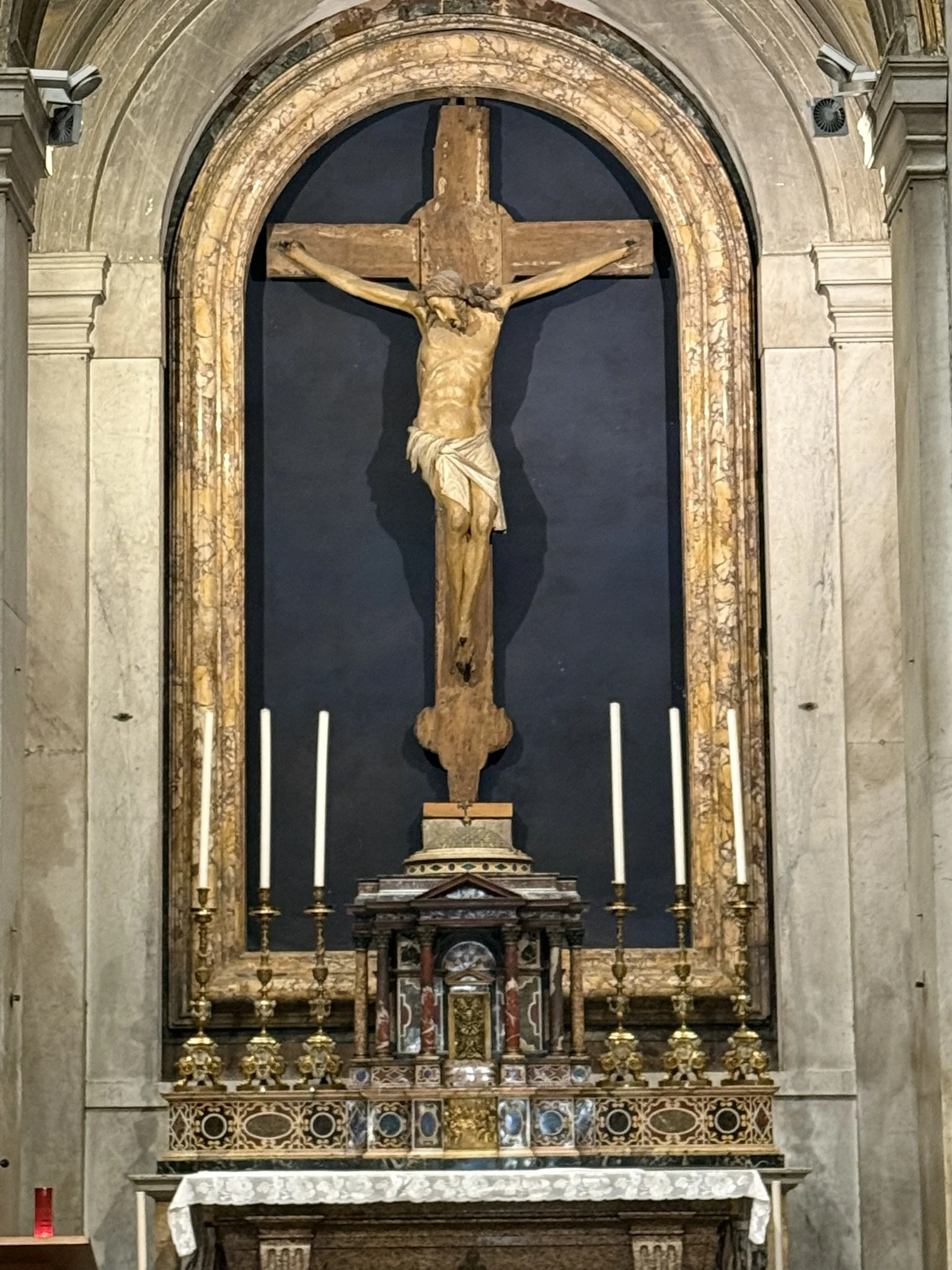
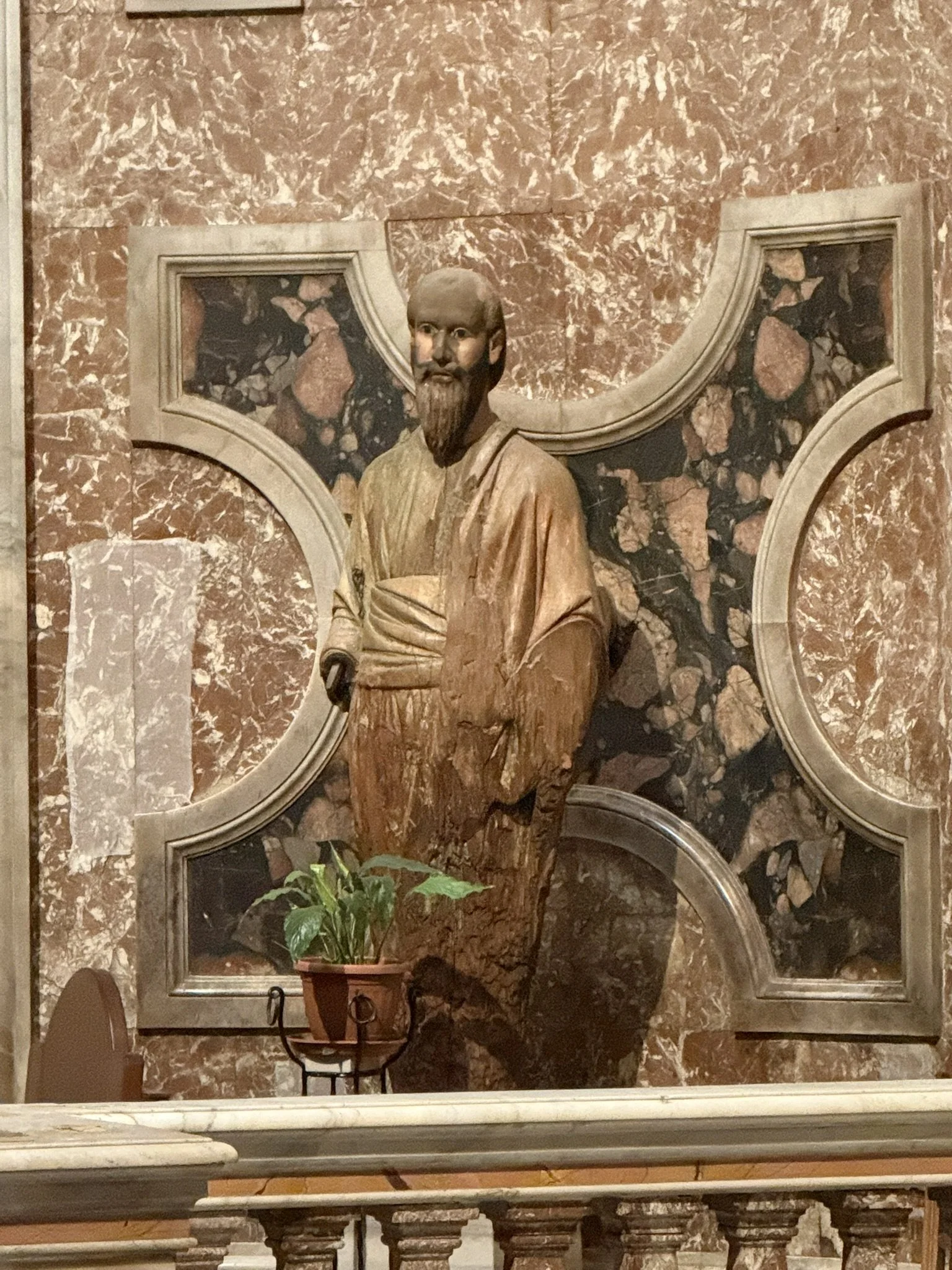
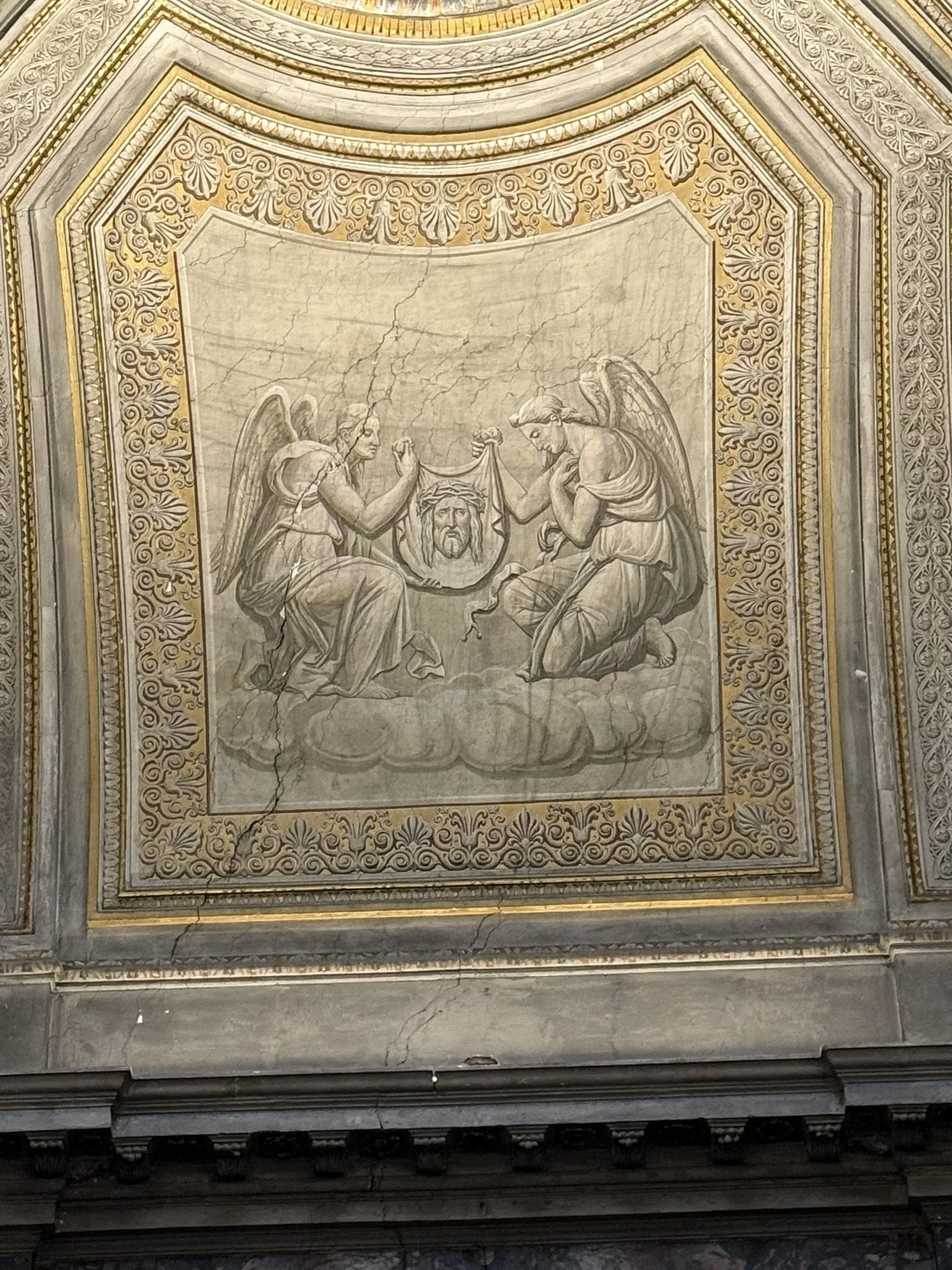
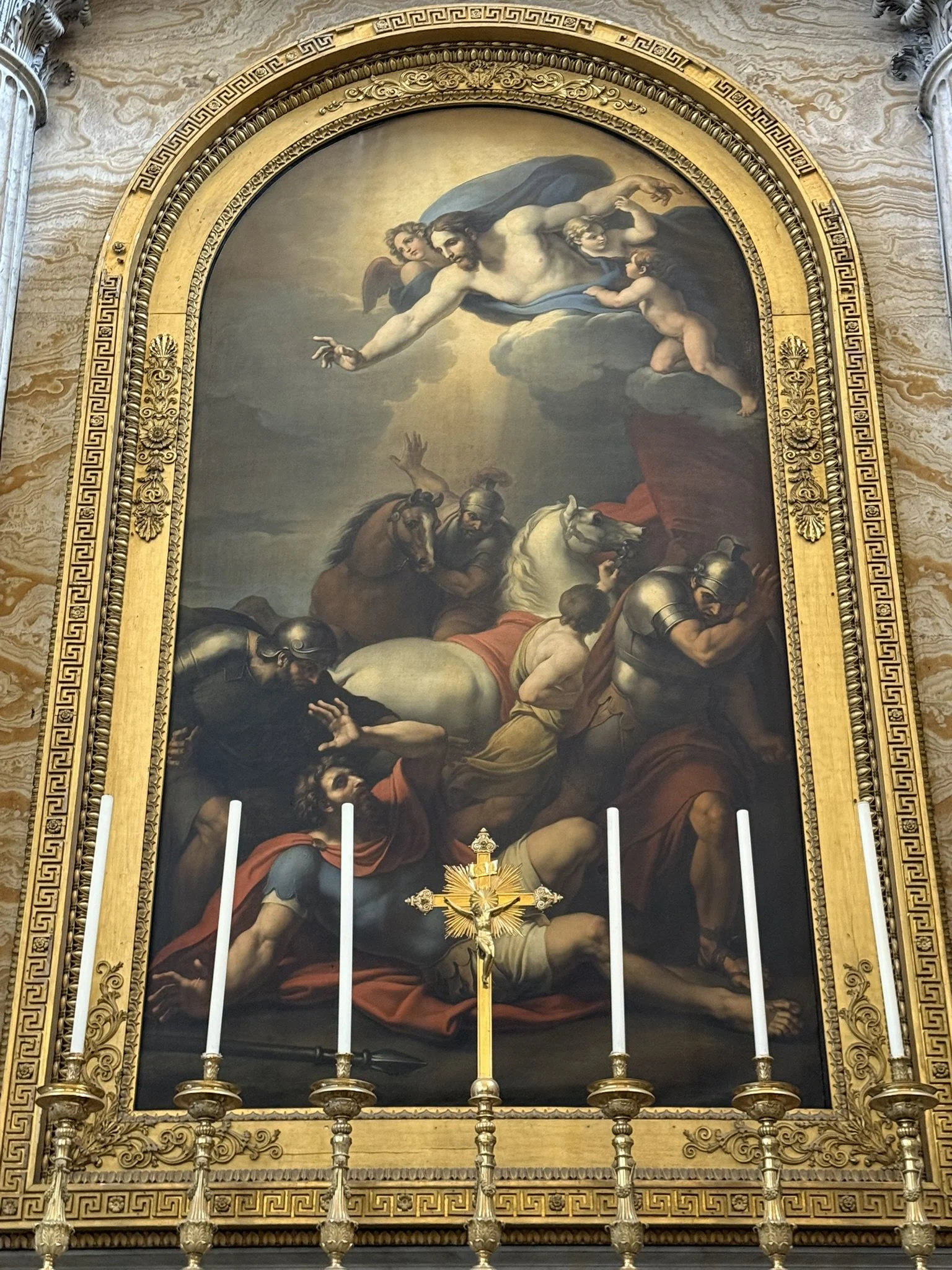
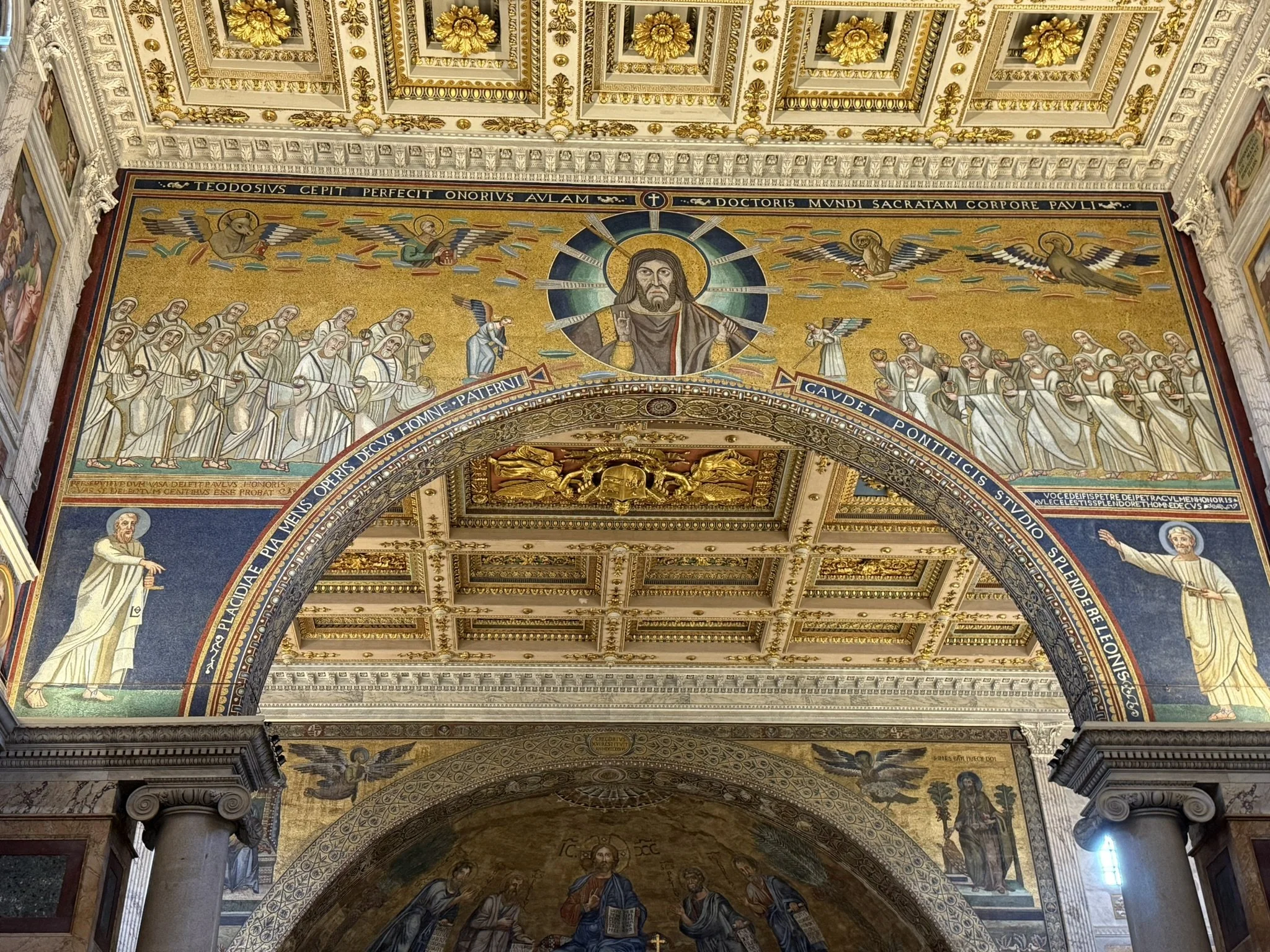
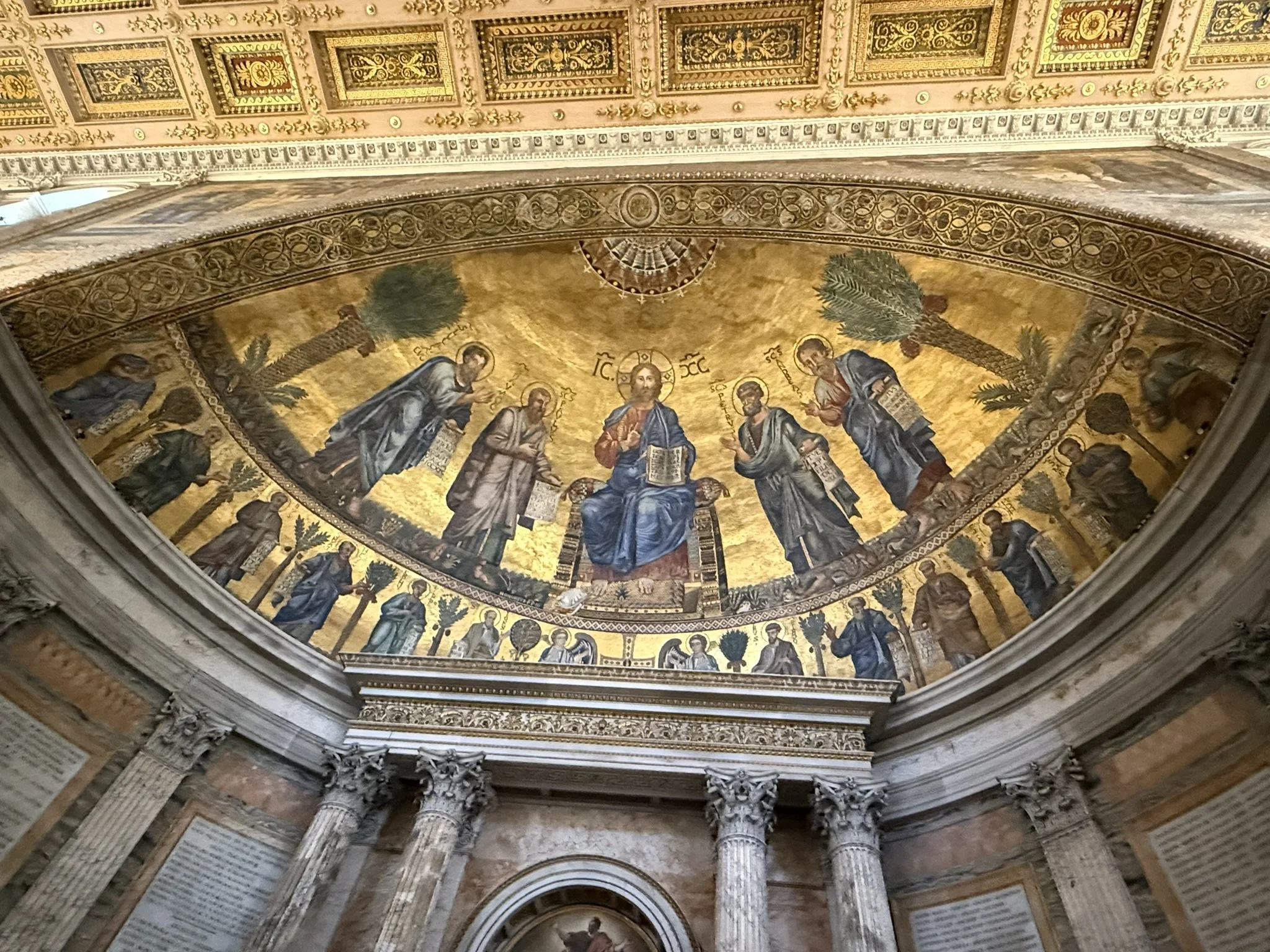
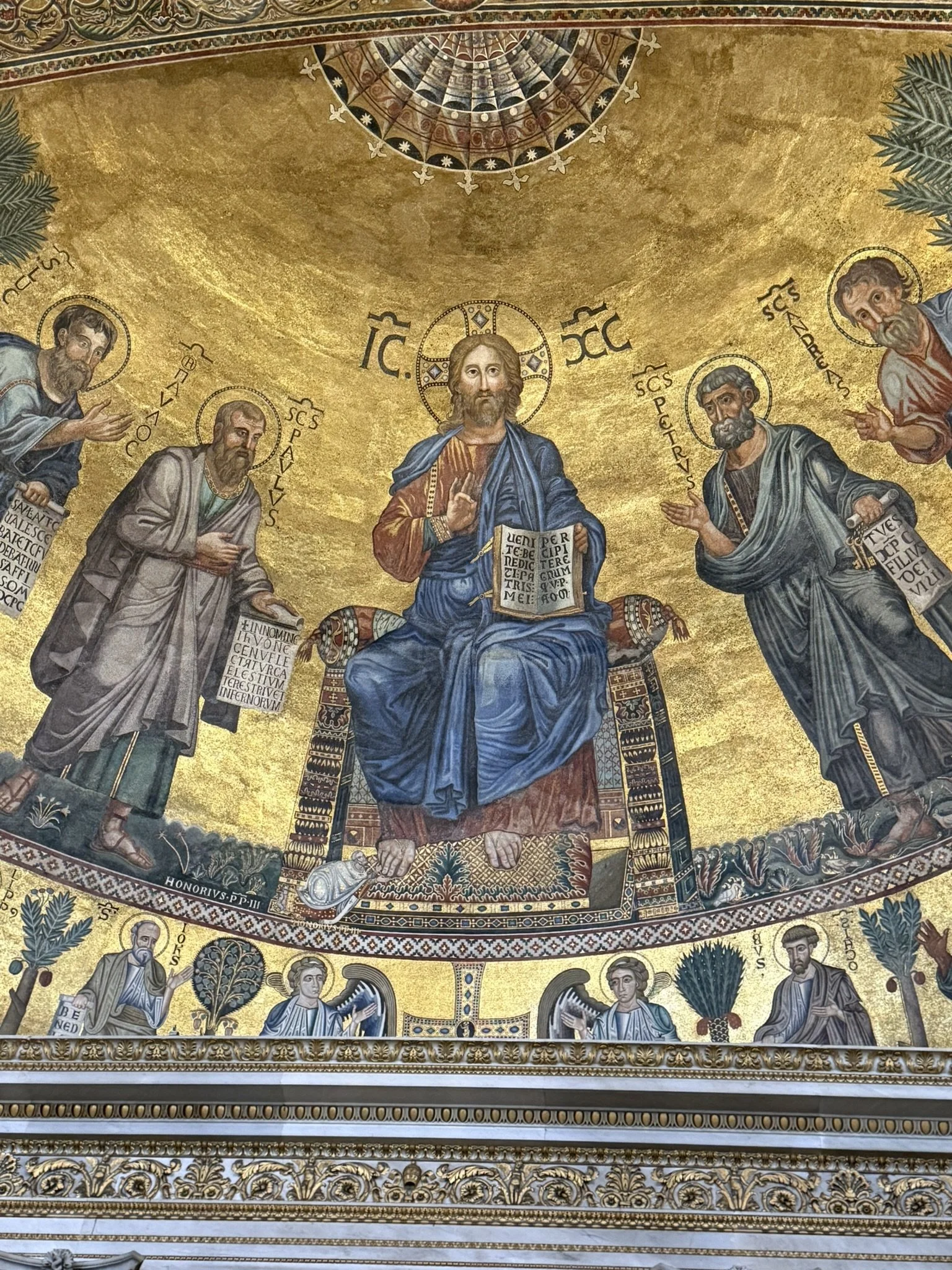
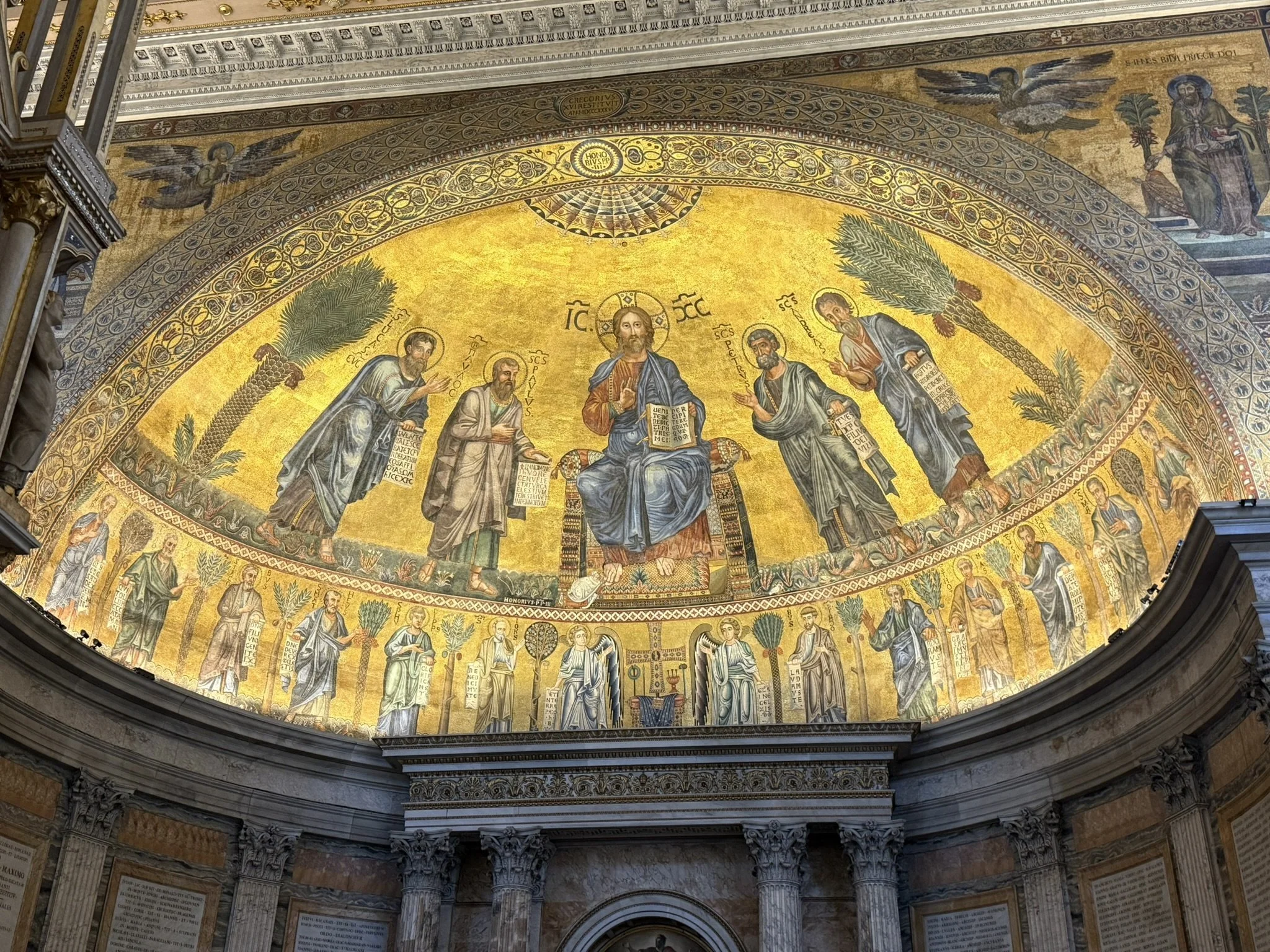
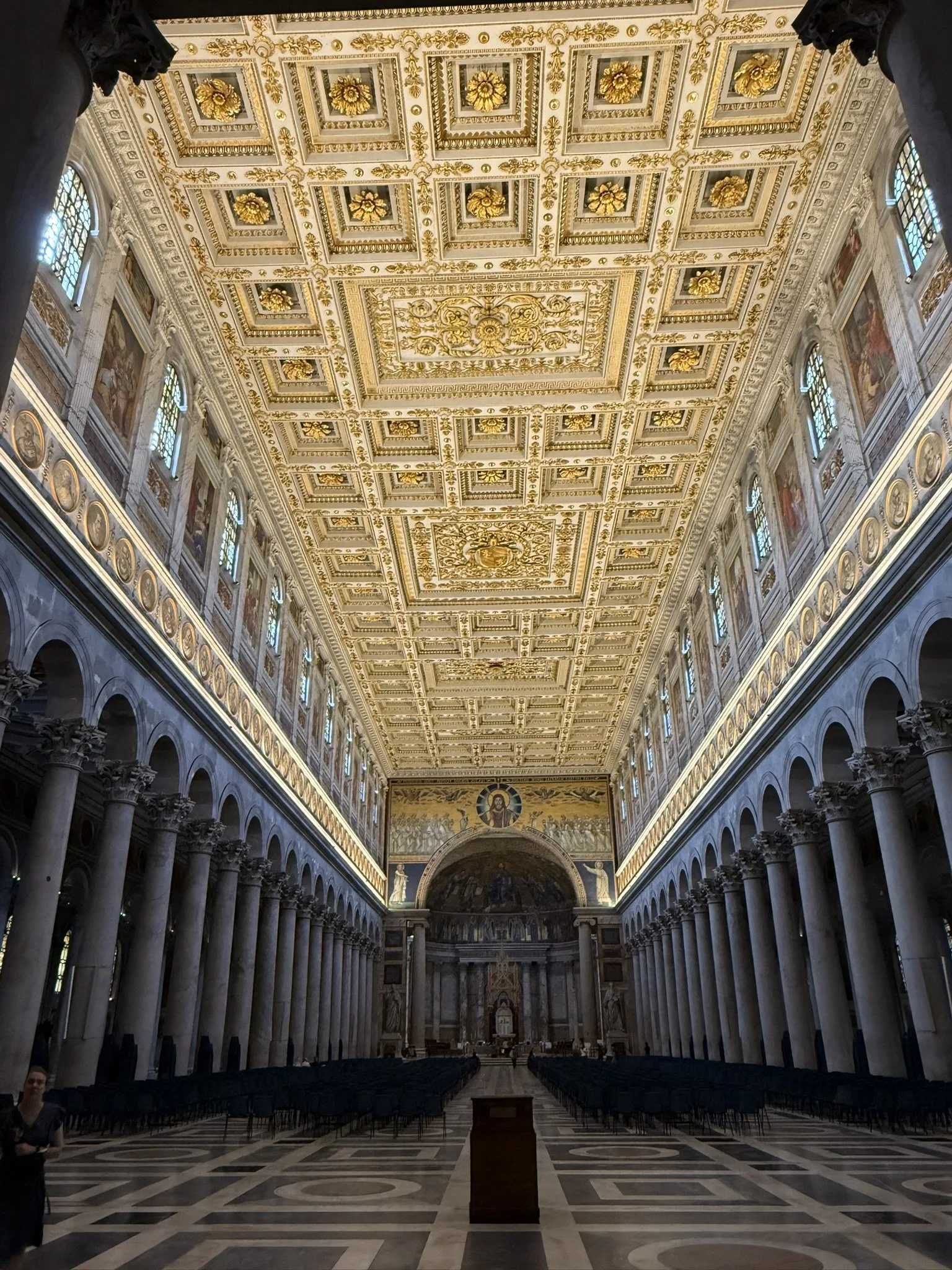
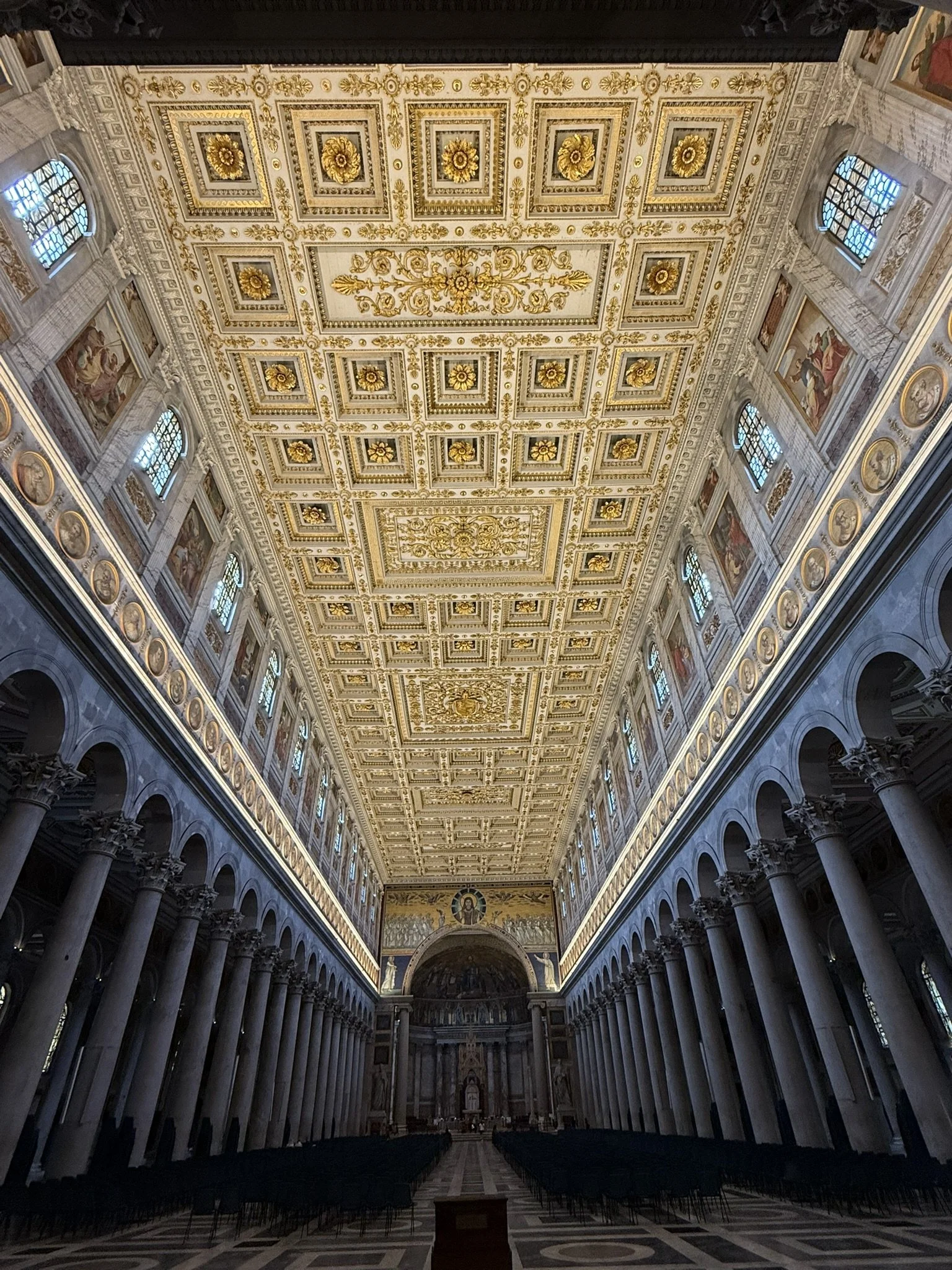
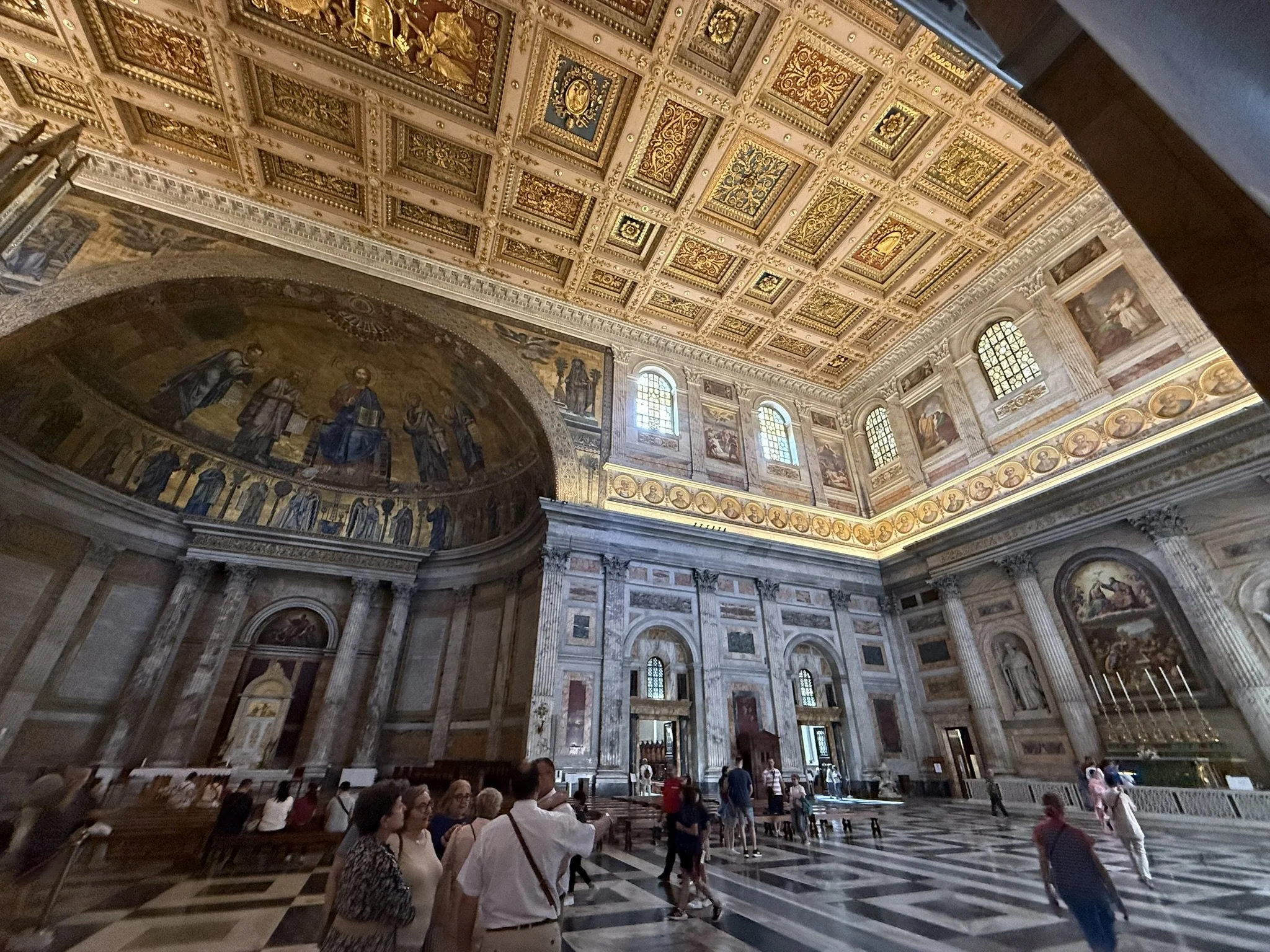
The apse and cathedra are wonderful, too. My wife also pointed out that St. Paul’s has elements from all the other Papal Basilicas. I think she’s right. There are certainly elements of the other three found in St. Paul’s, and you definitely feel that there are some specific architectural and artistic homages. Unfortunately, I lack the artistic knowledge to put it into words and identify specifically how.
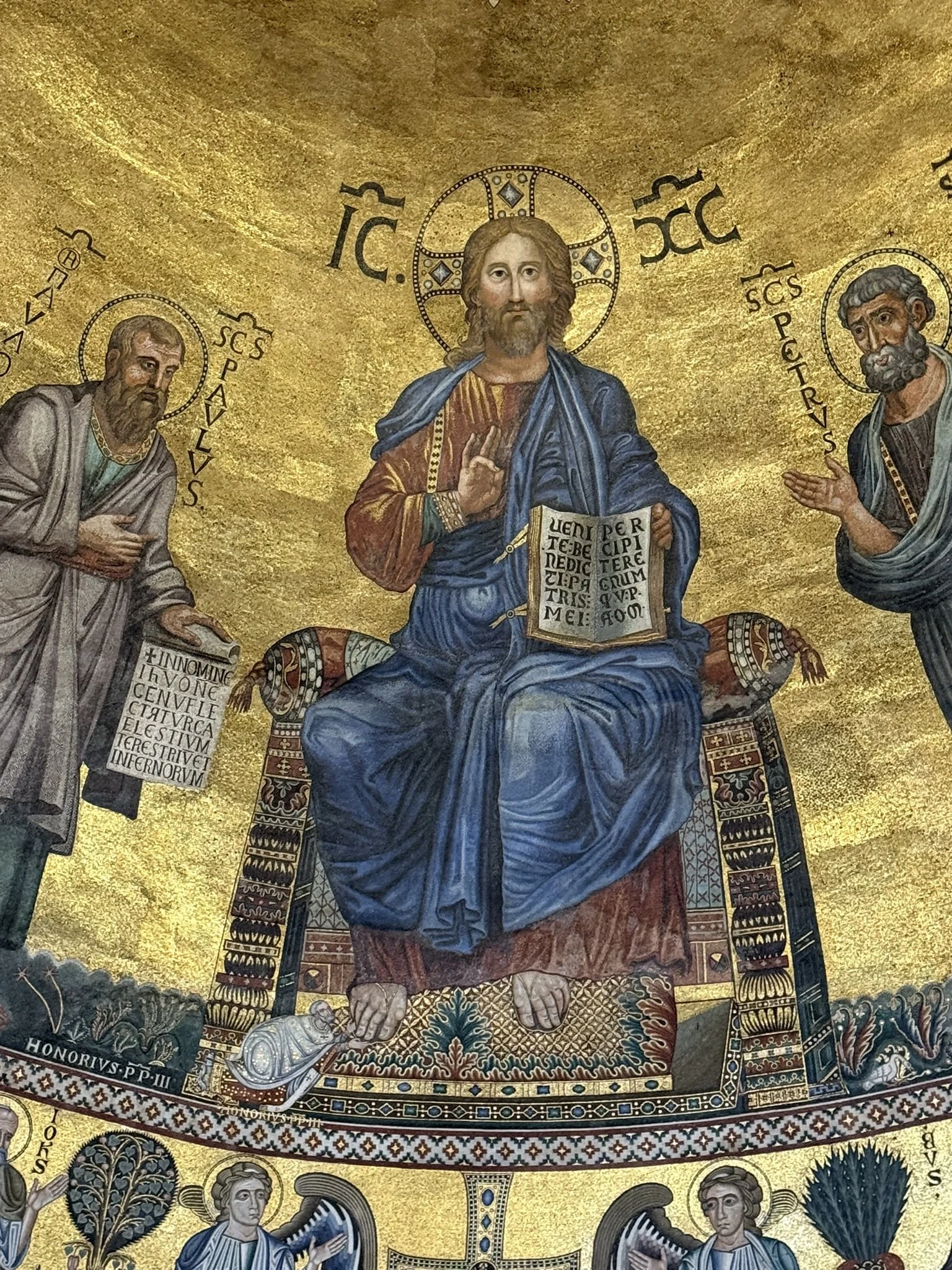
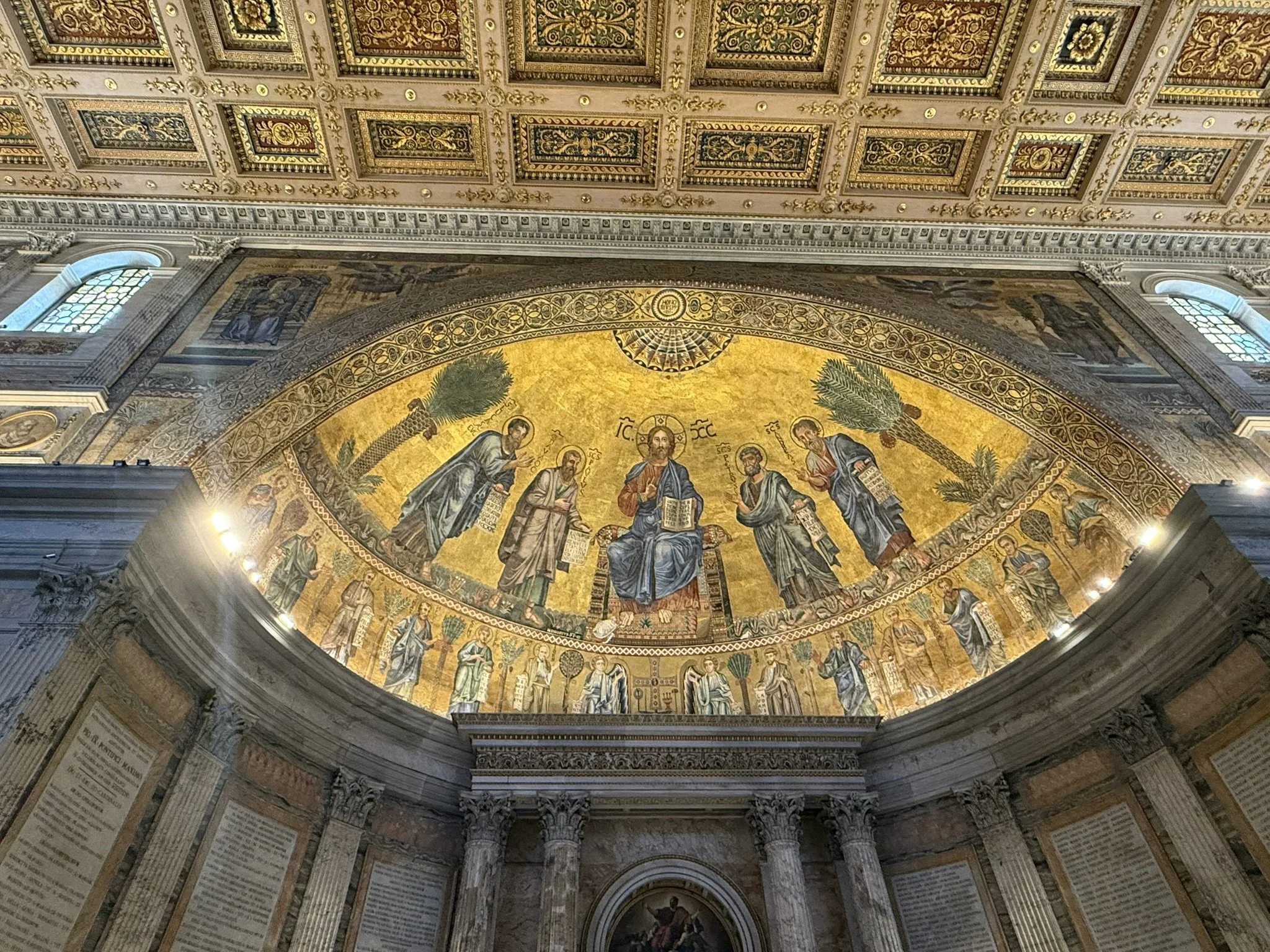
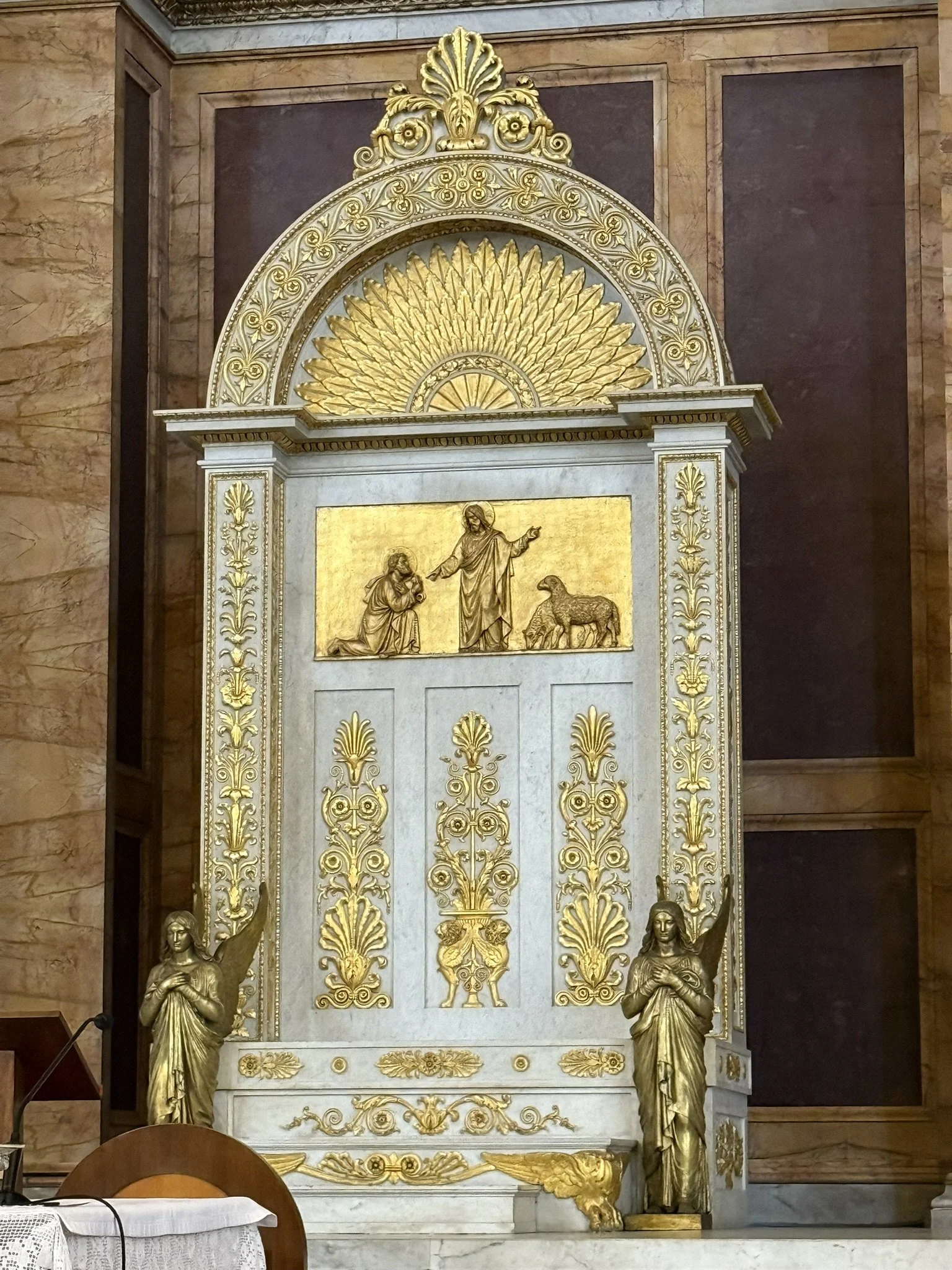
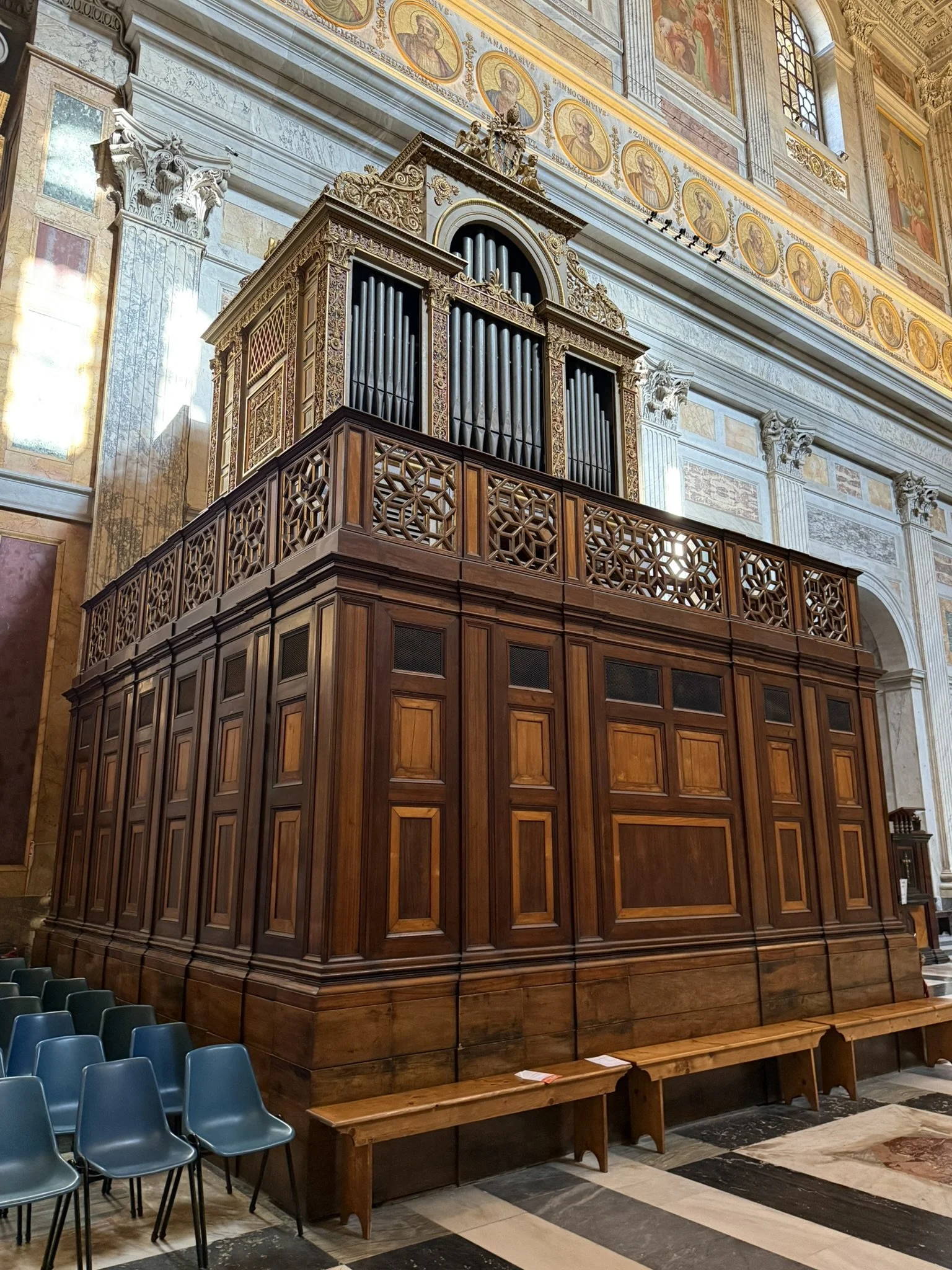
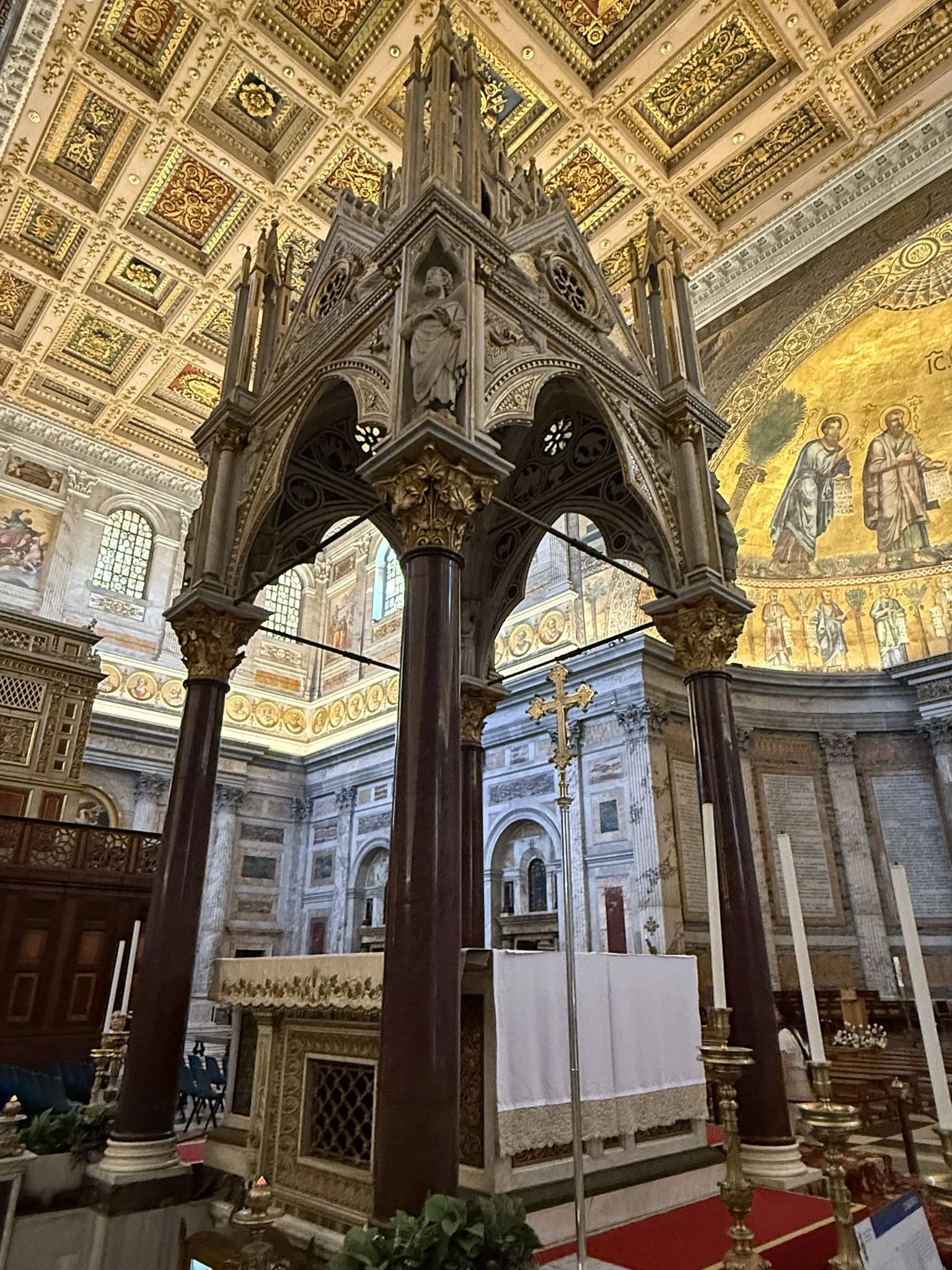
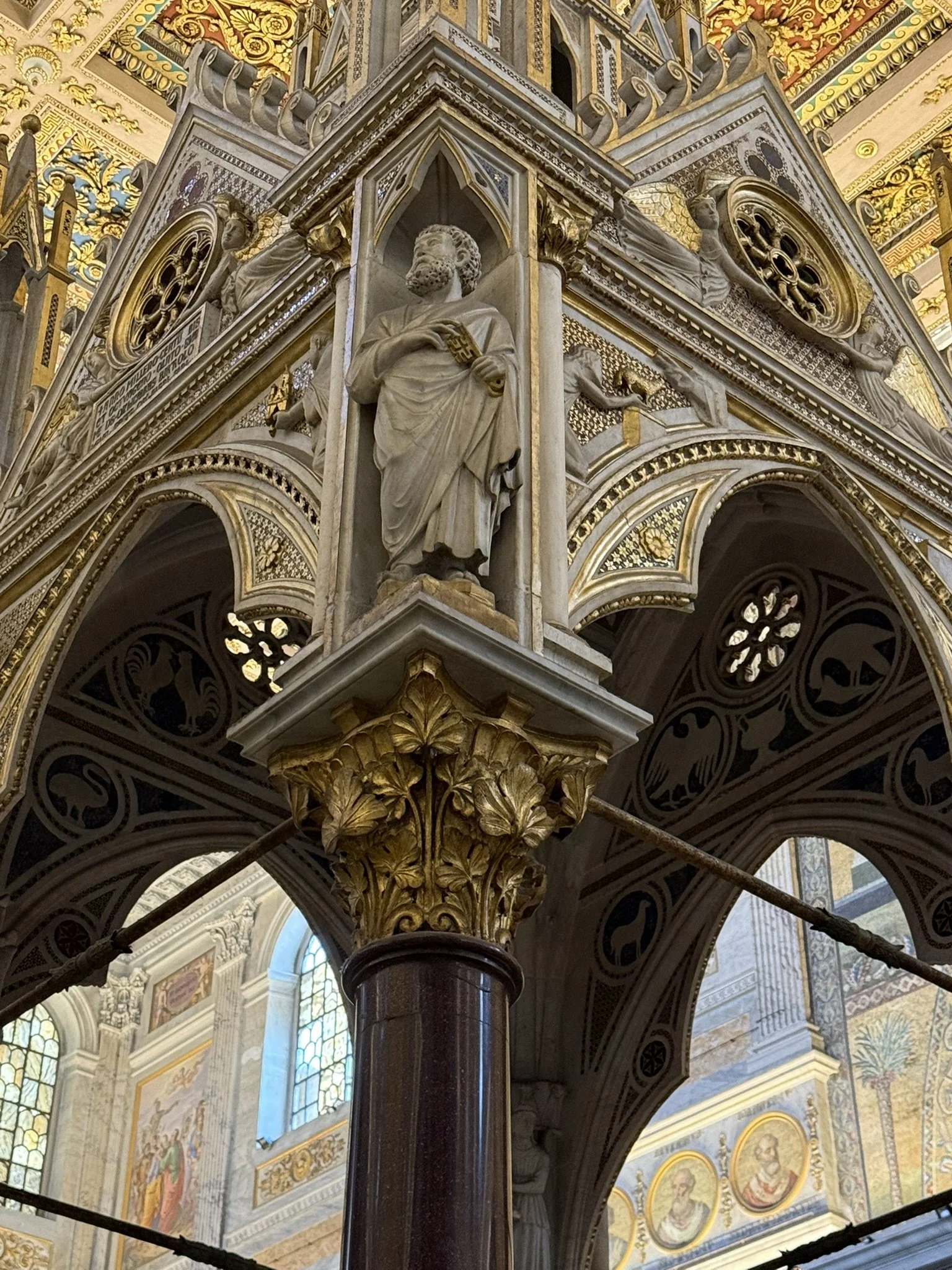
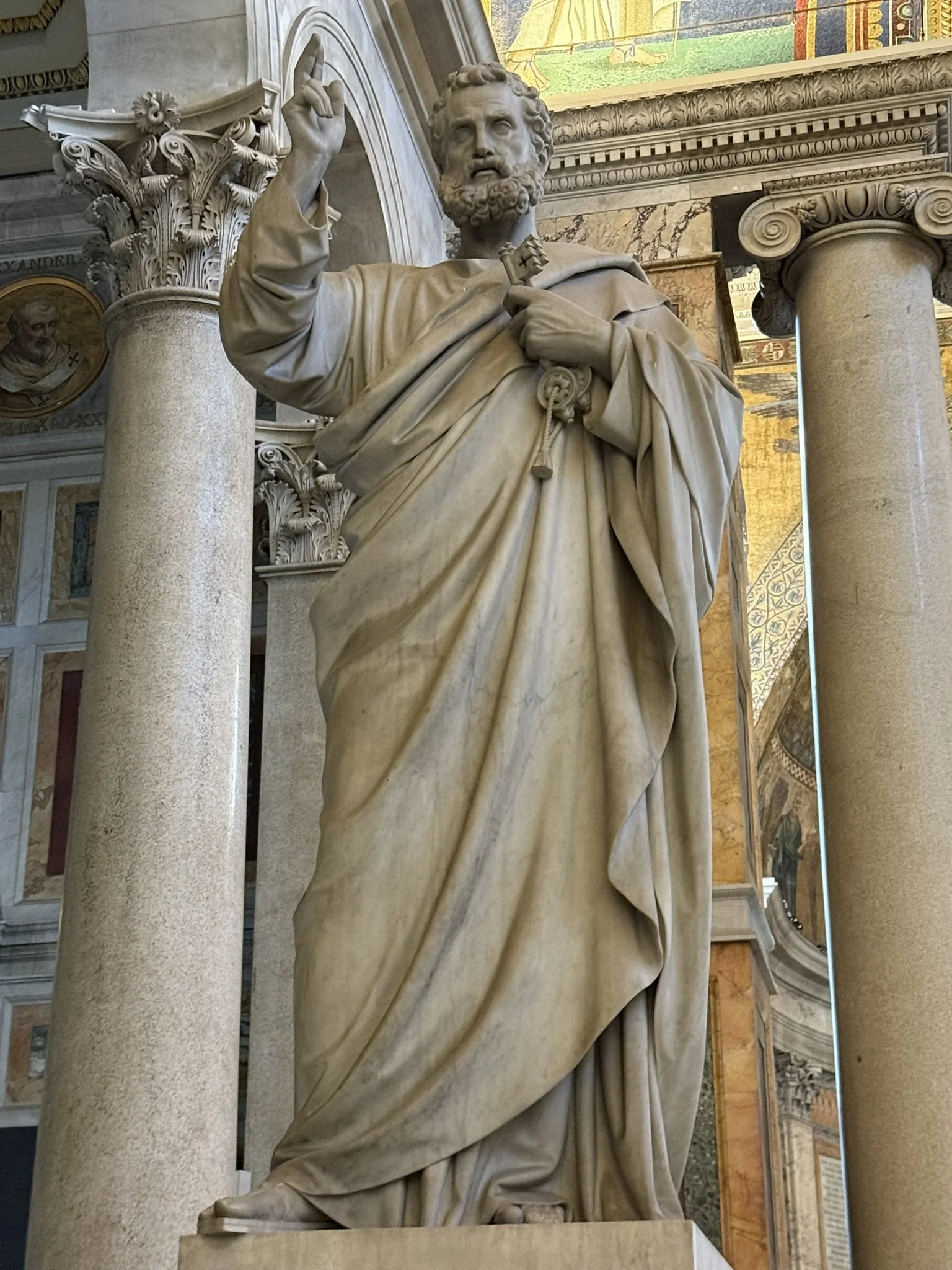
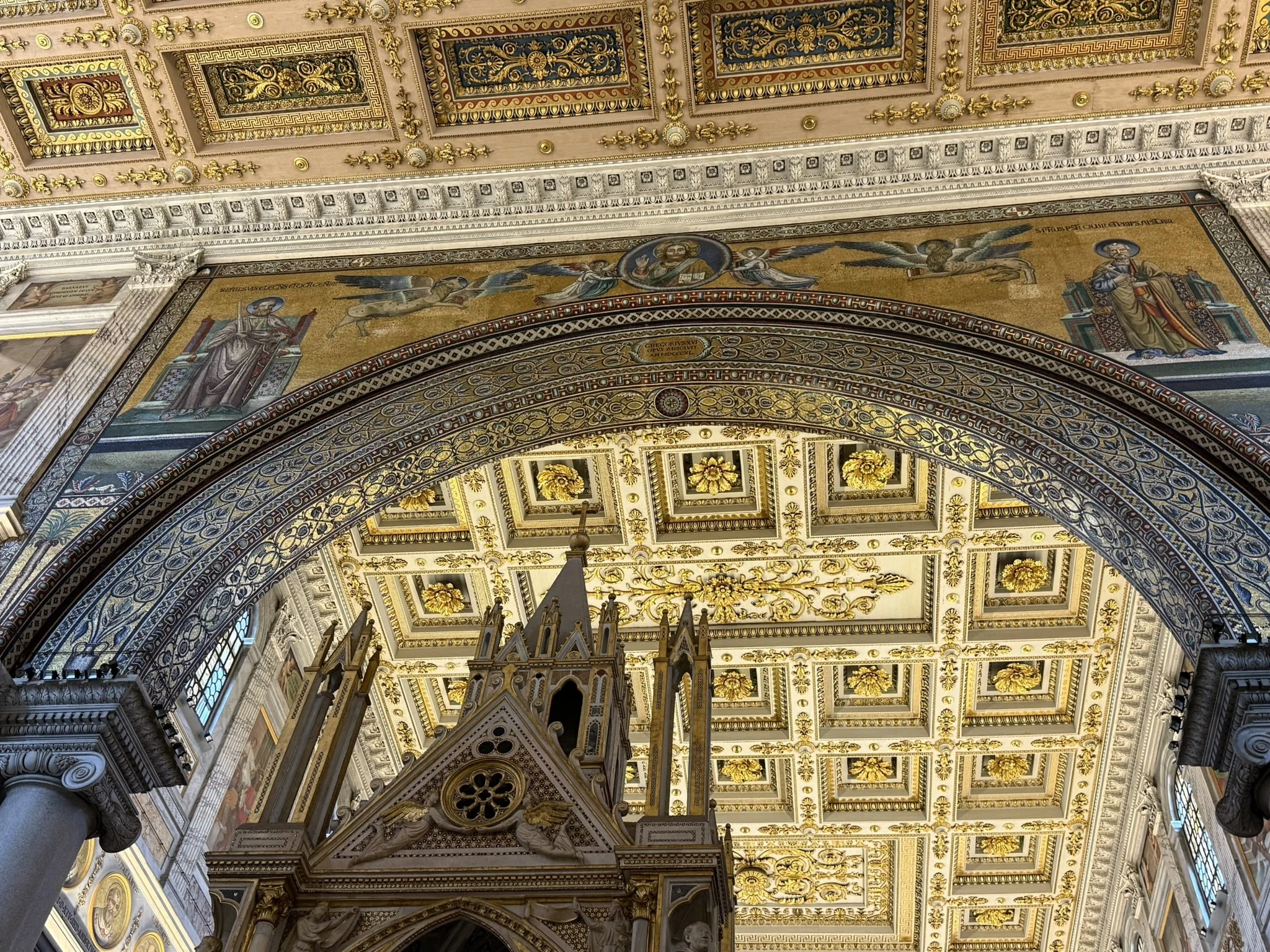
St. Paul’s has a HUGE organ. I am diligently working to get my pastor to purchase one just like this. I’ll keep everyone posted. There’s also a ciborium (sometimes called a baldachin), where I spotted a statue of St. Peter (and since he’s my Confirmation saint, I had to take a photo). The ciborium is not what we usually think of. When talking about liturgical architecture, it refers to the canopy above the high altar, and is made to invoke the same idea of a ciborium (and a ciborium is meant to invoke the same idea as the canopy and high altar). It is similar, too, to the idea of a king sitting underneath a canopy. It functioned as a way to identify an important person, as well to conceal them if needed. It sets the area apart, since the altar is the holiest place within a church. Sometimes I call it a ciborium, and sometimes I call it a baldachin. Let us not quarrel over words.
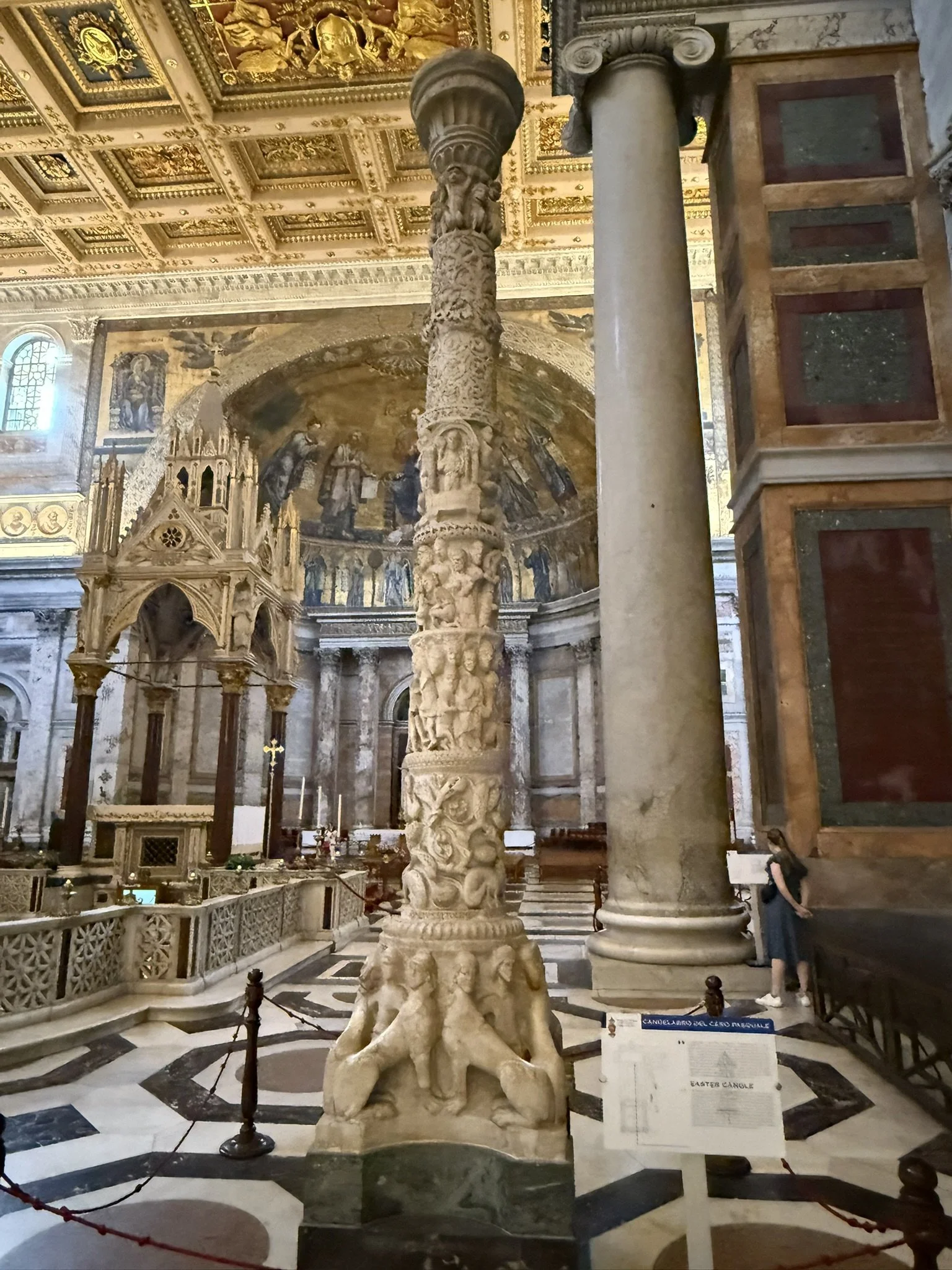
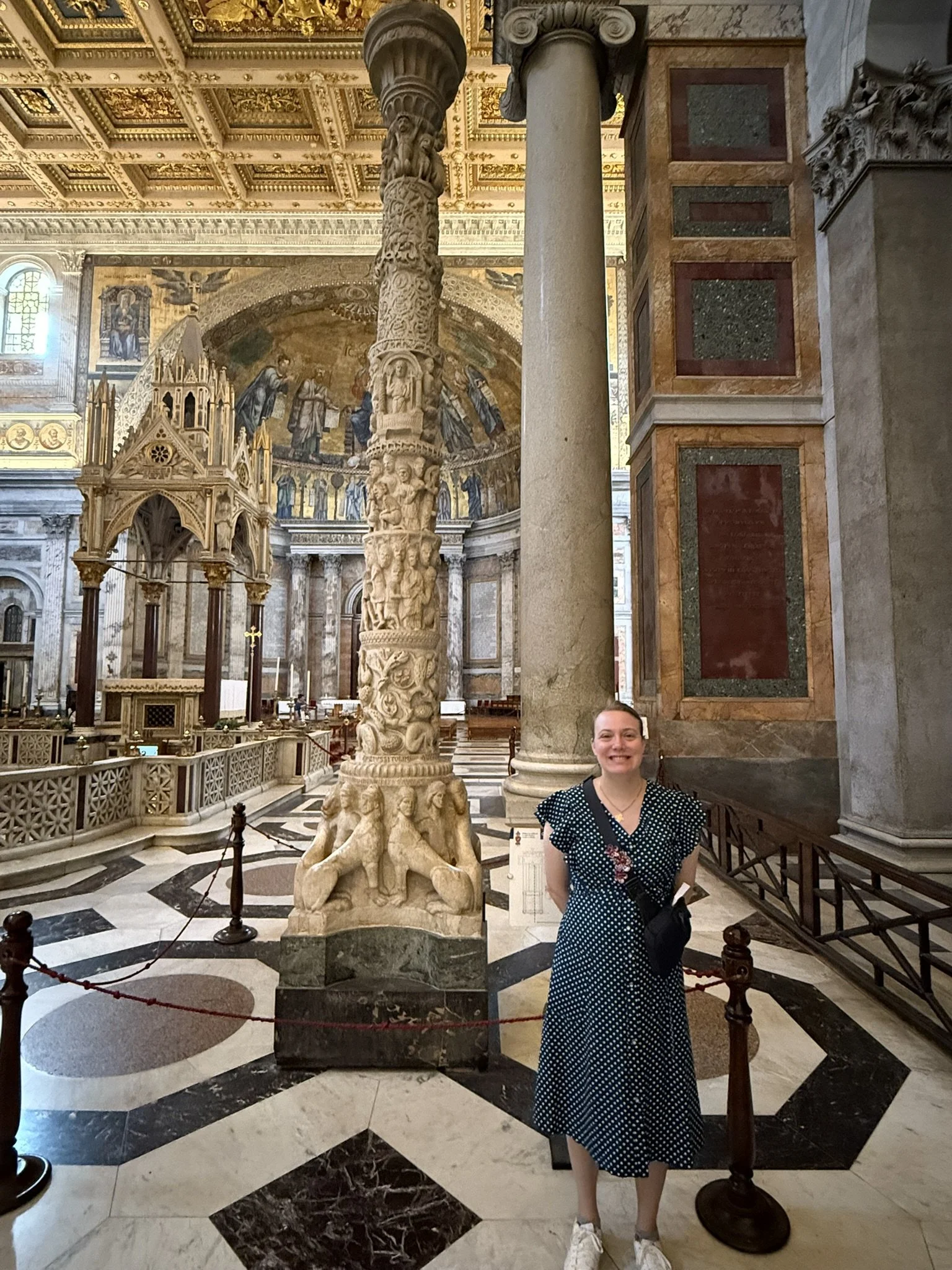
Another purchase I’m trying to convince my pastor to make is this Easter Candle. In the second picture of it, my wife is standing alongside for scale.
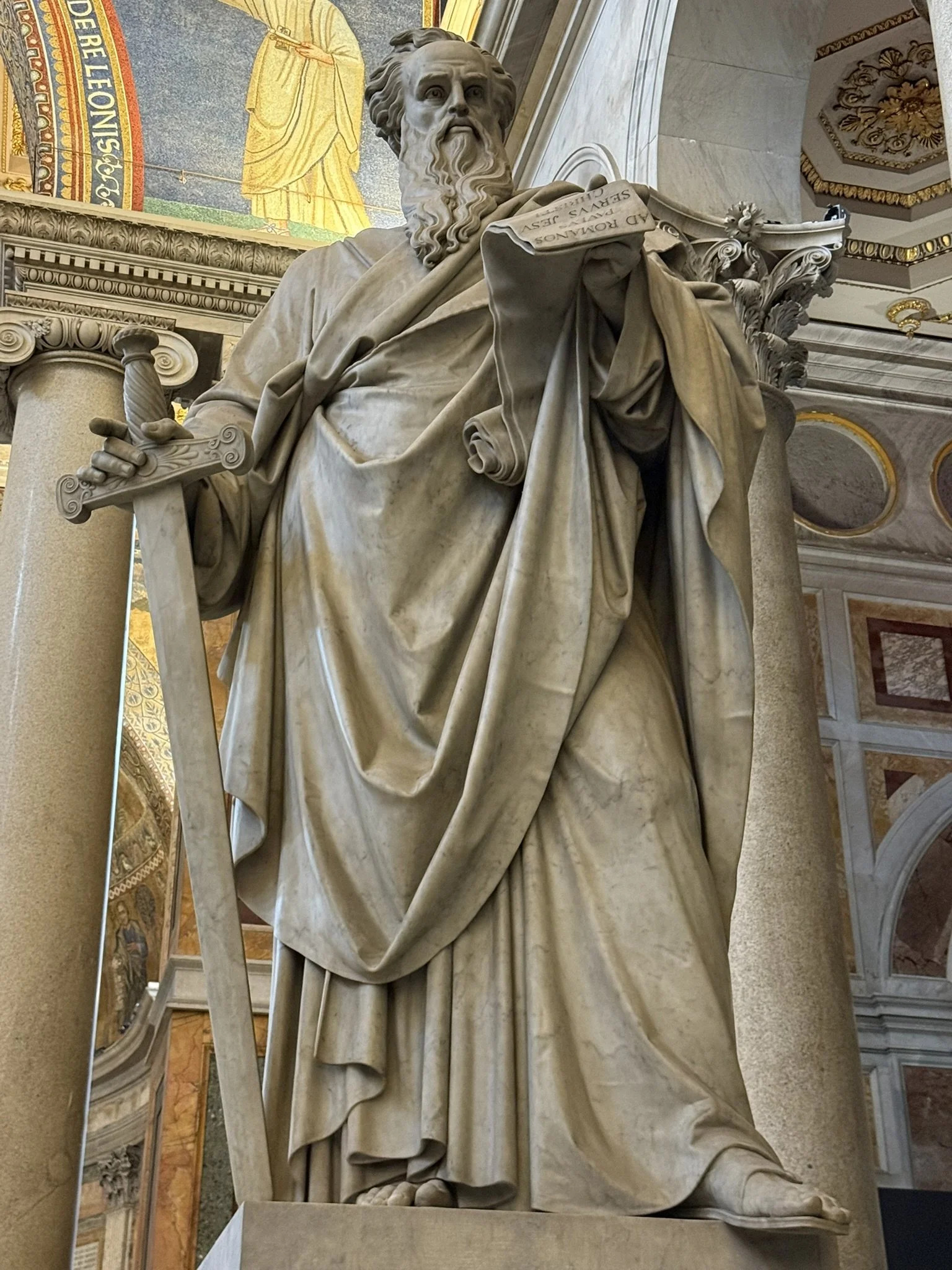
I also took as many pictures of parallel images of St. Peter and St. Paul as I could. These two spiritual brothers, while sometimes at odds with each other, still worked together for Christ, found themselves in Rome, and ultimately each suffered for their faith.
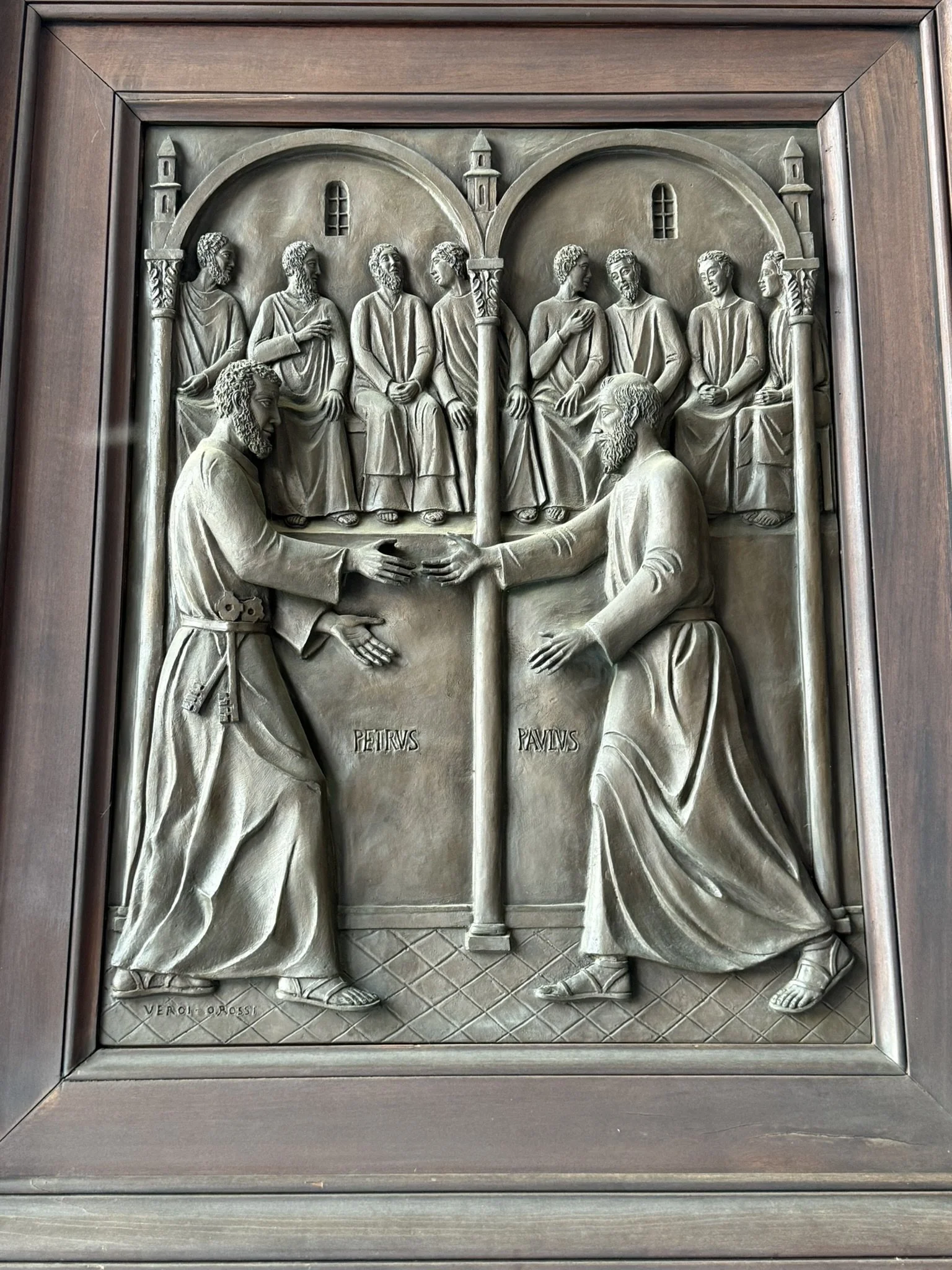
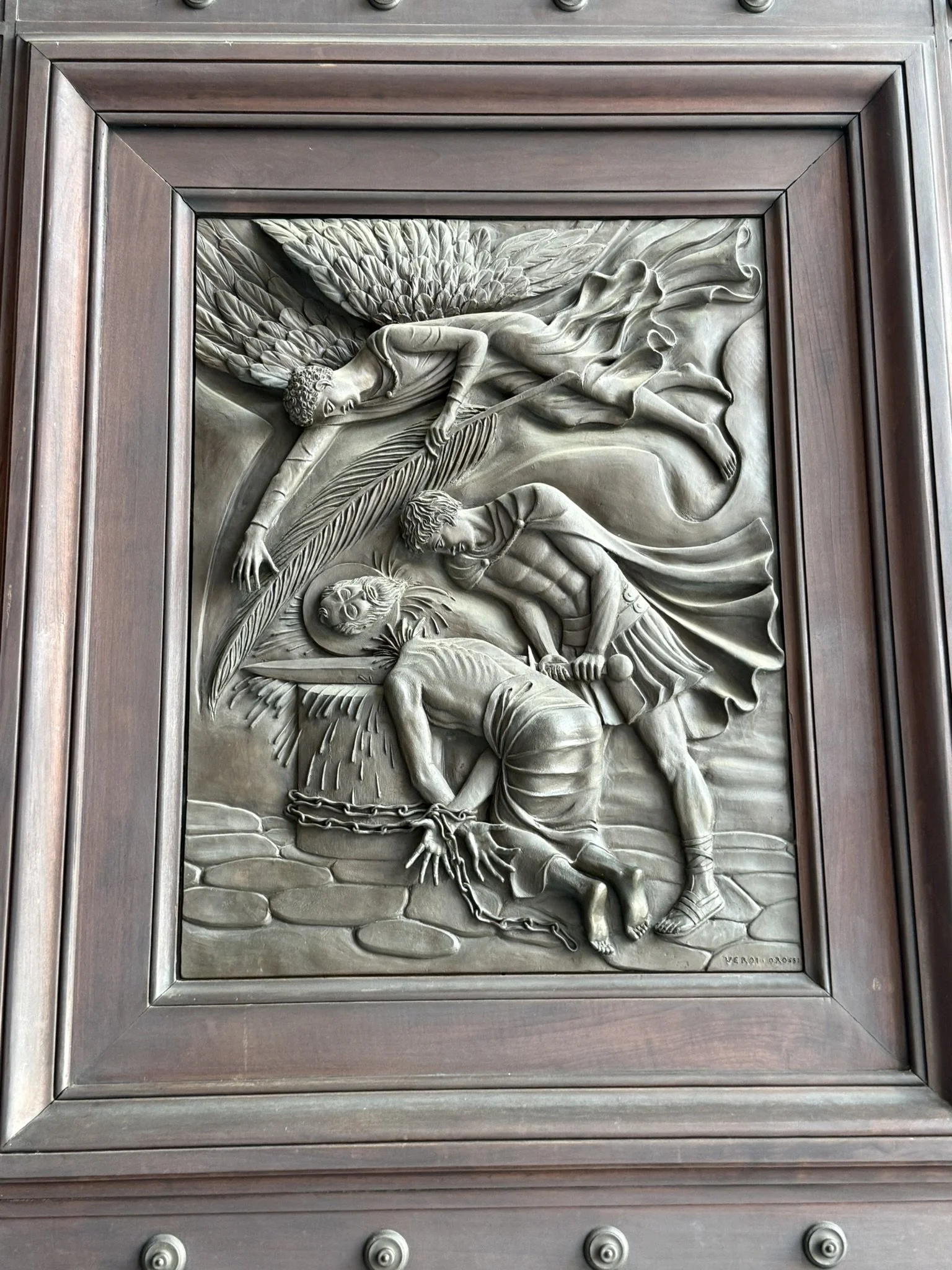
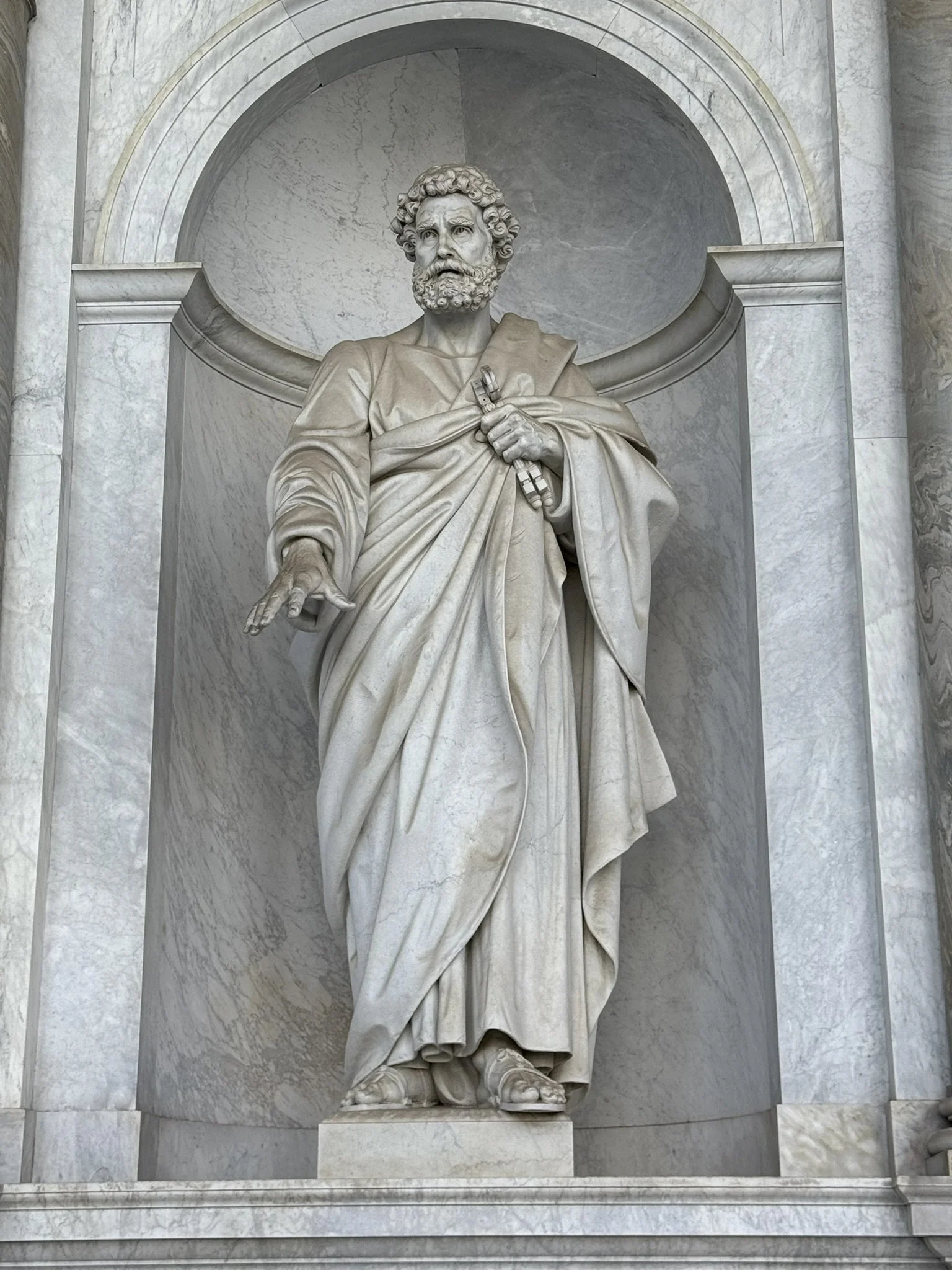
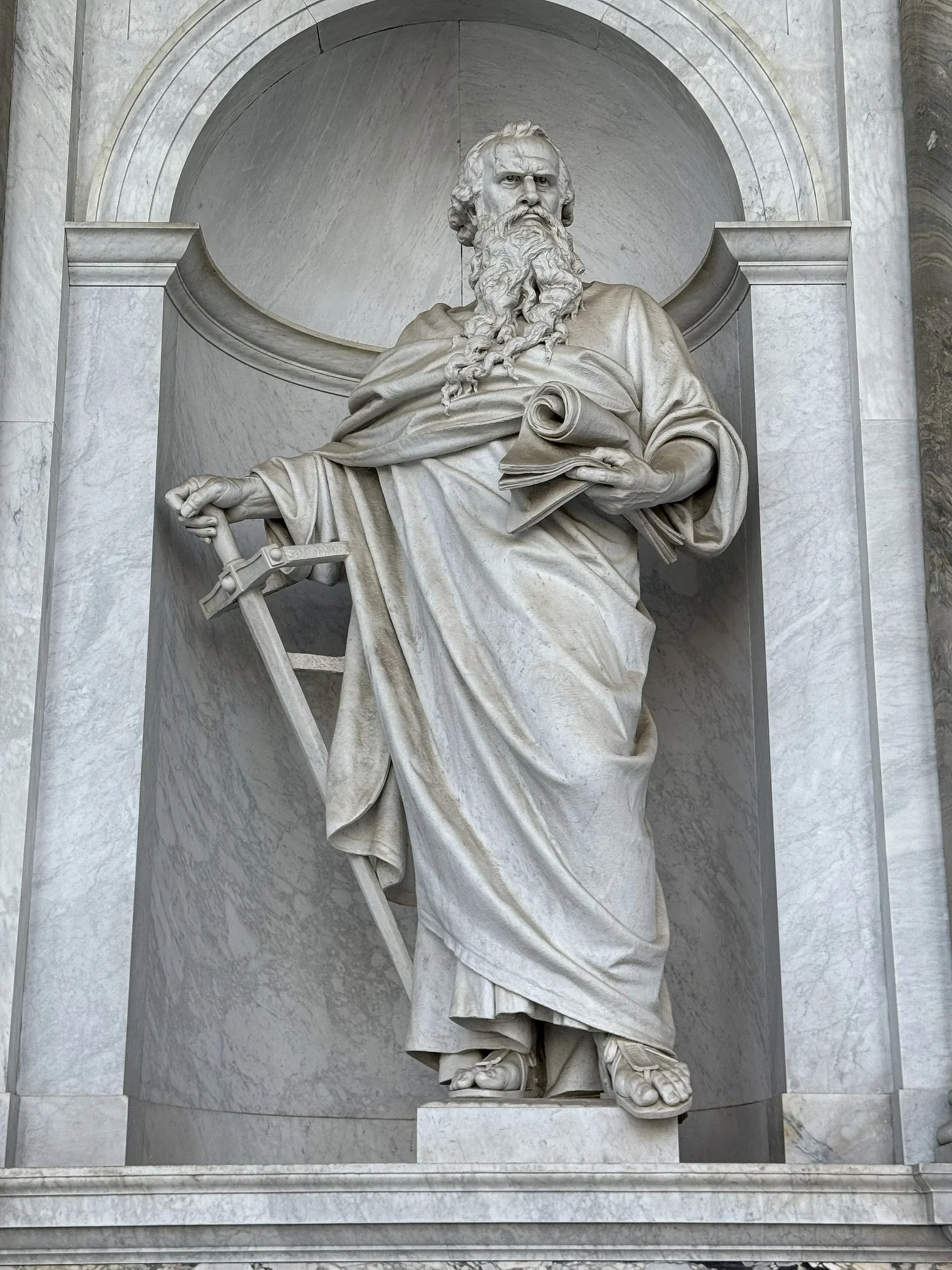
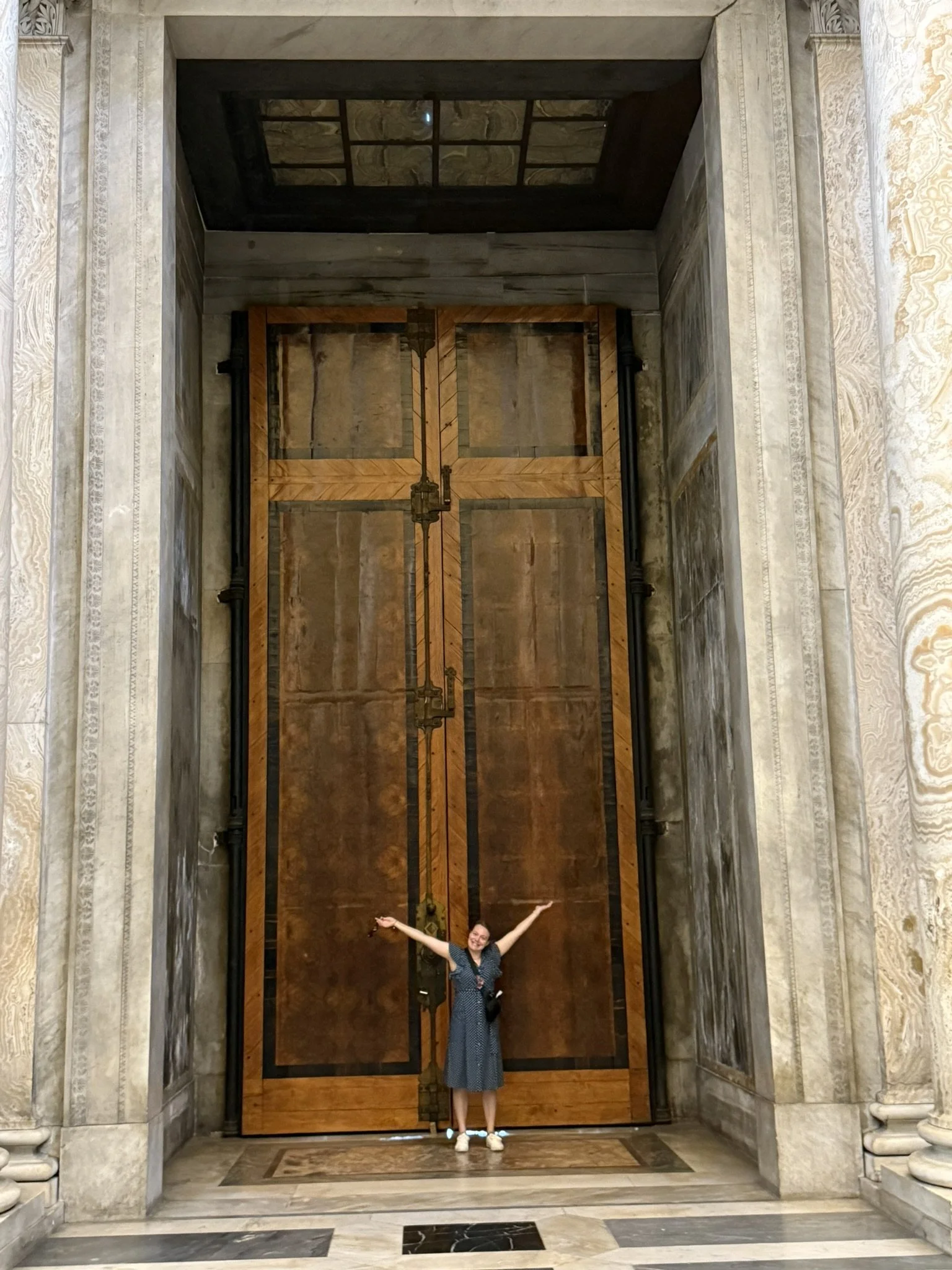
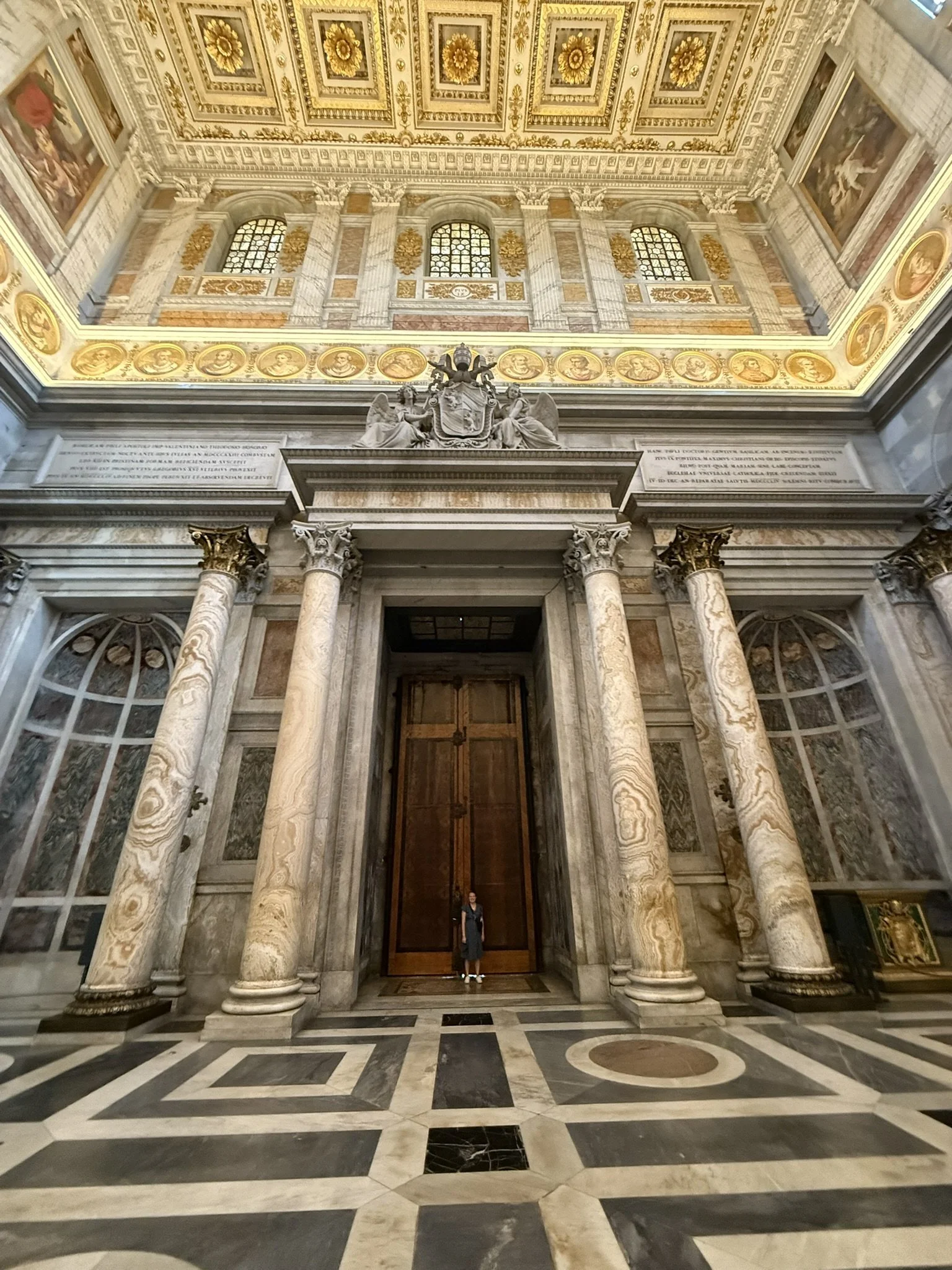
I cannot adequately express the scale of the Papal Basilicas. It would be odd to carry around a banana, so my wife will have to continue to do for purposes of scale. The Triumphal Arch depicts Revelation 4, which shows the 24 Elders casting their crowns before the Lord, with the four living creatures (often identified with the four Gospel writers). At the bottom of the arch are, of course, Peter and Paul.
A note on St. Paul, St. Stephen, Love, and Forgiveness
St. Paul Outside the Walls is built over St. Paul’s tomb. The basilica itself is a testament to love: love for Christ (his martyrdom), love for the Church (the chains show his ongoing persecution for the Church), and love for his neighbor (Paul went to all ends of the earth, and ended up in the center of that world).
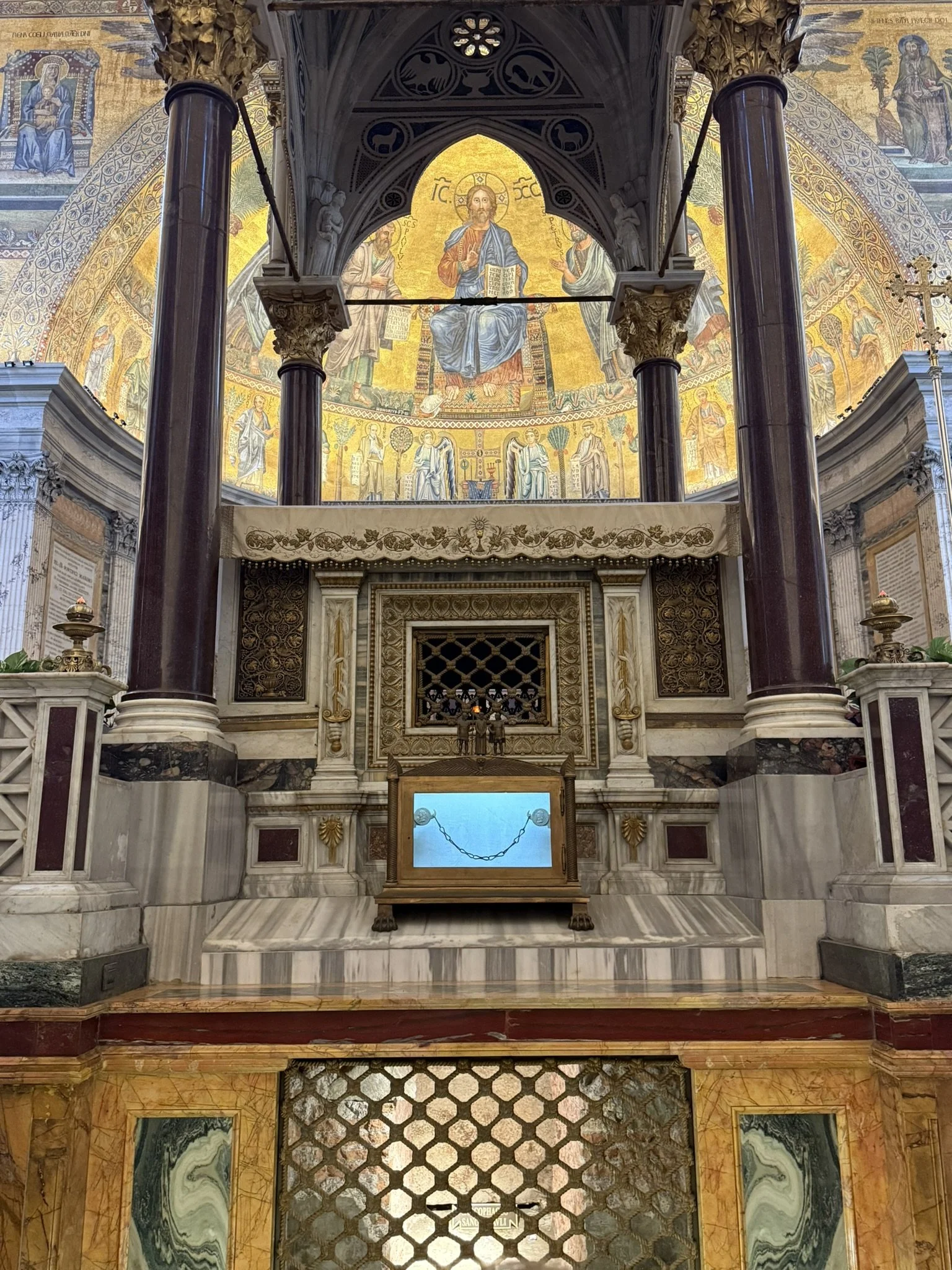
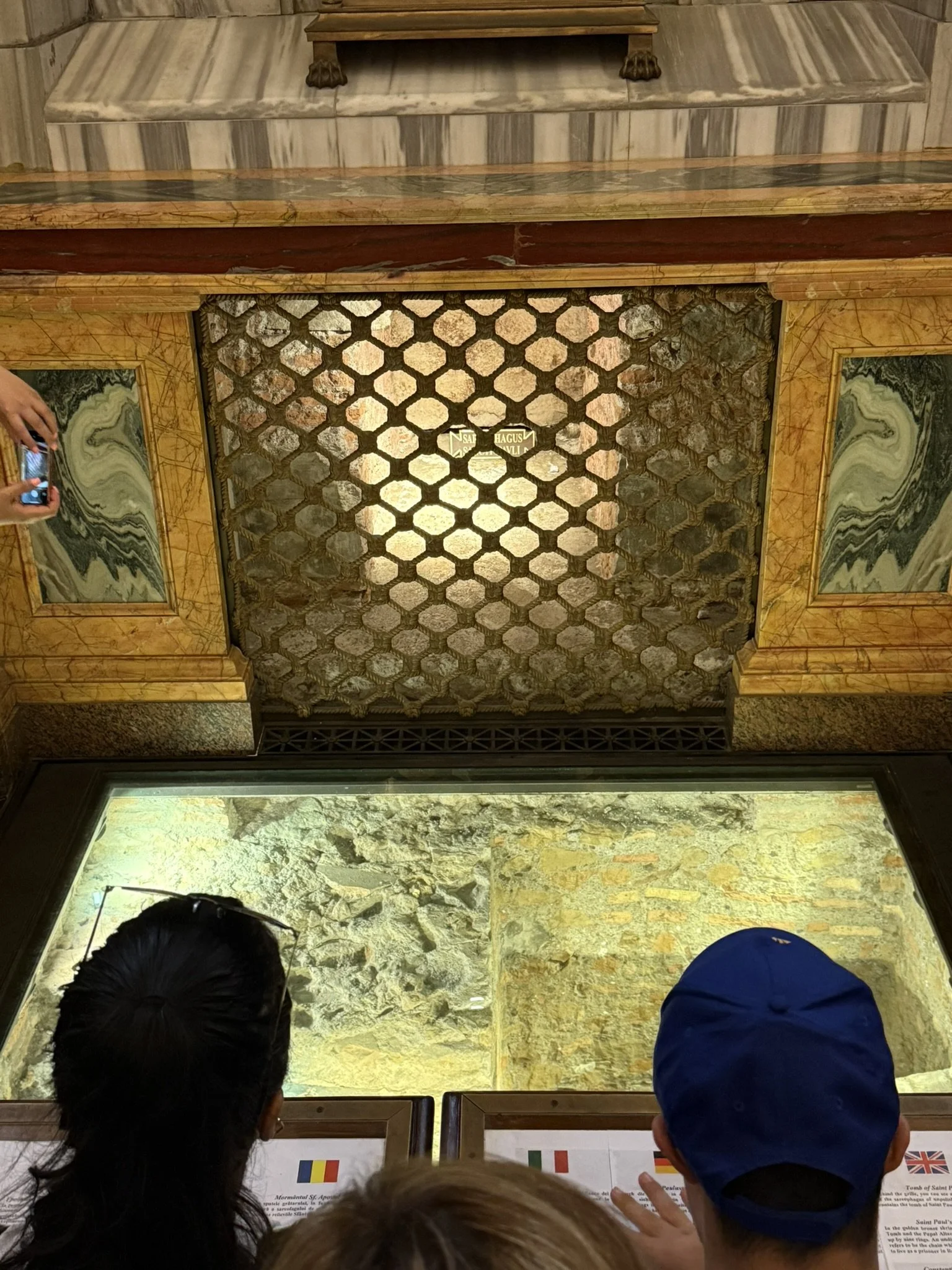
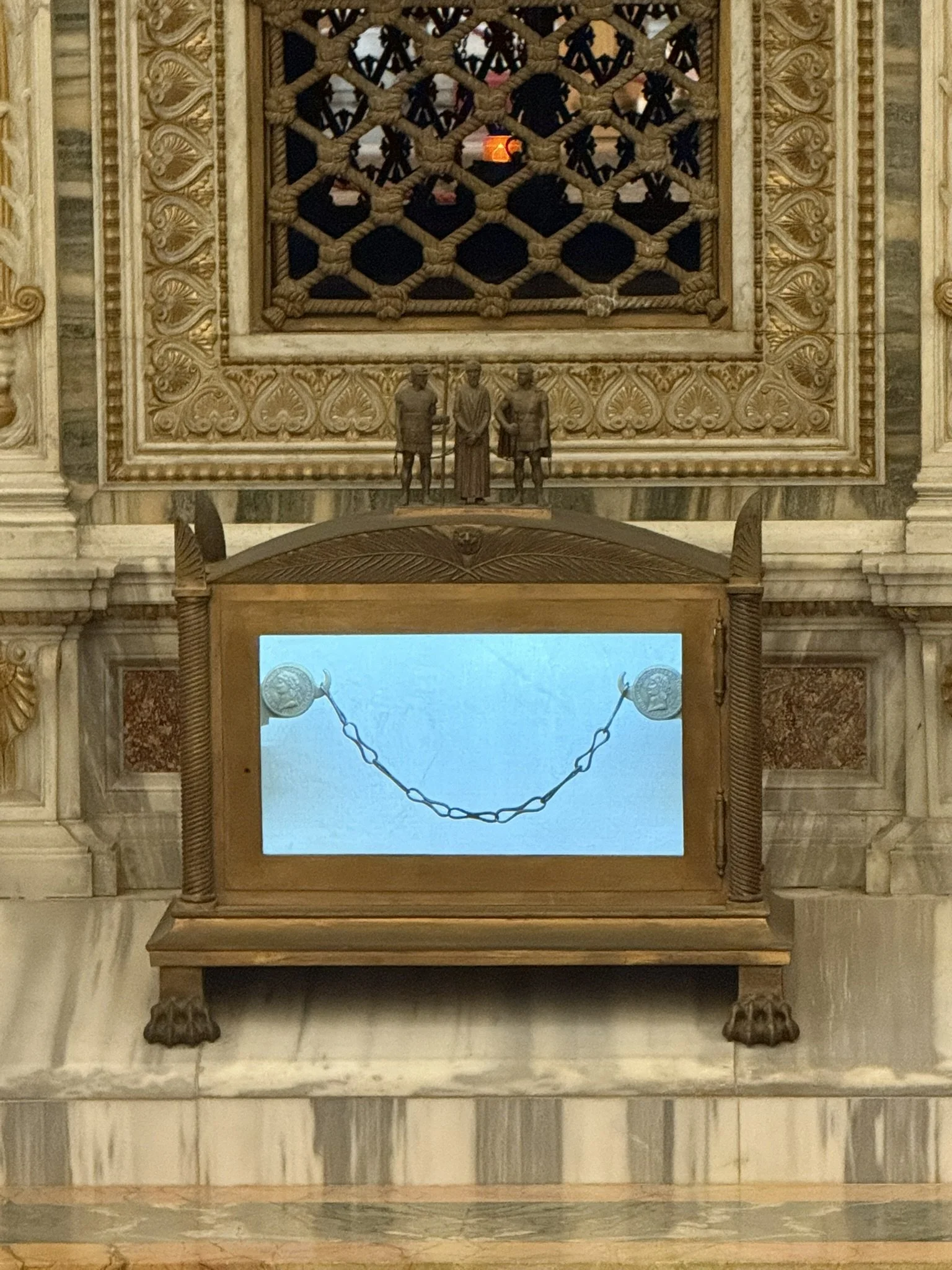
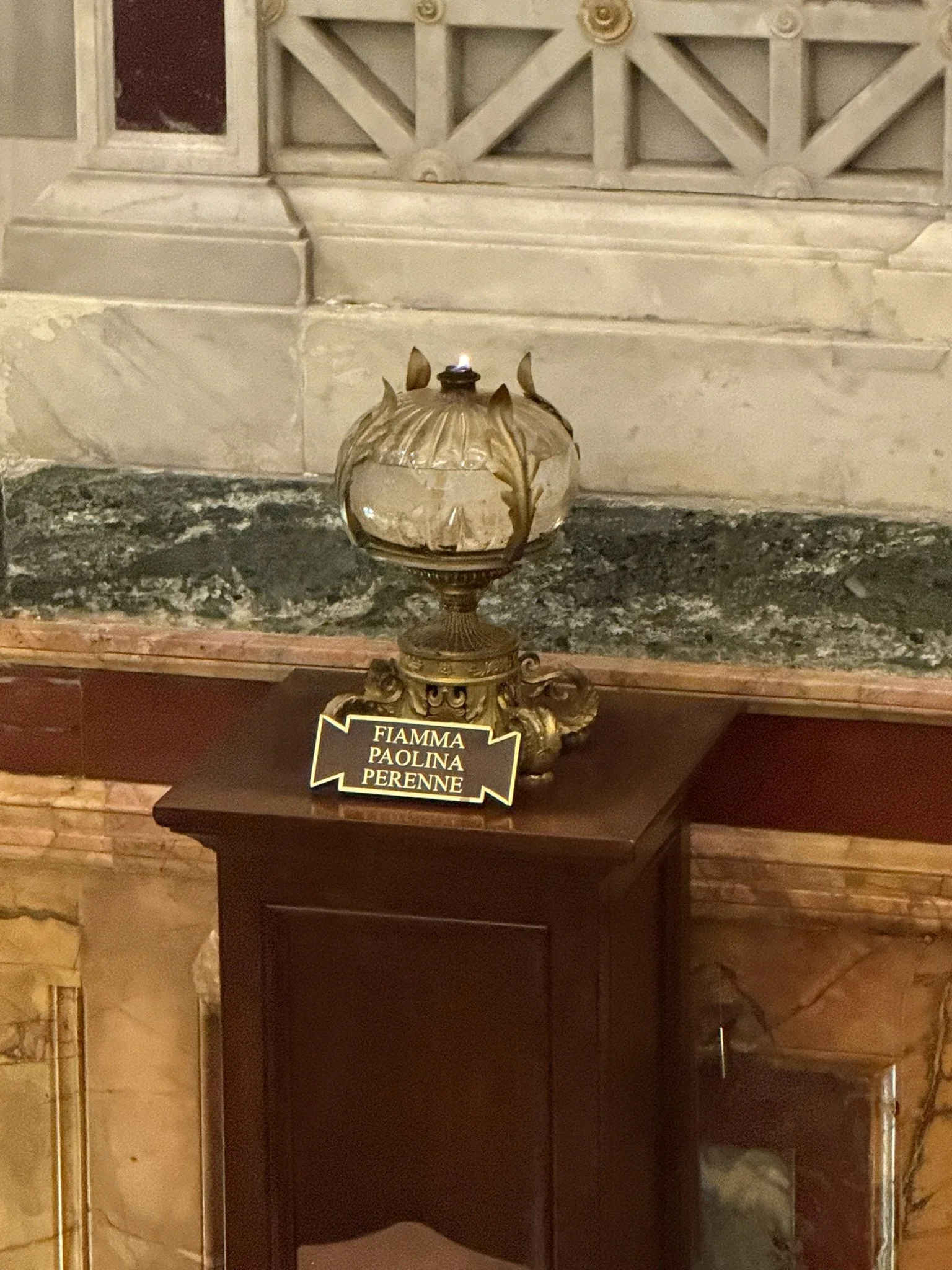
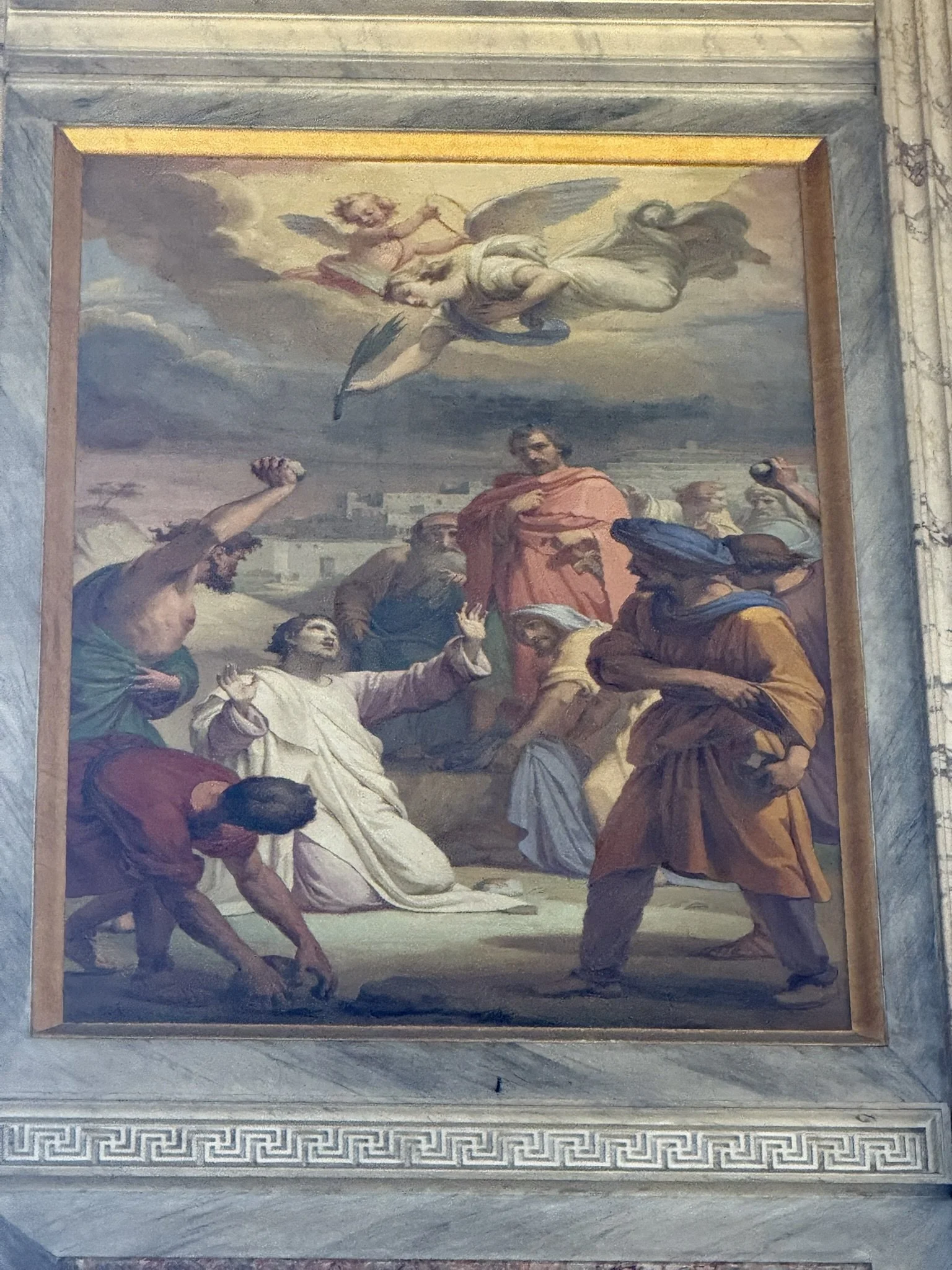
Notably, Paul was entombed for a while right beside St. Stephen (St. Stephen’s remains were moved to Rome. Eventually, Paul’s remains were removed from the tomb seen in the pictured above in St. Paul’s). If you know your Acts, then you know that Paul participated in his death. Stephen’s death is a lesson to all of us, especially in these times when anger and hatred seem to be the sins of the day. While he was being stoned, Stephen showed true forgiveness. He prayed the same words that his Savior prayed on the cross: “Lord, do not hold this sin against them.“ After having tried to save their souls, Stephen did the only thing left within his power: forgiveness. And this wasn’t a “I told you so, but I guess I’ll forgive you,“ nor was it a “I’ll forgive you, because someone else will take their revenge on you.“ Instead, it was a prayer that there would be no consequence from their sin. It was a prayer that they would be free from sin, particularly this sin.
I imagine St. Paul carried this memory with him for the rest of his life. It must have been a complicated feeling for him. On the one hand, it directly led to his conversion. On the other, he played a part in harming Christ and help kill many for the Faith he would later adopt himself.
There is important symbolism in the fact that Paul and Stephen’s tombs were beside each other for so many years, and that St. Stephen has a chapel in St. Paul’s. I believe St. Stephen would want it that way. He truly prayed for the conversion and salvation of those who murdered him. I think he would celebrate the fact that his death helped lead Paul to conversion, which resulted in the spread of the Gospel beyond what St. Stephen could have ever dreamed. I imagine that Paul would feel honored that his tomb was placed near St. Stephen’s. And I imagine that one of the first people to greet Paul upon his death was Stephen. I pray you and I may have that same level of love and forgiveness for others.
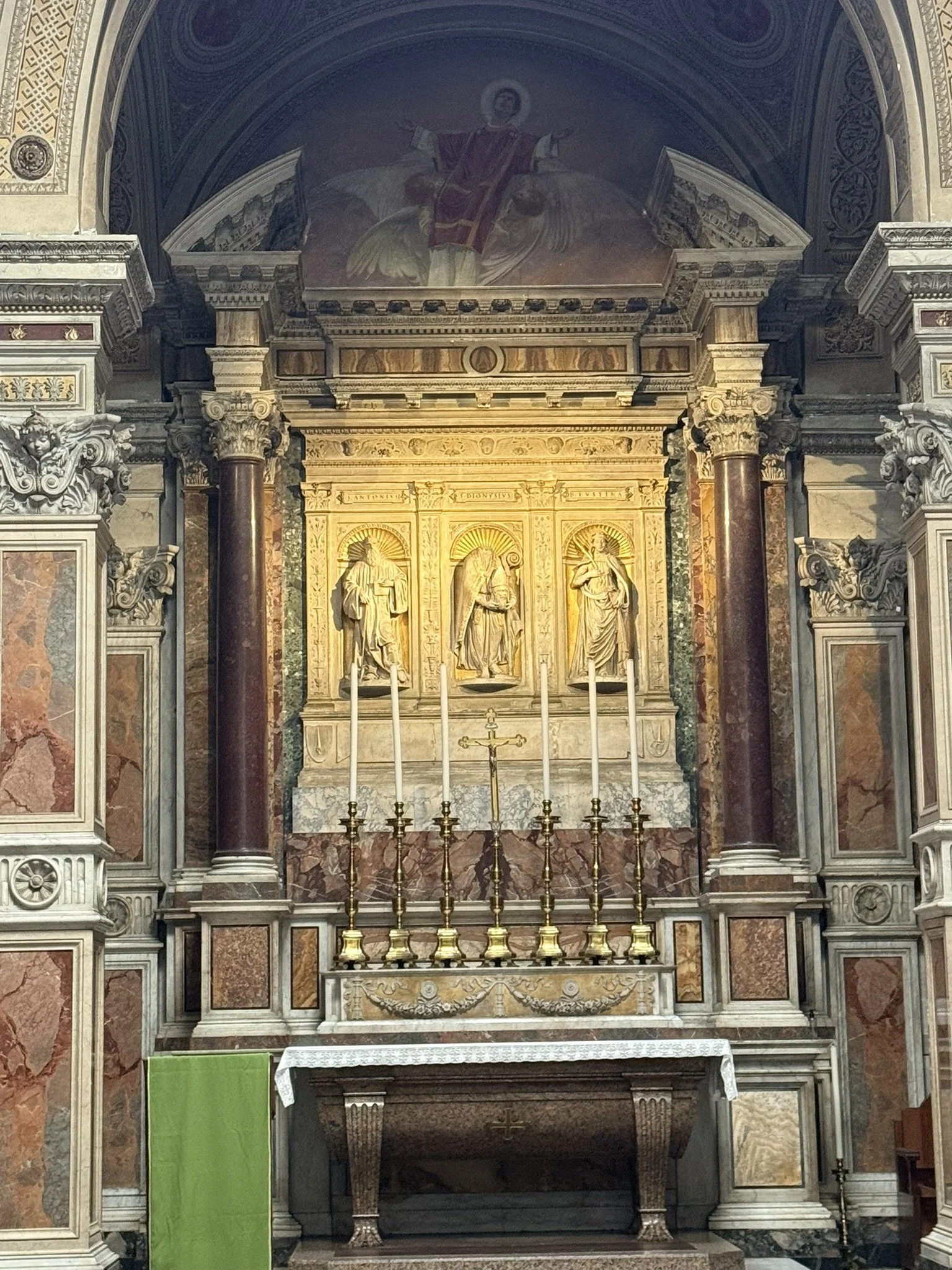
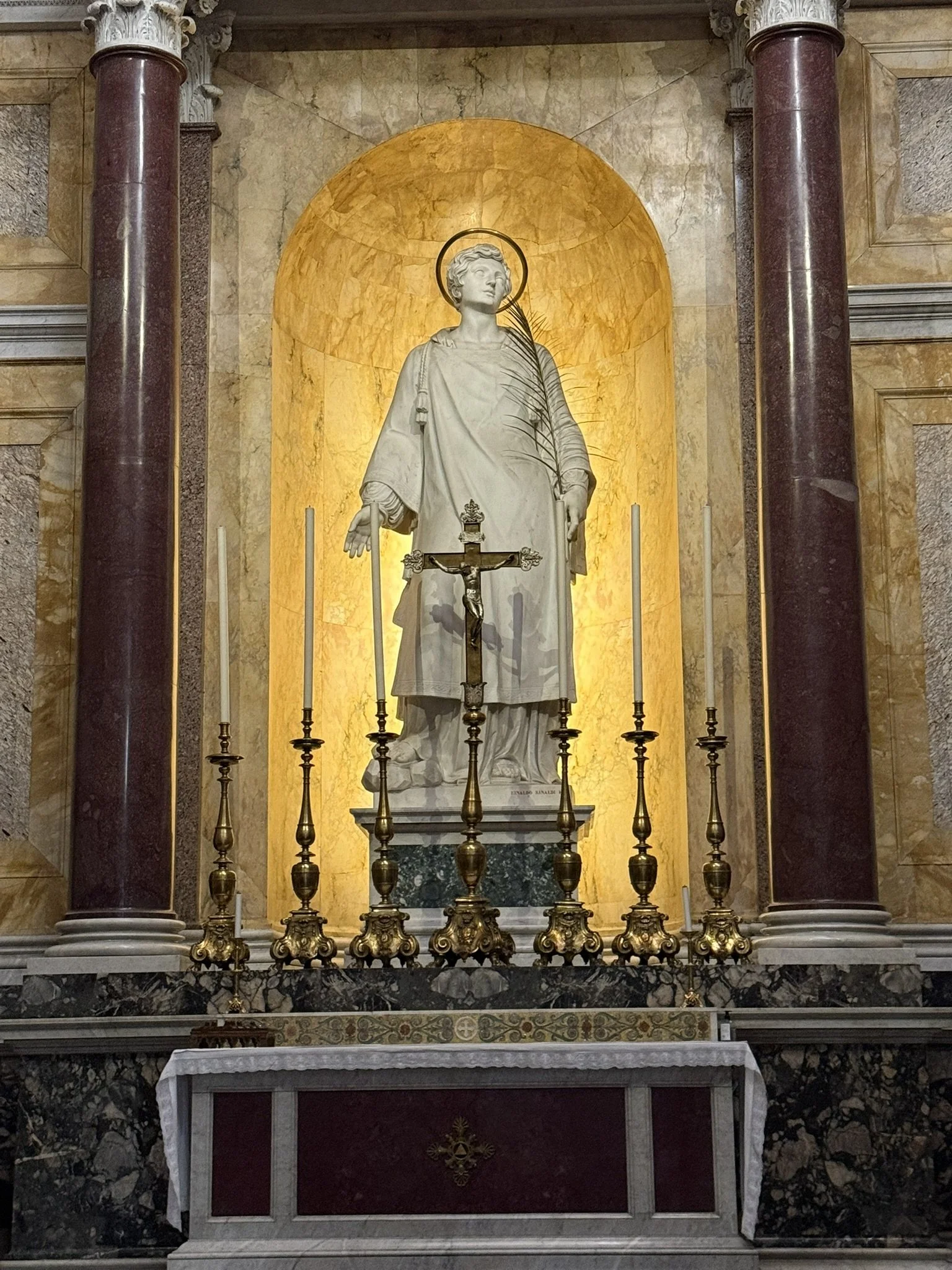
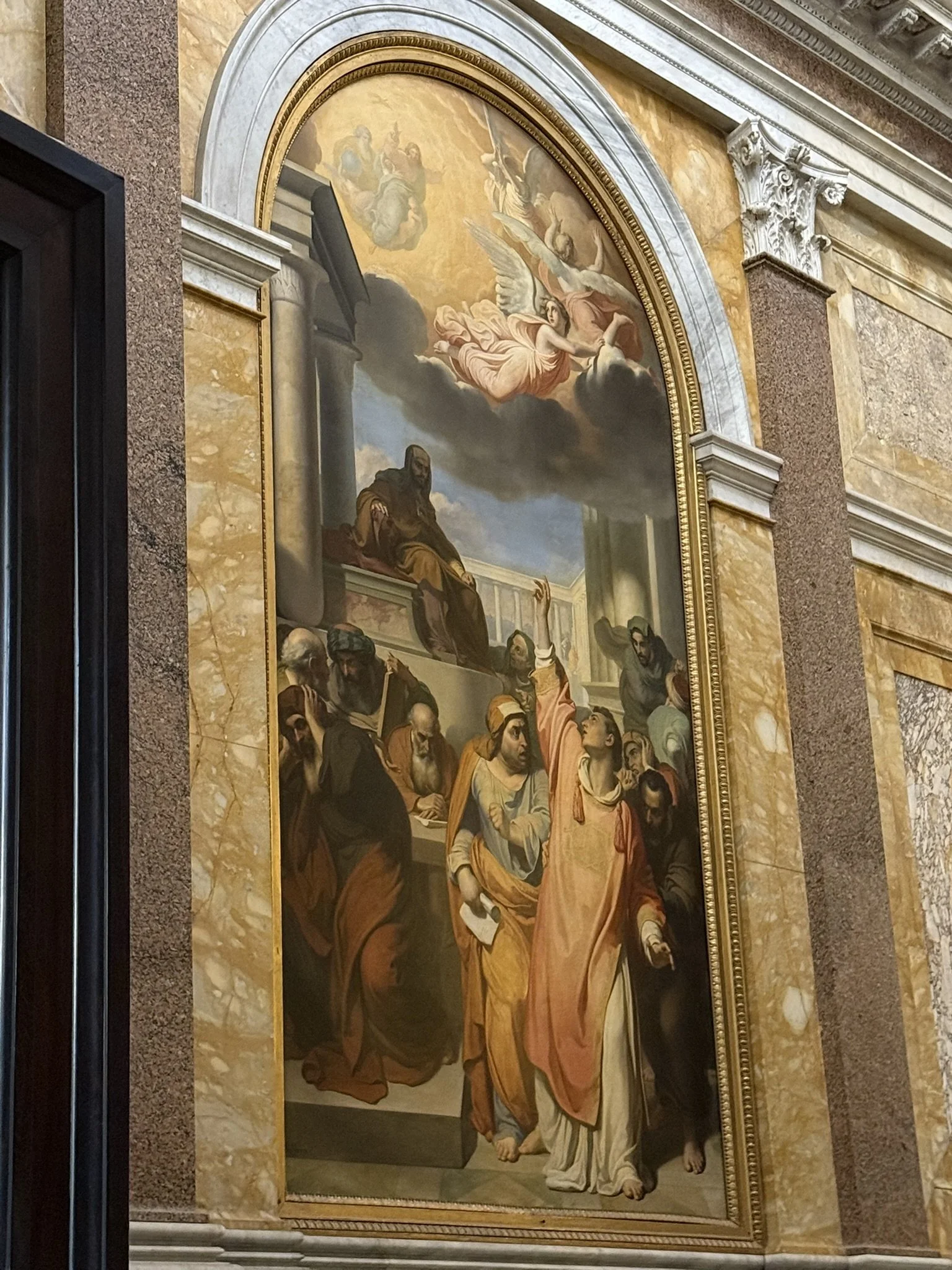
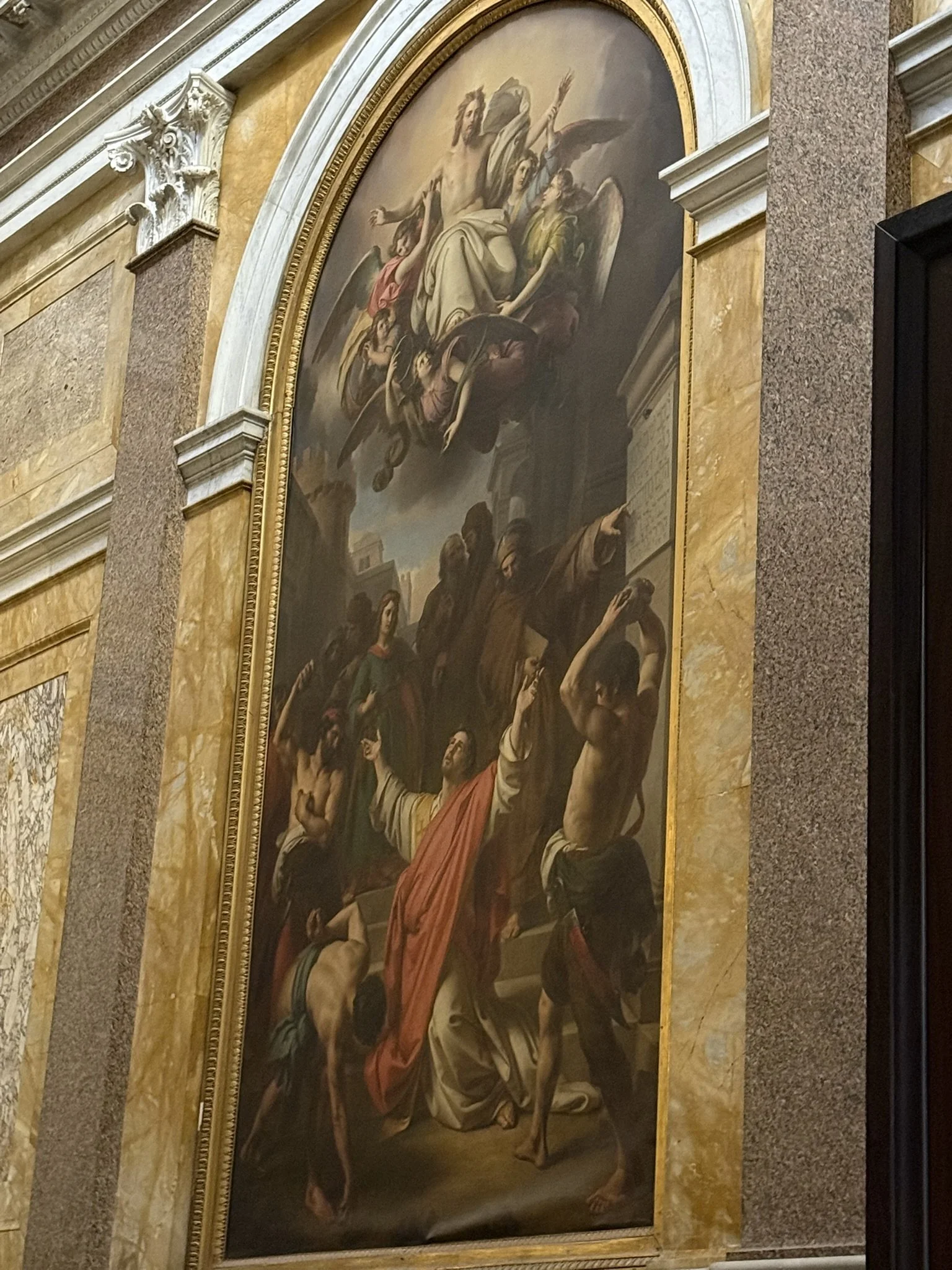
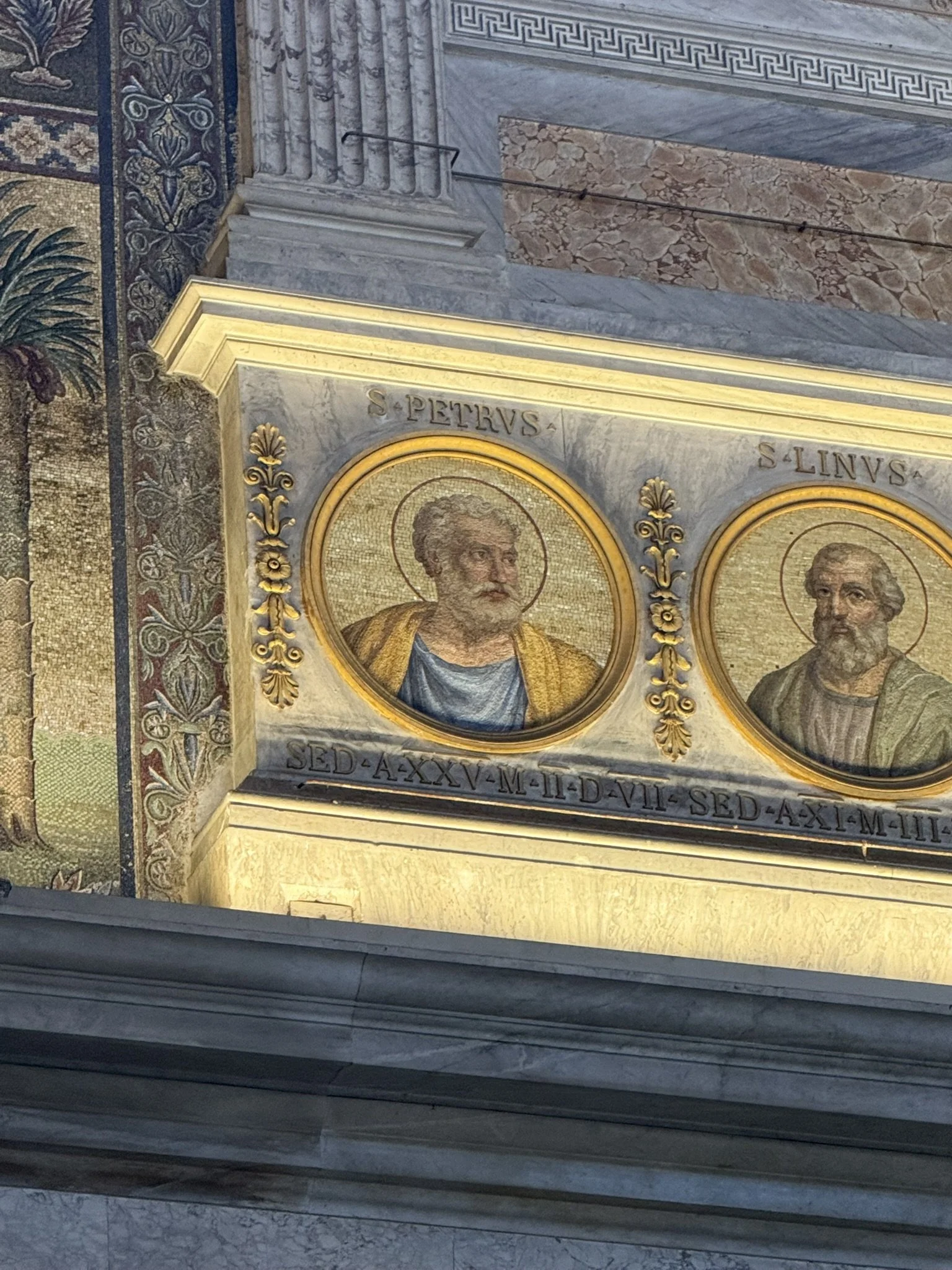
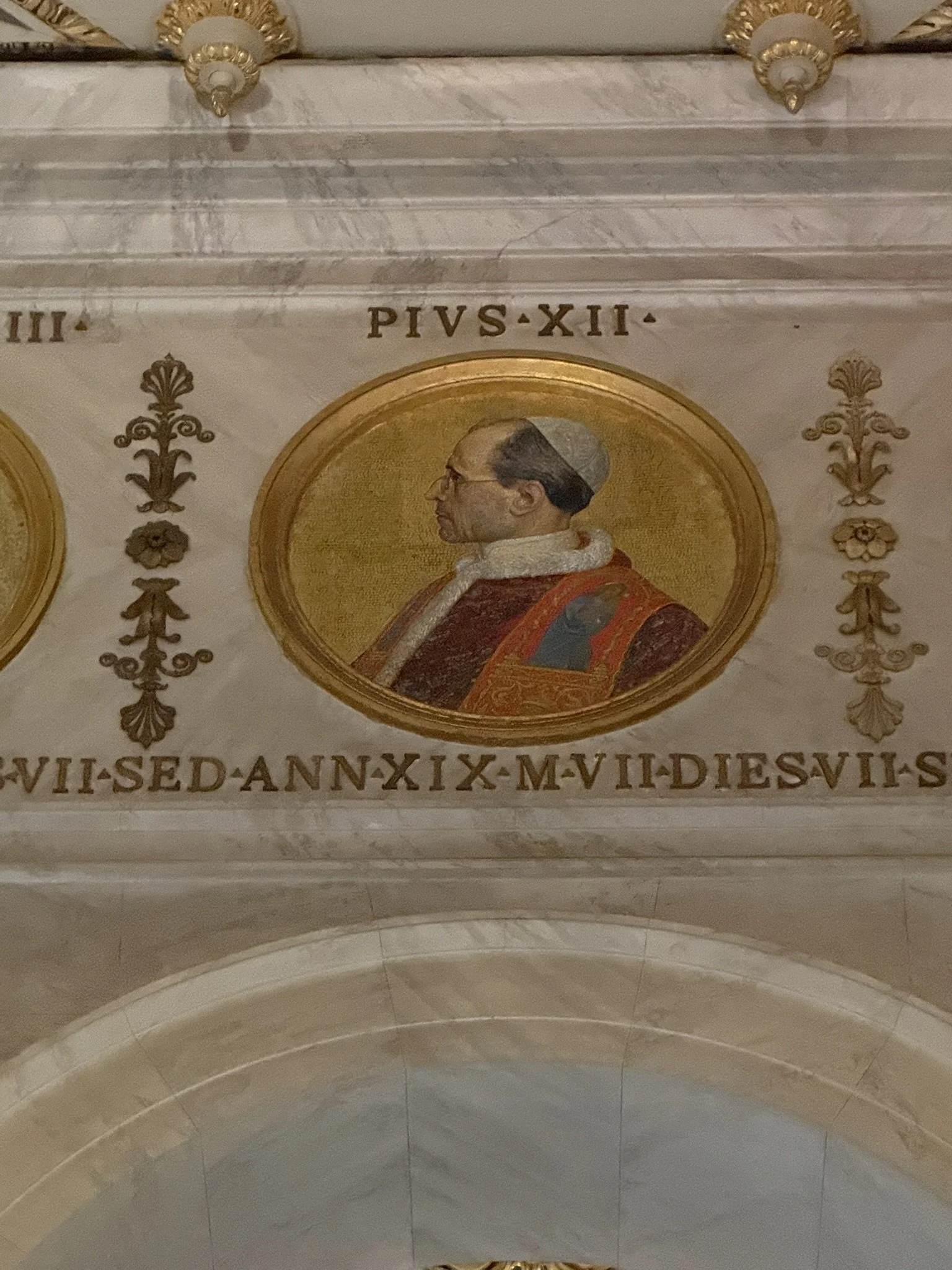
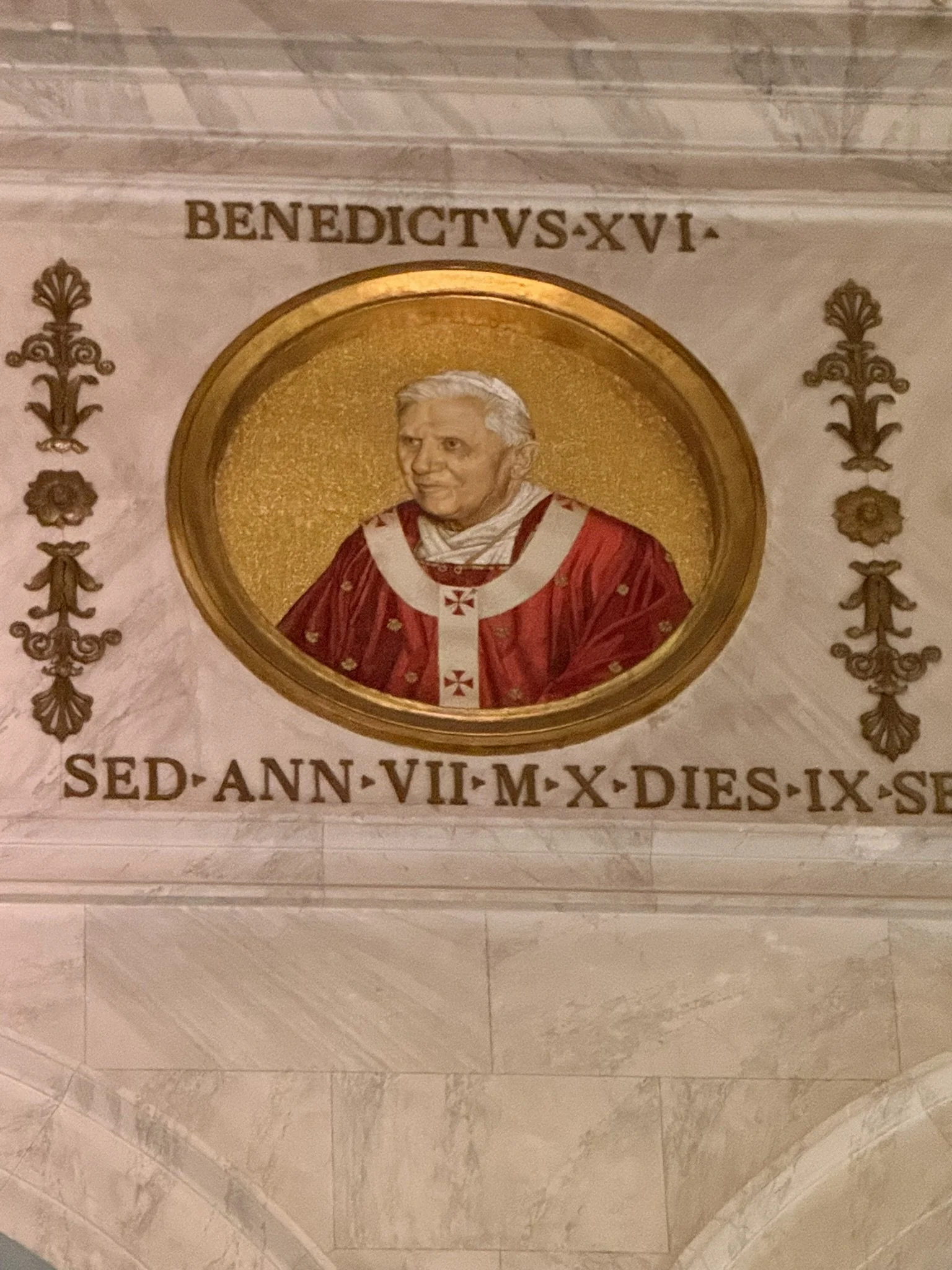
A few last things about St. Paul’s. The mosaics of all of the popes is really cool. It reminds you that the Church traces itself to the beginning, to Peter and, ultimately, to Christ. An interesting fact is that these are mosaics. As a result, when one of the popes are declared a saint, someone has to actually go up to their mosaic and add the halo!
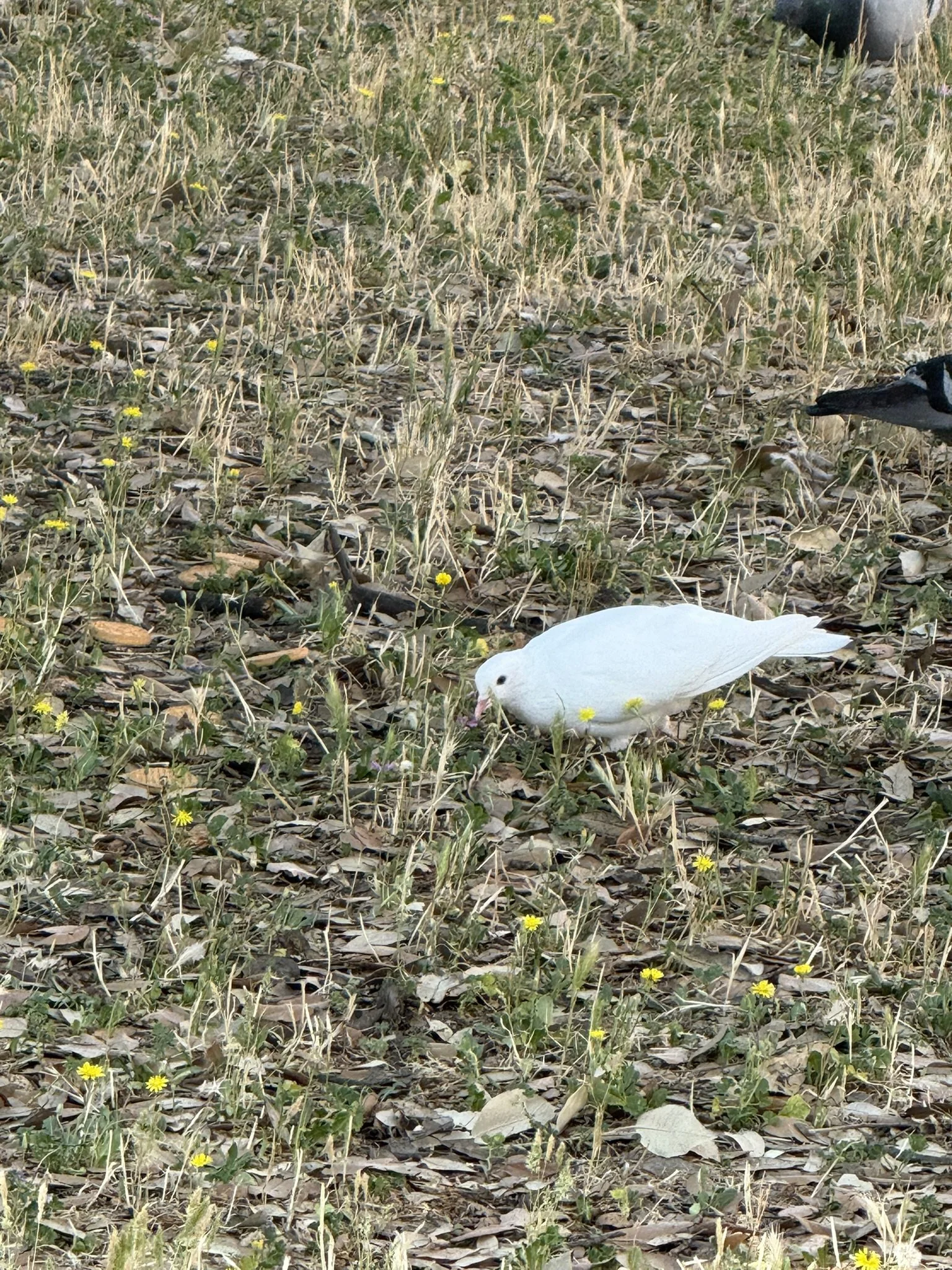
On the way out, and while walking the perimeter of the basilica while waiting for the car, I made friends with a dove… also, a heck of a lot of pigeons! I had to work hard to try to get the dove alone in the photo. But isn’t the story better if it’s just a dove?
There is also an interesting archeological exhibit underneath the outside near the store. It provides you a chance to see the different layers and how the area built up over time, as well as walk through these ruins to better understand the history behind it all.
I do regret that, at the store itself, my wife wanted to buy little, almost kitsch rings for each other. She finally warmed me up to the idea, but sadly they did not have one in my size. She is a thoughtful, romantic woman.
We next made our way to St. Sebastian Outside the Walls (no photos allowed). Then on to the Catacombs of St. Callixtus. I highly recommend going on the tour of the catacombs, especially this one. It is one of the downsides of going on pilgrimage on your own instead of with a group. Masses are allowed in the catacombs with advanced requests, but obviously my wife and I aren’t able to celebrate on our own.
Obviously pictures aren’t allowed in the catacombs, so I encourage you to Google those on your own. But it is fascinating to see the paintings and carvings, showing what the early Christians believed. Some of those same paintings and carvings can be seen in the early churches in Rome. Throughout the catacombs, I made sure to touch my Rosary to the stone and to pray for those Christians who had been buried there and who are still buried there.