A Catholic Perspective on Family Dinner
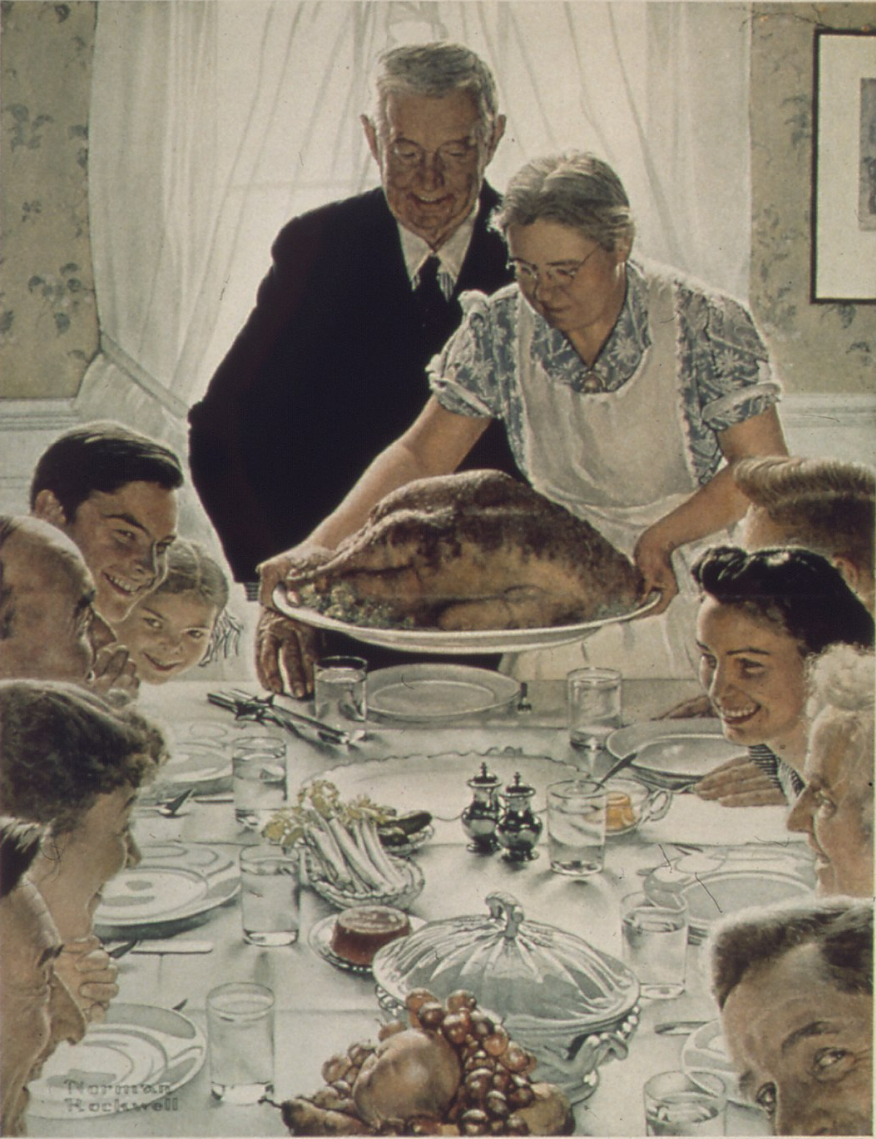
Family dinner is often spoken of nostalgically, almost like a friend or family member who has passed. People act as if it belonged to a bygone era of simpler times, never to return like large boxed black & white television. Yet it doesn’t need to be. And for Catholics, it is more than just a cultural tradition: it is a spiritual practice that reflects the deepest truths of our faith. It is also something that we can and need to renew and restore.
The Catechism reminds us that the family is ecclesia domestica, the domestic church, the primary place where faith is lived and passed on. (CCC, 1656-1657). Around the table, parents and children encounter one another in presence, conversation, and communion. In an age of constant busyness and digital distraction, reclaiming family dinner becomes not just a lifestyle choice but a counter-cultural act of discipleship.
St. John Paul II emphasized this truth when he wrote, “[t]he future of humanity passes by way of the family.” (Familiaris Consortio, 86). If this is true, then ordinary practices like gathering at the dinner table matter immensely. It affects our future. Just as the Church’s life centers around the Eucharistic table, so too does the domestic church gather around its own table, reflecting and participating in the mystery of communion.
The Table as More than a Table
Practically speaking, family dinner creates presence. To sit down together, without rushing or screens, is to declare with one’s time that family relationships matter. We spend time doing things that are important. If we spend no time with family, then how important is it?
Theologically, the family table echoes the Eucharistic table, where Jesus gathers His people to share one bread and one chalice. At Mass, we learn that communion is not something we create, but something we receive. At family dinner, that truth is mirrored in the simple act of receiving food prepared with love and shared in common.
The early Church understood this link. Acts 2:46 describes the first Christians who “breaking bread in their homes, they received their food with glad and generous hearts.” (Acts 2:46). The table is more than furniture. In a sense it’s an altar, where gratitude, unity, and daily life converge. When families honor their dinner table as a sacred space, even the most ordinary meal can become an echo of the Eucharist.
At the altar at Church, the priests, deacons, and altar servers don’t rush around mindlessly. They take their time. They are methodical. They have intention to their actions and purpose in their movements. Do we do the same at the dinner table? Or are we focus on what comes next after dinner: sports, tv, cellphones, homework?
Conversation as Formation
One of the most practical benefits of family dinner is conversation. Studies regularly show that children who regularly eat meals with their families are more likely to perform well academically, avoid risky behaviors, and develop stronger emotional health (here is one example from 2015. That said, there are some recent studies which suggest the opposite, although I’ve found some serious problems with these studies). Yet beyond sociological and academic benefits, conversation at the dinner table is a moment of catechesis. Parents, by sharing stories and engaging their children, form their hearts and minds in truth.
It’s not just about the parents telling Bible stories to their kids or talking to them about the 10 Commandments. It’s about walking them through their day, talking through problems at school with a Catholic outlook (dare I say it: a Catholic perspective).
Scripture speaks to this responsibility: “You shall teach [God’s words] diligently to your children, and shall talk of them when you sit in your house, and when you walk by the way, and when you lie down, nd when you rise.” (Deuteronomy 6:7). Family dinner is one of the most natural settings for this command. Asking about the day, discussing challenges, even laughing together over lighthearted stories all contribute to the gradual shaping of Christian identity. In this way, conversation becomes a spiritual formation, not by lecture, but by example and presence.
Rituals and Gratitude
Every Catholic family knows the importance of prayer before meals. Unfortunately, that simple ritual is easily rushed or forgotten, like the Sign of the Cross or Genuflection. To pause, even briefly, is to affirm that food is a gift, not an entitlement. The word “Eucharist“ itself means thanksgiving, and so every prayer at dinner connects the family table to the altar. St. Paul writes in this vein: “So, whether you eat or drink, or whatever you do, do all to the glory of God.” (1 Corinthians 10:31).
Families can deepen this ritual by adding small traditions: letting children take turns leading prayer, sharing something they are grateful for before eating, or offering a short intercession for those in need. These practices form habits of gratitude, which extend beyond the dinning room table. Just as the Eucharist is the Church’s act of thanksgiving par excellance, so too family dinner becomes a lesson in gratitude, training the heart to see all things as gift.
Fighting the Obstacles
Reclaiming family dinner is easier said than done. Work schedules, extracurricular activities, and the pull of digital devices often conspire against it. I need to be honest here: we don’t do it every night. There are nights where the kids have Cub Scouts from 6:30pm - 7:30 (thier bedtime is 7pm). There are nights where either I or my wife have something going on, like Finance Council or a Bible study. Many families feel that dinner together is simply impossible in today’s world. I know I did. Yet Catholic tradition reminds us that resisting cultural pressures is part of discipleship.
Families may not be able to share dinner every night, like my family can’t. But setting aside even two or three meals a week makes a difference. In addition, just because one parent or family member cannot be there does not mean that the entire enterprise should be dismissed. Rather, do what you can. Protecting this time means saying “no” to lesser goods in order to say “yes” to what is greater. Homework can wait 15 or 20 extra minutes. You can record your T.V. show. The last 15 minutes of the football game are usually more interesting than the first 15 minutes. To insist on family dinner is to witness that communion and presence matter more than convenience. It shows your priority. In a culture that fragments, family dinner unites. In a world that rushes, it slows. In an age of noise, it creates space for conversation.
Other Ideas to Strengthen Table Time
How, then, can Catholic families live this out?
Commit to a realistic goal of family dinners per week. Embrace imperfection: not every meal will be peaceful or profound, but consistency matters more than perfection. Above all, see dinner not as one more task but as an opportunity to live your vocation as a family.
As one Catholic writer put it, “The family that gathers at the table rehearses for heaven, where the great banquet awaits.” Every family meal, no matter how simple, prepares us for the eternal feast of communion with God.
Here are a few more ideas to help.
1) Be Realistic: Commit to a realistic goal of family dinners per week. Don’t jettison your entire routine. It’ll be impossible and too much of a culture shock. Start with 1 night a week (Sunday?). Next season, move it to two nights. Slowly add as many nights as you can. And don’t give ground. If you or the kids pick up a new activity, then find a new night to do family dinner.
2) Make it a Sacred Space: Reclaim the table as a sacred space! Would you play on your phone during Mass? Then don’t do it during dinner. Make it a phone-free zone.
3) Shared Preparation: Involve children in cooking and setting the table. Participation builds responsibility and creates a sense of belonging. It also lets the kids understand the work that goes into family dinner, which reinforces the fact that it’s important.
4) Storytelling: Parents can share stories of family history or saints’ lives during dinner, helping children situate themselves within both family and faith traditions. Remember that catechesis is more than a religious lecture. If your kids don’t want to share about their day, then YOU share yours, and help walk the family through how you addressed it from a Catholic perspective.
5) Blessing Each Child: Don’t just leave the table, like some do at the end of Mass. Wait for everyone to finish before some type of ritual dismissal: a final prayer, a blessing, etc. Before leaving the table, parents can trace the sign of the cross on their children’s foreheads. These simple gestures root identity in Jesus, while also showing that this sacred time is now at an end.
Feel free to share in the Comments your own ideas.
Conclusion
Family dinner wasn’t lost in a day, and it won’t be gained back in a day. Like anything, it takes time, and you won’t see improvements overnight. You will face discouragement. Things won’t be easy. But one day, if you start today, you will look back and realize how far you’ve come. Don’t try to do too much at once or you’ll burn out. Just remember what you’re working towards and why you’re doing it.
Most importantly, do it as a family. Tell the kids what you’re doing and why you’re doing it. They’re more likely to buy in if you do. Make sure you and your spouse are on the same page. Maybe it’s not a bad idea to make this a family New Year’s Resolution.
Good luck. BE countercultural. Fight back. Make dinnertime sacred again.
